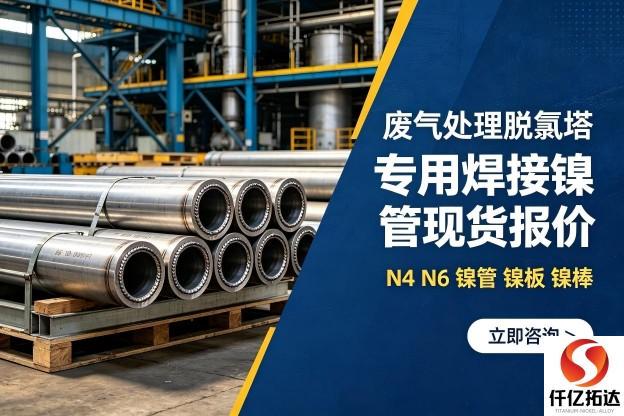
Titanium Export Products: Plate, Tube, Bar, Wire, Flange & Fittings
| Спецификация | Product: Titanium Export Products: Plate, Tube, Bar, Wire, Flange & Fittings |
|---|---|
| Применимый стандарт | Covers: plate, tube, bar, wire, flange, tee, reducer, elbow, cap, screw |
| Состояние материала | Standard: ASTM B265/B338/B348/B363/B381, ASME B16.5, AWS A5.16, F467/F468 |
| Контроль и упаковка | Service: Seawater, chloride, chemical, reducing acid, marine, medical |
| Справочная цена | $8.00 – $20.00 |
Описание продукции: Titanium export product guide: plate, tube, bar, wire, flange, fittings and fasteners from Baoji stock. Grades, ASTM standards, failure limits, RFQ checklist.
Обзор продукции
Titanium Export Products: Plate, Tube, Bar, Wire, Flange & Fittings
If you buy titanium for export, you are really buying ten different product families that share one rule: specify the grade for the fluid, not just the word “titanium.” We stock ~800 tonnes of titanium and nickel in Baoji, China’s Titanium Valley, covering all ten export lines — plate, tube, bar, wire, flange, the four fittings (tee, reducer, elbow, cap), and screws/fasteners — in Gr1, Gr2, Gr5, Gr7, Gr12 and Gr23, cut to size and shipped worldwide with full mill certificate. This single guide answers what each product is for, which grade to specify, where titanium actually fails, and how to write an RFQ that returns a usable quote instead of a guessing game. Read it once and you will stop paying for the wrong grade.
The reason a combined guide beats ten separate catalogues is simple: the ten families are not independent. A seawater line is plate shells, tube bundles, bar-made flanges, and B363 fittings from the same Grade 2 / Grade 7 material system. Specifying them consistently — same grade logic, same certificate, same stockist — is what keeps a plant leak-free for twenty years. Below, each family gets its own section, then we pull the threads together into one failure map and one selection rule.
At a Glance: The Ten Export Families
| Product | Common grades | Standard | Typical export service |
|---|---|---|---|
| Titanium Plate / sheet | Gr1, Gr2, Gr5, Gr7, Gr12 | ASTM B265 | Shells, tube sheets, liners, seawater & chlor-alkali |
| Titanium tube / pipe | Gr2, Gr5, Gr7, Gr12 | ASTM B338 / B862 | Heat-exchanger bundles, seawater & chemical lines |
| Titanium bar / rod | Gr2, Gr5, Gr7, Gr23 | ASTM B348 / B381 | Flange blanks, fasteners, CNC, implants |
| Titanium wire | Gr1, Gr2, Gr5, Gr23 | AWS A5.16 / ASTM B863 | Welding filler, medical mesh, additive mfg |
| Titanium flange | Gr2, Gr5, Gr7 | ASME B16.5 / EN 1092 | Seawater & chemical piping joints |
| Titanium tee | Gr2, Gr7 | ASTM B363 | Branch lines, manifolds |
| Titanium reducer | Gr2, Gr7 | ASTM B363 | Bore transitions, pump suction |
| Titanium elbow | Gr2, Gr7 | ASTM B363 | Direction changes, routing |
| Titanium cap | Gr2, Gr7 | ASTM B363 | Line termination, spares |
| Titanium screw / fastener | Gr2, Gr5, Gr23 | ASTM F467 / F468 | Marine, medical, racing, chemical flange |
1. The “Titanium Is Just Expensive Steel” Myth
The most expensive mistake export buyers make is treating titanium as a drop-in stainless or carbon-steel substitute. It is not. Titanium’s value is its self-healing passive oxide film — a few nanometres of TiO2 that reforms instantly when scratched, and that shrugs off chlorides where 316L stainless pits in months. But that film is fragile in the wrong chemistry. In a reducing or acidic chloride it needs palladium (Grade 7) or molybdenum-nickel (Grade 12) to stay stable; in strong oxidising acid or fluoride it dissolves outright. So the grade, not the metal name, is what buys you the service life. A Gr7 plate for chlor-alkali and a Gr2 plate for open seawater are different animals; read our titanium grade selector before you write “titanium” on the RFQ. The single sentence that saves the most money in this whole guide: match the grade to the worst corner of the system, not the average of it.
2. Grade Quick-Reference
: Which Titanium for Which Fluid
Use this table as the first filter on every RFQ. It is the condensed version of the failure map in Section 10.
| Service / fluid | Grade | Why |
|---|---|---|
| Aerated seawater, brine, neutral chloride | Gr2 | CP-Ti passive film is stable; 316L pits, Ti does not |
| Stagnant / reducing / acidic chloride, chlor-alkali, wet Cl2 | Gr7 (Ti-0.15Pd) | Pd catalyst stabilises the film in low-oxygen acid |
| Hot reducing acid (H2SO4, HCl, phosphoric) | Gr12 (Ti-0.3Mo-0.8Ni) | Mo/Ni widen the reducing-acid window |
| Structural, high strength-to-weight | Gr5 (Ti-6Al-4V) | ~2x Gr2 strength at ~half steel weight |
| Medical implant | Gr23 (Ti-6Al-4V ELI) | Extra-low interstitial, biocompatible |
| Cryogenic / maximum ductility | Gr1 | Lowest strength, highest ductility |
| Strong oxidising acid, dry halogen, fluoride | Not titanium | Use zirconium or lined/Clad (see clad plate) |
3. How to Read a Titanium RFQ (So You Get a Usable Quote)
Four fields decide whether a quote is comparable across suppliers:
- Grade matched to the fluid — Gr2 for aerated seawater, Gr7 for reducing/acidic chloride, Gr12 for hot reducing acid, Gr5 for strength, Gr23 for implants. State the reason, not just the grade.
- Dimensions and tolerance — thickness/OD, width/length, bore, thread class, wall schedule. Give the finished contour, not the parent size.
- Governing standard — ASTM B265/B338/B348/B363/B381, ASME B16.5, AWS A5.16, ASTM F467/F468, plus your drawing where needed.
- Certificate — insist on EN 10204 3.1 with heat-number traceability to the actual melt.
Any supplier who quotes “Titanium Plate” without asking the grade and the service is not a partner; they are guessing, and you will pay for it in the field. Insist on the four fields and two suppliers become directly comparable.
4. ://www.sxqytd.com/product/titanium-plate.html target='_blank'>Titanium Plate & Sheet
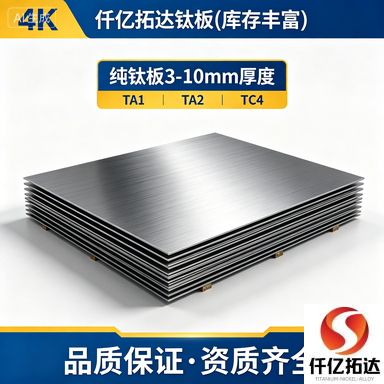
Plate is the starting form for most fabricated parts — pressure-vessel shells, tube sheets, baffles, liners, and structural skins. We stock commercially pure Gr1/Gr2 and alloyed Gr5/Gr7/Gr12 from 0.5 mm thin sheet up to 100 mm plate, cut to drawing the same day. Grade 2 is the default for seawater and neutral chlorides (see seawater plate); Grade 7 (Ti-0.15Pd) is specified where the environment is reducing or marginally acidic, such as chlor-alkali (see Gr7 acid plate); Grade 12 adds strength plus a wider reducing-acid window; Grade 5 is the structural alloy. Thin gauge down to 0.5 mm comes from our thin plate line.
For tube sheets we CNC-drill the bundle pattern to your exchanger drawing, holding pitch and hole tolerance so tubes seat without reaming on site. Our zero-cutting service bills the rectangle you use, not a whole sheet — useful for spares, prototypes, and tube-sheet blanks where a full plate would be 80% offcut. Plate is produced by forging a billet, then hot and cold rolling to gauge, annealing in a protective atmosphere, and pickling to remove the alpha case; after cutting we re-pickle to restore the film. The most common plate mistake is ordering one grade for every service instead of matching Gr2/Gr7/Gr12 to the fluid, and ignoring the EN 10204 3.1 (see plate certificate) that ties the heat number to your coil. Where solid titanium is cost-prohibitive over large areas, our titanium clad plate puts a thin Ti surface on a steel substrate for vessel linings — the same corrosion resistance at a fraction of the material cost, which is why clad routes appear in chlor-alkali and large desalination shells.
5. Titanium Tube & Pipe
Tube is the heart of every titanium heat exchanger and the standard pick for seawater and corrosive-fluid lines. We stock seamless and welded tube in Gr2, Gr5, Gr7 and Gr12, 6–50 mm OD, ASTM B338 / B862, cut to length the same day. Seamless tube (per B338) has no weld line and is preferred for exchangers and high-integrity duty; welded tube (B862) is cheaper for less critical lines. Grade 2 is the seawater workhorse (see heat-exchanger tube); Grade 7 serves chlor-alkali duty; Grade 12 extends into petrochemical reducing acid. Keep tube-side velocity in the 1–2 m/s band — below invites deposition and crevice attack, above invites erosion-corrosion.
Seamless tube is extruded or pierced from billet then cold-drawn and annealed; welded tube is rolled from strip and fusion-welded, then full-annealed and often eddy-current tested. For exchangers we supply straight lengths or U-bends with a controlled bend radius to avoid thinning, and where the code demands it we eddy-current (ET) or ultrasonic (UT) inspect the seam so no hidden defect enters a pressure boundary. The recurring tube errors: selecting Gr2 for a stagnant, low-oxygen chloride leg (use Gr7), running velocity too low (deposits → crevice) or too high (erosion), and buying untraceable tube without a mill certificate. Our 25/32/50 mm OD stock covers the common sizes; B338 tube guide gives grade-by-fluid detail.
6. Titanium Bar & Rod
Bar is the feedstock for flanges, fasteners, machined parts, and medical implants. We stock round, hex, and forged bar in Gr2, Gr5, Gr7 and Gr23, 20–300 mm, ASTM B348 / B381, cut to length. Round bar (see cut-to-length round) is universal for machining; hex bar is for nuts and wrenching parts; forged bar (see forged bar) gives the grain flow needed for flange rings and pressure parts. Grade 5 (see Gr5 stock) is the high-strength aerospace grade; Gr23 (ELI) is the medical-implant grade. Watch the trap: Gr5 has lower chloride resistance than Gr2 — do not substitute it where the part sees seawater. Our B348 bar guide covers selection, and common diameters are held in stock.
Round and hex bar are hot-rolled or forged and straightened; forged bar is upset to give grain flow along the contour — critical for flange rings. For implants, Gr23 is melted twice-vacuum and centreless-ground to a clean surface. The classic bar mistake is machining Gr5 into a seawater pump shaft expecting “stronger = better,” then watching it pit at the seal gland where chlorides concentrate. Corrosion service is won by grade, not by strength — engineer strength around the grade, not instead of it.
7. Titanium Wire
Wire splits into welding filler and precision formed wire. We stock Gr1, Gr2, Gr5 and Gr23 from 0.8 to 3.0 mm, spool or coil, to AWS A5.16 / ASTM B863. Gr1/Gr2 wire (see Gr1 welding wire) welds pure-grade joints; Gr5 wire (see AWS A5.16 wire) welds the high-strength alloy; Gr23 fine wire (see medical mesh wire) feeds implants and additive manufacturing. The non-obvious rule: titanium wire is a consumable that degrades by storage before it degrades by chemistry. Any moisture causes porous, brittle welds, so keep spools sealed and dry; reseal after use and purge the weld. Our 0.8–3.0 mm stock covers the common sizes; B863 wire guide has the detail. Match the filler to the base grade — Gr5 filler on a Gr2 base mismatches chemistry and can crack.
8. Titanium Flange
A flange connects corrosion-resistant pipe and equipment in seawater and chemical plants. We supply weld-neck, blind, slip-on and custom flanges in Gr2, Gr5 and Gr7, ASME B16.5 / EN 1092, PN10–PN40, with RT test reports. Grade 2 (see Gr2 ANSI B16.5) is the seawater default; Grade 7 serves chemical lines; Grade 5 is used for pressure-vessel flanges. Weld-neck (see weld-neck RF) gives the best fatigue for cyclic duty; slip-on is cheaper for low-stress lines; blind (see blind flange) closes unused nozzles. Pressure ratings derate with temperature — see flange pressure ratings; facing choices matter too (see sealing faces). Critically, pair flanges with titanium or insulated bolting to avoid galvanic loss of tension; our flange selection guide walks the trade-offs.
Flanges are forged from bar or billet (forged grain flow resists fatigue at the hub), then machined to facing, bolt circle, and bore. Where the code requires it we radiograph (RT) or dye-penetrant (PT) test the hub and weld prep, then issue the report with the MTC. The most common flange joint leak is not the flange — it is the bolting: a Gr2 flange with carbon-steel bolts, uninsulated, loses tension as the steel corrodes. Treat the flange as a system: grade the flange, the bolt, the gasket, and the isolation together.
9. ://www.sxqytd.com/Titanium-Fittings.html target='_blank'>Titanium Fittings: Tee, Reducer, Elbow, Cap
These four ASTM B363 butt-weld fittings keep a titanium line one material end to end. We stock equal and reducing tees, concentric and eccentric reducers, 90°/45° elbows (long/short radius), and end caps in Gr2 and Gr7. Grade 2 (see Gr2 fittings) serves seawater and neutral chloride; Grade 7 (see Gr7 corrosive fittings) is for reducing/acidic media. They are all butt-welded per B363 / B16.9 for full-strength joints. Three failure seeds dominate fittings:
- Tee — the branch crotch and any dead-leg are crevice magnets; in low-oxygen chloride prefer Gr7 and keep velocity up. Use a reducing tee only when the branch bore is smaller than the run.
- Reducer — the narrow bore raises local velocity; size for the 1–2 m/s band. On pump suction use an eccentric reducer with the flat up to vent air — a concentric reducer there traps an air pocket and cavitates the pump.
- Elbow — turbulence and erosion concentrate at the outer wall; use long-radius (1.5×D) elbows and hold velocity. Short-radius (1×D) is for tight skids only.
- Cap — a capped end is a stagnation trap; in low-oxygen fluid prefer Gr7 and avoid leaving it full long-term. Never seal a titanium line with a steel plug — galvanic corrosion attacks the junction.
Our fittings selection guide covers sizing; butt-weld to spec covers non-standard take-offs; desalination fittings and exchanger fittings are the application pages.
10. Titanium Screws & Fasteners
Screws, bolts, nuts and washers keep assemblies light and corrosion-free where steel rusts. We stock hex bolts, screws, nuts and washers in Gr2, Gr5 and Gr23, ASTM F467/F468, M6–M48, with same-day shipping on small orders. Grade 2 (see marine screws) resists seawater far better than 316 stainless at ~60% of the weight; Grade 5 (see hex bolt) adds strength for racing and structural use; Gr23 (see medical fasteners) is the implant grade. Two non-obvious rules: titanium threads gall without anti-seize, and titanium yields at a different torque than steel — use a titanium-specific torque chart, not a steel one, or you risk yielding the bolt. Pair with Titanium Fasteners and stud bolts as one kit; our fastener guide explains galling and isolation. Small orders ship same day (see small-order bolts).
11. The Limitation You Must Know
: Where Titanium Fails
Titanium is not magic. It fails in well-defined conditions, and naming them up front saves more jobs than any grade upgrade:
| Condition | What happens | Do this instead |
|---|---|---|
| Strong oxidising acids (conc. nitric) | Passive film breaks down | Use zirconium or lined steel |
| Dry halogens / dry HCl | Ignition risk above ~230°C | Keep every stream wet |
| Hydrofluoric acid / fluorides | Titanium dissolves aggressively | Never use titanium here |
| Hot air-free reducing acid | Gr2 loses passivity | Step to Gr7 / Gr12, or change material |
| Crevice / stagnant low-O2 zone | Even Gr2 crevice-corrodes | Design for flushing; use Gr7 |
| Galvanic coupling to steel | Steel attacks; joint seizes | Insulate or use compatible alloy |
12. When Titanium DOES Corrode (and What It Teaches You)
Three real patterns recur. (a) A Gr2 tube-sheet crevice-corroded behind a rubber gasket because the lane went stagnant for a maintenance window — the fix was Gr7 in the gasketed zone plus a flush protocol, not more thickness. (b) A fabricator machined Gr5 bar into seawater pump shafts expecting “stronger = better” and watched them pit at the seal gland — the fix was Gr2 with a hardened sleeve. (c) A desalination tie-in used Gr2 flanges with carbon-steel bolts “just this once”; the bolts corroded, lost tension, and the gasket wept — the titanium was fine, the bolting was the weak link. The lesson across all three: specify the grade for the worst stagnant corner, treat the joint as a system, and titanium will outlive the plant.
13. Choose by Service, Not by Habit
A one-line rule for each family:
- Plate / Tube / Bar / Fittings: Choose Gr2 for aerated seawater, brine, neutral chloride. Choose Gr7 for reducing/acidic chloride or chlor-alkali. Choose Gr12 for hot reducing acid. Choose Gr5 bar only where strength-to-weight rules and corrosion is mild.
- Wire: Choose Gr1/Gr2 for pure-grade and corrosion-service welding; Gr5 for the high-strength alloy; Gr23 for medical. Match the filler to the base. Store dry.
- Flange: Choose Gr2 for seawater; Gr7 for reducing/acidic; Gr5 for strength. Weld-neck for cyclic duty; slip-on for low stress. Pair with titanium or insulated bolting.
- Screw / Fastener: Choose Gr2 for marine/chemical; Gr5 for strength-to-weight; Gr23 for medical. Use anti-seize and titanium torque values; isolate from steel in wet service.
- Choose another material if the fluid is strong oxidising acid, dry halogen, or fluoride — move to zirconium or a lined/Clad route such as titanium clad plate.
14. RFQ-Ready Sizing & Specification Checklist
- Grade and temper (Gr1/2/5/7/12/23) with the service reason above.
- Dimensions — thickness/OD, width/length, bore, thread class, wall schedule.
- Standard (ASTM/ASME/EN) and tolerance class.
- Quantity and lot — single piece or batch; finished contour, not parent size.
- Surface finish — pickled, polished, machined, or as-rolled.
- Certificate — EN 10204 3.1 with heat number.
- NDT requirement — RT/PT/ET where the code demands it.
- Packing and destination — export packing and freight.
15. Common Procurement Mistakes (Across All Ten)
- Ordering one grade for every service instead of matching Gr2/Gr7/Gr12 to the fluid.
- Ignoring the EN 10204 3.1 and heat-number traceability on the MTC.
- Specifying full plate/bar when a cut-to-size piece avoids scrap (see zero-cutting).
- Using Gr5 in a seawater part expecting Gr2-level corrosion resistance.
- Pairing titanium with carbon-steel bolting without insulation (galvanic seizure).
- Torquing Titanium Fasteners to steel values (yield) or fitting them dry (galling).
- Running tube/fitting velocity outside the 1–2 m/s band (deposition or erosion).
16. Surface Finish, Packing & Export
Most products leave pickled (grey, matte) or can be supplied polished, bright-rolled, or machined; for tube sheets and implants a machined-and-passivated face is standard. After any cutting or bending, re-pickle to restore the film at the disturbed zone. Export packing is interleaved, strapped, and crated or skidded with VCI protection for sea freight; tubes are bundled and end-capped, flanges face-protected, fasteners bagged by size. MTC, packing list, and commercial invoice travel with the crate; NDT reports where specified. We ship from Baoji Titanium Valley to global ports with full documentation.
17. Why a Baoji Titanium-Valley Stockist
We are based in Baoji, China’s Titanium Valley, with ~800 t of titanium and nickel stock and same-day cutting. That means small MOQ, fast dispatch, and the ability to supply both standard stock and non-standard parts to drawing — without a minimum-lot penalty. It also means we can kit a complete order from one shipment: a forged Gr2 flange ring, Gr5 studs, Gr2 nuts, and the Gr2/Gr7 tube and fittings for the same line. Every lot ships with EN 10204 3.1 MTC and export documentation. See heat-exchanger guide, flange types, and Gr2 vs Gr5 for deeper dives.
18. Titanium vs the Alternatives
: When Not to Use Titanium
Titanium is not always the right call, and knowing when to step off it saves budget without adding risk. The table below frames the real choice buyers face:
| Material | Chloride resistance | Strength / weight | Relative cost | Choose when |
|---|---|---|---|---|
| 316L stainless | Moderate — pits in seawater | Good | 1x (baseline) | Low chloride, non-marine duty |
| Titanium Gr2 | Excellent (seawater, neutral Cl) | Good, ~half steel weight | ~3–4x | Seawater, brine, neutral chloride |
| Titanium Gr7 | Excellent + acidic chloride | Good | ~4–5x | Chlor-alkali, reducing chloride |
| Zirconium | Outstanding in strong acid | Good | ~6–8x | Strong oxidising / hot acid Ti can't take |
| Hastelloy C / nickel | Strong reducing acid | Good | ~5–7x | Hot reducing acid outside Ti window |
316L is cheaper and perfectly fine where chlorides are low and oxygen is plentiful, but it fails by pitting in seawater — that is exactly the line where titanium earns its premium. Zirconium outlasts titanium in strong acid but costs far more, so reserve it for the aggressive services titanium cannot take. Nickel alloys such as Monel / Inconel handle some reducing acids titanium cannot, at a weight and cost premium. The disciplined buyer uses titanium for the chloride / seawater / lightweight band and steps to these alternatives only outside it — never the reverse.
19. Lead Time & MOQ by Product Family
| Family | Typical stock | MOQ | Dispatch |
|---|---|---|---|
| Plate / sheet | 0.5–100 mm, common sizes | 1 piece | Same-day cut-to-size |
| Tube / pipe | 6–50 mm OD, seamless & welded | 1 length | Same-day cut-to-length |
| Bar / rod | 20–300 mm round/hex/forged | 1 piece | Same-day cut-to-length |
| Wire | 0.8–3.0 mm spools/coils | 1 spool | Same-day (common sizes) |
| Flange | DN15–600, small sizes held | 1 piece | Same-day (small sizes) |
| Fittings (tee/reducer/elbow/cap) | B363 Gr2/Gr7 stock + custom | 1 piece | Stock + cut-to-spec |
| Screw / fastener | M6–M48 bolt/nut/washer | Small bag | Same-day ship |
Because we hold ~800 t in Baoji, most standard items ship the same day; non-standard sizes and Gr12 / Gr23 grades are a few days, not mill weeks. Small MOQ applies across the board — you are never forced into a mill minimum-lot penalty, which is what lets a prototype and a full-line order share the same supply chain.
20. FAQ — Titanium Export Products
Which titanium grade should I default to for seawater?
Grade 2 for open, aerated seawater; Grade 7 where the service is reducing, acidic, or has stagnant/creviced zones. Both resist chloride pitting that destroys 316L stainless. See seawater plate and heat-exchanger tube.
Seamless or welded tube — which do I need?
Seamless (ASTM B338) for exchangers and critical service; welded (B862) for general lines where cost matters. We stock both; see common OD stock.
Can titanium handle hydrochloric or sulphuric acid?
Only in specific dilute, oxidising conditions. In air-free concentrated HCl or hot H2SO4, un-alloyed titanium loses passivity; step to Gr7/Gr12 or move to zirconium. Never in hydrofluoric acid.
Why did my titanium fitting erode / weep?
Usually velocity or stagnation: a tight elbow above ~2 m/s erodes; a dead-leg branch or concentric reducer on pump suction crevices or traps air. Hold 1–2 m/s, use long-radius elbows, and prefer Gr7 in low-oxygen corners. See fittings guide.
Do titanium bolts gall, and how do I stop it?
Yes — without anti-seize the threads can seize and the head twist off on teardown. Use proper paste and a titanium-specific torque chart (not steel values). See Titanium Fasteners.
What certificate comes with the material?
EN 10204 3.1 mill test certificate with heat-number traceability to the actual melt, per the relevant ASTM/ASME grade. See plate MTC as an example.
Can you supply non-standard parts to drawing?
Yes — plate cut to contour (zero-cutting), flanges machined from bar (flange machining), fittings cut to spec (butt-weld to spec), and non-standard fasteners (by drawing). Small batches welcome.
Gr2 vs Gr5 — which do I actually need?
If corrosion rules, Gr2. If strength-to-weight rules and the environment is mild, Gr5. Most process-equipment parts are Gr2; our Gr2 vs Gr5 guide walks the trade-off.
Do you export worldwide?
Yes — from Baoji Titanium Valley to global ports, with export packing, VCI protection, and full MTC and shipping documents for every lot.
What is the real lead time for non-standard parts?
Standard stock items cut and dispatch same day from Baoji; non-standard plate contours, forged flanges, cut-to-spec fittings, and Gr12 / Gr23 grades typically take a few days, not mill weeks. Small MOQ applies throughout — you are not forced into minimum-lot penalties.
Can I kit plate, tube, fittings and fasteners in one shipment?
Yes — because we stock the full family, we routinely kit a complete line (Gr2 plate shells, Gr2/Gr7 tube, B363 fittings, and a Gr2 flange with titanium studs) from one Baoji shipment, with one MTC pack. That consistency of grade and certificate is what keeps a system leak-free for decades.
21. Reading a Mill Test Certificate (So You Trust the Grade)
The EN 10204 3.1 certificate is the document that turns “titanium” from a marketing word into a verified material. For every lot you should expect it to state: the heat (melt) number that ties the paper to the actual billet; the chemical composition (Fe, O, H, N, C and alloying elements) against the ASTM/ASME limit; the mechanical results (tensile, yield, elongation); and any non-destructive results (RT/PT/ET/UT) where specified. The single most important field is the heat number — without it you cannot prove the part in the field is the grade you paid for. Reject any supplier who offers price but not traceability; in a chloride service, an untraceable “Gr2” that is actually Gr1-with-contamination is the difference between a 20-year life and a two-season failure. Our plate MTC example shows the format; the same discipline applies to tube, bar, flange and fittings.
22. A 5-Minute RFQ Template You Can Send Us
Copy this and fill the blanks; it returns a comparable quote the same day instead of a guessing game:
- Product family: plate / tube / bar / wire / flange / fitting / fastener
- Grade + reason: e.g. Gr2 for aerated seawater, or Gr7 for reducing chloride
- Dimensions: thickness/OD × width/length, or bore × wall, or thread × length
- Standard & tolerance: ASTM/ASME/EN + class
- Quantity & finish: pieces, pickled / machined / polished
- Certificate: EN 10204 3.1, heat-number traceability (required)
- NDT: RT/PT/ET/UT where the code demands it
- Destination & packing: port, VCI / crate
Email it to [email protected] — we confirm stock and pricing within 24 hours, and can kit the whole line from one Baoji shipment so grade and certificate stay consistent end to end.
Summary: One Rule Beats Ten Catalogues
If you take one thing from this guide, take this: specify the grade for the fluid, not just the word “titanium,” and treat every joint as a system. Grade 2 for aerated seawater, Grade 7 for reducing/acidic chloride, Grade 12 for hot reducing acid, Grade 5 for strength, Gr23 for implants — and never titanium in strong oxidising acid, dry halogen, or fluoride. Send the checklist above to [email protected] or use the inquiry form — we confirm stock and pricing within 24 hours, and can kit plate, tube, bar, wire, flange, fittings and fasteners for your whole line from one Baoji shipment.
Опишите ваши требования — марка, размер и количество. Ответим в течение 24 часов.
Предпочитаете чат? WhatsApp +86 188 2967 9311 или напишите на [email protected].


- Titanium Price Today (11 Nov 2026): Plate, Tube, Rod & Wire
- Titanium Price Today (9 Nov 2026): Plate, Tube, Rod & Wire
- Что такое титан фланец| ASME B16.5 ASTM B381 Gr2 Gr5 титановые флажк
- ASME B16.5 титановая флажка класса 2 DN100-DN600 Класс 150/300 FOB
- Gr2 Titanium Sheet Price FOB Shanghai | ASTM B265 In Stock
Контактное лицо: Wang Xiaoning
Телефон: +86-917-355-7966
Эл. почта: [email protected]
WhatsApp: +86 188 2967 9311
Компания: Shaanxi Qianyi Tuoda Technology Co., Ltd
Адрес: Floor 4, Building 4, No. 188 Gaoxin Avenue, High-tech Zone, Baoji City, Shaanxi Province, China