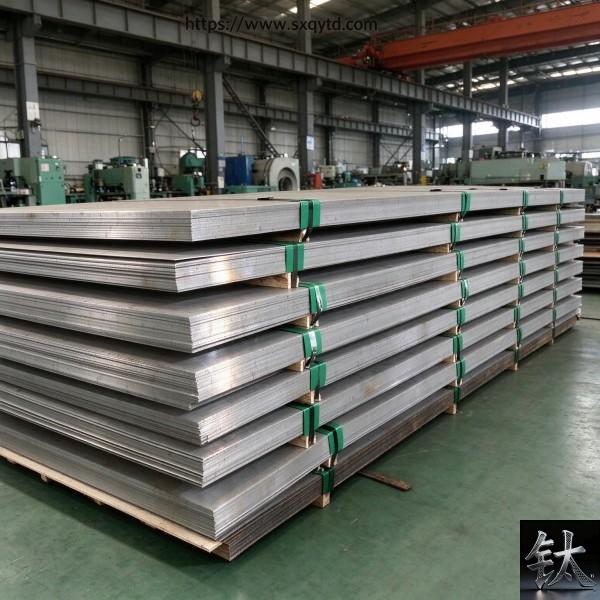
Titanium Plate Receiving Inspection: Theoretical Weight vs the Scale
| Спецификация | Titanium plate receiving inspection / theoretical weight / scale weight settlement |
|---|---|
| Применимый стандарт | ASTM B265 plate in Gr1 Gr2 Gr7 Gr12, cut-to-size and nested plates |
| Состояние материала | Theoretical weight vs weighed weight / thickness plus-tolerance / offcut ownership |
| Контроль и упаковка | Receiving Inspection and Acceptance Checklist / dispute document / MTC heat number |
| Справочная цена | $9.00 – $12.00 |
Описание продукции: Theoretical weight is area x nominal thickness x approx 4.51 g/cm3. Name the settlement basis in the PO or the B265 plus-tolerance becomes invoice weight.(154/160 ✓)
Обзор продукции
Titanium Plate Receiving Inspection: Theoretical Weight vs the Scale
Settle a Titanium Plate order by the kilogram and you pay for a calculation, not the metal on the pallet. Theoretical weight is area times nominal thickness times a density of roughly 4.51 grams per cubic centimetre, and ASTM B265 permits a thickness tolerance with a plus side. Our B265 plate selection guide, ordering-by-end-use page and zero-cut custom-size page cover which grade to buy and how a plate is specified and cut, and our theoretical weight calculator gives the theoretical figure. This article starts where all of them stop, at the goods-in gate, where that figure is checked against a scale ticket. If the purchase order names theoretical settlement but stays silent on the thickness used, a plate at the top of that plus side is invoiced for metal never ordered. There are three ways to settle, by the piece, by the square metre or by the scale, eight rejection triggers at the gate, and one 14-line Receiving Inspection and Acceptance Checklist that decides who signs.
Our arrival acceptance guide covers packaging and our process equipment buyers guide covers specification. Neither settles a weight dispute. Earlier articles explained how to write a purchase order correctly; here the order is placed and the plate is on the truck. We are a Baoji stockholder, not the author of your contract, so where a number depends on a standard edition we say so and give the verification action instead of printing one false-precision figure.
At a Glance: Seven Numbers That Separate a Clean Receipt from a Weight Dispute
Read the first three rows before the truck is booked; they fix the basis, the density and the tolerance. The rest turn those decisions into gate checks an inspector can sign.
| Item | What the receiving decision turns on |
|---|---|
| The short answer | Theoretical weight is a calculation, weighed weight is a measurement. A PO that names neither as the settlement basis is a dispute waiting for a truck |
| The plus-tolerance hook | The B265 edition in your contract permits a thickness plus side. Under theoretical settlement you can pay for metal never ordered. Confirm the deviation against the named edition |
| The density figure | Published values cluster near 4.5 grams per cubic centimetre, mill datasheets often quote about 4.51. Write the value and its source into the PO, or settle by the scale |
| Three settlement bases | By the piece, by the square metre, by the scale. Each fails differently: dimensions and offcuts, measured area and trim, or calibration and tare |
| The conversion gap | Theoretical and scale weight are expected to differ. Agree the allowed divergence ratio and conversion method before dispatch, and keep both as independent records |
| The offcut question | A nested cut leaves a skeleton. Name who owns it and reconcile pieces plus skeleton against the original plate weight |
| The governing document | The PO, MTC, packing list and scale ticket are not equal. The PO should name the order of precedence |
| The one document to demand | A 14-line Receiving Inspection and Acceptance Checklist naming what to inspect, the basis document, the acceptance criterion and who signs |
Rows two and three hide most of the money. Our EN 10204 3.1 certificate page shows the form of a traceable record, but the certificate cannot choose your settlement method or offcut owner. A stockholder can certify plate and heat number; it cannot decide whether your invoice is a calculation or a weighing.
The Kilogram You Did Not Buy: How a Thickness Plus-Tolerance Becomes Invoice Weight
Theoretical weight is a calculation: area times nominal thickness times density. Published density values for commercially pure titanium cluster near 4.5 grams per cubic centimetre, with mill datasheets often quoting about 4.51 and other figures for alloys. We will not pick one as true: the invoiced value must be the value written in the purchase order. Confirm the permitted thickness deviation against the B265 edition named in your contract, not a supplier tolerance table. The tolerance has a plus side.
Under theoretical settlement that extra thickness is invisible; under scale settlement it is weighed. Both are defensible. What is not is a purchase order that names theoretical settlement, stays silent on the thickness used and leaves the density to be chosen after dispatch. Each party then reaches for the number that favours them.
Under a theoretical-weight clause, the plus side of the thickness tolerance is metal you pay for but did not order. Name the thickness and density in the PO, or settle by the scale.
Our upgrade ladder against 316L, 2205 and 6Mo shows a specification is a set of decisions, and our what B16.5 hides about flanges shows a dimensional standard leaves the commercial term to the PO. A certificate covered by our EN 10204 3.1 certificate page proves heat and chemistry, not whether your invoice is a calculation or a weighing. Decide before the plate is cut.
By Piece, By Square Metre, By Scale: Three Settlement Methods and the Dispute Each One Creates
Three ways to price a plate, and each fails differently. By the piece fixes a price per cut plate, so the fight moves to dimensions and offcuts. By the square metre fixes a price on area, so it moves to measured dimensions and trim. By the scale fixes a price on weighed kilograms, so it moves to calibration, tare and the density in any cross-check. Our Gr2 versus Gr7 seawater guide reminds that grade changes density; our cut-to-length B338 tube shows per-piece logic on tube. A PO saying only “Titanium Plate, 1000 kilograms” has chosen none of the three.
The table maps each basis to the clause it forces and where the check lands.
| Settlement basis | What is counted | Where the dispute lands | Line to write in the PO |
|---|---|---|---|
| By the piece | Fixed price per cut plate tied to the nesting diagram | Dimensions and offcut owner | Piece count, drawing revision, offcut owner |
| By the square metre | Area from measured length and width | Dimensions and edge trim | Dimension method, trim rule, rounding |
| By the scale | Weighed kilograms with tare | Calibration, tare, cross-check density | Scale ID, calibration date, tare, density source |
Write the basis per line item, not once for the whole order. A mixed nested-and-weighed order has two acceptance regimes on one delivery, and the inspector must record which basis applied to each pallet.
Theoretical Weight vs the Scale: Where the Two Numbers Diverge and Which One the PO Must Name
The two numbers are expected to disagree. Weighed weight includes actual thickness, trim, oxide and the real density; theoretical weight uses nominal thickness and a chosen constant. The useful question is not whether they match but whether the PO named the allowed divergence ratio, the conversion method and the governing document.
A scale ticket is one measurement at one moment, not a settlement basis. Keep the calculation and the weighing as two independent records.
Where sources disagree we say so and give the action. Published density values differ across datasheets, and the permitted deviation depends on edition, thickness range and product form. Confirm it against the edition named in your contract, require the supplier calculation sheet, and reconcile against the agreed ratio. Our WPS and NDT qualification guide makes the parallel point for weld acceptance, and our tube-to-tubesheet welded joint detail shows how a dimensional condition propagates into fit-up. Weight is one line in a broader record, not the whole record.
The Offcut Question: Who Owns the Skeleton After a Nested Cut
A nested cut turns one plate into shaped pieces and a leftover skeleton with real weight and no clear owner unless the PO says otherwise. Two disputes follow: a piece cut to the wrong orientation against the approved nesting diagram, and offcuts both parties assume they own.
Write three things before cutting: the drawing revision that governs the layout, who owns the skeleton and whether it is returned, credited or scrapped, and how pieces plus skeleton reconcile to the original plate weight. Our Titanium Fasteners range and Gr2 flange page are small parts often cut from that skeleton. Our titanium storage tank range is where those plates end up rolled into a shell. Choosing a cutting method or a minimum order quantity is a fabrication decision, not a receiving one.
When Receipt Turns into a Claim: Which Document Governs, the MTC, the PO or the Scale Ticket
Four documents arrive and they are not equal. The PO is the contract and should name precedence. Our EN 10204 3.1 certificate page covers the certificate, which proves heat, chemistry and properties, not invoiced weight. The packing list declares pieces and dimensions. The scale ticket is one measurement at one time.
Write the precedence clause: the PO governs settlement and acceptance, the certificate governs identity, the drawing governs cut dimensions, the scale ticket governs only measured weight. Our free-iron and pickling guide shows a certificate about one property cannot answer another, and our galvanic corrosion guide shows a surface condition a document was never written to detect. The common failure is identity: a nested cut separates the marked corner, and a handwritten heat number is not traceability. Hold the lot until the heat-to-piece map is restored.
Set Up the Receiving Bay Before the Truck: Gauges, Calibration, Sampling and Hold Tags
A trigger is only enforceable if the measurement is credible. Most disputes are lost because a number has no instrument, calibration date or signature.
Gauges and calibration
Keep a calibrated micrometer or ultrasonic gauge for the thickness grid, a tape for dimensions, a straightedge for bow and a free-iron kit with recorded expiry. Log instrument identity and calibration beside each reading, and check the scale can resolve the expected gap. Our ASTM B338 tube guide makes the same point: the standard gets material to the gate, the PO carries the measurement duty.
Sampling plan and evidence
Agree a sampling plan before dispatch: how many points, which plates, and whether a joint re-measure is witnessed. Record ambient temperature, photograph packaging as found and each reading with the instrument visible. A hold tag naming lot, trigger, date and person turns a complaint into a controlled nonconformance. Our grade-by-grade acid limits guide reminds that the grade on the certificate must be verified on the pallet.
Eight Rejection Triggers at the Gate: Measure, Judge, Sign
None of these means Titanium Plate is a poor purchase. Each is a measurable reason to hold a lot before the scale ticket is signed, and each names what to measure, the method, the basis document and the dispute action. Our hydrogen embrittlement guide and flange, bolt and gasket three-piece article cover the downstream cost of a plate that should have been held.
Measured thickness above the order tolerance while the invoice is raised on theoretical weight
Measure thickness on a documented grid with a calibrated micrometer or ultrasonic gauge, logging instrument and calibration date. Judge against the PO tolerance and confirm the permitted deviation against the B265 edition named in your contract, not a datasheet. If the plate is at the top of the plus side yet the invoice uses area times nominal thickness times density, you pay for metal never ordered. In a dispute, hold the lot, do not sign the scale ticket as acceptance, request a joint re-measure, and resolve from the PO settlement clause. Our EN 10204 3.1 certificate page shows the record form; the certificate does not set the method.
Theoretical weight and scale weight diverge beyond the agreed ratio with no conversion basis in the file
Weigh the full lot on a calibrated scale and compute theoretical weight from the same packing list dimensions, then express the gap against the ratio agreed in the PO. Judge against the PO clause naming the allowed divergence and conversion method, not an improvised tolerance. The gap is expected to be non-zero, but a PO naming neither cannot be settled after dispatch. In a dispute, freeze both numbers with timestamps, request the supplier calculation sheet, and use the weight-discrepancy clause.
Flatness out of tolerance that will obstruct downstream rolling or fit-up
Lay a calibrated straightedge across the plate on a defined grid and measure the maximum gap, recording ambient temperature because a thermal gradient bows thin plate. Judge against the PO flatness requirement and confirm the tolerance against the contract edition. A plate can be on-weight and still fail to feed a rolling machine. Our tube-to-tubesheet welded joint detail and WPS and NDT qualification guide show how fit-up drives quality. In a dispute, photograph the gap with a scale in frame and ask the fabricator to confirm the bow can be rolled out.
Cut-edge burrs, lamination or visible cracks at the sheared or cut edge
Inspect every cut edge under good light and with a deburring tool, then examine suspect areas with a magnifier and, where the drawing calls for it, dye penetrant or ultrasonic check. Judge against the PO edge clause and confirm criteria against the contract edition. Burrs are a handling hazard; lamination and cracks are discontinuities no weight measurement reveals. In a dispute, mark each defect, photograph it with the plate identity, segregate the plates, and request a supplier disposition before further cutting.
Free iron on the surface confirmed by an iron-ion test, distinguished from mill-stage contamination
Swab the surface with a ferroxyl or free-iron test kit and time any colour change, logging the kit and expiry. Judge against the PO cleanliness clause and keep this separate from mill pickling controls: a receipt test asks what the plate picked up in transit. Our free-iron and pickling guide sets out the chemistry and the correct standards. In a dispute, quarantine the lot, re-test a control area, and require a documented clean and re-test.
Heat number lost after cutting, or a steel stamp that does not match the mill test certificate
Read the stamped heat or lot number on every piece and reconcile it against the certificate and packing list, photographing each stamp. Judge identity against the PO traceability clause. A nested cut can lose identity the moment the marked corner is separated, and an untraceable plate is a reject regardless of weight. Our certificate page covers what the certificate proves. In a dispute, hold the lot and require the supplier to rebuild the heat-to-piece map.
Cut-to-size dimensions that do not match the nesting diagram, with offcut ownership left unwritten
Measure length, width and diagonal of every cut piece against the approved nesting diagram and tally the skeleton separately. Judge dimensions against the drawing revision in the PO and the skeleton against the offcut clause. Our Titanium Fasteners range and Gr2 flange page are small parts cut from that skeleton. In a dispute, reconcile pieces plus skeleton against the original plate weight and resolve ownership from the PO.
Transit scratches, wet stains or missing interleaf paper between stacked plates
Unpack the stack and examine both faces for gouges, wet marks and interleaf paper, logging packaging before the plates move. Judge against the PO packaging clause and confirm surface criteria against the contract edition. Wet marks can mean condensate that also drives free-iron staining; missing interleaf paper is why faces arrive scored. In a dispute, photograph packaging as found, note the carrier paperwork, segregate the plates, and file the claim while evidence is on the pallet.
The 14-Line Receiving Inspection and Acceptance Checklist
The recurring failure is a one-line delivery note saying “check weight and quantity”. Each line below can be answered with a document, a criterion and a signature. Never merge lines five and six.
| # | Receiving check | Basis document | Acceptance criterion | Sign-off |
|---|---|---|---|---|
| 1 | Settlement basis named per line item | Purchase order | One basis, no ambiguity | Buyer and supplier |
| 2 | Density value and its source | PO and mill datasheet | Value with source, marked approx | Buyer planner |
| 3 | Thickness tolerance and edition | PO and named B265 edition | Deviation recorded, not copied | Buyer quality assurance |
| 4 | Actual thickness on a grid | Calibrated gauge record | Readings inside tolerance | Receiving inspector |
| 5 | Full-lot weighed weight, tare, timestamp | Calibrated scale ticket | Instrument ID and calibration date | Storekeeper and carrier |
| 6 | Theoretical versus weighed ratio | PO weight-discrepancy clause | Inside ratio, conversion attached | Buyer quality assurance and supplier |
| 7 | Cut dimensions versus nesting diagram | Approved drawing revision | Dimensions and orientation match | Receiving inspector |
| 8 | Offcut skeleton ownership and reconciliation | PO offcut clause | Owner and disposition recorded | Buyer and supplier |
| 9 | Heat number versus certificate | MTC and packing list | Every piece traceable | Receiving inspector |
| 10 | Surface free-iron test | PO cleanliness clause | No positive reaction beyond criterion | Receiving inspector |
| 11 | Flatness or straightedge gap | PO or fabrication drawing | Gap inside limit at stated temperature | Fabricator and inspector |
| 12 | Cut-edge condition | PO edge clause | No prohibited discontinuity | Receiving inspector |
| 13 | Packaging, interleaf paper, wet marks | PO packaging clause | Layers separated, faces dry | Storekeeper |
| 14 | Hold, disposition and release record | This checklist | Every line answered and signed | Quality lead and buyer |
Line six is often answered with one scale reading, line two with a density from the wrong grade, line nine with no heat-to-piece map, and line fourteen with no signature. Our EN 10204 3.1 certificate page and equipment arrival acceptance guide separate material evidence from receiving work; B265 plate guide and what B16.5 hides about flanges show a standard gets you to the gate while the PO carries the duty. ASTM B338 tube guide, process equipment buyers guide and five tube bundle failure cases are the references when a released nonconformance has to be handled downstream.
Six Verification Actions When the Mill Certificate and the Scale Disagree
This article quoted a density near 4.5, a tolerance dependent on the contract edition, an agreed divergence ratio and three settlement bases. Printing one favourite value would be faster and wrong. Six actions settle the numbers for one delivery.
- Require every acceptance value to carry its document, revision and clause. Confirm the permitted deviation against the B265 edition in your contract. A number without a citation is not a specification.
- Do not pick one density when sources disagree. Write the value and its source into the PO, mark it approx, or settle by the scale. Our upgrade ladder applies the same discipline to conflicting corrosion data.
- Keep the calculation and the weighing as two independent records with their own timestamps and instruments. The PO has to say which governs.
- Make the settlement basis a per-line decision, not one plant-wide note. Record which basis applied to each pallet. Our Gr2 versus Gr7 guide belongs in the grade review.
- Set the allowed divergence ratio and conversion method before dispatch, require the supplier calculation sheet, and escalate any larger gap to the weight-discrepancy clause. Our galvanic corrosion guide is a reminder a number can be locally right and describe the wrong mechanism.
- Use trigger-based re-verification: any re-cut, re-weigh, heat mismatch, positive iron test or opened hold forces reassessment. Our hydrogen embrittlement guide and five tube bundle failure cases show the downstream cost.
Most of these cost nothing at planning and a great deal after the plate is cut. Ask a supplier for the PO settlement clause, the calculation sheet and the scale ticket for the same lot, with dates and signatures. We are a stockholder, not the author of your contract; where figures come from datasheets we label them, and where they disagree we give the disagreement and the action. Our grade-by-grade acid limits guide follows the same rule.
Summary: Choose Theoretical Settlement if, Escalate if, Choose Another Route if
Choose theoretical-weight settlement with a named density if:
- The PO names one density with its source and confirms the tolerance against the named B265 edition.
- The thickness grid is measured on a defined sampling plan and every reading is inside tolerance.
- The allowed divergence ratio and conversion method were agreed before dispatch.
- Offcut ownership and the heat-to-piece map are settled, and the checklist is signed per line.
Escalate to a weight dispute or a quality review if:
- The invoice uses theoretical weight while measured thickness sits at the top of the plus side.
- Theoretical and weighed weights diverge beyond the agreed ratio with no conversion sheet.
- The heat number was lost after cutting, or the stamp does not match the certificate.
- A free-iron test is positive, or interleaf paper is missing with wet marks.
- The offcut skeleton has weight but no named owner in the PO.
Choose a different settlement basis if:
- The plates are nested or cut to size, so settlement by the piece with a signed dimension check is cleaner.
- The lot cannot be weighed as one unit, or the scale cannot resolve the expected gap.
- The grade and density are in question; settle by the scale and verify the grade from our grade-by-grade acid limits guide.
- The buyer cannot produce a thickness grid or a sampling plan. Set up the bay first.
The whole subject reduces to one sentence: theoretical weight is a calculation and weighed weight is a measurement, and a PO that names neither has already lost the argument. When you enquire, send the grade, dimensions and thickness, the settlement basis with its density, the tolerance and standard edition, the nesting diagram with the offcut clause, and the document order of precedence. We hold roughly 800 tonnes of titanium stock in Baoji, China Titanium Valley, including about 400 tonnes of plate, 80 tonnes of tube, 200 tonnes of bar and ingot, 50 tonnes of wire, 3,000 fittings, 1,500 flanges and 30,000 fasteners, plus about 30 tonnes of nickel products and an annual capacity near 100 sets of non-standard titanium equipment. We cut to non-standard and small-batch sizes, work from customer drawings, certify to ASTM, ASME and GB standards, export-pack in house and dispatch confirmed in-stock orders the same day. Send us the plate schedule and the settlement basis, and we will tell you honestly what we can ship from stock and which decisions belong with your quality team. Request a quote →
Frequently Asked Questions
Is theoretical weight the same as the weight on the scale ticket?
No. Theoretical weight is a calculation from area, nominal thickness and about 4.51 grams per cubic centimetre; weighed weight is a measurement including the actual thickness deviation, trim and surface. They are expected to differ. A PO that names neither as the settlement basis nor the allowed ratio turns that difference into a dispute. Record both numbers, their timestamps and the density used.
Does ASTM B265 permit a thickness tolerance that adds weight?
The standard permits a thickness tolerance with a plus side, but the permitted deviation depends on the edition, thickness range and product form in your contract. We will not print a tolerance table. Confirm it against the edition named in your contract and write the settlement basis into the PO. Under theoretical settlement, a plate at the top of the plus side is invoiced for metal you did not order.
Which settlement method is safest for a cut-to-size plate order?
For nested or cut-to-size plates, settling by the piece with a signed dimension check against the nesting diagram is usually cleaner, because it removes the density and thickness argument. Write who owns the offcut skeleton and reconcile pieces plus skeleton against the original plate weight. Settle by the scale only when the whole lot can be weighed and the scale resolves the expected gap.
Which document wins if the MTC, the packing list and the scale ticket disagree?
The PO should name the order of precedence and that clause governs. A mill test certificate proves heat, chemistry and properties, not invoiced weight. A packing list declares pieces and dimensions; a scale ticket is one measurement at one time. Our certificate page covers what the MTC proves. Resolve weight from the PO clause, identity from the MTC, and do not let a scale ticket overwrite a missing heat number.
How do I test for free iron on a plate at receipt?
Use a ferroxyl or iron-ion detection kit, record the kit and expiry, time any colour change, and keep the receipt test separate from the mill pickling record. Confirm the acceptance criterion against the PO cleanliness clause. A positive result means iron picked up in transit, which our free-iron and pickling guide explains. Quarantine, re-test a control area, and require a documented clean and re-test.
What should be on a Receiving Inspection and Acceptance Checklist?
Fourteen lines, each naming what to inspect, the basis document, the acceptance criterion and who signs. They cover the settlement basis, density source, thickness tolerance and edition, thickness grid, weighed weight, divergence ratio, cut dimensions, offcut ownership, heat traceability, free-iron test, flatness, cut-edge condition, packaging, and hold and disposition sign-off. A checklist without a signature column is a note, not an acceptance record.
Can a plate be on-weight and still be a valid reject?
Yes. Weight is one line of fourteen. Flatness that blocks rolling, a cut-edge lamination, a lost heat number, a positive free-iron test and missing interleaf paper with wet marks are all valid holds on a plate whose weight is exactly as invoiced. Our five tube bundle failure cases show the downstream cost. Judge each trigger against the PO and hold the lot before the scale ticket is signed.

Опишите ваши требования — марка, размер и количество. Ответим в течение 24 часов.
Предпочитаете чат? WhatsApp +86 188 2967 9311 или напишите на [email protected].


- Titanium Price Today (9 Nov 2026): Plate, Tube, Rod & Wire
- Что такое титан фланец| ASME B16.5 ASTM B381 Gr2 Gr5 титановые флажк
- ASME B16.5 титановая флажка класса 2 DN100-DN600 Класс 150/300 FOB
- Gr2 Titanium Sheet Price FOB Shanghai | ASTM B265 In Stock
- Titanium Price Today (26 октября 2026 г.): отчет о рынке Китая
Контактное лицо: Wang Xiaoning
Телефон: +86-917-355-7966
Эл. почта: [email protected]
WhatsApp: +86 188 2967 9311
Компания: Shaanxi Qianyi Tuoda Technology Co., Ltd
Адрес: Floor 4, Building 4, No. 188 Gaoxin Avenue, High-tech Zone, Baoji City, Shaanxi Province, China