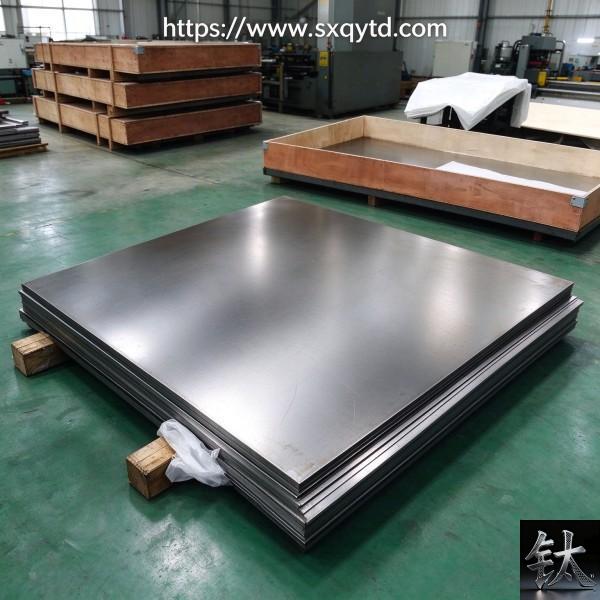
Titanium vs 316L, 2205 and 254SMO: The Upgrade Ladder Buyers Skip
| Specification | Material upgrade / grade selection |
|---|---|
| Applicable Standard | 316L / 904L / 2205 / 2507 / 254SMO / Gr2 Ti |
| Material Condition | PREN / CPT / CCT / ASTM G48 / G150 |
| Inspection & Packaging | ASTM B265 / B338 / A240 / A182 / ASME II-D |
Product Description: 316L failed, so buy titanium? There are three grades in between. PREN, CPT/CCT, chloride SCC, corrosion allowance and the PO lines that stop over-specifying.
Product Overview
Titanium vs 316L, 2205 and 254SMO: The Upgrade Ladder Buyers Skip
A 316L tube bundle that has pitted through in warm seawater does not create a two-option decision. Between 316L and commercially pure titanium there are at least three commercially available steps — 904L, duplex 2205, and either super duplex 2507 or a 6Mo austenitic such as 254SMO — and in a large share of real enquiries one of those steps solves the problem for less money and with an easier fabrication route. Published PREN values put 316L around 24 to 25, 2205 around 34 to 35, and 2507 and 254SMO in the low 40s; those numbers rank resistance to chloride pitting, they do not describe what actually broke. What usually failed is a shielded crevice under a deposit, a stagnant dead leg, a chloride-bearing stream above roughly 60 °C under tensile stress, or a weld whose heat-affected zone lost local corrosion resistance. This guide sets out the upgrade ladder, why PREN cannot rank titanium, the difference between critical pitting temperature and critical crevice temperature, the failure modes that decide the step, the cost model that is not per kilogram, the eight services where titanium is the wrong upgrade, and a purchase-order template. It is deliberately not an equipment-level comparison. For equipment life, purchase price and weight on a complete agitator, use our titanium agitator versus stainless steel agitator comparison; that article answers whether to buy a titanium machine. This one answers which alloy rung to stand on, and how to specify it without an argument later. For titanium grades once the ladder has been climbed, the heat exchanger material selection guide by service condition covers the internal Gr2 / Gr7 / Gr5 choice.
At a Glance: The Upgrade Ladder and Where It Stops
| Item | What the buyer must know |
|---|---|
| The short answer | Titanium Grade 2 is effectively immune to chloride pitting, crevice attack and chloride stress corrosion cracking in most natural waters. But 316L failing does not automatically make titanium the next step: 904L, duplex 2205, super duplex 2507 and 6Mo grades sit in between |
| What usually killed the 316L | A shielded crevice under a deposit, a stagnant dead leg, a hot chloride under tensile stress, or a weld that lost its local corrosion resistance. Often the design, not the alloy, is the fault |
| The ranking tool | PREN = %Cr + 3.3 x %Mo + 16 x %N ranks stainless and Ni-Cr-Mo alloys against chloride pitting. It has no meaning for titanium, which has no Cr-Mo-N pitting formula |
| Where published numbers disagree | PREN values for the same grade vary with the nitrogen multiplier used; critical pitting and crevice temperatures vary with the ASTM G48 method letter, surface finish, weld state and test laboratory. Ask for method, edition and specimen condition, not a bare pass |
| Two temperatures that decide | Critical pitting temperature (CPT) on an open surface and critical crevice temperature (CCT) under a shielded crevice. CCT is always lower than CPT, which is why a tube that passes a clean immersion test fails under a gasket |
| Failure mode is the real criterion | Austenitic 316L cracks by chloride stress corrosion cracking at roughly 60 °C and above in many published accounts. Duplex grades resist that crack but carry a temperature ceiling near 300 °C. Titanium avoids chloride SCC yet has its own hydrogen and dry-chlorine limits |
| Cost is not per kilogram | Titanium is about 4.51 g/cm³ against roughly 7.8 to 8.0 g/cm³ for stainless. A titanium design often carries no corrosion allowance, so compare mass per square metre of wetted surface and the installed cost, not the per-kilo quote |
| Code temperature ceiling | Grade 2 titanium is commonly quoted around 315 °C for pressure-vessel use, duplex 2205 around 300 °C because of sigma phase, and austenitic stainless far higher. Confirm against the current ASME II-D allowable stress tables |
| When titanium is the wrong upgrade | Hot concentrated caustic, fluorides and HF, dry chlorine, anhydrous methanol, red fuming nitric acid, hot reducing acids beyond the grade limit, abrasive slurries, galling threads and high air-side temperature |
| The PO line that causes trouble | “316L or equivalent or better”. There is no equivalent across two different passive-film systems. Name the grade, UNS number, product standard edition, the CPT/CCT method and the acceptance temperature |
| Cheapest verification | Ask every bidder for the same corrosion data sheet: same test method, same edition, same specimen condition, same units. A grade comparison built on mixed test methods is not a comparison |
Read rows two, five and ten first. The most expensive mistakes we see are not a buyer choosing 316L for hot seawater; they are a buyer choosing titanium for a problem that a change of gasket geometry would have solved, a buyer comparing a titanium quote against a 316L quote per kilogram rather than per square metre of wetted surface, and a buyer writing “or equivalent” into a specification for two alloys with completely different failure modes. Every numerical range in this table is orientational. The nitrogen multiplier used in PREN, the ASTM G48 method letter, the specimen surface finish and whether the sample is welded all move the reported result. Treat these as a shortlist tool. The governing values are the ones in the current edition of the product standard named on your own purchase order, confirmed by a report issued under a method you have specified.
The “316L Failed, So Buy Titanium” Trap
The reasoning sounds sound: stainless steel corroded, so specify the material that does not corrode. The problem is that the word “corroded” is doing far too much work. A 316L component can fail by chloride pitting on an open surface, by crevice corrosion inside a gasketed joint or under a deposit, by chloride stress corrosion cracking under sustained tensile stress, by erosion-corrosion at a high-velocity inlet, by sensitisation after a bad weld, or by microbial and under-deposit attack. Each of those has a different cheapest fix. A crevice under a badly chosen gasket will keep consuming material even after an alloy upgrade if the geometry is unchanged; a dead leg that sits stagnant for weeks will concentrate chlorides at the metal surface far above the bulk analysis; and a tube that failed because the design temperature was quoted as bulk fluid rather than wall temperature will fail again at a higher grade. Titanium is a superb answer to several of those mechanisms and an irrelevant answer to others.
There is a second, quieter cost. Titanium is not forgiving to fabricate or to repair on site. Welding requires trailing and backing argon coverage as well as the torch shield; the procedure and welder qualification chain has to exist before production; heat tint has to be removed and assessed; and a field repair inside an operating plant is materially harder than the same repair on 316L. Our GTAW shielding guide for titanium wire sets out the three-zone protection requirement, and our WPS, PQR and NDT qualification guide explains why the paperwork must be in place before the first production weld. If the plant cannot support that fabrication discipline, an intermediate stainless grade with a well-understood local welding route can be the better engineering decision even where titanium is technically superior.
A useful way to frame the enquiry is to ask what evidence would change the decision. If the answer is a chloride profile, a maximum wall temperature, a deposit survey and a weld map, then the fix may be design plus one ladder step. If the answer is that none of those change anything because the stream is hot concentrated caustic, contains fluorides, or alternates between oxidising and reducing conditions, then the conversation has left the stainless ladder altogether and belongs with nickel products or with the acid limits in our titanium in HCl grade-limit guide.
The Upgrade Ladder: Six Rungs, Not Two
The table below is a decision frame, not a corrosion data sheet. It is ordered by what each step actually changes: cost, then molybdenum, then microstructure, then nitrogen and molybdenum together, then a completely different passive film, then a completely different alloy family. Composition figures quoted for 254SMO in published data sheets are typically around 19.5 to 20.5 percent chromium, 17.5 to 18.5 percent nickel, 6.0 to 6.5 percent molybdenum, 0.18 to 0.22 percent nitrogen and 0.5 to 1.0 percent copper; confirm them against the current edition of ASTM A240 or A182 rather than a supplier brochure. Grade designations also matter on the PO: 2205 exists as both S31803 and the higher-nitrogen S32205, and a specification that just says “duplex” leaves the purchaser with whichever variant is cheapest that week.
| Rung | Typical designation | What it buys you | Where it stops |
|---|---|---|---|
| 1 | 316L / UNS S31603 | Lowest cost, easiest fabrication, broadest stock and filler availability | Warm chlorides, shielded crevices, chloride SCC under tensile stress |
| 2 | 904L / UNS N08904; 317L | More molybdenum and copper; better in reducing acids and moderate chlorides | Still austenitic, still vulnerable to warm-seawater crevices and chloride SCC |
| 3 | Duplex 2205 / UNS S32205 | Roughly twice the yield strength of 316L, strong resistance to chloride SCC, thin walls | Ceiling near 300 °C from sigma and 475 °C embrittlement; heat input and interpass control are mandatory |
| 4 | Super duplex 2507 / UNS S32750; 6Mo 254SMO / UNS S31254 | PREN in the low 40s; genuine hot-seawater and brine capability | Specialist filler, solution anneal and quench, tight welding windows, higher alloy cost and longer lead time |
| 5 | Titanium Gr2 / UNS R50400, Gr7, Gr12 | Near-immunity to chloride pitting, crevice attack and chloride SCC in natural waters; no corrosion allowance in many designs | Fluorides, dry chlorine, anhydrous methanol, red fuming nitric acid, hot reducing acids, hot caustic, air-side temperature about 315 °C |
| 6 | Ni-Cr-Mo alloys (C276 / C22), nickel 200 / 201, zirconium 702 | Mixed acids, hot concentrated caustic, reducing acids beyond the titanium window | Highest cost; grade-specific limits still apply; availability and fabrication routes differ |
Two patterns show up repeatedly in enquiries. The first is the buyer at rung one who should be at rung three: a brackish or moderate chloride duty, a pressure or weight constraint, and a 316L history of chloride SCC. Duplex 2205 doubles the available yield strength, so wall thickness falls, supports shrink and the installed cost can be close to the 316L option even when the per-kilogram price is similar. The second is the buyer at rung four who should be at rung five: continuous warm seawater, chlorinated cooling water, hypochlorite dosing, or a stream that swings between oxidising and reducing conditions. Here the intermediate stainless grades are being pushed to their crevice limits and titanium Grade 2 becomes the economical default, with palladium-bearing Grade 7 reserved for hot stagnant crevices as explained in our Gr2 versus Gr7 seawater comparison.
The reverse movements matter just as much. A large low-pressure static tank with a mild chloride stream is a poor candidate for solid Titanium Plate: the tonnage is high and the corrosion benefit over a lined or clad construction is small. Our titanium clad plate alternative page gives an honest comparison of solid plate against a bonded corrosion layer, and our titanium reactor guide shows where a clad or loose-lined shell is the standard build. When the ladder reaches rung six, the C276 versus C22 comparison covers the oxidising-versus-reducing split inside the Ni-Cr-Mo family.
Why PREN Cannot Rank Titanium
The Pitting Resistance Equivalent Number is a composition index. The most commonly published form is PREN = %Cr + 3.3 x %Mo + 16 x %N, with an extended form adding half the tungsten contribution for tungsten-bearing super duplex and nickel grades. It correlates, loosely, with resistance to chloride pitting in iron- and nickel-based alloys that rely on a chromium oxide film. Titanium has no chromium, no molybdenum and no deliberate nitrogen addition in Grade 2, and it protects itself with a titanium dioxide film whose stability depends on the availability of oxygen or water rather than on a Cr-Mo-N balance. Running the formula on Grade 2 returns roughly zero, which is not a corrosion rating of any kind. Comparing “PREN 25” with “zero” and concluding that 316L is better is a category error, not a conservative engineering choice.
Even inside the stainless family, published PREN values for the same grade disagree. Nitrogen multipliers of 16, 20 and 30 appear in different references; tungsten-bearing grades use a different formula again; heat-to-heat composition variation moves the number; and the index says nothing about sigma phase, weld dilution, nitrogen loss in the heat-affected zone, surface finish or flow velocity. Two alloys with the same PREN can have different measured critical pitting temperatures. We therefore do not publish a single authoritative PREN table here. If a vendor quotes one, ask which formula, which nitrogen multiplier, which composition source and whether the value is a minimum or a nominal. Then treat PREN as a shortlisting filter only, and require the actual test data before a grade is written into a specification.
The practical conflict appears on real purchase orders. A specification written for a stainless upgrade may demand “PREN not less than 40” and then be reused verbatim for a titanium line item. The titanium supplier cannot comply with a clause that has no meaning for the alloy, the buyer cannot assess the nonconformance, and the enquiry stalls over a number that was never a design input. The clean fix is to split the specification by alloy system: PREN and ferrite range for duplex, solution-annealed condition and G48 results for super austenitics, and for titanium the grade, UNS number, product standard, oxygen and iron limits, and the certificate chain in our ASTM B265 plate procurement guide. For a document-level check on what a mill certificate actually asserts, the equipment arrival acceptance checklist lists the receiving-side evidence.
Do not write this: “Material: 316L or equivalent or better, PREN minimum 40.”
Write this instead: “Wetted parts: ASTM B265 Grade 2 titanium, UNS R50400, hot-rolled pickled, EN 10204 3.1 certificate per heat. No PREN requirement applies to this item; grade conformance is by OES chemistry and tensile test.” Keep the PREN clause on the stainless line items where it belongs.
CPT and CCT: The Two Temperatures That Actually Decide
A corrosion table that says an alloy is “suitable for seawater” is a statement about a test, not about a plant. The two numbers with real design value are the critical pitting temperature, measured on an open surface, and the critical crevice temperature, measured with an artificial crevice pressed against the sample. CCT is always lower than CPT because a shielded zone develops its own aggressive chemistry: oxygen is depleted, metal ions hydrolyse, pH falls and chlorides migrate in to hold charge balance. That is precisely the chemistry under a gasket, a tube-to-tubesheet expansion, a support baffle or a six-month-old deposit. A buyer who selects a grade on CPT and then installs it into a creviced geometry has designed in the failure.
| Item | What it means | What to demand |
|---|---|---|
| CPT | Lowest temperature at which stable pitting initiates on a freely exposed surface in a defined test solution | Method letter and edition, solution concentration, exposure time, surface finish, pass or fail temperature steps |
| CCT | Lowest temperature at which attack initiates under an artificial crevice; always lower than CPT for the same alloy | Crevice device type and torque, gasket material, number of crevice sites, and the same solution details |
| ASTM G48 | Ferric chloride immersion family; methods cover pitting and crevice screening and incremental-temperature determination | Name the method letter explicitly. Different references map the method letters to CPT and CCT differently |
| ASTM G150 / ASTM G36 | Electrochemical CPT determination, and boiling magnesium chloride SCC screening respectively | State which result is being quoted. An SCC screening result is not a pitting temperature |
| Specimen condition | As-rolled, ground, pickled, welded, or heat-treated specimens give different thresholds | Require welded and HAZ specimens when the delivered item will be welded; a mill-annealed coupon is not the delivered part |
Here is a genuine conflict we will not paper over. Reference sources disagree about which ASTM G48 method letter corresponds to CPT and which to CCT: some describe Method A or C as the pitting determination and Method D as the crevice determination, others map the incremental-temperature methods differently, and vendors frequently quote a bare “G48 pass” with no letter at all. Published CPT values for the same grade also spread widely — 316L is quoted in the mid-teens to low twenties Celsius in ferric chloride, 2205 and 904L around the low thirties, and 6Mo and super duplex anywhere from the seventies to the mid-eighties depending on the source and method. We are not going to print one of those as the number. The executable action is to name the method letter and edition, the solution concentration, the exposure time, the surface finish, whether the specimen is welded, and the acceptance temperature on the purchase order — then require every bidder to report against that identical basis. A comparison built on mixed methods is not a comparison.
Two further cautions. First, the ferric chloride test is an aggressive ranking medium, not a simulation of your process stream; a pass at a given temperature is not a service guarantee, and a field coupon or side-stream trial is worth more than another datasheet line when the duty is marginal. Second, titanium does not need a CPT number in the same sense: in aerated natural seawater and wet chlorine, the TiO2 film is stable to temperatures well beyond the range where stainless grades are being ranked, and the titanium design question moves to crevices above roughly 70 to 93 °C — a range where our own pages and published sources give different thresholds because the test geometry and grade differ. Where hot stagnant crevices cannot be designed out, the Gr7 versus Gr12 comparison explains the palladium and Mo-Ni options.
Failure Mode, Not Corrosion Rate, Decides the Upgrade
Uniform corrosion rates are the least useful number in this decision because none of these alloys normally fails by uniform thinning in a chloride duty. Austenitic 304 and 316L fail by chloride stress corrosion cracking when tensile stress, chlorides and temperature coincide; published guidance commonly places the onset around 60 °C in neutral chlorides, but lower thresholds are reported for acidic chlorides, high dissolved oxygen, evaporative concentration under deposits and high residual weld stress. The failure looks like a brittle crack with no wall loss at all, which is why a thickness survey can declare a bundle healthy one month before it leaks. ASTM G36 boiling magnesium chloride is a screening test for this mechanism, not a design limit, and it should never be quoted as though it were a CPT.
Duplex grades change the mechanism rather than just shifting a number. Their mixed ferrite-austenite structure interrupts crack propagation, and their higher yield strength reduces the wall thickness needed for pressure. The trade is a new set of constraints: sigma, chi and secondary austenite can form in the weld thermal cycle within seconds in the 700 to 950 °C range, chromium nitrides can precipitate on fast cooling, and long-term service near or above about 300 °C is restricted. Published fabrication guidance commonly limits heat input to roughly 0.5 to 2.5 kJ/mm and interpass temperature to about 100 to 150 °C, with matched filler such as ER2209. Those are orientation figures from welding literature; the binding values are the ones in the qualified WPS for the actual thickness. A duplex tube welded with the wrong heat input can lose the local corrosion resistance that the grade was bought for.
Titanium removes chloride SCC from the conversation almost entirely, which is why it is the default for hot seawater and wet chlorine. It does not remove every mechanism. Hydrogen uptake can produce hydride embrittlement; free-iron contamination and a badly controlled nitric-HF pickle can initiate local attack; and cathodic protection set too negative can charge the titanium surface. Those are covered in our pickling and iron contamination guide and our titanium-to-steel galvanic corrosion guide, the latter dealing with the electrical design of mixed-metal joints. The honest summary is that every rung solves one class of failure and introduces another, so the upgrade decision should be made on the mechanism observed in the failed part, not on a price list or a single corrosion-rate figure.
This is also where a failure investigation earns its cost. Ask for a section through the initiation site: branched transgranular cracking points to chloride SCC; a shallow pit under a deposit or gasket points to crevice corrosion; smooth directional grooving at the inlet end points to erosion-corrosion; and intergranular attack near a weld points to sensitisation or a degraded heat-affected zone. Each result sends you to a different rung, or to a design change that costs nothing in alloy. Our process equipment buyer specification guide includes the service-data fields that make this diagnosis possible before a purchase order is issued.
The Per-Kilogram Trap: Cost, Density and Corrosion Allowance
Titanium is quoted per kilogram and stainless is quoted per kilogram, so the comparison looks obvious and is usually wrong. At about 4.51 g/cm³ against roughly 7.8 to 8.0 g/cm³, a Titanium Plate of the same area and thickness weighs a little over half as much. Then the design thickness changes too: stainless designs in chloride service commonly carry a corrosion allowance of 1 to 3 mm, while titanium designs frequently carry none because the passive film is not consumed. A like-for-like comparison is therefore mass per square metre of wetted surface at the design wall, multiplied by a price that already includes cutting, forming, welding and inspection, not the raw coil price. The agitator comparison already gives the equipment-level life-cycle arithmetic; this section is about not letting the first number in the quote decide the last.
| Factor | Titanium Gr2 | 316L / 2205 / 254SMO | Why it changes the quote |
|---|---|---|---|
| Density | About 4.51 g/cm³ | Roughly 7.8 to 8.0 g/cm³ | A kilograms quote flatters steel. Compare mass per square metre of wetted area |
| Corrosion allowance | Often taken as zero in chloride service | Commonly 1 to 3 mm added by the designer | Removing the allowance reduces thickness, weight, tube-sheet drilling and weld volume |
| Elastic modulus | Roughly 105 to 110 GPa | Roughly 193 to 200 GPa | Titanium needs different support spacing, more springback allowance in forming, and careful flange stiffness checks |
| Thermal conductivity | Published values roughly 17 to 22 W/m.K | Typically around 14 to 16 W/m.K for austenitics | The gap is smaller than buyers expect; thin titanium tube walls often offset it |
| Fabrication and repair | Three-zone argon shielding, qualified WPS, heat-tint removal, PMI | Conventional shop and field welding routes | A site that cannot support titanium welding pays for the alloy and still carries the risk |
| Code temperature ceiling | Commonly quoted near 315 °C | Austenitics far higher; duplex near 300 °C | High air-side or process temperature can exclude titanium regardless of corrosion behaviour |
The mechanical differences are not footnotes. Titanium has roughly half the elastic modulus of steel, so support spacing, baffle design, flange stiffness and springback in formed heads all need their own check. Thermal conductivity figures for Grade 2 are published across roughly 17 to 22 W/m.K depending on the source and condition, which is close enough to austenitic stainless that a thin-wall titanium tube can match or beat a thick-wall steel tube in overall heat transfer. Above about 315 °C on the air side, however, titanium begins to oxidise and pick up oxygen, and code allowable stresses fall away; that ceiling is far below what 316L tolerates. Confirm the applicable figure against the current ASME BPVC Section II-D tables and the product standard on your order, rather than against a marketing page.
The last line of the table is often the decisive one. A titanium fabrication route needs qualified procedures, three-zone shielding, controlled interpass temperature, heat-tint removal, and positive material identification of the delivered heats. Our WPS and NDT qualification guide explains the employer-signed WPS and PQR chain, and the GTAW shielding guide explains the oxygen and moisture limits for the shield gas. If the fabricator cannot produce those records, the correct decision may be an intermediate stainless grade from a shop with a proven route, or a clad construction in which the titanium layer is not structurally welded in the field. For tube-side specifications, the ASTM B338 tube guide sets out the ordering fields that keep the wall thickness and test regime unambiguous.
When Titanium Is the Wrong Upgrade
A supplier who sells titanium has a duty to say where it loses. Four of the following cases send the enquiry sideways to nickel or to a non-metal; three send it back down the ladder to a cheaper stainless or a different design. None of them is solved by buying a higher titanium grade.
Hot concentrated caustic and alkaline evaporators
Hot concentrated sodium hydroxide is nickel territory. Our Ni200 versus Ni201 caustic guide covers the carbon ceiling and the graphitisation risk above roughly 315 °C, and the nickel product range lists the stocked forms. Specifying titanium on a caustic evaporator is a well-known chlor-alkali plant error; the same plant may be an excellent titanium application on its wet-chlorine side. One vessel, two sides, two different material answers.
Fluorides, HF and cleaning chemicals
Fluoride ions dissolve the TiO2 film at concentrations measured in parts per million. A plant that doses a fluoride-containing inhibitor, uses an HF-bearing etchant, or cleans with a product that leaves fluoride residue has excluded every titanium grade regardless of palladium content. Our HCl grade-limit guide lists this among its hard exclusions, and the acid pickling guide explains why the nitric-to-HF ratio and the rinse sequence are acceptance items rather than shop-floor details. In those services a super duplex grade, a nickel alloy or a non-metallic lining is a more honest route.
Dry chlorine, anhydrous methanol and red fuming nitric acid
These three share a hidden qualifier: water content. Titanium is outstanding in wet chlorine because moisture maintains the passive film, and dry chlorine is a hard exclusion with published reports of rapid attack and ignition. Anhydrous methanol and certain methanol solutions are associated with stress corrosion cracking, while a small controlled water addition can suppress it. Red fuming nitric acid is the exception to the rule that oxidising media are good for titanium; published investigations tie the pyrophoric risk to very low water and high nitrogen dioxide content. The numbers quoted for each threshold differ between sources, so we will not print one as a design limit: the action is to require a water-content analysis at the worst-case point in the process, a written startup and shutdown sequence, and a corrosion coupon or side-stream trial before the material is fixed. Full detail is in the HCl grade-limit guide.
High air-side temperature, abrasive slurries and galling threads
Titanium is soft, has a low modulus and a strong tendency to gall against itself. Pump wear rings, valve seats, threaded fasteners under repeated assembly, and slurries carrying hard particles are poor titanium applications even when the chemistry is ideal. For fastener torque, anti-seize practice and thread seizure, the relevant ordering details live in the product-side documentation rather than in a corrosion table. Above roughly 315 °C the air-side oxidation and code stress ceiling exclude titanium from duties where a high-nickel or stainless grade runs comfortably; and duplex 2205 has its own sigma-phase ceiling near 300 °C. Where the duty is a large low-pressure tank rather than a heat-transfer surface, a clad or loose-lined construction usually beats solid plate on cost without any loss of corrosion life.
There is one more case worth naming: the enquiry where the medium has not been fully described. An oxidising stream with a trace of fluoride, a reducing acid with ferric or cupric ions that shift the potential, a cleaning-in-place cycle hotter than the production cycle, or a startup before the moisture seal is established will each defeat a grade chosen from the normal operating line alone. That is why the PO template in the next section asks for the upset, startup, shutdown and cleaning conditions as separate fields.
The Purchase-Order Template: Twelve Lines That Stop “Or Equivalent”
The single most damaging phrase in this category is “316L or equivalent or better”. Equivalence implies a shared failure model. Titanium and 316L do not share one: one cracks by chloride SCC, the other forms hydrides; one is ranked by PREN, the other has no PREN; one tolerates 800 °C air, the other has a code ceiling near 315 °C. There is no ordering of “better” that is valid across both. The template below separates the alloy systems, names the test basis, and makes the acceptance point explicit. Copy it into the material requisition and delete the lines that do not apply to the item.
Material requisition fields for a chloride-duty upgrade
1. Grade and UNS
: e.g. ASTM B265 Gr2 / UNS R50400, or UNS S32205, or UNS S31254. Never “or equivalent”.
2. Product form and standard edition
: B265 plate, B338 tube, B348 bar, A240 plate, A790 pipe; state the year of edition.
3. Service medium
: full composition including chlorides, fluorides, oxidants, pH and dissolved oxygen.
4. Temperatures
: normal, maximum, startup, shutdown, cleaning-in-place, and wall temperature on heat-transfer surfaces.
5. Geometry
: gasketed joints, expansions, threads, deposits, dead legs, stagnant intervals, flow velocity.
6. For stainless only
: minimum PREN with the formula and nitrogen multiplier named; ferrite range for duplex.
7. For stainless only
: CPT and CCT by ASTM G48 with method letter, edition, solution, exposure time and acceptance temperature; or ASTM G150 with the same detail.
8. For titanium only
: grade, oxygen and iron limits, hydrogen value, surface condition, and prohibition of unapproved pickling or fluoride-bearing cleaners.
9. Welding
: WPS and PQR reference, filler designation, heat input and interpass limits, and whether welded coupons are required for corrosion testing.
10. Corrosion allowance and design wall
: state the number in millimetres, or state explicitly that it is zero and why.
11. Documentation
: EN 10204 3.1 per heat, OES chemistry, tensile results, corrosion test report, PMI, NDT where applicable.
12. Acceptance hold point
: who witnesses the corrosion test, where the sample is taken, and when the result is due.
Two of those lines do most of the work. Line 7 prevents the mixed-method comparison: every bidder reports the same method letter, edition and specimen condition, so a CPT number from a polished mill coupon cannot be placed next to a CCT number from a welded crevice assembly and called a ranking. Line 10 prevents the per-kilogram comparison: once the design wall is written down with its corrosion allowance, the mass and the installed cost can be computed on the same basis for every option. For the receiving side, the arrival acceptance checklist shows how to match heat numbers and reports to the delivered parts, and the B265 plate guide explains why minimum rather than nominal thickness belongs on the drawing.
A final practical note on availability. Super duplex and 6Mo plate and tube are mill-scheduled products in many markets, while Grade 2 Titanium Plate and tube are the stocked items in our Baoji inventory. There are projects where the technically ideal rung four alloy is unavailable inside the shutdown window and a stocked Grade 2 tube bundle with a qualified fabricator is the only option that returns the plant to production on time. Lead time is a material property in practice, even if it never appears in a corrosion table. Put the required date on the requisition with the medium, not after the grade has been chosen.
Limitations and Failure Conditions: Eight Services Where the Ladder Breaks
This is the section to read before the grade is chosen. Each condition below either sends the enquiry sideways to another alloy family, back down the ladder to a cheaper design fix, or into a verification programme rather than a purchase order. Several of them are places where titanium itself loses, and we would rather say so here than in a failure investigation.
Warm aerated seawater with deposits and tight gasket crevices
The classic 316L failure and the classic misdiagnosis. Pitting begins inside the shielded zone where oxygen is depleted and chlorides concentrate, not on the free surface, so CCT rather than CPT governs. Deposits, biofouling, support baffles, gasketed joints and merely expanded tube-to-tubesheet joints all create that zone. An alloy upgrade without a geometry change can move the threshold by a rung and still leave a crevice that fails at the design temperature. Fix drainability, eliminate dead legs and review the gasket and expansion detail before spending on grade; if the duty is hot and stagnant, titanium Grade 2 with Grade 7 at the crevice-prone locations is the durable answer.
Hot neutral chloride water above roughly 60 °C under sustained tensile stress
Chloride stress corrosion cracking produces branched transgranular cracks with essentially no wall loss, so ultrasonic thickness surveys can report a healthy component until the day it leaks. Austenitic 304 and 316L are the vulnerable family; published onset figures near 60 °C in neutral chlorides fall lower under acidic chlorides, high dissolved oxygen, evaporative concentration and residual weld stress. Duplex 2205 and 2507 interrupt crack propagation and are the usual economical step. Titanium is effectively immune to chloride SCC in these waters, but it brings hydrogen and fabrication constraints instead. Always ask whether the failed part was under residual welding stress or an externally loaded bend before choosing the next rung.
Hot concentrated caustic and alkaline evaporator duties
Hot concentrated sodium hydroxide is not a titanium service and buying a higher titanium grade does not change that. The material answer is nickel 200 or low-carbon nickel 201 with the carbon ceiling and the graphitisation boundary respected, or a suitable steel with the proper post-weld treatment. Chlor-alkali plants are the common setting for this error because the same site also runs wet-chlorine and brine streams where titanium is the standard choice. Split the plant by stream and temperature rather than issuing one site-wide material specification.
Fluoride-bearing acids, cleaning chemicals and HF pickling residues
Fluoride ions attack the titanium dioxide film directly, at concentrations far below those that would trouble a stainless grade. The exposure is often accidental: a fluoride-bearing inhibitor, an etchant carried over from another unit, a cleaning-in-place chemical, or a nitric-HF pickle that was not rinsed and neutralised. Every titanium grade is excluded, including palladium-bearing Grade 7. Review the full chemical inventory including cleaning and startup chemicals, and put a prohibition on unapproved fluoride-bearing products into both the PO and the maintenance procedure.
Dry chlorine, anhydrous methanol and red fuming nitric acid
These three services share a moisture qualifier that disappears from short corrosion tables. Wet chlorine is a titanium stronghold because water sustains the passive film; dry chlorine is a hard exclusion with published reports of rapid attack and ignition. Certain methanol solutions are associated with stress corrosion cracking while a controlled water addition suppresses it, and red fuming nitric acid can form a pyrophoric reaction product even though ordinary nitric acid suits titanium well. Published water and nitrogen dioxide thresholds differ between investigations, so require a worst-case water analysis, a written startup and shutdown sequence, and a coupon or side-stream trial rather than a single number.
Reducing acids beyond the concentration and temperature limit of the grade
In a reducing acid, titanium is conditional rather than immune. At ambient temperature published iso-corrosion curves place the useful limit of Grade 2 near 7 percent HCl and Grade 7 near 27 percent, with the window collapsing as temperature rises; a trace of oxidising ion can widen it and a deaerated stream can close it. Neither 316L nor a duplex grade is a general answer here either. Where the acid is hot or the concentration swings, the honest options are a palladium or Mo-Ni titanium grade within its verified window, zirconium 702, a Ni-Cr-Mo alloy or a non-metallic lining. Send the full impurity spectrum with the enquiry, since oxidising impurities change which family wins.
Metal temperature near or above the code ceiling on the air side
Corrosion resistance is not the same as high-temperature capability. Grade 2 titanium is commonly quoted near 315 °C as a pressure-vessel ceiling, above which air-side oxidation, oxygen pickup and falling allowable stresses end the discussion; duplex 2205 has its own restriction near 300 °C from sigma phase and 475 °C embrittlement; austenitic stainless and nickel alloys run far hotter. On heat-transfer surfaces the governing number is wall temperature, not bulk fluid temperature, and startup or steam-out can exceed both. Confirm against the current ASME BPVC Section II-D allowable stress tables and the project design code before the grade is fixed.
Abrasive slurries, high-velocity impingement and galling threaded joints
Titanium is relatively soft, has a low modulus and galls readily against itself. Pump wear rings, valve seats, repeated-assembly threaded fasteners, inlet ends exposed to high-velocity impingement and slurries carrying hard particles are poor titanium applications even when the chemistry is ideal. Hard-faced stainless, a duplex grade or a replaceable non-metallic wear part is usually the right answer at that location. Where Titanium Fasteners are used, specify the lubricant, the torque procedure and the anti-seize practice, and keep the galvanic and insulating design in view when the joint also contains steel.
Summary: Choose an Intermediate Grade if, Choose Titanium if, Choose Another Family if
Choose 316L, 904L, 2205 or 2507 / 254SMO if:
- The failure was chloride SCC under tensile stress, or pitting at a temperature below the measured CCT of the next rung.
- The fabrication shop has a qualified route for duplex or 6Mo welding but cannot support three-zone argon shielding and heat-tint control for titanium.
- Pressure or weight favours the higher yield strength of duplex, or the required plate and tube sizes are only available from a stainless mill schedule.
- The design temperature on the air side approaches or exceeds the titanium code ceiling.
- A design change to the crevice geometry, drainage or cleaning cycle removes the failure mechanism without any alloy change.
Choose titanium Grade 2, Grade 7 or Grade 12 if:
- The duty is continuous warm seawater, wet chlorine, hypochlorite, chlorinated cooling water or oxidising brine.
- The stream swings between oxidising and reducing conditions, or hot stagnant crevices cannot be designed out.
- Zero corrosion allowance, thin walls, long inspection intervals and elimination of cathodic protection are worth more than the initial material premium.
- The medium is free of fluorides, dry chlorine, anhydrous methanol and red fuming nitric acid, and the metal temperature stays inside the code ceiling.
- The fabricator can produce a qualified WPS, shielding records, PMI and a certificate chain before production starts.
Choose nickel, zirconium or a non-metallic lining if:
- The duty is hot concentrated caustic, a fluoride-bearing stream, or a hot reducing acid beyond the verified titanium window.
- Mixed acids with halides or an aggressive cleaning-in-place cycle dominate the corrosion balance.
- The vessel is large, low-pressure and static, so a clad or loose-lined construction delivers the same corrosion face at lower tonnage.
- The medium has not been fully characterised and a coupon or side-stream trial is needed before any material is fixed.
The whole decision reduces to one sentence: upgrade against the failure mechanism you actually observed, at the wall temperature you actually run, on a test basis every bidder shares. When you send an enquiry, the six most useful inputs are the full medium analysis including cleaning chemicals, the maximum wall temperature across startup and shutdown, the crevice and flow geometry, the failure appearance in the part being replaced, the fabrication and repair capability of the shop, and the required delivery date. Those six lines decide the rung before any price is discussed and remove most of the round trips that delay shutdown orders. We hold roughly 800 tonnes of titanium stock in Baoji (China Titanium Valley), including about 400 tonnes of plate, cut to non-standard sizes, work from customer drawings, certify to ASTM / ASME / GB, export-pack, and dispatch confirmed in-stock orders the same day. Send us the medium and the failure photograph with the size list and we will tell you honestly whether the next rung is ours or somebody else’s. Request a quote →
Frequently Asked Questions
Is titanium always a better choice than 316L in seawater?
For continuous immersion in warm, aerated or chlorinated seawater, yes in corrosion terms: Grade 2 titanium is effectively immune to the pitting, crevice attack and chloride stress corrosion cracking that limit 316L. In cold clean seawater with good flow, no deposits and a short planned life, 316L or a duplex grade can still be the economical choice. Check the crevice geometry and the wall temperature first. An alloy upgrade does not fix a stagnant dead leg or a deposit that concentrates chlorides at the metal surface.
Can I compare titanium and 254SMO using PREN?
No. PREN = %Cr + 3.3 x %Mo + 16 x %N is a composition index for alloys that rely on a chromium oxide passive film. Grade 2 titanium has no chromium or deliberate molybdenum or nitrogen addition and protects itself with titanium dioxide, so the formula has no meaning for it and returns a misleading near-zero value. Use PREN to shortlist stainless and Ni-Cr-Mo grades, then require critical pitting and crevice temperature data under one named method for the real comparison. Keep the PREN clause off the titanium line items of the purchase order.
What is the difference between CPT and CCT, and which ASTM G48 method should I ask for?
CPT is the lowest temperature at which stable pitting starts on a freely exposed surface; CCT is the lowest temperature at which attack starts under an artificial crevice and is always lower. Because gaskets, deposits and tube expansions create shielded zones, CCT usually governs the installed equipment. ASTM G48 is the ferric chloride family covering pitting and crevice screening and incremental-temperature determination, but published references map the method letters to CPT and CCT inconsistently. Name the method letter, edition, solution, exposure time, surface finish and welded or unwelded specimen condition on the PO, and never accept a bare G48 pass.
When is duplex 2205 or super duplex 2507 enough and titanium an overspend?
When the observed failure is chloride stress corrosion cracking of an austenitic grade, when pressure or weight rewards roughly double the yield strength, when the metal temperature stays inside the duplex ceiling near 300 C, and when the shop has a qualified duplex welding route with controlled heat input and interpass temperature. In those cases the installed cost can be close to the 316L option. Titanium earns its premium in continuous warm seawater, wet chlorine, hypochlorite and duties that swing between oxidising and reducing conditions, or where zero corrosion allowance and long inspection intervals dominate the economics.
Why does titanium have a much lower code temperature ceiling than stainless steel?
Because corrosion resistance and high-temperature capability are different properties. Grade 2 titanium is commonly quoted near 315 C for pressure-vessel service; above that range air-side oxidation, oxygen pickup and falling allowable stresses limit the design. Duplex 2205 has its own ceiling near 300 C from sigma phase and 475 C embrittlement, while austenitic stainless and nickel alloys tolerate much higher temperatures. On heat-transfer surfaces use wall temperature rather than bulk fluid temperature, and confirm the governing figure against the current ASME BPVC Section II-D allowable stress tables and the project code.
What should the purchase order say instead of 316L or equivalent?
Name the grade and UNS number, the product standard with its edition year, the full medium including cleaning chemicals, all temperature cases including startup and cleaning, the crevice and flow geometry, minimum PREN with the formula for stainless items only, CPT and CCT with the named test method and acceptance temperature for stainless items only, grade and chemistry limits for titanium items only, the welding WPS and filler, the corrosion allowance in millimetres or an explicit zero, the documentation set, and the acceptance hold point. Separating the alloy systems on the requisition is what prevents a meaningless PREN clause being applied to a titanium line item.
Does galvanic corrosion rule out mixing titanium tubes with a carbon steel or stainless shell?
It does not rule it out, but it adds a second independent check. Titanium is the noble member of the couple, so the steel is normally the consumed component, and severity is governed by the wetted area ratio and the electrolyte rather than by the potential difference alone. Insulating flange kits, coating strategy, cathodic protection limits and the risk of hydrogen charging at excessive negative potential all need their own review. Our titanium-to-steel galvanic corrosion guide covers that electrical design separately from the chemical grade selection discussed here.
Tell us your requirement — grade, size and quantity. We reply within 24 hours.
Prefer chat? WhatsApp +86 188 2967 9311 or email sales@sxqytd.com.


- What is Titanium Flange | ASME B16.5 ASTM B381 Gr2 Gr5 Titanium Flan
- ASME B16.5 Titanium Flange Grade2 DN100-DN600 Class150/300 FOB
- Gr2 Titanium Sheet Price FOB Shanghai | ASTM B265 In Stock
- Titanium Price Today (Oct 26, 2026): China Market Report
- Titanium Price Today (23 Oct 2026): Plate, Tube, Rod & Wire
Contact Person: Wang Xiaoning
Tel: +86-917-355-7966
Email: sales@sxqytd.com
WhatsApp: +86 188 2967 9311
Company: Shaanxi Qianyi Tuoda Technology Co., Ltd
Address: Floor 4, Building 4, No. 188 Gaoxin Avenue, High-tech Zone, Baoji City, Shaanxi Province, China