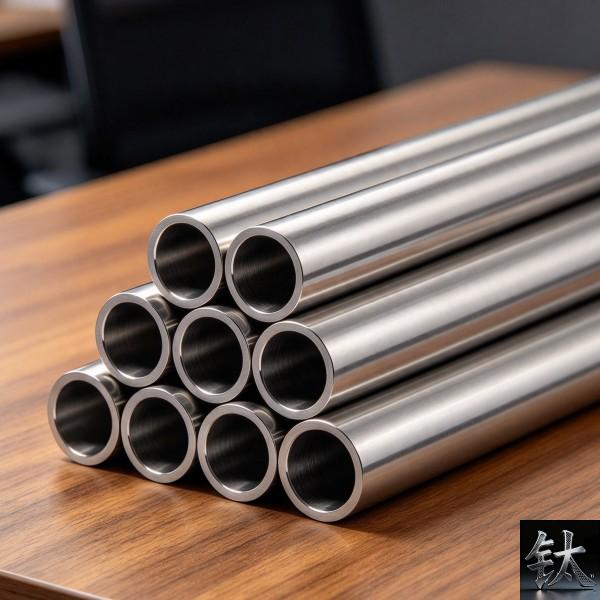
Hastelloy C276 vs C22: Which C-Grade to Specify for Your Chemical Process
| Specification | UNS N10276 / N06022 |
|---|---|
| Applicable Standard | Hastelloy C276 / C22 |
| Material Condition | Hastelloy grade selection |
| Inspection & Packaging | ASTM B575 / B574 / B622 |
| Reference Price | $50.00 – $100.00 |
Product Description: Hastelloy C276 vs C22: same Ni-Cr-Mo family, inverted Cr/Mo ratio. Reducing acids favor C276, oxidising media C22. Decision rules, 8 failure modes.
Product Overview
Hastelloy C276 vs C22: Which C-Grade to Specify for Your Chemical Process
Hastelloy C276 and C22 are the same Ni-Cr-Mo family with one ratio inverted: C276 carries 15-17% molybdenum against 14.5-16.5% chromium, while C22 carries 20-22.5% chromium against 12.5-14.5% molybdenum. That six-percentage-point chromium swing is the whole decision. If your process stream is reducing — hydrochloric acid, dilute sulphuric acid, wet-process phosphoric acid, sour gas — C276 is the economical and usually the better choice. If the stream contains oxidisers — wet chlorine, hypochlorite, ferric or cupric ions, nitric acid, or cleaning cycles that alternate between oxidising and reducing — specify C22, because C276 can fail at the weld in weeks. C22 costs roughly 5-15% more per kilogram and is often a mill order, so paying for it on a purely reducing line buys capability you will never use. This guide gives the chemistry, the eight ways buyers specify these alloys into failure, and a one-line rule you can hand to a design or purchasing team. For the single-grade view of C276, including its wet phosphoric acid and FGD case history, see our C276 selection guide; this article handles the choice between the two.
At a Glance: C276 vs C22 Specification Snapshot
| Spec | C276 (UNS N10276) | C22 (UNS N06022) |
|---|---|---|
| Design idea | Mo + W first, for reducing acids | Cr first, for oxidising media |
| Chromium | 14.5-16.5% | 20.0-22.5% |
| Molybdenum | 15.0-17.0% | 12.5-14.5% |
| Tungsten | 3.0-4.5% | 2.5-3.5% |
| Iron / carbon | Fe 4.0-7.0% / C ≤0.01% | Fe 2.0-6.0% / C ≤0.015% |
| Density | ~8.89 g/cm³ | ~8.69 g/cm³ |
| Tensile / yield (min) | ~690 / ~283 MPa | ~690 / ~310 MPa |
| PREN | Published figures range ~55 to ~74 for both; the formula gives near-equal values. Not a selection tool here. | |
| Matching filler | ERNiCrMo-4 | ERNiCrMo-10 |
| Main standards | ASTM B575 plate / B574 bar / B622 seamless pipe / B619 welded pipe / B564 forgings / B366 fittings | |
| Default duty | HCl, dilute H2SO4, wet-process H3PO4, sour gas | Wet chlorine, hypochlorite, Fe3+/Cu2+, HNO3, mixed acids, CIP |
What Actually Differs: The Cr/Mo Ratio Is Inverted
Both are nickel-based, single-phase austenitic alloys built around roughly 53-57% nickel, with very low carbon (C ≤0.01-0.015%) and very low silicon (≤0.08%). The low carbon and silicon are deliberate: they suppress carbide and silicide precipitation in the weld heat-affected zone, which is why both alloys are far more weldable than the original Hastelloy C of the 1950s. Beyond that shared backbone, the two grades make opposite bets. C276 adds molybdenum and tungsten, which stabilise the passive film under reducing conditions where a chromium oxide film dissolves. C22 adds chromium, which builds a thicker Cr2O3 film that survives oxidising conditions, and keeps enough molybdenum (12.5-14.5%) to remain useful in chlorides. Neither is a "stronger" alloy in any sense that matters for a vessel: minimum tensile strength is about 690 MPa for both, with minimum yield around 283 MPa for C276 and 310 MPa for C22. Design allowables come from the applicable ASME code and temperature, not from this comparison.
The practical consequence is that the two grades are complementary, not a good/better ladder. If a purchasing department standardises on one "C-grade" for the whole plant, it will overpay on reducing lines and under-specify on oxidising ones. Write the medium into the material take-off instead of writing a single alloy number into the project standard. Our broader Monel, Inconel and Hastelloy overview places both grades in the wider nickel-alloy family; this article stays narrow on purpose, because the C276/C22 decision is where most specification mistakes happen.
One more difference that only shows up at goods-in: density. C22 is about 8.69 g/cm³ against 8.89 g/cm³ for C276, roughly a 2% difference. On a per-kilogram quote that slightly offsets the C22 premium in sheet form, because a kilogram of C22 covers a little more area. It is a second-order effect, but it is worth knowing when a supplier quotes by weight and your drawing is dimensioned by area.
The “C22 Is Just an Upgraded C276” Myth
C22 was developed after C276 and is frequently sold as its successor, so the natural assumption is that it supersedes the older grade. It does not. C22 has the wider corrosion envelope across mixed and oxidising media; C276 retains a real advantage in hot concentrated hydrochloric acid, in reducing acid mixtures, and in sour (H2S) service where its higher molybdenum and tungsten suppress general corrosion. Published comparisons from alloy suppliers consistently put C276 ahead or equal in pure reducing acids, and several Chinese engineering sources go further and report measurably lower corrosion rates for C276 in HCl and dilute H2SO4. Calling C22 an upgrade is harmless in a sales brochure and expensive in a reactor where the chemistry is strictly reducing and the extra chromium buys nothing.
Rule of thumb used by process engineers: if oxidisers account for more than roughly one fifth of the chemical exposure, move to C22. If the stream is consistently reducing and well understood, C276 is the correct specification. If the process swings between the two, C22 is the safer insurance policy — and a corrosion coupon test in the real liquor is still cheaper than a shutdown.
There is also a supply reality behind the myth. C276 has been the industry workhorse for about fifty years; it is stocked in plate, bar, pipe, fittings and forgings by most nickel-alloy distributors, and its ERNiCrMo-4 filler is a commodity item. C22 is a narrower-market product with fewer producers. Specifying C22 on a short shutdown window can turn a five percent material premium into an eight-week schedule slip. That is not an argument against C22; it is an argument for checking filler and stock availability before the grade goes on the isometric drawing, which is exactly the check we cover in the commercial section below.
The PREN Trap: Why Published Numbers Disagree
Search for C276 versus C22 and you will find PREN (Pitting Resistance Equivalent Number) values all over the place: some supplier tables give C276 ~55 and C22 ~60, others give C276 ~68 and C22 ~65, and at least one gives both ~72. Critical pitting and crevice temperatures are no better: reported critical crevice temperature differences range from about 15 °C to 30 °C, and some sources even reverse which grade wins in wet chlorine. We are not going to publish a single authoritative PREN pair here, because the sources genuinely disagree and we have not run the tests ourselves. If a number matters to your design, ask the mill for its ASTM G48 test report on the actual heat you are buying.
The underlying reason for the confusion is arithmetic. The commonly used formula for nickel alloys is PREN = %Cr + 3.3 × (%Mo + 0.5 × %W) + 16 × %N. C22 gains roughly six points of chromium; C276 gains roughly two and a half points of molybdenum plus about half a point of tungsten, which the formula multiplies by 3.3. The two contributions nearly cancel. Calculated PREN therefore comes out almost identical for the two alloys, and small differences in the assumed composition or the inclusion of nitrogen push the result either way. A number that cannot distinguish two alloys is not a selection criterion between them, and PREN says nothing at all about passive-film stability under changing redox potential — which is the property that actually separates these grades.
What to do instead, in order of effort: first, list every oxidising species in the stream (Fe3+, Cu2+, dissolved oxygen, free chlorine, nitrate, peroxide) and estimate their share of exposure time; second, note the maximum upset temperature, not just the normal operating temperature; third, ask the supplier for isocorrosion curves in your specific acid at your concentration; fourth, for any new or fluctuating chemistry, run a coupon test in the real liquor at real temperature for a meaningful period. Sixty days of immersion is cheap next to a vessel re-fabrication. A supplier who will only give you a star-rating table is telling you something useful about the depth of their data.
Oxidising vs Reducing: The One Question That Decides the Order
Where C22 earns its premium is any stream that oxidises. Higher chromium keeps a protective Cr2O3 film intact when the environment attacks the film itself — nitric acid, chromic acid, ferric and cupric chlorides, hypochlorite, chlorine dioxide, wet chlorine, mixed-acid pickling baths, and pharmaceutical clean-in-place cycles that alternate HNO3 and HCl. In these conditions C276 does not merely corrode a little faster; its lower chromium can fail to maintain passivity at all, producing rapid general corrosion or localised attack that starts at the weld. Wet chlorine is the clearest published example: in comparative testing reported by Haynes International, C276 welds showed severe weld-metal and intergranular HAZ attack at around 80 °C while C22 showed low uniform corrosion and no localised attack at 95 °C. Different distributors quote different thresholds, so treat the temperatures as approximate, but the direction of the result is consistent across the manufacturer data.
Where C276 earns its place is the reducing side. Hydrochloric acid across a wide concentration range, dilute sulphuric acid at moderate temperature, wet-process phosphoric acid containing chloride and fluoride contamination, wet HCl gas, and sour oil and gas environments rich in H2S all favour the molybdenum-plus-tungsten chemistry. C22 handles many of these adequately — it is not a poor alloy in HCl — but it offers no measurable advantage to justify the premium and the lead time when the chemistry stays reducing. The one nuance worth keeping is that a nominally reducing stream can turn oxidising during an upset: air ingress, a cleaning cycle, a batch of ferric-contaminated feed, or a shutdown with stagnant aerated liquor. If your plant has any of those, the "purely reducing" assumption is a design choice, not a fact, and it should be written down as one.
It also helps to know where these alloys sit relative to the rest of the corrosion-resistant ladder. For hot reducing acids where titanium loses its passive film, see our titanium HCl limits by grade and the Grade 7 vs Grade 12 comparison. For seawater and chloride crevice duty, Grade 2 vs Grade 7 titanium covers the titanium side. For oxidising organic acids such as acetic acid, titanium versus zirconium 702 is the relevant comparison. For hot concentrated caustic, pure nickel grades (and the carbon ceiling that separates Ni200 from Ni201) still win, as covered in Ni200 vs Ni201 and our nickel products by medium page. C276 and C22 are mixed-acid problem solvers; they are not the default answer to every aggressive stream.
When C276 DOES Corrode: The Weld Is the Weak Link
Most field failures in C276 equipment do not start in the middle of a plate. They start at a weld, a gasket face or a deposit. The reason is metallurgical: the thermal cycle of welding partially depletes the matrix of alloying elements at grain boundaries, and the weld metal itself is a cast structure with a slightly different composition from the wrought base metal. C276 has less chromium in reserve, so when the surrounding liquor is oxidising, the heat-affected zone and the weld bead become the anodic, preferentially attacked regions. The published wet-chlorine tests described above are a textbook case: the parent plate looked acceptable while the weld metal and HAZ showed intergranular attack. This is why an as-welded C276 vessel in oxidising chloride service is a much bigger risk than the same vessel in a reducing acid line.
A second, quieter route is the crevice. Gasketed flange faces, tube-to-tubesheet gaps, lap joints, under-deposit zones and dead legs all develop a locally acidified, oxygen-depleted chemistry that differs sharply from the bulk stream. Even when the bulk corrosion rate is negligible, the crevice can cross the critical crevice temperature and initiate pitting. Published CCT figures typically put C22 some 15-25 °C above C276, which is a meaningful margin on a hot chloride line with unavoidable gasket geometry. Design it out where you can — full-penetration welds, drainable layouts, no stagnant branches — and where you cannot, C22 is usually worth the premium. Our process equipment buyers guide covers the fabrication details that decide whether these details get built correctly.
The third route is fabrication practice rather than chemistry. Both alloys work-harden quickly, so cold forming may need intermediate annealing; severe cold work is followed by solution annealing around 1121 °C with a rapid quench on many specifications. Cutting too fast, using a stainless-steel wire brush that has previously been used on carbon steel, leaving oil or oxide in the joint, or allowing sulphur and lead contamination all produce localised attack sites. Pickling needs a mixed HNO3 + HF bath; a standard stainless pickling paste is not sufficient to remove the heat tint on a Ni-Cr-Mo alloy. None of this is exotic, but all of it belongs in the fabrication specification rather than being left to the shop.
Welding, Filler Metal and the PWHT Disagreement
The filler metals are not interchangeable. C276 uses ERNiCrMo-4 (AWS A5.14 / ASME SFA-5.14, electrode ENiCrMo-4); C22 uses ERNiCrMo-10 (ENiCrMo-10). Putting ERNiCrMo-4 into a C22 joint undercuts the chromium content of the weld metal and creates a selective corrosion path in oxidising service — precisely the service C22 was chosen for. The reverse direction is an accepted practice: ERNiCrMo-10 is frequently used as an overmatching filler on C276 base metal when the joint will see oxidising conditions, because the higher chromium improves weld-metal resistance. For a dissimilar C276-to-C22 joint, ERNiCrMo-10 is the usual choice. Confirm the filler on the WPS and on the purchase order; do not leave it to the welding consumables store.
The welding technique itself is conventional for nickel alloys: GTAW preferred for root passes and thin sections, GMAW or SMAW acceptable for fill, no preheat, low heat input with stringer beads rather than wide weaving, interpass temperature typically limited to about 93-150 °C depending on the specification, and a back purge for the root. Both alloys were designed with very low carbon and silicon so that most fabrications can go into service as-welded. There is, however, a genuine disagreement between published sources on post-weld heat treatment. International mill datasheets generally state that no PWHT is required for wall thicknesses below about 19 mm and that stress relief around 650 °C should actually be avoided because slow cooling through the 375-875 °C range can precipitate embrittling phases. Chinese engineering practice, including our own C276 engineering guide, often requires solution annealing at roughly 1120-1170 °C with rapid cooling after welding on critical equipment.
We are not going to pretend one of these is simply wrong. The difference usually comes down to wall thickness, code jurisdiction, whether the fabricator can actually solution-anneal and quench a finished assembly without distortion, and how severe the service is. The safe way to handle it in a specification is to make it an explicit line item: state the delivery condition, state whether the fabrication is as-welded or solution-annealed, state the interpass limit, and require the WPS/PQR to be approved before production welding. If a project specification demands solution annealing, the fabricator needs to know that before quoting, because quenching a large vessel is a completely different logistical proposition from stress-relieving a small spool.
Standards, Mill Certificate and PMI: How to Avoid Buying the Wrong Alloy
Both grades are covered by the same ASTM product-form family, which is part of why purchase orders get muddled: ASTM B575 plate and sheet, B574 bar and rod, B622 seamless and B619 welded pipe and tube, plus B564 forgings and B366 fittings (C22 also appears under B628). The UNS number is the thing that must appear on the order: N10276 for C276 and N06022 for C22. Writing "Hastelloy C" or just "C-grade alloy" on a purchase order is an open invitation to receive whichever material the supplier has on the shelf. Add the product form, delivery condition (solution annealed and quenched), dimensions or cut length, and the required certificate, and most quote discrepancies disappear before they start.
A workable specification line looks like this: "Material: Hastelloy C22, UNS N06022, plate to ASTM B575 / ASME SB-575, solution annealed and water quenched, 8 mm × 1,500 mm × 3,000 mm (or cut to drawing), EN 10204 3.1 MTR with heat number, PMI verification of Cr 20-22.5% and Mo 12.5-14.5%, for a wet-chlorine scrubber." That single sentence gives incoming inspection something objective to check. For more on what a 3.1 certificate should contain and what it does not guarantee, see our nickel sheet with EN 10204 3.1 and the mill certificate explainer.
Positive material identification is not optional on this pair. The Cr/Mo ratio is the fingerprint: C22 should read above roughly 20.5% chromium with molybdenum in the 12.5-14.5% band, while C276 should read 14.5-16.5% chromium with molybdenum above about 15.5%. Handheld XRF will separate them in seconds, and it will also catch the more common fraud — 316L, 904L or C276 substituted for C22. Ask for the PMI report alongside the MTR, and if the application is a high-consequence oxidising service, request corrosion test data for the delivered heat. Our plate ordering guide and fittings guide show how the same document discipline applies to the rest of the bill of materials.
Cost, Stock and Lead Time: What the 5-15% Premium Really Buys
C22 typically runs about 5-15% above C276 per kilogram, with the gap driven by higher chromium content and lower production volume. On a modest piping package that is a rounding error next to the cost of a weld failure; on a large clad vessel it is a real number that deserves a justification. The honest framing is not "which is cheaper" but "what does the premium buy on this line": if the stream is reducing and stable, it buys nothing; if it is oxidising, mixed or subject to upsets, it buys a passive film that stays intact and a weld that does not become the failure origin. Where shutdown costs are high and chemistry is unpredictable, C22 is insurance rather than an upgrade.
Availability is a bigger lever than price on many projects. C276 has fifty years of installed base behind it and is stocked in most forms by nickel-alloy distributors; ERNiCrMo-4 filler is available from any welding supply house that handles nickel alloys. C22 is commonly a mill order with a lead time measured in weeks, and ERNiCrMo-10 is a narrower product with fewer producers and a higher per-kilogram price. If you are repairing a reducing-acid line during a planned outage, C276 is usually the only realistic choice; if you are designing a new pharmaceutical reactor with alternating CIP chemistry, the C22 lead time belongs in the project schedule from day one. Check both the base metal and the filler before the grade is frozen on the drawing.
As a stockholder and supplier rather than a mill, we can be straightforward about this: we hold roughly 800 tonnes of titanium and nickel-alloy stock across plate, tube, bar, wire, pipe fittings, flanges and fasteners, and we cut non-standard sizes, work from customer drawings, certify to ASTM / ASME / GB and dispatch export orders the same day. C276 is the C-grade that moves through that inventory routinely; for C22 we will tell you honestly whether the form you need is on the shelf or has to come from the mill, and what that does to your date. We would rather quote the real lead time than win an order with an optimistic one. Send the medium, temperature, product form and quantity and we will confirm grade and availability together. Request a quote →
Limitations and Failure Conditions: Where Each Grade Breaks
Neither grade fails because it was the "weaker" one. Both fail when a specification ignores a boundary — an oxidiser nobody listed, a crevice nobody drew, a filler nobody checked, or a certificate nobody read. The eight conditions below are organised by medium and shop-floor situation, in the order they appear in real RFQs and failure reports.
Oxidising chlorides: wet chlorine, hypochlorite and ClO2
The classic C276 failure. Free chlorine, sodium hypochlorite, chlorine dioxide bleach stages, ferric and cupric chlorides, and dissolved oxygen in hot chloride liquor all demand a chromium-rich passive film. Published comparative wet-chlorine tests report C276 weld metal and HAZ suffering intergranular attack at temperatures where C22 remains uniformly corrosive at a low rate. This is the service where specifying C276 out of habit produces premature weld failures. If the word hypochlorite or ClO2 appears anywhere in the process description, start from C22.
Hot concentrated nitric acid and fuming nitric acid
Strongly oxidising acids attack the lower-chromium C276 film and produce unacceptable uniform corrosion rates; fuming nitric with insufficient water is a hard exclusion. C22 handles nitric and mixed HNO3/HF pickling baths substantially better, but neither alloy should be assumed suitable for hot concentrated oxidising acids without an isocorrosion curve for the exact concentration and temperature. For oxidising organic acid systems, titanium or zirconium may be the more economical answer; see the titanium versus zirconium comparison.
Concentrated hot HCl and reducing-acid upsets
C22 is competent in hydrochloric acid but has less molybdenum and tungsten to hold the film under strongly reducing conditions. In hot concentrated HCl, in reducing acid mixtures with chloride contamination, and in wet HCl gas, C276 generally shows the lower corrosion rate. Do not read this as a blanket licence: at elevated temperature both alloys have limits, and a small amount of oxidiser can reverse the ranking completely. This is exactly why the redox inventory comes before the grade.
HF and fluoride-bearing mixed acids
Fluorides are a boundary, not a grade choice. C276 is widely used in wet-process phosphoric acid that carries modest HF and chloride contamination, and that is a legitimate application. Pure hydrofluoric acid, high-concentration fluorides and hot HF-containing mixtures are a different matter: published comparisons disagree on which C-grade suffers more, with some reporting much higher C276 corrosion in H2SO4 + HF mixes. Never assume a C-grade solves HF. Specify a coupon test in the real liquor, or change material family. Trace fluoride in a cleaning pickle is enough to matter.
Stagnant high-chloride crevices, deposits and dead legs
Gasket faces, tube-to-tubesheet joints, lap seams, under-deposit zones and poorly drained branches develop a local chemistry far more aggressive than the bulk stream. Published critical crevice temperature figures generally place C22 some 15-25 °C above C276, so on a hot chloride line with unavoidable crevice geometry C22 carries real margin. Design the crevice out first: full-penetration welds, drainable layouts, avoid dead legs. If the geometry is fixed by the equipment, choose the grade on the crevice condition, not on the bulk analysis.
Wrong filler metal, as-welded HAZ and the PWHT argument
Using ERNiCrMo-4 on C22 base metal strips the weld of the chromium that justified the grade; using ERNiCrMo-10 on C276 is normally acceptable overmatching but must be recorded on the WPS. Beyond filler, low-carbon low-silicon chemistry means most fabrications can be placed in service as-welded, while some project specifications and our own C276 engineering guide require solution annealing at about 1120-1170 °C with rapid cooling. Resolve this explicitly in the WPS/PQR and the purchase order; an unresolved assumption here becomes a dispute after a failed hydrotest.
High temperature, sensitisation and hot caustic
These are corrosion alloys, not high-temperature structural alloys. Long exposure in roughly the 375-875 °C band can precipitate intermetallic phases that embrittle the structure and reduce corrosion resistance; published maximum service temperatures cluster around 650 °C for both, with some sources allowing more for C276 and warning about C22 above 800 °C. Neither belongs in a furnace part. Hot concentrated caustic and molten alkali are also poor fits: pure nickel, with the carbon limit that separates Ni200 from Ni201 above about 315 °C, is the correct family, as explained in Ni200 vs Ni201.
Mislabelled stock, wrong Cr:Mo ratio and missing PMI
The most preventable failure is receiving the wrong alloy. 316L, 904L, C276 or an off-spec heat substituted for C22 will look identical on the rack and fail in weeks. Require UNS N06022 or N10276 explicitly, an EN 10204 3.1 MTR tied to a heat number, and a handheld-XRF PMI report showing the Cr/Mo fingerprint on delivery. For a high-consequence oxidising service, add corrosion test data for the delivered heat. A 3.1 certificate proves what the mill tested; PMI proves what actually arrived.
Application Map and How to Specify
Use the duty, not the price column, to place the order. C276 default work: hydrochloric acid storage and transfer, dilute sulphuric acid lines, wet-process phosphoric acid concentrators and extraction tanks, FGD absorber slurry service where the chemistry stays reducing, sour-gas downhole and flowline components, pulp and paper digestors, and general mixed-acid duty when a coupon test confirms reducing conditions. C22 default work: wet-chlorine and hypochlorite systems, chlorine dioxide bleach plants, pharmaceutical and API reactors with alternating CIP chemistry, agrochemical swing processes, mixed-acid pickling baths, nitric-containing waste streams, hot chloride service with unavoidable gasket crevices, and any oxidising or fluctuating stream where the weld zone must survive without solution annealing.
Where the two overlap — a moderately aggressive chloride line at modest temperature — choose on fabrication and schedule: which grade can actually be delivered in the required form, with the correct filler, inside the shutdown window? Material price differences of 5-15% are routinely dwarfed by contractor standby time. For a broader equipment-level view of how these choices interact with vessel design, welding and inspection, the non-standard process equipment buyers guide is the natural next read.
| Process condition | Specify | Reason |
|---|---|---|
| HCl, dilute H2SO4, reducing, no oxidiser | C276 / N10276 | Higher Mo + W; lower cost; stocked |
| Wet chlorine, hypochlorite, ClO2 | C22 / N06022 | Higher Cr keeps the passive film; weld zone survives |
| Fe3+ / Cu2+, nitric or mixed-acid pickling | C22 / N06022 | Oxidising attack on C276 can be rapid |
| Alternating oxidising / reducing CIP cycles | C22 / N06022 | Versatility is the insurance policy |
| Hot chloride with gasket crevices | C22 / N06022 | Higher critical crevice temperature margin |
| Short outage, reducing line, standard forms | C276 / N10276 | Stock availability and ERNiCrMo-4 filler |
| Hot concentrated caustic or molten alkali | Neither — pure Ni200 / Ni201 | Wrong alloy family |
Summary: Choose C276 if, Choose C22 if
Choose C276 (UNS N10276) if:
- The medium is consistently reducing: HCl, dilute H2SO4, wet-process H3PO4, sour gas.
- No oxidising species appear in normal operation, cleaning or credible upset scenarios.
- You need plate, bar, pipe or fittings from stock with a matching ERNiCrMo-4 filler on a short schedule.
- The fabrication can be solution annealed if the project specification requires it.
- Cost per kilogram matters and the 5-15% C22 premium buys no capability you will use.
Choose C22 (UNS N06022) if:
- The stream contains oxidisers: wet chlorine, hypochlorite, ClO2, Fe3+, Cu2+, HNO3.
- The process alternates between oxidising and reducing, as pharmaceutical CIP cycles do.
- Hot chloride service has unavoidable gasket faces, deposits or dead legs.
- The fabrication will go into service as-welded and the weld zone must resist oxidising attack.
- A shutdown is expensive enough that a modest material premium is cheap insurance.
Write the chemistry into the purchase order and the grade follows. A one-line brief — every species and concentration, maximum upset temperature, oxidiser fraction, crevice geometry, product form, delivery condition, UNS number, ASTM standard, MTR and PMI requirement — gets you a real quote instead of a guess. It is also the single biggest lever on both cost and lead time. We hold roughly 800 tonnes of titanium and nickel-alloy stock, cut to non-standard sizes, work from customer drawings, certify to ASTM / ASME / GB and ship export orders the same day; we will tell you plainly whether C22 in your form is on the shelf or a mill order. Send the process brief and we will confirm the grade, the filler and the realistic date together. Request a quote →
Frequently Asked Questions
Is Hastelloy C22 simply an upgraded version of C276?
No. C22 has the wider envelope in oxidising and mixed media because of its 20-22.5% chromium, but C276 retains an advantage in hot concentrated hydrochloric acid, reducing acid mixtures and sour service thanks to 15-17% molybdenum plus tungsten. They are complementary grades, not generations of the same product. Choose on the redox chemistry of the stream.
Which grade should I use for hydrochloric acid?
For consistently reducing HCl service, C276 is usually the better and cheaper choice: its higher molybdenum and tungsten give a lower general corrosion rate in hot concentrated HCl. C22 is competent in HCl but offers no advantage there. If the acid contains ferric or cupric ions, dissolved oxygen or free chlorine, the ranking can reverse, so check the oxidiser inventory first.
Can I weld C276 and C22 together, and are the filler metals interchangeable?
A dissimilar joint is technically possible and ERNiCrMo-10 (the C22 filler) is the usual choice, because its higher chromium gives an overmatching weld. Using ERNiCrMo-4 on C22 base metal is not acceptable for oxidising service: it dilutes the chromium content of the weld metal and creates a selective corrosion path. ERNiCrMo-10 on C276 is an accepted overmatching practice. Record the filler on the WPS and the purchase order.
Why do published PREN and critical pitting temperature figures disagree so much?
Because the formula nearly cancels out. PREN = %Cr + 3.3 x (%Mo + 0.5 x %W) + 16 x %N; C22 gains about six points of chromium while C276 gains roughly two and a half points of molybdenum plus tungsten, which is multiplied by 3.3. Calculated values come out near-equal, and different assumed compositions push the result either way. Published PREN pairs range from about 55 to 74, and some sources even disagree on which grade wins in wet chlorine. Do not use a star-rating table to choose: ask the mill for ASTM G48 data on the delivered heat and run a coupon test in the real liquor.
Does C276 require post-weld solution annealing?
Sources genuinely disagree. International mill datasheets generally allow as-welded service for wall thicknesses below about 19 mm and warn against stress relief near 650 °C, because slow cooling through 375-875 °C can precipitate embrittling phases. Many Chinese project specifications, including our C276 engineering guide, require solution annealing around 1120-1170 °C with rapid cooling on critical equipment. Resolve it explicitly in the WPS/PQR and the purchase order rather than assuming.
Which grade is easier to buy and what is the lead time difference?
C276 is the industry workhorse with about fifty years of installed base: plate, bar, pipe, fittings and forgings are commonly stocked, and ERNiCrMo-4 filler is widely available. C22 usually carries a 5-15% price premium, is often a mill order measured in weeks, and ERNiCrMo-10 has fewer producers. On a short shutdown, schedule rather than price usually decides. Confirm both the base metal form and the filler before freezing the grade on the drawing.
How do I verify I actually received C22 rather than C276 or stainless steel?
Put UNS N06022 (or N10276 for C276) on the order, require an EN 10204 3.1 MTR tied to a heat number, and run handheld XRF positive material identification on delivery. C22 should read above roughly 20.5% chromium with molybdenum in the 12.5-14.5% band; C276 reads 14.5-16.5% chromium with molybdenum above about 15.5%. The Cr/Mo ratio is the fingerprint. For high-consequence oxidising service, also request corrosion test data for the delivered heat.
Tell us your requirement — grade, size and quantity. We reply within 24 hours.
Prefer chat? WhatsApp +86 188 2967 9311 or email sales@sxqytd.com.
Related Products
- What is Titanium Flange | ASME B16.5 ASTM B381 Gr2 Gr5 Titanium Flan
- ASME B16.5 Titanium Flange Grade2 DN100-DN600 Class150/300 FOB
- Gr2 Titanium Sheet Price FOB Shanghai | ASTM B265 In Stock
- Titanium Price Today (Oct 26, 2026): China Market Report
- Titanium Price Today (23 Oct 2026): Plate, Tube, Rod & Wire
Contact Person: Wang Xiaoning
Tel: +86-917-355-7966
Email: sales@sxqytd.com
WhatsApp: +86 188 2967 9311
Company: Shaanxi Qianyi Tuoda Technology Co., Ltd
Address: Floor 4, Building 4, No. 188 Gaoxin Avenue, High-tech Zone, Baoji City, Shaanxi Province, China