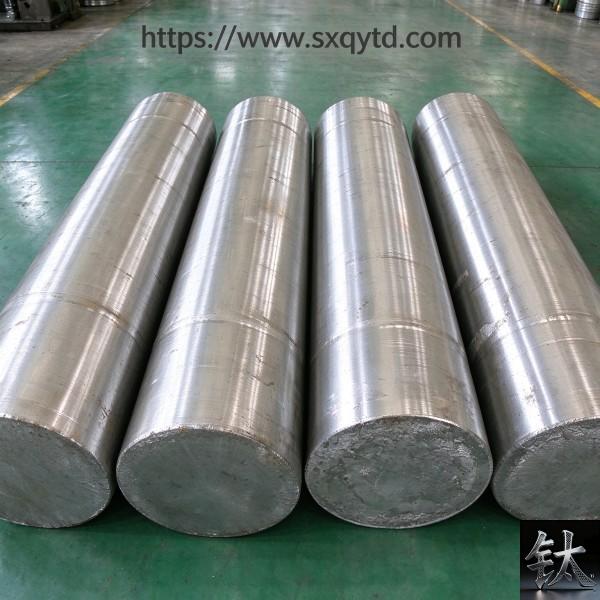
Gr7 vs Gr12 Titanium Grade
| Specification | Gr7-vs-Gr12 |
|---|---|
| Applicable Standard | Gr7 (Ti-0.15Pd) · Gr12 |
| Material Condition | Wet chlorine · hot brine |
| Inspection & Packaging | Crevice vs hydrogen |
Product Description: Gr7 vs Gr12: both are sold as upgrades to Gr2, yet they solve different corrosion problems. Compare mechanism, limits, cost and RFQ wording.
Product Overview
Gr7 vs Gr12 Titanium: Chlor-Alkali Grade Selection- Home
- Knowledge
- Titanium Grades
- Gr7 vs Gr12
Titanium Grades
Gr7 vs Gr12 Titanium: Choosing the Right Grade for Chlor-Alkali and Hot Chloride Service
Most purchase specifications call for "corrosion-resistant titanium" and leave the grade to the supplier. In chlor-alkali service that single omission decides whether a heat exchanger runs fifteen years or fails in eighteen months — and the two grades most often confused are Gr7 and Gr12.
- The failure grade selection is meant to prevent
- What the two alloys actually are
- Reduced-palladium alternatives
- Selecting by service condition
- Where each grade reaches its limit
- Why the cost gap is not fixed
- Fabrication differences
- Inspection: what changes with the grade
- Mistakes that end up in a retube
- Dimensions and tolerances
- Writing the RFQ
- Frequently asked questions
Both are sold as "the corrosion-resistant upgrade to Gr2." They are not interchangeable. Gr7 is palladium-stabilised; Gr12 is molybdenum-nickel stabilised. They solve two different corrosion problems, they fail in two different ways, and their price relationship shifts every time the palladium market moves.
This guide separates the two on mechanism rather than marketing: what each alloying addition actually does, where each grade reaches its limit, how the cost gap behaves, and what to write into the RFQ so the mill cannot substitute one for the other.
Gr7 and Gr12 are two different answers to two different corrosion problems.
1. The failure grade selection is meant to prevent
Titanium's corrosion resistance comes from a passive oxide film a few nanometres thick that reforms instantly when scratched. That film is stable in oxidising conditions and in neutral chloride solutions. It is not stable everywhere.
In chlor-alkali plants the aggressive environments are specific and well documented:
- Wet chlorine gas — dry chlorine is handled in steel; it is the wet gas, and the hypochlorous acid it forms with condensed water, that attacks titanium.
- Hot brine and chloride liquors — chloride concentration combined with temperature drives crevice attack at flanges, gaskets and tube-to-tubesheet joints.
- Reducing acids — hydrochloric acid, dilute sulphuric acid and acidic bleach liquors break down the passive film entirely.
- Hydrogen absorption — under cathodic or strongly reducing conditions titanium absorbs hydrogen and embrittles. This is the failure mode most often missed at the specification stage.
Gr2 handles the first three within limits. Above roughly 80 °C in wet chlorine or hot chloride, crevice corrosion becomes a real risk and the decision moves to Gr12. In reducing acid, Gr2 is the wrong material regardless of temperature, and the decision moves to Gr7.
2. What the two alloys actually are
Both are commercially pure titanium with small additions. The additions are what matter, and they are not symmetric.
| Property | Gr7 | Gr12 | Gr2 (reference) |
|---|---|---|---|
| UNS number | R52400 | R53400 | R50400 |
| Alloying addition | Pd 0.12–0.25 % | Mo 0.2–0.4 %, Ni 0.6–0.9 % | None (CP) |
| Chinese designation | TA9 | TA10 | TA2 |
| Tensile strength, min. | 345 MPa | 485 MPa | 345 MPa |
| Yield strength, min. (0.2 %) | 275 MPa | 345 MPa | 275 MPa |
| Elongation, min. | 20 % | 18 % | 20 % |
| Primary protection | Hydrogen uptake, reducing acid | Crevice corrosion in hot chloride | General oxidation |
| Relative cost vs Gr2 | Priced on request — tracks the Pd market | Typically +20–35 % | Baseline |
Chemistry and mechanical properties above follow ASTM B338 for tube and ASTM B265 for plate and sheet. Both grades also appear in B348 (bar and billet) and B381 (forgings), so the same designation carries through every form in a plant build — including Gr7 Titanium Plate to ASTM B265 and Gr12 Titanium Plate to ASTM B265.
Why palladium works
Palladium is a platinum-group metal with a low hydrogen overpotential. Dispersed finely in the titanium matrix it acts as a cathodic site where hydrogen ions recombine into molecular hydrogen instead of being absorbed into the metal lattice. The practical effect: Gr7 tolerates reducing and cathodic conditions — where hydrogen charging would otherwise embrittle Gr2 — without losing passivity.
That is also why Gr7 performs in hydrochloric acid. In HCl the passive film cannot form; the material survives because Pd sites keep the surface potential high enough to maintain a residual film. Gr2 in the same service corrodes at a measurable rate that accelerates with both temperature and concentration.
Why molybdenum and nickel work
Nickel at 0.6–0.9 % raises the potential at which the passive film breaks down, delaying crevice initiation. Molybdenum at 0.2–0.4 % strengthens the film against chloride attack. Neither is a hydrogen catalyst in the way Pd is.
The result is a grade with noticeably higher strength — 485 MPa against 345 MPa — and better crevice resistance in hot chloride, but no meaningful advantage over Gr2 in reducing acids. Putting Gr12 into an HCl line because it is "the upgraded grade" produces uniform wall loss within a year.
3. The reduced-palladium alternatives most specifications never mention
Palladium is the dominant cost driver in Gr7, and its price is volatile enough that the Gr7-to-Gr2 gap can move by tens of percent within a single procurement cycle. Two families of alternatives exist and are worth raising with the customer's corrosion engineer before the specification is frozen.
| Grade | Stabiliser | When it makes sense |
|---|---|---|
| Gr16 | Pd 0.04–0.08 % | Lower-Pd version of Gr7. Adequate for many moderate HCl and bleach services; less margin in severe reducing conditions |
| Gr17 | Pd 0.04–0.08 %, low oxygen | Same chemistry with improved formability, used where deep drawing is required |
| Gr13 / 14 / 15 | Ruthenium | Ru substitutes for Pd at roughly a third of the addition level. Cost-effective in many chloride services; narrower availability |
Gr16 is the pragmatic middle path when a customer has specified Gr7 by habit rather than by calculation. In dilute HCl at moderate temperature it often performs close enough to Gr7 that the cost reduction justifies the substitution. Confirm against the actual concentration, temperature and aeration of the process — the lower Pd content gives less margin in the most severe cases.
For the full grade map across commercially pure and alloyed titanium, see our titanium grades Gr1 to Gr12 comparison.
4. Selecting by service condition
The table below is the decision sequence we use when a customer sends a process description rather than a grade. It is ordered by the variable that most often decides the outcome: whether the environment is reducing or oxidising, then temperature.
| Service | What to confirm first | First choice | When to upgrade |
|---|---|---|---|
| Wet chlorine gas | Moisture content, temperature, condensed HCl | Gr2 below 80 °C | Above 80 °C, or liquid pooling at gaskets → Gr12 |
| Hot brine / chloride liquor | Cl⁻ concentration, temperature, crevice geometry | Gr2 to 80 °C | 80–120 °C → Gr12; above 120 °C review with corrosion engineer |
| Hydrochloric acid | Concentration, temperature, aeration | Gr7 at any temperature | Dilute, near-ambient → consider Gr16 for cost |
| Dilute sulphuric acid | Concentration, temperature, oxidiser present | Gr7 | Oxidising conditions may allow Gr2 — verify, do not assume |
| Hypochlorite / bleach | Free chlorine, pH, temperature | Gr7 | Gr12 only where crevice risk dominates and acidity is low |
| Caustic (NaOH) evaporators | Concentration, temperature, hydrogen generation | Gr7 — hydrogen absorption governs | — |
| Seawater cooling | Temperature, fouling, chlorine dosing | Gr2 below 80 °C | Chlorinated and above 80 °C → Gr12 |
Where the application is a shell-and-tube exchanger rather than a vessel, material selection sits alongside tube specification — see Gr7 seamless titanium tube to ASTM B338.
5. Where each grade actually reaches its limit
Published corrosion tables give ranges, not thresholds, and the thresholds matter more than the ranges. The figures below are the limits we work to when reviewing a specification; they are consistent with published industry guidance but should be confirmed against the specific process chemistry, not applied as universal constants.
| Environment | Gr2 limit | Gr12 limit | Gr7 limit |
|---|---|---|---|
| Wet chlorine gas, no condensate | ~80 °C | ~150 °C | ~150 °C |
| Wet chlorine with condensate (HCl formation) | Not recommended | Not recommended | ~120 °C |
| Chloride brine, crevice present | ~80 °C | ~120 °C | ~120 °C |
| HCl 3–5 %, aerated | < 30 °C | < 30 °C | ~100 °C |
| HCl 10 %, unaerated | Not recommended | Not recommended | ~60 °C |
| NaClO (hypochlorite), pH > 9 | ~60 °C | ~80 °C | ~100 °C |
Working limits by grade and environment. Confirm against the actual process chemistry before specifying.
Three things about this table matter more than the numbers in it.
First, condensate changes everything. Dry wet-chlorine gas at 150 °C is a different material problem from the same gas where water condenses on a cold flange. The condensate forms hydrochloric acid locally, and a system that is fine in bulk becomes a Gr7 application at the joint. Design the thermal profile before selecting the grade.
Second, crevice geometry decides the Gr2-to-Gr12 step, not bulk temperature. A gasketed flange, a tube-to-tubesheet roll joint, or a support saddle creates a stagnant zone where oxygen cannot replenish. Crevice corrosion initiates there long before the bulk solution reaches any critical temperature. If the design cannot avoid crevices, assume the crevice temperature governs.
Third, aeration is an uncontrolled variable in most specifications. Small amounts of dissolved oxygen passivate titanium and can extend the usable range significantly. The same acid line behaves differently depending on whether it is open to air, nitrogen-blanketed, or sealed under pressure. Ask before assuming.
6. Why the cost gap is not a fixed percentage
Most comparisons quote Gr7 as "40–70 % more than Gr2." That number is not stable, and quoting it as a constant leads to budget errors on large projects.
The reason is that the alloying additions dominate the premium, and one of those additions trades on an open market.
- Gr7 premium tracks palladium. Palladium content is 0.12–0.25 % by weight. At a palladium price of USD 30,000/kg, that is USD 36–75 of metal per kilogram of titanium before any processing. At USD 60,000/kg it doubles. Titanium itself moves far less over the same period.
- Gr12 premium is more stable. Molybdenum and nickel are cheaper and the addition levels are lower, so the premium over Gr2 stays in a narrower band and moves with the alloy market rather than a single metal.
- The visible price is not the whole price. Gr7 is softer and gummier to machine than Gr12; tool wear and machining time are higher. In a component with heavy machining, part of the Gr7 material premium is recovered on the shop floor, and part of the Gr12 material saving is lost. Compare finished cost, not plate cost.
In practice this means the Gr7-versus-Gr12 decision should be re-costed at the time of each project, not carried forward from a quotation two years old. We re-quote both grades on request for exactly this reason — the ranking can reverse.
7. Fabrication differences that change the specification
The two grades behave differently in the workshop, and those differences belong in the purchase documents.
| Operation | Gr7 | Gr12 | Practical consequence |
|---|---|---|---|
| Welding | Straightforward; matching filler available as ERTi-7 | Straightforward; matching filler as ERTi-12 | Never weld Gr12 with Gr2 filler — the Mo/Ni addition is what provides the crevice resistance |
| Forming | Softer, more ductile, easier to bend | Higher strength, more springback | U-bends and tight radii favour Gr7; specify post-bend anneal for Gr12 |
| Machining | Gummy, higher tool wear | Better chip formation | Machined parts may be cheaper in Gr12 even at higher material cost |
| Pickling | Standard HNO₃/HF | Standard HNO₃/HF | Both require iron-free handling after pickling |
| Heat treatment | Stress relief 540–650 °C | Stress relief 540–650 °C | Do not exceed; higher temperatures coarsen structure and reduce toughness |
The welding point is the one that causes field failures. A fabricator who runs out of ERTi-12 and substitutes ERTi-2 because "it is all titanium" produces a weld whose chemistry is closer to Gr2 than Gr12. The heat-affected zone loses most of its crevice resistance, and the failure appears at the weld rather than in the parent metal — which then gets blamed on the plate.
The filler must match the parent grade. ERTi-7 and ERTi-12 titanium welding wire is supplied to AWS A5.16.
8. Inspection
: what changes with the grade
Inspection requirements for Gr7 and Gr12 are largely the same as for Gr2 under ASTM B265 and B338, with one addition that matters commercially.
- Chemical analysis with heat-number traceability — the Pd or Mo/Ni content must be verified per heat, not assumed from the grade stamp. Pd content at the low end of the 0.12–0.25 % range is still compliant but gives less margin in severe service; knowing which end you received is useful information.
- Tensile and yield testing — required for both, and Gr12's higher strength is a specification point, not a bonus.
- Eddy current or ultrasonic examination — for tube, per ASTM E426 or E213 as specified; the grade does not change the method.
- Hydrostatic or pneumatic test — for tube and pressure parts, at the pressure the purchase order states.
- EN 10204 3.1 mill certificate — standard; 3.2 with third-party witness where the project requires it.
For Gr7 specifically, ask for the actual palladium analysis rather than a compliance statement. The difference between 0.13 % and 0.24 % Pd is invisible in a certificate that only says "conforms to Gr7," but it is a real difference in margin, and it is a real difference in what the material cost.
Examination routes for tube are set out in our ASTM B338 titanium tube guide. Plate tolerances and testing follow the ASTM B265 Titanium Plate buyer's guide.
9. The five mistakes that end up in a retube
These are the errors we see most often when a customer sends an existing specification for review.
- Specifying Gr7 for crevice corrosion. Gr7 is not a crevice-corrosion grade. If the problem is a stagnant zone in hot chloride, palladium does not help; the answer is Gr12 or a design change that eliminates the crevice.
- Specifying Gr12 for reducing acid. The mirror error. Higher strength reads as "better," but Mo and Ni do not stabilise titanium against HCl. The material corrodes uniformly and the strength is irrelevant.
- Writing the grade but not the standard. "Gr7" without "ASTM B265" or "ASTM B338" leaves tolerance, test frequency and marking open. The mill supplies to whichever standard is cheapest to comply with.
- Ignoring the weld consumable. The purchase order covers plate and the fabrication drawing does not specify filler metal. The result is a correctly supplied plate with an incorrect weld.
- Locking a Gr7 price for a project that ships in eight months. The palladium component can move materially in that window. Either accept the volatility in the contract or specify Gr12/Gr16 where the chemistry allows.
10. Dimensions and tolerances for the thicker-section grades
Gr7 and Gr12 are frequently specified in plate for vessel shells and tube sheets, and in tube for exchangers. Tolerances follow the standard, but two points are worth writing into the order.
Thickness tolerance on plate is asymmetric under ASTM B265. Permissible variation is expressed against nominal thickness, and the allowable minus tolerance is not the same as the plus tolerance across all thickness ranges. For a vessel shell where the design calculation used nominal thickness, ordering to the minus limit silently reduces the corrosion allowance the designer intended. Specify that thickness shall not be below nominal, and expect to pay for it.
For tube, outside diameter consistency matters more than wall thickness where the tubes are rolled into a tubesheet. Wall thickness variation affects thermal performance; OD variation affects whether the joint seals. Ask for go/no-go ring gauge inspection in the quality plan rather than relying on a micrometer reading per length.
| Parameter | Typical specification | What to state in the order |
|---|---|---|
| Plate thickness | Per ASTM B265, by thickness range | Whether minus tolerance is acceptable; state "not below nominal" where design assumes nominal |
| Plate width / length | Mill standard or cut to size | Cut-to-size dimensions and whether edge condition (sheared / sawn / machined) is specified |
| Tube OD | Per ASTM B338 | Ring gauge inspection; permissible ovality |
| Tube wall | Typically ±10 % | Whether minus wall is acceptable for the thermal design |
| Tube length | Straight lengths or U-bend | For U-bends: bend radius, leg lengths, post-bend anneal, and whether the bend is included in the ET scan |
| Surface | Pickled, bright annealed, or as-rolled | Iron contamination limits; whether passivation is required after fabrication |
Where the crevice is at a flanged joint, the flange material must match: ASME B16.5 Titanium Flanges in Gr7 and Gr12 are supplied with matching heat traceability.
11. Writing the RFQ so the grade cannot drift
A specification that says "Gr7 or equivalent" will receive whatever the supplier considers equivalent. The following format closes that gap. It is written for a plate or tube order; adapt the dimensional block to the product form.
Complete: "Titanium Plate to ASTM B265, Grade 7 (UNS R52400), Pd 0.12–0.25 %, 10 mm nominal × 1000 × 2000 mm, annealed, pickled, thickness not below nominal, 100 % ultrasonic examination per ASTM A578 Level II, EN 10204 3.1 MTR with actual Pd analysis, heat number marked on each plate and stated on the packing list."
The items to state explicitly, every time:
- Standard and edition — ASTM B265, B338, B348 or B381, and the year where the project fixes one.
- Grade plus UNS number — the UNS number removes any ambiguity between GB, ASTM and EN designations.
- Product form and condition — plate / sheet / tube / bar; annealed, pickled, bright annealed, polished.
- Dimensions with tolerance intent — and specifically whether minus tolerance is acceptable.
- Examination route — UT level, ET method, hydrostatic pressure. Naming the standard is not enough; the grade does not determine the test.
- Certificate level — 3.1 or 3.2, and whether actual alloying-element analysis is required on the certificate.
- Traceability requirement — heat number on the piece, on the bundle tag, and on the packing list.
- Fabrication consumables — if welding is in scope, specify ERTi-7 or ERTi-12 filler and prohibit substitution.
- Packing — iron-free handling, VCI or equivalent, end caps for tube, ISPM-15 crate for export.
- Acceptance criteria for the crevice case — if the service is crevice-sensitive, state the joint design assumed, so the mill knows what the material is being asked to do.
Send the completed list through our titanium RFQ form with the drawing attached.
12. Frequently asked questions
Is Gr7 better than Gr12?
Neither is better. Gr7 protects against hydrogen absorption and reducing acids; Gr12 protects against crevice corrosion in hot chloride. Choose by failure mechanism. In a plant with both an HCl line and a hot brine exchanger, the correct answer is usually Gr7 in one place and Gr12 in the other.
Can Gr12 replace Gr2 without changing anything else?
In dimensions and welding procedure, largely yes. In welding consumables, no: you must switch to ERTi-12. Gr12 also has higher strength and more springback, so forming operations may need adjustment. It is not a drop-in substitution at the fabrication level without review.
Why is Gr7 so much more expensive than Gr2?
The palladium. At 0.12 to 0.25 percent Pd by weight, the metal cost added per kilogram is set by the palladium spot price, which is several times the price of titanium and considerably more volatile. The premium is not a processing premium and it does not follow the titanium market.
What is the difference between Gr7 and Gr11?
Same palladium content; Gr11 has a lower oxygen limit of 0.18 percent maximum against 0.20 percent for Gr7, which gives better ductility and formability. Gr11 is used where severe forming is required. For most corrosion-driven applications the two are equivalent in service.
Can I use Gr16 instead of Gr7 to save cost?
Often yes, with a limit. Gr16 carries 0.04 to 0.08 percent Pd against 0.12 to 0.25 percent. That is enough for moderately reducing service and common bleach duties, but gives less margin in hot concentrated hydrochloric acid or strongly cathodic conditions. Confirm the process conditions before substituting.
Does the Chinese grade TA10 behave the same as Gr12?
Chemistry is comparable; documentation and tolerances are not identical. If the project specifies ASTM, order to ASTM and expect the certificate to state ASTM. If it specifies GB/T, order to GB/T. Do not accept a certificate that mixes the two without a clear statement of which standard the test results are judged against.
How do I tell whether a failure was a grade problem or a fabrication problem?
Look at where it started. Crevice corrosion under a gasket or at a roll joint with correct material points to design. Uniform loss in an acid line with Gr12 points to grade selection. Cracking adjacent to a weld with the wrong filler points to fabrication. Attack at a heat-affected zone with the correct filler points to procedure, heat input, shielding or interpass contamination.
Gr7 and Gr12 plate in common thicknesses are held in our Baoji titanium stock for small-quantity orders.
Request a quotation for Gr7 or Gr12
Send the service conditions and we will quote both grades against your actual requirement, including the current cost gap at the time of order.
We reply within one working day with grade recommendation, test plan, lead time and price. Drawings can be attached on the next step.
- Titanium grades Gr1 to Gr12 Full grade comparison across CP and alloyed titanium
- ASTM B338 heat exchanger tubes Seamless vs welded, tolerances, NDT routes
- ASTM B265 plate buyer's guide Thickness tolerance, condition, testing
- Titanium stock in Baoji Common grades and sizes for small-quantity orders
Standards referenced. ASTM B265 — titanium and titanium alloy strip, sheet and plate. ASTM B338 — seamless and welded titanium tube for condensers, evaporators and heat exchangers. ASTM B348 — titanium and titanium alloy bars and billets. ASTM B381 — titanium and titanium alloy forgings. ASTM E426 — electromagnetic (eddy current) examination of seamless and welded tubular products. ASTM A578 — ultrasonic examination of plain and clad steel plate. EN 10204 — types of inspection documents.
Note on figures. Corrosion limits quoted in section 5 are working values consistent with published industry guidance for these alloys; they are not substitutes for project-specific corrosion assessment. Alloy compositions and mechanical properties follow the ASTM specifications named above. Confirm the applicable edition before ordering.
Tell us your requirement — grade, size and quantity. We reply within 24 hours.
Prefer chat? WhatsApp +86 188 2967 9311 or email sales@sxqytd.com.


- Titanium Price Today (23 Oct 2026): Plate, Tube, Rod & Wire
- Read titanium wire and titanium alloy wire: diameter classification
- Titanium wire: from brand selection to manufacturing process (2026 r
- Read titanium tube and titanium alloy tube: OD classification + comm
- Titanium pipe knowledge·tee + reducer selection 5 steps
Contact Person: Wang Xiaoning
Tel: +86-917-355-7966
Email: sales@sxqytd.com
WhatsApp: +86 188 2967 9311
Company: Shaanxi Qianyi Tuoda Technology Co., Ltd
Address: Floor 4, Building 4, No. 188 Gaoxin Avenue, High-tech Zone, Baoji City, Shaanxi Province, China