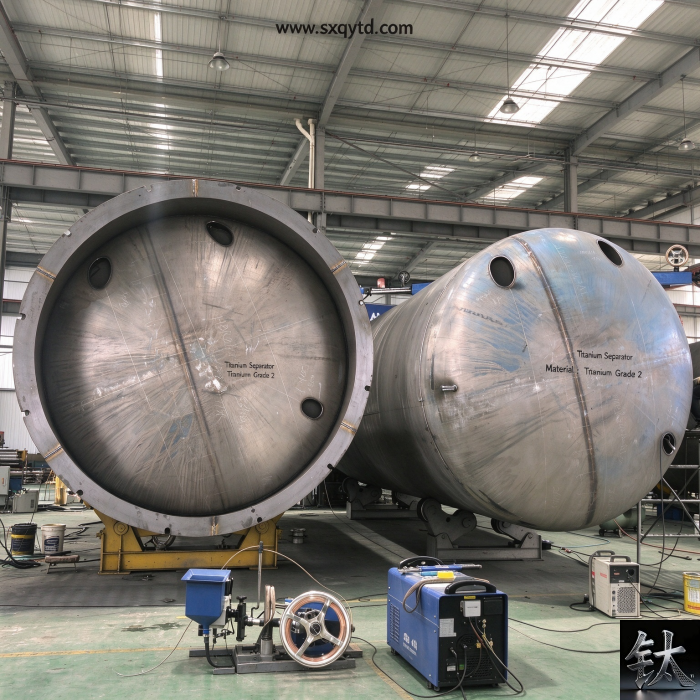
Titanium Equipment Lay-Up: Why a Steel Shutdown Plan Removes the Oxygen Titanium Needs
| Specification | Titanium equipment shutdown / lay-up / mothballing preservation |
|---|---|
| Applicable Standard | Titanium reactors, heat exchangers, tanks, coils and piping in Gr2 / Gr7 / Gr12 |
| Material Condition | Nitrogen blanketing / dew point / drainage verification / oxygen scavenger conflict |
| Inspection & Packaging | Preservation Method Statement / ITP / restart recommissioning / ASTM C692 C795 C87 |
| Reference Price | $1000.00 – $10000.00 |
Product Description: Steel lay-up guides remove water and oxygen. For titanium, oxygen keeps the passive film alive. Nitrogen, dew point and a 14-line preservation ITP.
Product Overview
Titanium Equipment Lay-Up: Why a Steel Shutdown Plan Removes the Oxygen Titanium Needs
The preservation plan most plants already own lists five factors that drive corrosion on carbon steel: moisture, dissolved oxygen, pH, contaminants and deposits. Published guidance from ASME, EPRI and VGB then says the lay-up objective is mainly to act on the first two, keeping the metal dry and keeping oxygen out. Apply that document unchanged to an idle titanium reactor, condenser or tank and the second half of the instruction works against you: dissolved oxygen is the cathodic depolarizer that holds the titanium dioxide film in the passive region, and a marine passivation review states plainly that titanium alloys are relatively susceptible to crevice corrosion in anaerobic seawater at high temperature. The damage is rarely visible at shutdown. It appears at restart, as a pinhole behind a gasket, a groove under a tubesheet crevice or a stain that is actually free iron from a carbon steel blind installed during the outage.
This guide covers the layer that sits between the last production batch and the first batch after restart: what the industry lay-up bands actually mean, why a nitrogen gauge cannot certify dryness, where residual water hides in real titanium geometries, why an ASTM C795 insulation certificate does not cover titanium, how to split one preservation boundary into material-specific rule sets, and the 14 lines that turn all of it into a Method Statement and a preservation ITP. Our equipment arrival acceptance guide already covers the packaging end of storage, PE film lining, desiccants and pipe-end caps; our mixer maintenance guide covers the annual overhaul window and warns against contact with dissimilar metals. Our process equipment buyers guide covers grade, medium and design code. None of the three is a lay-up procedure. This article starts where the plant stops producing, and keeps those three as the references for receipt, maintenance and specification respectively.
At a Glance: Nine Checks Before You Sign a Lay-Up Plan
| Item | What the buyer must know |
|---|---|
| The short answer | A lay-up plan is not a one-time action, it is a documented chain from drain to restart. Titanium equipment usually survives the running years and is damaged in the idle weeks, most often in the gap between cleaning and verified dryness, or in the third week after a nitrogen blanket silently loses pressure |
| The object mismatch | Published preservation guidance from ASME, EPRI and VGB names five corrosion factors for carbon steel, moisture, dissolved oxygen, pH, contaminants and deposits, and says the goal is to act mainly on the first two. For titanium, dissolved oxygen is not enemy number two: it is the cathodic depolarizer that holds the oxide film in the passive region |
| The gauge trap | A stable nitrogen pressure proves pressure retention at one measurement point. Published preservation guidance says explicitly that pressure retention must not be mistaken for proof of drying, that a 5 psig holding pressure is a holding proposal and not a drying criterion, and that purge completion cannot be judged by how long nitrogen has flowed |
| The number conflict | Published positive-pressure values for inert blanketing range from 0.2 to 1.5 kPa on storage tanks, through 20 to 50 kPa in trade equipment-preservation guides and about 34 kPa (5 psig) on idle process piping, to roughly 172 kPa (25 psig) for a boiler wet lay-up. They answer different questions. Do not copy one into a titanium vessel PO |
| The crevice mechanism | Titanium crevice corrosion starts when oxygen inside a tight gap is consumed faster than it diffuses in. The cathode moves outside, chloride migrates in, titanium ions hydrolyse, internal pH can fall below 1, and the attack becomes autocatalytic. A deaerated, stagnant, chloride-bearing wet lay-up builds exactly that geometry |
| The insulation clause | ASTM C795 is titled Thermal Insulation for Use in Contact with Austenitic Stainless Steel. Its acceptance curve scores chloride plus fluoride together against sodium plus silicate, with the end point being stainless stress corrosion cracking. Titanium is nearly immune to chloride SCC but is dissolved by free fluoride. A C795-only compliance claim averages two completely different hazards |
| The mixed-metal problem | Inside one preservation boundary, carbon steel and copper alloys want oxygen removed and titanium wants a passivating potential. A single plant-wide wet lay-up chemistry serves one side and harms the other. Split the boundary by material and write two rule sets |
| The one document to demand | A 14-line Lay-Up Method Statement and Preservation ITP covering boundary drawings, material inventory, drainage map, rinse and neutralisation end points, dryness acceptance, insulation and fluoride control, method per boundary, gas supply, oxygen-scavenger decision, free-iron control, cathodic protection, monitoring, restart and sign-offs |
Read rows two, three and four first. The recurring failure is not that titanium is a bad material for idle equipment; it is that a document written for a ferritic or austenitic water circuit was pasted into a titanium work order without anybody checking which metal the chemistry protects. Every figure in this table has a published source behind it, and several of them conflict by orders of magnitude. Where sources disagree we name the disagreement and give the verification action rather than printing one false-precision value. Treat the table as a list of decisions the owner, the preservation contractor and the equipment supplier must settle before the outage begins. A stockholder can certify plate, tube, heat number and NDT. It cannot decide your dryness end point, your scavenger policy or your blanket pressure. That division of responsibility is the whole subject, and our ASTM B338 tube guide makes the same point for material ordering: the standard gets the tube to the gate, and the purchase order has to carry the duty.
The “Oxygen Is the Enemy” Trap: A Steel Chemistry Spec on a Titanium Circuit
Preservation practice in the power and process industries is built around a simple and correct observation about steel. A widely cited HRSG preservation review, which draws on ASME CRTD-Vol.66 (Consensus for the Lay-Up of Boilers, Turbines, Turbine Condensers, and Auxiliary Equipment, 2002), EPRI TR-107754 (Cycling, Startup, Shutdown, and Layup Fossil Plant Cycle Chemistry Guidelines, 1998) and VGB-R116He (Guideline for the Preservation of Power Plant Systems, 1981), lists five factors controlling corrosion on carbon steel surfaces: moisture, dissolved oxygen, pH, contaminants and deposits. It then states that the goal of lay-up is primarily to act on the first two, preventing the simultaneous presence of moisture and oxygen on the metal. Wet lay-up keeps surfaces immersed in chemically treated water with oxygen held low. Dry lay-up drains and dries everything, then holds it with nitrogen, desiccants or dehumidified air. Both routes are coherent for steel, and both are documented in detail.
The chemistry behind wet lay-up makes the object mismatch explicit. EPRI work on pressurised water reactor steam generator lay-up describes an amine for pH control plus hydrazine or another qualified oxygen scavenger to maintain a protective oxide film and a reducing environment, with hydrazine above 75 ppm described as an effective oxygen scavenger at ambient temperature. Nitrogen sparging is used to mix the scavenger and remove oxygen, and a positive nitrogen overpressure is held during filling, draining and cold shutdown to minimise oxygen ingress. The stated purpose is to keep the tube surface and its deposits in a reducing environment so that the corrosion potential stays low. EPRI cycling-unit guidance adds ammonia for pH, blowdown before shutdown to reduce chloride and other corrosive impurities, and a nitrogen cap while draining at residual steam pressure. Filming amines and vapour phase inhibitors are described in the same literature as barrier treatments that bond to iron atoms and make the surface non-wettable, with oxygen corrosion as the target. Every one of those acceptance parameters is an answer to a ferrous or copper-alloy question.
For carbon steel, removing dissolved oxygen removes the cathodic reactant. For titanium in a hot concentrated chloride crevice, removing dissolved oxygen removes the cathodic depolarizer that keeps the corrosion potential above the passive transition. The same action, opposite consequence.
The titanium mechanism is worth stating precisely, because it is often reduced to a slogan. Titanium resists chloride attack through a thin, adherent, self-repairing oxide film, predominantly titanium dioxide, that forms spontaneously in air or water. Inside a tight crevice, at a flange face, a gasket, a tube-to-tubesheet expansion or under a deposit, dissolved oxygen in the trapped liquid is consumed by the cathodic reaction faster than diffusion can replace it. Once the crevice liquor is deoxygenated, the cathodic reaction can continue only on the external surface, while anodic dissolution dominates inside. Titanium ions accumulate, chloride migrates in to preserve charge neutrality, hydrolysis releases hydrogen ions, and published accounts describe internal pH falling below 1 against a near-neutral bulk. The process becomes autocatalytic: its products create the conditions for a faster reaction. Published geometry guidance adds that narrow gaps below roughly 0.5 mm are far more aggressive than wide ones, that non-metallic gasket materials such as PTFE produce more susceptible crevices than titanium-to-titanium contact because they do not participate as cathodes, that increasing temperature shortens the incubation period, and that hydrogen absorption with acicular hydrides accompanies the attack. A marine passivation review summarises the field result in one line: titanium and its alloys are relatively susceptible to crevice corrosion in anaerobic seawater at high temperatures.
So a wet lay-up that leaves a stagnant, warm, chloride-bearing liquor in a gasket crevice while an oxygen scavenger holds the bulk reducing has assembled all four ingredients of the failure. This is not an argument that titanium needs aerated water during storage; in cool, neutral, low-chloride water the film is sustained by water itself and the oxygen question is largely irrelevant. It is an argument about a specific and common combination: residual process liquor, elevated temperature or a warm idle period, tight non-metallic crevices, and a chemistry regime deliberately held reducing. Published supplier pages on titanium heater sheaths in 100,000 ppm chloride brine at 120 °C describe dissolved oxygen of the order of 0.5 ppm as a passivation threshold under that extreme condition, while another supplier page classifies severe anaerobic conditions as below 2 mg/L and moderate deficiency as 2 to 6 mg/L. Those two figures differ by roughly four times, use different units and describe different duties, and neither is a general design standard. We are not going to select one. The honest position is that an oxygen-scavenged wet lay-up on a hot chloride boundary is an engineering decision requiring a documented review, not a box to tick from the plant water-treatment manual.
The boundary of the argument matters as much as the argument. Titanium is not universally harmed by low oxygen. Our Gr2 versus Gr7 seawater guide explains why the palladium-bearing grade is the answer to reducing and hot-crevice duties, and our grade-by-grade acid limits guide sets out the media where titanium is simply the wrong material. Our upgrade ladder against 316L, 2205 and 6Mo makes the broader point that passive-film systems cannot be exchanged with an or-equivalent clause. Lay-up chemistry is one more place where that rule applies: a treatment qualified on a ferrous circuit is not automatically qualified on a titanium one, and the certificate for the treatment chemical says nothing about the metal it will sit against for three months.
Standby, Short Term, Long Term, Mothball: Four Bands That Do Not Agree
Preservation is chosen by duration, and the first surprise is that the industry does not agree on where the boundaries sit. The HRSG preservation review quoted earlier gives the common power-industry approach: standby means overnight or up to 72 hours depending on whether the unit can be kept warm and under pressure; short term means up to one week with a rapid return to service required; long term means out of service for more than one week, usually with at least one day of notice for restart; and mothball means permanently removed from service but maintained in a preserved state in case it is ever needed again. The same review lists the factors that should shift the choice: available nitrogen or dehumidified air, piping layout and materials, cleanliness of heat transfer surfaces, local discharge regulations for treatment chemicals, climate and freeze risk, and how close the restart really is.
Trade guidance written for idle titanium equipment uses a different grid: up to 7 days, 7 to 90 days, and beyond 90 days, with directional drainage and compressed-air purging for the first, full drainage plus circulating low-temperature hot-air drying for the second, and full drainage plus hot-air drying plus sealed nitrogen blanketing for the third. A separate Chinese-language maintenance encyclopaedia splits at 1 to 7 days and beyond one month, adds desiccant sachets changed every two weeks, an indoor storage window of 0 to 40 °C at no more than 60 per cent relative humidity, and a large-vessel nitrogen pressure of 0.02 to 0.05 MPa. These are trade and reference sources, not consensus standards, and we present them as evidence of the spread rather than as allowables. The practical consequence is that a purchase order which says “preserve per standard practice for three months” is unenforceable, because three different published grids put a three-month outage in three different regimes.
| Idle period | Power-industry band | Typical protection route | What must be recorded |
|---|---|---|---|
| Hours to 3 days | Standby, up to 72 h if kept warm | Keep warm and under pressure, or drain with a nitrogen cap | Valve lineup, pressure and temperature trend |
| To 1 week | Short term, rapid restart | Wet lay-up with controlled chemistry, or full drain and dry | Chemistry results, or dryness end point with sampling points |
| More than 1 week | Long term, restart on notice | Dry lay-up preferred for all-titanium boundaries; nitrogen, desiccant or dehumidified air | Boundary drawing, dryness certificate, blanket pressure and dew point baseline |
| Indefinite | Mothball, preserved for possible return | Full dry method, sealed openings, labelled boundaries, formal inspection regime | Preservation dossier, named owner, escalation and re-preservation triggers |
There is a second axis that the four bands hide: the timeline inside a single outage. A shutdown is not one moment. It is a sequence of drain, rinse, neutralise, verify dryness, isolate, establish the protective atmosphere, monitor, then de-preserve and restart. Two windows account for a disproportionate share of damage. The first is the interval between the end of cleaning and the moment dryness is actually verified, when a thin residual film of chloride-bearing liquor is evaporating and concentrating on a warm surface. The second is the third or fourth week after the blanket was established, when the gauge was read once, nobody owns the trend, and a small leak or a cooling gas volume has silently pulled humid air back through a flange or a vent. Published guidance on idle process piping names exactly these failure modes: water appearing at a low-point drain after drying, moisture readings that disagree between outlets, and pressure that holds while no dryness acceptance record exists.
For a buyer, the useful output of this chapter is a definition written into the work order. State the expected idle duration and the date it will be reassessed; state which published grid the plant uses and its revision; state what happens when the outage crosses a band boundary; and state who re-declares the preservation method. Our mixer maintenance guide organises maintenance by chronology from unpacking to scrap, and that habit is worth borrowing here: lay-up is also a chronological discipline, not a valve position. Our arrival acceptance guide already applies the same idea to the period before commissioning, with desiccant and protective caps as receipt hold points. The difference is that the pre-commissioning package is supplied by the fabricator, whereas the post-shutdown package is owned by the plant. Nothing in the mill certificate transfers that ownership. Our EN 10204 3.1 certificate page is a useful reminder of where the supplier evidence stops, and our titanium storage tank range is the hardware most often kept in long-term standby. A tank delivered clean and dry from the factory is not the same preservation problem as a vessel that has held process liquor for four years.
The Gauge Does Not Measure Water: Why Stable Nitrogen Pressure Is Not a Dryness Record
This is the single most useful sentence in the published preservation literature, and it is worth quoting in substance: a stable gauge reading verifies pressure retention at that measurement point, and does not verify dryness, purge coverage or readiness to introduce process fluid. The same guidance lists the diagnostic pairs that field teams routinely confuse. Water at a low-point drain means drainage was incomplete or water entered after drying. Moisture readings that differ between outlets mean the purge distribution is uneven or an isolated branch is still wet. Pressure that falls can mean leakage, an open connection or simply cooling of the contained gas, so pressure has to be compared with temperature before a leak is declared. Pressure that holds while no dryness acceptance record exists means pressure retention was mistaken for proof of drying. Each of the four leads to a different corrective action, and none of them is fixed by topping up the nitrogen.
The pressure figures themselves are the second trap, because published values span nearly three orders of magnitude and each answers a different engineering question. Storage-tank nitrogen blanketing guidance describes a slight positive pressure typically 0.2 to 1.5 kPa, held by a blanketing valve and a breather valve to stop air ingress and vapour loss. Trade equipment-preservation guidance for long-term standby gives 0.02 to 0.05 MPa, which is 20 to 50 kPa, for large sealed vessels. Published guidance on idle process piping discusses 5 psig, about 34 kPa, as a holding-pressure proposal and explicitly says it is a gauge pressure describing a small positive pressure relative to atmosphere, not a drying criterion or a leak-test acceptance value. EPRI cycling-unit guidance describes nitrogen being supplied at around 25 psig, about 172 kPa, to collapse residual steam and exclude air during cool-down of a boiler circuit, with draining carried out while steam pressure is still above that value. Shell DEP 70.10.70.11-Gen, Preservation of New and Old Equipment Standing Idle, is named in the piping guidance as a document whose applicability and current project requirements should be checked; the guidance is careful to say that naming it is not approval of any particular pressure or treatment for every item.
| Parameter | Published values | Why they cannot be merged |
|---|---|---|
| Blanket positive pressure | 0.2 to 1.5 kPa; 20 to 50 kPa; about 34 kPa (5 psig); about 172 kPa (25 psig) | Tank vapour-space padding, sealed-vessel storage, pipe holding pressure and boiler steam collapse are four different duties |
| Gas purity | At least 99.5 per cent in tank blanketing, at least 99.9 per cent for sensitive products, argon at least 99.995 per cent in our GTAW shielding guide | Different gases, different impurities, different failure modes; a welding argon specification is not a nitrogen specification |
| Moisture criterion | Dew point below minus 60 °C for welding shielding gas; dehumidified air to a target relative humidity in power-plant dry lay-up; representative moisture readings at outlets in piping preservation | Dew point, relative humidity and outlet moisture are three different measurements with three different acceptance bases |
| Inspection rhythm | Desiccant checked every two weeks in one trade guide; three times per week then weekly for steam generator lay-up water samples in EPRI guidance; pressure trended against temperature in piping guidance | Desiccant colour, water chemistry and pressure trend are different observables on different equipment |
| Dissolved oxygen | About 0.5 ppm as a passivation threshold in one extreme brine heater page; below 2 mg/L called severe and 2 to 6 mg/L moderate in another supplier page | Different duties and units, both from supplier technical pages rather than a material standard; no general titanium limit can be quoted |
Two more field details from the same piping guidance belong in any titanium Method Statement. First, do not judge purge completion by how long nitrogen has flowed: a short path between inlet and outlet can bypass branches completely, so an approved sampling plan with representative outlet readings is required. Second, check that the gauge can actually resolve a change at the selected holding pressure. A pressure gauge intended for a much higher operating pressure can make a small loss invisible, and an isolated section behind a closed valve can appear protected only because another section still reads pressure. Add the safety point that the guidance also makes: nitrogen creates an oxygen-deficiency hazard, gas must be routed to an approved discharge, and a pressure reading says nothing about whether the surrounding atmosphere is safe to enter.
Our GTAW shielding guide is a useful internal comparison here. It sets argon purity, dew point and a three-zone shielding discipline for welding because oxygen and nitrogen contamination above about 400 °C destroy ductility. Those numbers are real and they matter, but they are welding numbers. Borrowing either the welding purity or the welding dew point into a preservation specification, or borrowing a power-plant boiler pressure into a titanium vessel, is the same category error dressed up as conservatism. Write the source of every number next to the number. Our WPS and NDT qualification guide makes the parallel argument for weld acceptance: four codes are not interchangeable, and a pass under one does not discharge the others. Preservation acceptance works the same way.
Where the Water Hides: Low Points, U-Bends, Coils, Tubesheets and Instrument Leads
The instruction “drain and dry the equipment” assumes the equipment can be drained. Titanium process equipment is full of geometry that makes that assumption false. Published trade guidance on idle titanium heating assemblies notes that opening the bottom drain valve discharges the bulk liquid but leaves residual liquid trapped in bent pipe sections, weld gaps and liquid-level fluctuation zones, where small volumes can remain stagnant for weeks. It recommends multi-angle directional drainage, tilting assemblies where practicable and compressed-air purging of dead ends, followed by temperature-controlled forced hot-air drying rather than natural air drying in a closed humid workshop. Those are practical observations, not code requirements, but they describe exactly the places where a buyer should expect a dryness certificate to be weak.
The low points and the blind branches
Every horizontal run, every instrument impulse line, every sample cooler and every valve body with a pocket is a candidate reservoir. A preservation boundary drawing that shows only the main vessel nozzles has not described the system that will actually hold water. Require a drainage map: every low point, every blind branch, every closed valve behind which a section can be isolated, and the order in which drains are opened. Our heat exchanger fittings range and cut-to-length B338 tube are the components that create these pockets in the field; the drawing, not the tube, decides whether they drain.
U-bends, coils and tube bundles
A U-bend holds liquid at the bottom of the return, and a helical coil holds liquid at every turn below the outlet elevation. In a shell-and-tube unit, the shell side below the lower tubesheet and the bundle under the baffle cuts are classic traps. Our U-bent condenser tube page and coil selection guide set out bend radius and post-bend condition for fabrication; the preservation addendum is that those same geometries need their own drainage and drying verification points, not a single dew-point reading at the top nozzle. Our coiled tubing range and condenser tube stock are the replacement hardware when a stagnant pocket has already done its work, and our five tube bundle failure cases shows what that damage looks like in service.
Tubesheet crevices, gasket faces and expansion transitions
A tube-to-tubesheet expansion is a crevice by construction, and a gasketed flange is a crevice with a non-metallic face, which published crevice-corrosion guidance describes as more susceptible than a titanium-to-titanium metal contact because the gasket cannot act as a cathode. Residual liquor in that gap is the exact geometry of the autocatalytic mechanism described earlier. Our tube-to-tubesheet welded joint detail and B338 ordering-by-failure-mode guide cover the joint design and the failure-mode view of tube procurement; neither can tell a plant whether the gap is dry. Our B16.5 flange guide and flange, bolt and gasket three-piece selection article cover the mating hardware, and the preservation note is that a PTFE gasket that has sat compressed through repeated thermal cycles is a different component at restart than it was at shutdown.
What a defensible dryness record looks like
It names the measurement method and its units, the instrument and its calibration, every sampling point with a location on the drainage map, the acceptance value and the document it came from, the ambient and metal temperature at the time of reading, and the result at each point rather than a single best reading. It is signed by the person who owns the boundary. It is repeated after any event that opens the boundary. Published piping guidance says this in plainer terms: obtain a representative moisture measurement, do not use pressure retention as proof of drying, and reassess dryness if the boundary was opened, lost its protective condition or admitted water. Our B265 plate guide and certificate page are the right models for the form of the record; the content of this particular record cannot be supplied by a material producer, because nobody at the mill knows where your low points are.
The Insulation Clause: ASTM C795 Qualifies Steel, Not Titanium
A long-idle insulated vessel is an external-corrosion problem as well as an internal one, and this is where a second standards mismatch appears. ASTM C795 is titled Standard Specification for Thermal Insulation for Use in Contact with Austenitic Stainless Steel. Its scope covers non-metallic thermal insulation for contact with austenitic stainless steel piping and equipment, and it requires a preproduction corrosion test under ASTM C692 plus confirming chemical analysis under ASTM C871. ASTM C692 in turn is explicitly a laboratory evaluation of whether insulation contributes to external stress corrosion cracking of austenitic stainless steel due to soluble chlorides, using sensitised stainless coupons in a 28-day test. The acceptability curve in C795 plots leachable chloride plus fluoride against sodium plus silicate; published tabulations of that curve show chloride rising from about 1 ppm at 10 ppm sodium-plus-silicate to as much as 700 ppm at 100,000 ppm sodium-plus-silicate. A leachate pH limit of 12.5 at 25 °C is also quoted. The 2018 reapproval extended the halide evaluation to include fluoride alongside chloride, with the stated purpose still being stress corrosion cracking of stainless steel.
Now compare that with titanium. Our upgrade ladder documents that titanium is close to immune to chloride stress corrosion cracking while 316L has a well-known chloride SCC weakness around 60 °C; that is one of the main reasons to buy titanium. But our grade-by-grade acid limits guide also documents that hydrofluoric acid and free fluoride dissolve the oxide film outright. For titanium, chloride and fluoride are not two members of one halide family with a combined score: chloride is a crevice and temperature problem, fluoride is a direct film-dissolution problem with no inhibitive credit from sodium silicate. A C795 compliance certificate therefore answers a question about stainless SCC that titanium does not have, while summing together two ions whose danger to titanium differs in kind. The standard is a material qualification for a defined substrate. It is not a general low-halide insulation approval, and it says nothing about damaged jacketing, rain ingress, chloride-containing washdown water or a wet insulation layer sitting on a warm idle vessel for three months.
An insulation certificate that says C795 compliant is evidence about a stainless steel coupon in a 28-day laboratory test. It is not evidence that fluoride is controlled, that the jacketing is intact, or that a mothballed titanium vessel stayed dry under its lagging.
The external risk during lay-up is concentration, not the certificate. Insulation acts as a collecting medium: it wicks and holds water, transmigration concentrates soluble ions against the heated metal, and evaporation at elevated temperature accelerates both concentration and reaction rate. During operation the metal is hot and often dries the interface. During a long shutdown with the lagging wet and the vessel cold, the interface can stay damp for weeks, and the C795 qualification test does not reproduce that field condition. Published commentary on the standard makes the same distinction: a material can pass qualification and still perform poorly if the jobsite introduces standing water, damaged jacketing or chloride contamination during storage. Add free iron from carbon steel scaffolding or grinding dust and the external damp film has a ready-made galvanic initiation site; our pickling and free-iron guide documents why a rust stain on titanium is a contamination event rather than corrosion of the titanium itself, and why stainless passivation standards such as A967 and A380 are the wrong documents to cite.
The purchase-order fix is small and specific. Do not write “insulation to ASTM C795” as the only halide control on a titanium item. Write a separate fluoride limit and a separate chloride limit, each with a test method and an edition, and state that they are scored independently rather than as a sum. Add a jacketing-integrity and moisture inspection as a preservation hold point with a named interval, and record any insulation that was removed and reinstated during the outage, because the reinstated material is rarely the qualified material. Our Gr5 versus Gr23 ELI guide is a useful analogy for how a small chemistry difference changes the governing failure mode; here a small anion difference changes the governing standard. For buyers who also hold stainless or nickel equipment in the same unit, our process equipment buyers guide is the reminder that the insulation clause has to be written per material row, not once for the whole plant.
One Unit, Two Preservation Rules: Titanium, Carbon Steel and Copper Alloys in the Same Boundary
Real plants are not single-material. A titanium reactor has carbon steel jacket supports, stainless or copper-alloy instrument tubing, a mechanical seal with a carbon or silicon carbide face, PTFE gaskets, and possibly a carbon steel shell on a titanium-clad vessel. Published cycling-unit guidance notes that introducing oxygen into the heated wet environment of feedwater heaters on shutdown promotes rapid oxidation of susceptible copper and nickel components, and that blanketing those heaters with nitrogen is how the exfoliation is resisted. The same guidance describes filming amines bonding to iron atoms on steel surfaces, and EPRI steam generator work describes hydrazine holding deposited copper in the reduced state. All of that is sound advice for those metals. It is also a description of a preservation chemistry whose success criteria are defined for a different substrate than the titanium it will now sit against.
The result is a genuine conflict, not a paperwork inconvenience. On one side, ferrous and copper-alloy components in the boundary want deaerated water, elevated pH, a reducing environment and an oxygen-free nitrogen cap. On the other side, a titanium crevice containing warm residual chloride liquor wants to avoid exactly that stagnant, reducing, oxygen-depleted state. A single wet lay-up applied to the whole boundary satisfies the first requirement and creates the second hazard. Our galvanic corrosion guide explains why the area ratio and the direction of the couple decide severity, why coating only the steel side is the classic mistake, and why over-protection on the negative side is itself a hydrogen risk for titanium. A preservation boundary that joins these materials electrically and chemically is a long-duration version of the same problem, with weeks instead of hours for the current to flow.
| Material row | Preservation objective | Line to write in the Method Statement |
|---|---|---|
| Titanium wetted surfaces, Gr2 / Gr7 / Gr12 | Dry, chloride-free, fluoride-free, no stagnant reducing liquor in crevices | Dry lay-up with verified dryness; no oxygen scavenger or filming amine without a documented engineering review |
| Carbon steel jacket, supports, blinds, pump casing | Exclude oxygen and moisture, hold alkaline pH where wet | Separate boundary or separate chemistry; VPI or dehumidified air on the dry side; no shared water circuit |
| Copper alloy and nickel alloy instrument tubing | Avoid oxygen ingress and oxidation on shutdown | Isolate and preserve per the instrument vendor instruction; record as its own boundary |
| PTFE / graphite gaskets, mechanical seal faces | Avoid cold flow, drying out and loss of preload across thermal cycles | Inspect and record at restart; do not assume an idle seal is a new seal |
| Thermal insulation and jacketing | Keep halides out and the lagging dry | Separate chloride and fluoride limits, jacketing integrity inspection, record any reinstated material |
This is the same drafting discipline as the two-chloride-rule problem in hydrotest water, moved one axis over. The earlier problem was that a chloride limit written for stainless piping was being applied to titanium; the answer was to split the specification by material row. Here the split is by oxygen policy rather than by chloride limit, and the answer is the same: define the boundary on a drawing, list every material inside it, and write the preservation method and acceptance criteria per row. If a boundary cannot be split, the plant needs a documented engineering decision that names which material governs and why, with the residual risk written down. What it cannot do is claim that one plant-wide chemistry protects everything.
Two adjacent risks deserve their own lines. Cathodic protection systems are frequently left energised or, worse, left unmonitored during an outage; our hydrogen embrittlement guide explains why over-negative protection generates hydrogen at the titanium surface, why reversible hydride plates remove toughness before strength, and why the 150 ppm figure on a mill certificate is a factory compliance ceiling rather than a service safety limit. Free iron is the other: a shutdown brings carbon steel blinds, scaffolding, lifting gear, grinding dust and temporary test pumps into contact with titanium that was carefully kept iron-free during fabrication. Our free-iron pickling guide sets out the detection and the correct standards, and our Gr2 flange page and Titanium Fasteners range are the parts most often substituted with steel during a hurried isolation. Specify non-ferrous dedicated tooling and a free-iron test at de-preservation as separate lines, not as a general cleanliness note.
Limitations and Failure Conditions: Eight Ways an Idle Titanium Unit Is Damaged
None of the eight conditions below means titanium is a poor choice for equipment that will sit idle. Each one means a preservation variable was inherited from a steel procedure, or was never written down, or was measured once and then left unowned. Several of them are places where the metal was never the problem, and we would rather say so here than in a restart investigation.
Stagnant chloride water left in low points and gasket crevices after shutdown
The dominant idle-period mechanism is concentration. A thin film of process liquor left in a flange gap, a tubesheet expansion or a U-bend evaporates while the unit is warm, so a bulk chloride level that was harmless in service becomes a concentrated local solution. Inside a tight deoxygenated gap the cathode moves to the external surface, chloride migrates in, titanium ions hydrolyse and the internal pH can fall below 1. The attack is autocatalytic and ends in local perforation rather than general wall loss. Require a drainage map with every low point, blind branch and non-metallic crevice named, a rinse and neutralisation end point, and a dryness reading at representative points. Our B338 failure-mode guide and tubesheet joint detail describe the geometries; this chapter is about what sits in them while the plant is stopped.
An oxygen-scavenged wet lay-up chemistry applied to a titanium boundary
EPRI steam generator guidance describes amine for pH control, hydrazine above 75 ppm for ambient-temperature oxygen scavenging, nitrogen sparging to remove oxygen and a positive nitrogen overpressure to keep the tube surface in a reducing environment. Those are correct measures for the alloys that guidance was written for. On a warm chloride-bearing titanium crevice, dissolved oxygen is the cathodic depolarizer that keeps the corrosion potential in the passive region, and a marine passivation review calls anaerobic high-temperature seawater a known crevice-corrosion condition. Do not copy a plant wet-lay-up chemistry into a titanium boundary. Require an engineering decision that names the residual chloride, temperature, crevice geometry and idle duration, and record who approved the scavenger or prohibited it.
A nitrogen blanket that holds pressure but was never dried, sampled or trended
Published idle-piping guidance is unambiguous: pressure retention verifies pressure at one point and does not verify dryness, purge coverage or readiness for process fluid. A short purge path can bypass branches, a gauge sized for operating pressure can hide a small loss, and a section behind a closed valve can appear protected because another section still reads pressure. Cooling of the contained gas also changes pressure, so temperature has to be trended alongside it. Require a separate dryness acceptance record with sampling points on the drainage map, an approved sampling plan with representative outlet readings, a gauge able to resolve the chosen holding pressure, and a re-preservation trigger whenever the boundary is opened or the pressure trend breaks.
Free iron introduced by carbon steel blinds, scaffolding, tools and test pumps during the outage
Fabrication controls free iron carefully and a shutdown undoes them in a day. Carbon steel blinds, temporary spools, lifting gear, wire brushes, grinding dust and a carbon steel hydrotest pump all deposit iron on a titanium surface. In a damp idle film the iron rusts, the stain is misread as titanium corrosion, and the local cell keeps running after the visible rust is wiped away. Published guidance on iron contamination puts the Fe to Ti potential difference near 0.5 V and notes that A967 and A380 are stainless passivation standards, not titanium ones. Require dedicated non-ferrous tooling, physical separation from carbon steel work, a documented free-iron test at de-preservation and the correct pickling reference. Our free-iron and pickling guide is the detailed source.
Wet, chloride-bearing or fluoride-bearing insulation under a C795-only compliance claim
ASTM C795 qualifies insulation for contact with austenitic stainless steel, with C692 stress-corrosion testing on sensitised stainless coupons and C871 halide analysis scored as chloride plus fluoride against sodium plus silicate. Titanium is nearly immune to chloride SCC but is dissolved by free fluoride, so the summed acceptance curve averages two hazards of different kind. A mothballed vessel adds the field conditions the laboratory test does not reproduce: wet lagging, damaged jacketing, washdown chloride and weeks of damp contact. Write independent fluoride and chloride limits with test methods and editions, add a jacketing and moisture inspection hold point, and record any insulation removed and reinstated during the outage.
Hydrogen pickup from acid-cleaning residues, over-negative cathodic protection and anaerobic crevices
Three idle-period hydrogen sources are easy to miss because none of them requires the plant to be running. Residual acid cleaning liquor that was rinsed but not neutralised can keep generating hydrogen at the surface; a cathodic protection system left energised or unmonitored can drive the titanium potential too negative; and the crevice-corrosion mechanism itself is accompanied by hydrogen absorption and acicular hydride formation. Published hydrogen guidance notes that the 150 ppm mill-certificate figure is a factory compliance ceiling rather than a service safety limit, that hydride plates remove toughness before strength, and that the baking treatment used for plated steel does not transfer to titanium. Record the neutralisation end point, the CP set point during the outage, and a hydrogen result where the duty warrants it. Our hydrogen embrittlement guide and galvanic corrosion guide are the two references.
Stagnant seawater, sulphides and biofilm under deposits during a long warm outage
A warm idle vessel containing seawater or sulphide-polluted water is a different environment from the same vessel in flow. Published trade guidance on idle titanium equipment describes residual organic sludge and droplets forming a humid nutrient-rich film, airborne spores colonising it, and biofilms creating oxygen-deficient acidic microzones beneath deposits. A marine passivation review treats biofouling as a factor that can raise corrosion rate but notes that the effect is not universal. The practical controls are unglamorous: remove sludge and deposits before the outage rather than after, drain the dead legs, dry with temperature-controlled forced air rather than ambient air in a humid workshop, and do not leave a warm wet boundary sealed for months. Our brine lithium extraction exchanger page shows how quickly a fouling-prone duty changes the maintenance picture.
Repeated start-stop thermal cycles relaxing PTFE gaskets and bolted joints
A mothballed unit is often started, stopped and started again during commissioning trials, and each cycle works on the joint. PTFE and graphite gaskets creep, bolt preload relaxes, and a flange that was tight at shutdown opens a fine gap that admits humid air and defeats the blanket. Titanium and steel also expand at different rates, roughly 8.6 versus 16 micrometres per metre per kelvin, so a mixed flange sees additional relative movement. Our flange, bolt and gasket three-piece article covers the selection trap and our B16.5 flange guide covers what the dimensional standard does not tell you. Add a restart hold point for gasket condition, bolt preload and leak tightness, and treat any re-opened flange as a reason to re-verify dryness rather than simply re-pressurise the boundary.
The 14-Line Lay-Up Method Statement and Preservation ITP Buyers Can Copy
The specification failure in this subject is always the same: a preservation instruction written as one sentence on a work order, usually “drain, dry and nitrogen blanket”. The template below is written so that every line can be copied into a Method Statement or an inspection and test plan and answered with a document. It deliberately separates drainage from dryness, pressure from dryness, the titanium boundary from the mixed-metal boundary, and chloride from fluoride. Copy it, delete the lines that genuinely do not apply, and never merge lines five and eight.
| # | Line to put in the Method Statement or ITP | Evidence to demand |
|---|---|---|
| 1 | Preservation boundary drawing with valve lineup, blind list, vent and drain positions, and the named owner of each boundary | Marked-up P and ID or isometric, blind register, signed valve lineup |
| 2 | Material inventory per boundary: titanium grade, carbon steel, stainless, copper alloy, gaskets, insulation, cathodic protection | Material row table tied to equipment numbers; no single plant-wide chemistry line |
| 3 | Drainage map: low points, blind branches, U-bends, coil turns, tubesheet pockets, impulse lines, opening sequence | Drainage sketch and signed completion record per point |
| 4 | Rinse and neutralisation end points: water chloride and fluoride, residual pH and conductivity, sludge and deposit removal | Water analysis with sampling points; neutralisation sign-off before drying starts |
| 5 | Dryness acceptance: measurement method and units, instrument and calibration, sampling points, acceptance value and its source document | Signed dryness certificate with a result at every point; pressure record kept separate |
| 6 | Insulation and external CUI: independent fluoride and chloride limits with test method and edition, jacketing integrity, reinstated material | Insulation analysis separately for each ion; lagging inspection record; C795 applicability note |
| 7 | Preservation method per boundary: dry, wet, nitrogen, desiccant or dehumidified air, with the reason and the expected idle duration with reassessment date | Method selection record naming the published grid and revision used |
| 8 | Gas supply: purity, dew point, holding pressure with source document, regulator, pressure protection, gauge range, discharge route and oxygen-deficiency controls | Gas certificate, regulator and relief settings, gauge calibration, confined-space controls |
| 9 | Oxygen scavenger, amine and filming inhibitor decision for each titanium boundary, with the named engineer who approves or prohibits it | Written decision referencing residual chloride, temperature, crevice geometry and idle duration |
| 10 | Free-iron and tooling control: non-ferrous dedicated tools, separation from carbon steel work, isolation materials, de-preservation iron test | Tooling register, blind and spool material list, free-iron test result, correct pickling reference |
| 11 | Cathodic protection and electrical isolation during the outage: set point, monitoring, hydrogen limit, insulation joint status | CP log with potential readings, isolation test, hydrogen result where the duty warrants it |
| 12 | Monitoring regime: pressure with temperature trend, dew point, desiccant state, halide and iron checks, inspection interval, alarm and corrective action, named owner | Preservation log with trend, deviation entries and re-preservation triggers |
| 13 | Restart: de-preservation sequence, nitrogen displacement and oxygen check, blind removal, gasket and bolt inspection, leak test, first-run iron and chloride trend | Signed recommissioning checklist, atmospheric test record, leak test, first-run analysis |
| 14 | Records and sign-offs: preservation dossier, revision control, deviation route, re-preservation triggers, release signatures | Indexed dossier with every numbered line answered and signed |
Line five is the one most often answered with a pressure reading, and line eight is the one most often filled with a number copied from a different duty. Line nine is the one that almost never exists, because plant water-treatment specifications do not carry a material column. Line twelve is the one that makes the whole plan falsifiable: a pressure trend with temperature, a dew point and a named owner turn a one-time action into a chain of custody. Line thirteen is where a three-month outage is either proven harmless or discovered to have been expensive. Write the owner of each line next to it. Our EN 10204 3.1 certificate page and equipment arrival acceptance guide are the two references to attach when a contractor asks what evidence belongs with the material and what belongs with the preservation work; B265 plate guide and what B16.5 hides about flanges show the same pattern in their own families, where a standard gets you to the gate and the PO carries the duty.
One contractual note. Because the published preservation guidance is written as guidance for thermal power cycles, with explicit caveats about applicability and current project requirements, no preservation pressure or chemistry can be assumed to follow from naming a company specification. It has to be a named line in the Method Statement with a named author, a named revision and a named signatory. condenser tube stock, cut-to-length B338 tube and heat exchanger fittings are the physical deliverables if a boundary
Tell us your requirement — grade, size and quantity. We reply within 24 hours.
Prefer chat? WhatsApp +86 188 2967 9311 or email sales@sxqytd.com.


- What is Titanium Flange | ASME B16.5 ASTM B381 Gr2 Gr5 Titanium Flan
- ASME B16.5 Titanium Flange Grade2 DN100-DN600 Class150/300 FOB
- Gr2 Titanium Sheet Price FOB Shanghai | ASTM B265 In Stock
- Titanium Price Today (Oct 26, 2026): China Market Report
- Titanium Price Today (23 Oct 2026): Plate, Tube, Rod & Wire
Contact Person: Wang Xiaoning
Tel: +86-917-355-7966
Email: sales@sxqytd.com
WhatsApp: +86 188 2967 9311
Company: Shaanxi Qianyi Tuoda Technology Co., Ltd
Address: Floor 4, Building 4, No. 188 Gaoxin Avenue, High-tech Zone, Baoji City, Shaanxi Province, China