TA2 Titanium Welding Wire: ERTi-2 Filler Matching
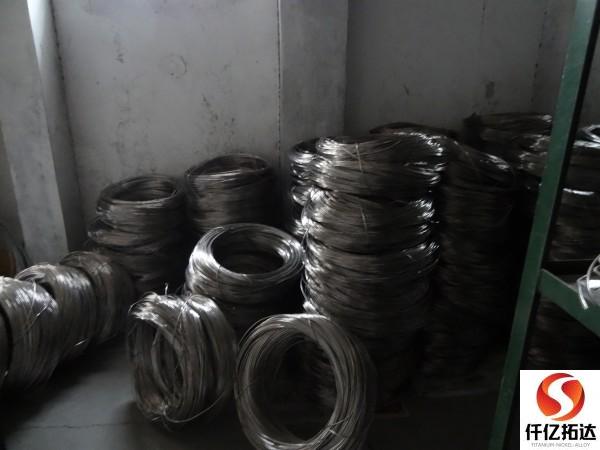
TA2 titanium welding wire is stocked as straight cut rod and as coiled spool wire, but coiled wire is cheaper and the two are not interchangeable. The decision is about feeding, cleanliness and packaging, not metallurgy: straight cut ERTi-2 rod in 1.6–3.2 mm diameters for manual TIG, coiled ERTi-2 in 0.8–1.6 mm for mechanised or orbital welding. What turns a sound TA2 weld into a porous one is almost never the alloy — it is a wire bought to ASTM B863 instead of AWS A5.16, residual drawing lubricant on the surface, or a spool that travelled without sealed packaging.
This guide is for buyers welding chemical titanium equipment: reactors, tank linings, piping, heat exchanger shells and repair work. It covers the difference between B863 wire and A5.16 filler classification, the filler-to-base-metal matching rule, straight versus coiled formats, surface and packaging requirements, shielding practice, the service limits of TA2 weldments, the economics of weld repair, and the eight fields that belong on the RFQ. For a broader view of wire forms including spring and medical wire, see our ASTM B863 welding wire overview and the titanium wire category.
| Standards | ASTM B863 (wire product); AWS A5.16 / ASME SFA 5.16 (ERTi-2 filler classification); F67/F136 for implant wire |
| Grades | ERTi-2 for TA2 / Gr2 base metal; ERTi-1, ERTi-7, ERTi-12, ERTi-5, ERTi-23 by base metal |
| Service | TIG and PAW welding of chemical titanium equipment, reactor linings, piping, tank repairs |
| Core distinction | Welding wire is a cleanliness-controlled filler product. General-purpose wire to B863 is not automatically weld-ready. |
The "Any TA2 Wire Will Do" Trap
A titanium equipment fabricator in Southeast Asia was welding the circumferential seam on a TA2 reactor shell in 2022 using mechanised TIG. The purchase order read "TA2 titanium wire 1.2 mm, coiled, 20 kg". The supplier shipped cold-drawn B863 TA2 wire — correct alloy, correct diameter, correct chemistry, valid certificate. It was not welding filler wire. It was general-purpose wire with residual drawing lubricant on the surface, supplied on an open spool in a cardboard carton rather than a sealed moisture-barrier bag.
Radiography of the first seam showed scattered porosity along most of its length. The investigation found three contributors. Residual hydrocarbon lubricant on the wire surface decomposed in the arc and supplied hydrogen and gas to the weld pool. The wire had picked up moisture and light surface oxidation during transport and storage. And the shop had used a standard gas lens without a trailing shield, so the cooling bead was still hot when it left the argon envelope — the straw-to-blue colour gradient on the bead confirmed it. The entire circumferential seam was ground out and rewelded, adding roughly four days to the vessel's critical path.
The rule: for titanium filler, surface condition and packaging are part of the product specification. Chemistry tells you what the wire is; cleanliness tells you whether you can weld with it. A B863 certificate does not answer the second question.
Nothing in that delivery was out of specification — the wire met B863 because that is a wire product standard, not a welding filler classification. The buyer had assumed the words "titanium wire" and "welding wire" were synonyms. Our titanium welding wire guide sets out the classification in more detail, and the Gr2 chemical welding wire page shows the form we normally supply for this work.
Two Standards, Two Jobs: B863 vs AWS A5.16
ASTM B863 covers titanium and titanium alloy wire as a mill product: chemical composition, mechanical properties, dimensional tolerances, and surface conditions. It is the right standard for spring wire, hanging wire, anode wire, weaving wire, medical wire and fastener heading stock. It does not require the surface cleanliness, degreasing, controlled interstitial limits, weld-bead testing or sealed packaging that a welding consumable needs.
AWS A5.16 (and its ASME counterpart SFA 5.16) classifies titanium and titanium alloy welding electrodes and rods: ERTi-1, ERTi-2, ERTi-5, ERTi-7, ERTi-12, ERTi-23 and so on. The ER designation is a welding filler classification. It carries tighter control of interstitials because oxygen, nitrogen, hydrogen and carbon picked up by the filler go straight into the weld metal, and it requires the filler to be clean, uniformly finished and packaged to protect that condition. For code work, the SFA 5.16 classification and the applicable ASME section are what the inspector will look for.
The practical consequence is simple: if the wire is going into a weld, order it to AWS A5.16 with the ER designation. If it is going into a spring, a mesh, an anode basket or a formed part, order it to B863. A PO that says only "TA2 wire" will get you the cheaper product, because that is what an unqualified description reasonably means. The two are not in a quality hierarchy — they are different products for different jobs, and using one for the other is a specification error rather than a material defect.
Match the Filler to the Base Metal
The cardinal rule of titanium welding is that the filler grade matches the base metal grade. ERTi-2 for TA2/Gr2, ERTi-1 for TA1/Gr1, ERTi-7 for Gr7/TA9, ERTi-12 for Gr12/TA10, ERTi-5 for Gr5/TC4, ERTi-23 for Gr23 ELI. The reason is not strength — a stronger weld metal sounds attractive — but corrosion behaviour and ductility balance across the joint.
| Base metal | Correct filler | What goes wrong with a mismatch |
|---|---|---|
| TA2 / Gr2 | ERTi-2 | ERTi-5 produces a harder, less ductile, less corrosion-resistant weld; fusion-line cracking is common |
| TA1 / Gr1 | ERTi-1 | Higher-oxygen filler makes the weld stronger but less formable than the base metal |
| Gr7 / TA9 | ERTi-7 | ERTi-2 weld metal loses the palladium benefit exactly at the crevice-prone joint |
| Gr12 / TA10 | ERTi-12 | Weld becomes the weak link in reducing-acid or crevice service |
| Gr23 ELI | ERTi-23 | Oxygen pickup destroys the ELI toughness advantage the alloy was chosen for |
The most damaging mismatch in chemical equipment is ERTi-5 into TA2. An aluminium-vanadium weld bead in a CP titanium shell is harder, less ductile and has different corrosion behaviour; the fusion line becomes a metallurgical notch and a galvanic boundary. We have seen this produce transverse cracking after months of thermal cycling. It usually happens because a shop has ERTi-5 left over from a Gr5 job and somebody decides titanium is titanium. It is not. Store filler by classification, segregate it physically, and issue it against the weld procedure specification.
There is one legitimate exception: some procedures deliberately use a lower-interstitial filler such as ERTi-1 on Gr2 to improve weld ductility. That is a qualified welding procedure decision documented in a WPS/PQR, not a purchasing shortcut. If your WPS says ERTi-1, buy ERTi-1. If it says ERTi-2, do not let the storeroom substitute.
Straight Cut Wire vs Coiled Wire: Feeding, Not Metallurgy
Straight cut rod, typically 1.6–3.2 mm diameter and 1000 mm length, is for manual TIG where the welder feeds by hand. Coiled or spooled wire, typically 0.8–1.6 mm, is for mechanised, orbital or robotic welding with a wire feed unit. Both can be ERTi-2 to A5.16 with identical chemistry; the difference is form, straightness, cast, helix and spool winding quality.
Coil geometry matters more than most buyers expect. Cast and helix determine how the wire tracks through the feed liner and where it exits the contact tip relative to the arc. A spool with inconsistent cast causes the wire to wander, which on titanium produces an unstable arc, intermittent shielding disturbance and variable bead shape. For orbital welding of tube-to-tubesheet joints, specify the spool type, winding layer, cast and helix limits, and ask for a feed trial before committing a production run. Straight rod needs its own checks: diameter tolerance, straightness, clean square cut ends and no burrs that can snag a glove.
The economic difference is real but easy to misread. Coiled wire generally costs less per kilogram and enables faster mechanised welding, but it is useless to a manual welder on a repair job, and an opened spool has a limited shelf life once the sealed barrier is broken. Straight rod costs more per kilogram, has no feed equipment requirement, and is the right product for a two-hour repair on a reactor nozzle. Buy the format the process uses, not the cheaper line on the quote. We stock both; see the welding wire stock page for the forms available.
Surface Cleanliness and Packaging Are Part of the Specification
Titanium weld metal is extremely sensitive to hydrogen, oxygen, nitrogen and carbon. Interstitial pickup embrittles the bead and produces porosity. The sources are mundane: drawing lubricant left on the wire, fingerprints, cutting fluid, atmospheric moisture, a dusty storeroom, or a shared abrasive wheel that has embedded free iron. This is why welding filler is supplied degreased, pickled or bright-finished, handled with clean gloves and sealed immediately.
Four clauses belong on a filler PO. First, surface condition: "degreased, pickled or bright annealed, free of drawing lubricant, oxide scale, free iron and moisture". Second, packaging: "sealed moisture-barrier bag with desiccant, individual spool or bundle identification, heat number and classification on the label". Third, storage and shelf life: state the maximum time an opened package may remain in the shop and require re-cleaning or scrapping after it. Fourth, handling: dedicated tools and gloves, and no contact with carbon steel.
A simple incoming check catches most problems: wipe a short length of wire with a clean white solvent-moistened lint-free cloth and look at what comes off. Any grey or dark residue means the surface is not weld-ready regardless of what the certificate says. On critical work, run a short bead on a coupon and bend or section it before starting the production weld. That ten-minute test has saved more reactor seams than any amount of paperwork.
Shielding: Where Most Titanium Welds Actually Fail
Even perfect filler produces a bad weld without proper inert shielding. Titanium above roughly 400 C reacts rapidly with oxygen and nitrogen, so three zones need protection: the weld pool under the torch, the solidifying and cooling bead behind the torch (trailing shield), and the back side of the joint (backing purge). A standard gas lens covers only the first.
Colour is the shop-floor indicator. A bright silver or light straw bead indicates good shielding; dark straw, purple and blue indicate increasing oxygen contamination; a grey or white powdery surface means the weld is contaminated and must be removed. Any blue or grey on a chemical-service weld is a reject, not a cosmetic issue, because the contaminated layer is brittle and has reduced corrosion resistance.
Back-side purging is the hardest part on equipment. A tank lining welded against a carbon steel shell has no accessible back side, and a closed vessel may need a full argon purge with oxygen monitoring. Joint design has to provide the shielding path — a grooved backing strip, a purge channel or a temporary backing dam. If you are buying plate, tube or filler for a lined vessel and have not seen the joint detail, ask the fabricator before material is cut. Our custom reactor and heat exchanger overview shows the arrangements we most often build, and the TA2 tube weld protection notes cover the tube-side equivalent.
Where TA2 Welds DO Fail: Read This Before You Approve the Procedure
Hot chloride crevices at the weld
A weld is a natural crevice generator: backing strips, incomplete penetration, lap joints, undercut and heat-tint oxide all create stagnant gaps. Above roughly 60–70 C in chloride service, crevice corrosion starts in those gaps while the open surface stays sound. Full-penetration welds, removal of heat tint by pickling, and crevice-free joint design matter more than a more expensive filler. See the Gr2 vs Gr7 seawater guide for the zoning approach.
Reducing acids, fluoride and dry chlorine
The weld metal is still TA2 chemistry, so all the base-metal exclusions apply: no useful resistance to HF or fluoride contamination, poor behaviour in hot concentrated HCl or H2SO4, and the need for trace water to repassivate in dry chlorine and water-free organics. A weld with slightly higher oxygen from imperfect shielding is often worse than the base metal in these media, not better.
Hydrogen embrittlement and delayed cracking
Hydrogen from moisture, lubricant or improper pickling enters the weld pool, and hydride platelets can precipitate later under load. Delayed cracking is particularly dangerous because the equipment passes hydrotest and fails months into service. Control the filler cleanliness, the shielding gas dew point, and the pickling procedure together; fixing only one does not solve it.
Contamination from carbon steel tooling
Free iron embedded from a shared grinding wheel, a carbon steel wire brush or a steel workbench forms local galvanic cells and shows up as rust-coloured pitting after the first hydrotest. Dedicated titanium or stainless tools, a dedicated abrasive wheel and a final pickling step are mandatory. This is the same mechanism described for butt-weld fittings and plate edges.
Thermal cycling and mismatched weld metal
A weld that is harder and less ductile than the base metal concentrates strain at the fusion line. Under repeated heat-up and cool-down, transverse cracks initiate there. This is the classic ERTi-5-into-TA2 failure, and it is a metallurgical design error that no amount of post-weld inspection will catch at the time of fabrication.
Do not buy general-purpose B863 wire for a welding job, do not accept an unsealed spool, do not weld titanium without a trailing shield and a back-side purge, and do not substitute ERTi-5 for ERTi-2 because it was in the storeroom. Each of these has produced a reactor seam that had to be ground out.
Cost Economics: What a Weld Repair Actually Costs
Filler wire is one of the smallest line items in a fabrication budget and one of the largest sources of rework cost. On a reactor circumferential seam, the wire consumed may be a few kilograms. Grinding out a contaminated seam, re-preparing the joint, re-purging, rewelding and re-radiographing consumes days of skilled labour and occupies a vessel that cannot be delivered. In the case at the start of this article, the saving on a B863 wire order was trivial against four days on the critical path.
The same asymmetry applies to the sealed-packaging clause. A moisture-barrier bag with desiccant costs almost nothing; an opened spool that sits in a humid workshop for three weeks produces porosity that is discovered only after radiography. Set a shelf-life rule and treat expired filler as scrap. It is cheaper than one rejected seam.
Where the cheaper option is genuinely correct: general-purpose B863 wire for non-welding applications such as hanging wire, anode baskets, springs and formed parts. There you are buying mechanical properties and corrosion resistance, not weld cleanliness, and paying for A5.16 classification would be waste. Our B863 wire overview covers those forms, and the price index plus the latest daily report give current base material context. All cost relationships here are approximate planning figures, not quotations.
Seven Procurement Mistakes That Show Up at Radiography
- Ordering B863 wire for a weld. Name AWS A5.16 with the ER classification on the PO.
- Not matching filler to base metal. ERTi-2 for TA2, ERTi-7 for Gr7, ERTi-12 for Gr12, ERTi-5 for Gr5.
- Accepting unsealed packaging. Require a moisture-barrier bag with desiccant and a labelled heat number.
- No surface cleanliness clause. Degreased and free of lubricant, oxide, free iron and moisture is a specification.
- Ignoring cast and helix on coiled wire. Orbital and mechanised feeding need controlled spool geometry.
- Buying the wrong format. Straight rod for manual TIG, coiled wire for mechanised feeding.
- No storage and shelf-life rule. Opened filler has a limited shop life; write it into the procedure.
Stock, Small Quantities and Lead Time
We stock ERTi-2 straight cut rod in the common manual-TIG diameters and coiled wire for mechanised welding, alongside ERTi-1, ERTi-7, ERTi-12 and ERTi-5 for mixed-grade shops. Wire is supplied degreased and sealed, with classification, heat number and diameter on each bundle or spool. Exact diameters and quantities are on our inventory page and the welding wire stock page; confirm live availability when you enquire.
Small quantities are normal. A repair job that needs 2 kg of ERTi-2 rod is as valid an order as a full production spool allocation, and this is where a stockholder has an advantage over a mill with a large minimum order. We can also supply the matching TA2 plate, tube and fittings for the same repair so that the filler and base metal come from a consistent, traceable material package.
Lead time depends on diameter, format, grade and any third-party certification required. We quote a firm date with the offer. Send the WPS filler classification, base metal grade, diameter, format, quantity and document set to our quotation desk; the enquiry response procedure lists what we need to reply within 24 hours. For export orders, state the certificate language and confirm the packaging is suitable for a long transit — a punctured moisture barrier is a rejected spool on arrival.
Supplier Verification: What to Ask Before the PO
Ask which standard the wire is certified to and whether it is an AWS A5.16 ER classification rather than a B863 wire product. Ask for the heat number, chemistry including interstitials, and whether a weld-bead or bend test result is available. Ask how the wire is cleaned after drawing, what packaging is used, and what shelf life applies once opened. For coiled wire, ask for cast and helix limits and whether a feed trial has been performed on the winding.
Then ask the question that separates a consumables supplier from a wire stockholder: can you supply the matching filler for every grade on this equipment drawing, and can you segregate and label them so the storeroom cannot mix them up? A supplier who can assemble a full, labelled filler package for a mixed TA2/Gr7/Gr12 fabrication understands the failure mode you are preventing. Our certifications page and materials overview show the document set and grade range available.
Frequently Asked Questions
Q1: Which filler grade should be used on TA2 plate?
ERTi-2 to AWS A5.16 (ASME SFA 5.16 for code work). Match the filler to the base metal so the weld has the same ductility and corrosion behaviour as the surrounding material. A qualified WPS may specify ERTi-1 for added ductility, but that is a documented procedure decision, not a purchasing substitution.
Q2: Can ERTi-5 be used to weld TA2?
No, not as a substitute. ERTi-5 is Ti-6Al-4V weld metal: harder, less ductile and with different corrosion behaviour than CP titanium. It concentrates strain at the fusion line and commonly produces transverse cracking under thermal cycling. Use ERTi-5 for Gr5/TC4 base metal only.
Q3: What is the difference between straight and coiled wire?
Straight cut rod (typically 1.6–3.2 mm x 1000 mm) is fed by hand for manual TIG. Coiled or spooled wire (typically 0.8–1.6 mm) is for mechanised, orbital or robotic feeding and needs controlled cast and helix. The chemistry can be identical; the format, straightness and packaging are different. Buy the format your process uses.
Q4: Why is wire surface cleanliness critical?
Residual drawing lubricant, moisture, oxide and free iron introduce hydrogen, oxygen and carbon into the weld pool, producing porosity and a brittle, less corrosion-resistant bead. Degreased, pickled or bright-finished wire in sealed packaging is a specification, not a premium option. A white-cloth wipe test is a useful incoming check.
Q5: Is AWS A5.16 required or is ASTM B863 enough?
For welding, A5.16 is required. B863 is a wire product standard covering general-purpose wire for springs, anodes, mesh and formed parts; it does not control filler cleanliness, interstitials or packaging to welding-consumable level. For code work, reference SFA 5.16 and the applicable ASME section.
Q6: How should titanium filler wire be stored?
In its sealed moisture-barrier packaging, in a clean dry storeroom, off carbon steel surfaces, handled with clean gloves and dedicated tools. Once opened, apply a defined shop-life limit and re-clean or scrap expired wire. Segregate grades physically and keep the classification label with the wire until it is consumed.
Q7: Do you supply small quantities for repair work?
Yes. Small bundles of straight rod and single spools are normal orders for us. Send the WPS classification, base metal grade, diameter and format to the quotation desk, and we will confirm the size against live stock with a firm delivery date.
Choose ERTi-2 TA2 Wire if / Choose Something Else if
Choose ERTi-2 TA2 welding wire if the base metal is TA2/Gr2; the joint will be TIG or PAW welded with proper trailing and back-side shielding; you can specify A5.16 classification, degreased surface and sealed packaging; and the service is an oxidising or mildly reducing chemical stream, seawater below roughly 60 C, or a general corrosion-resistant fabrication without hot stagnant crevices.
Choose something else if the base metal is a different grade (match ERTi-7, ERTi-12, ERTi-5 or ERTi-23 accordingly); if the joint cannot be back-purged (redesign the joint before ordering filler); if the service contains fluoride, hot concentrated reducing acid, dry chlorine or hot chloride crevices (address the material and joint design first); or if the wire is for a non-welding use such as springs, anode baskets or hanging wire, where B863 general-purpose wire is the correct and more economical product.
Summary: The Eight Fields That Belong on the RFQ
- Classification and standard: ERTi-2, AWS A5.16 / ASME SFA 5.16, with the WPS reference and base metal grade.
- Format and dimensions: straight cut rod (diameter x length) or coiled/spooled wire, with cast and helix limits for mechanised feeding.
- Surface condition: degreased, pickled or bright finished; free of lubricant, oxide, free iron and moisture.
- Packaging: sealed moisture-barrier bag with desiccant, classification, heat number and diameter on every bundle or spool.
- Chemistry: full certificate including interstitial limits and heat number; weld-bead or bend test result if the procedure requires it.
- Shielding plan: torch, trailing shield and back-side purge arrangements, gas purity and dew point, heat-tint acceptance criteria.
- Storage and handling: shop life after opening, dedicated tools, clean gloves, grade segregation in the storeroom.
- Commercial terms: quantity (small bundles accepted), export packing, certificate language, target date, incoterms.
Send those eight items with your WPS and the equipment drawing to our quotation desk, or use the contact page if you want to check the filler grade before ordering. Related reading: the titanium wire category, the welding wire guide, and the full product range.
- Titanium Price Today (11 Nov 2026): Plate, Tube, Rod & Wire
- Titanium Price Today (9 Nov 2026): Plate, Tube, Rod & Wire
- What is Titanium Flange | ASME B16.5 ASTM B381 Gr2 Gr5 Titanium Flan
- ASME B16.5 Titanium Flange Grade2 DN100-DN600 Class150/300 FOB
- Gr2 Titanium Sheet Price FOB Shanghai | ASTM B265 In Stock
Contact Person: Wang Xiaoning
Tel: +86-917-355-7966
Email: [email protected]
WhatsApp: +86 188 2967 9311
Company: Shaanxi Qianyi Tuoda Technology Co., Ltd
Address: Floor 4, Building 4, No. 188 Gaoxin Avenue, High-tech Zone, Baoji City, Shaanxi Province, China