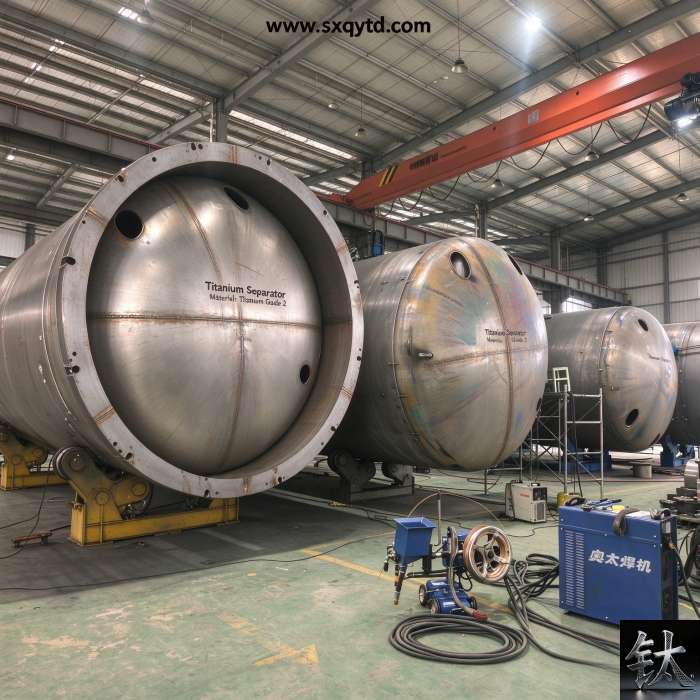
Titanium at Cryogenic Temperature: MDMT, Impact Tests and the -196 C Trap
| Спецификация | Cryogenic / low-temperature titanium service |
|---|---|
| Применимый стандарт | Gr2 / Gr9 / Gr5 / Gr23 ELI titanium plate, tube, wire, flanges |
| Состояние материала | MDMT / Charpy impact / interstitial control / thermal contraction |
| Контроль и упаковка | ASME VIII-1 UNF-51 / UHA-51 / ASTM B265 / B338 / B348 / B863 |
Описание продукции: Titanium has no brittle transition, yet one ASME UNF-51 table lists it at only -59 C without impact tests. Grades, welds, contraction and a 14-line PO.
Обзор продукции
Titanium at Cryogenic Temperature: MDMT, Impact Tests and the -196 C Trap
Titanium has no ductile-to-brittle transition temperature. That statement is true, it is repeated in almost every supplier datasheet, and it does not buy you a pressure vessel rated for liquid nitrogen. One published summary of ASME BPVC Section VIII Division 1 Part UNF puts titanium and zirconium at minus 75 F (minus 59 C) as the minimum design metal temperature permitted without impact testing, while Part UHA allows wrought 316L stainless down to minus 320 F (minus 196 C). The same summary then notes that UNF materials are generally usable at very low temperatures without impact tests. The table and the note contradict each other, and neither is the code itself. Meanwhile ASTM B265, B338 and B348 certify chemistry and room-temperature tensile properties, not a low-temperature toughness result. So a purchase order reading ASTM B338 Gr2, for minus 196 C service is not a specification; it is a request for material that nobody has qualified. This guide covers the layer between the materials handbook and the drawing: what the standards actually certificate, how MDMT and impact-test exemptions really work for non-ferrous metals, which grades and which weld states hold up in the cold, how much a 10 m run shortens on cooldown, and the 14 lines that make a cryogenic order enforceable. Our titanium versus 316L, 2205 and 254SMO upgrade ladder settles the corrosion-based upgrade; this article is the independent low-temperature check that has to run alongside it, not a replacement for it. Our titanium process equipment buyers guide covers medium, pressure and the roughly 300 C upper bound, and our Gr9 subsea low-temperature wire page is a product positioning statement. None of the three is a cryogenic design basis, and this article starts where they stop.
At a Glance: Nine Checks That Settle a Cryogenic Titanium Order
| Item | What the buyer must know |
|---|---|
| The short answer | Titanium and its alloys do not show a ductile-to-brittle transition temperature, and that metallurgical fact is frequently used as if it were a code approval. It is not. A purchase order that says ASTM B338 Gr2 for minus 196 C service certificates nothing about behaviour at minus 196 C |
| The number that surprises buyers | One published summary of ASME BPVC Section VIII Division 1 UNF-51 lists titanium and zirconium at minus 75 F (minus 59 C) as the MDMT permitted without impact testing, while UHA-51 allows wrought 316L down to minus 320 F (minus 196 C). The same summary note then says UNF materials are generally usable at very low temperatures without impact tests. The table and the note disagree |
| What the material standard covers | ASTM B265, B338 and B348 specify chemistry and room-temperature tensile properties in the condition normally supplied, plus flattening, hydrostatic or NDT tests as applicable. They do not set a minimum design metal temperature and do not require a low-temperature Charpy result |
| The grade lever | Low-temperature toughness is governed mainly by interstitial content (oxygen, nitrogen, hydrogen, carbon) and iron, plus the amount of cold work. That is why low-interstitial Gr23 ELI and lean Gr9 are the low-temperature answers, while standard Gr5 is a strength answer first |
| The weld is the weak link | Oxygen or nitrogen picked up during GTAW concentrates in the weld and heat-affected zone. An impact-test programme that samples only base metal proves nothing about the joint that will actually see the cold |
| The 8.6 versus 16 problem | Titanium contracts at about 8.6 x 10^-6 per K near room temperature, 316L at about 16, carbon steel at about 12 and aluminium at about 23. Over the 216 K drop from plus 20 C to minus 196 C, a 10 m titanium run shortens about 18.6 mm and a 316L run about 34.6 mm. The 16 mm mismatch, not the alloy, is what opens the flange |
| Where titanium really belongs | Full-scale LNG storage tanks are built from 9 percent nickel steel, austenitic stainless, aluminium alloys or Invar. Titanium earns its premium in the cold-plus-corrosive parts: cryogenic heat exchangers, subsea and transfer lines, pump and valve trim, and seawater-cooled hardware on the same skid |
| The conflicting lower limits | Public sources quote minus 59 C, minus 196 C, minus 253 C and minus 269 C for titanium in different contexts: a code exemption, a liquid gas boiling point, a reported plasticity change and an aerospace claim. They are not the same quantity. Do not copy any one of them into a specification |
| The one document to demand | A 14-line cryogenic PO and ITP that names the governing code and edition, the MDMT with its written basis, the impact-test temperature and sampling locations including weld and HAZ, the acceptance value, the interstitial and hydrogen ceilings, the contraction calculation, and the cooldown and hold-point records |
Read rows two, three and six first. The recurring failure is not that titanium becomes brittle in the cold; it is that somebody treated a handbook property as a code approval and never ordered the evidence. Every number in this table has either a governing document or a published dataset behind it, and several of them openly conflict. Where sources disagree we name the disagreement and give the verification action rather than printing one false-precision value. Treat the table as a list of decisions the designer, the fabricator and the mill must settle before a stockholder can be asked to quote. A stockholder can certify a grade, a wall, a heat number and a surface state. It cannot decide your MDMT, your impact-test programme or your flange preload at minus 162 C. That division of responsibility is the whole subject. Our ASTM B265 plate ordering guide makes the same point for plate thickness and end use: the standard gets you to the gate, and the purchase order has to carry the duty.
Why “No DBTT” Is True in the Handbook and Irrelevant on the Drawing
Ferritic steels have a ductile-to-brittle transition temperature. Above it they tear; below it they cleave, and the Charpy energy falls off a cliff over a narrow temperature band. That is why a carbon steel pipeline in a cold climate can fail in a way that looks sudden and glassy, and why entire families of pressure-vessel rules exist to keep the metal above its transition or to prove toughness below it. Commercially pure titanium is hexagonal close packed and does not undergo that transition. Published metallurgical explanations attribute the retention of low-temperature ductility to deformation twinning: as temperature falls, twin density rises inside the grains and the twin morphology changes, so plasticity continues by a mechanism that ferritic steels do not have available in the same way. Strength rises as the temperature falls while elongation drops only modestly. That is a real and valuable property. It is also the reason the marketing sentence is so persistent.
The same metallurgical literature immediately adds the qualification that buyers rarely read: low-temperature performance is controlled primarily by interstitial content. Oxygen, nitrogen, hydrogen and carbon, plus iron, are the levers. Lower interstitial and iron content gives better resistance to cold embrittlement; excessive cold deformation during forming introduces a separate low-temperature brittleness. So the honest statement is not that titanium is cryogenic. It is that a specific heat of a specific grade, in a specific product form, with a specific interstitial chemistry and a specific amount of cold work, retains toughness at low temperature. Change any one of those five and the handbook sentence stops being evidence. Our hydrogen embrittlement and hydrogen acceptance guide makes the same argument about the 150 ppm figure on a mill certificate: a factory compliance ceiling is not a service qualification, and hydrogen in titanium forms reversible hydride plates that remove toughness before they remove strength.
Public sources also quote wildly different lower bounds. Trade and encyclopedia pages describe pure titanium remaining ductile at minus 196 C, report impact energy beginning to decline slowly somewhere below minus 50 C, place a plasticity inflection near minus 253 C, and claim Ti-6Al-4V remains usable to minus 269 C. Those numbers come from different test methods, different grades, different product forms and different definitions of the word brittle. Some are boiling points of liquefied gases rather than material limits: minus 162 C for LNG at atmospheric pressure, minus 196 C for nitrogen, minus 253 C for hydrogen, minus 269 C for helium. A code exemption temperature is a fifth, unrelated quantity. When a supplier quotes one of these four numbers as the lowest service temperature for titanium, ask which quantity it is, which grade it was measured on, which standard and edition governed the test, and whether the sample included a weld. Most such quotations cannot survive the second question.
A material property describes what a metal can do. A design temperature describes what a specific fabricated item is permitted to do. Confusing the two is the single most common error in cryogenic titanium enquiries.
This is also why the low-interstitial variants exist at all. Gr5 versus Gr23 ELI is nominally the same Ti-6Al-4V alloy with oxygen reduced from about 0.20 per cent to about 0.13 per cent; the lower interstitial grade is selected for toughness and purity, not for better corrosion resistance. In a cryogenic context that purity difference becomes a design variable rather than a datasheet curiosity. A buyer who specifies Gr5 because it is stronger, then assumes the whole family inherits the same low-temperature behaviour, has just made an interstitial decision without looking at the certificate.
The “-196 C” Trap: What ASTM B265, B338 and B348 Actually Certificate
Read the scope of ASTM B338 carefully. The standard covers 28 grades of seamless and welded titanium alloy tube for surface condensers, evaporators and heat exchangers. It requires chemistry, room-temperature tensile properties in the condition normally supplied, a flattening test, a reverse flattening test for welded tube, nondestructive electromagnetic and ultrasonic examination for welded product, and a hydrostatic or pneumatic test. The phrase is explicit: room temperature tensile properties. There is no minimum design metal temperature in the scope, no sub-zero Charpy requirement and no clause that becomes active when the buyer writes minus 196 C in a remark field. B265 for plate and B348 for bar and billet are built the same way, with bending or other form-specific tests added. The standard is a product acceptance document, not a design code.
This produces a very specific commercial failure. A purchaser sends an RFQ reading ASTM B338 Gr2 welded tube, for liquid nitrogen service at minus 196 C. The mill produces fully compliant tube, issues an EN 10204 3.1 certificate with heat number, chemistry, room-temperature tensile results, flattening, eddy current and hydrostatic test records, and ships it. Every line on that certificate is true and none of it speaks to toughness at the service temperature. Six months later the designer asks for the low-temperature impact results and the project discovers that a compliant order produced an unqualified component. Neither party made a mistake inside their own document; the mistake was in the interface between them. Our ASTM B338 tube ordering guide and B338 ordering-by-failure-mode guide already argue that a grade plus a standard is not an adequate specification when the failure mode is known. Cryogenic duty is simply the case where the missing clause is most expensive.
The certificate itself is not the problem. EN 10204 3.1 mill certificate guidance explains what a 3.1 certificate can and cannot carry: the results of the tests the material specification actually requires, issued by the manufacturer independent of production. If the material specification requires no sub-zero impact test, a 3.1 certificate cannot contain one. Moving to 3.2 with a witnessed inspection does not fix that either, because a witness can only attest to tests that are called up. The remedy is to add a supplementary requirement to the purchase order, in words, with a test method, a temperature, sampling locations and an acceptance value. Then the certificate has something to report.
There is a second trap in the same remark field. Some specifications say titanium Gr2 or equivalent for cryogenic service. Our cross-family upgrade ladder explains why or equivalent fails when it crosses a passive-film system: 316L, 2205, 254SMO and Gr2 do not resist the same media by the same mechanism. Exactly the same objection applies here, one axis over. Offering 316L as equivalent to Gr2 at minus 196 C is not a harmless substitution, because the two materials are exempted from impact testing under different code parts, at different temperatures, for different metallurgical reasons, and they contract at roughly double the rate of one another. An or-equivalent clause that ignores both toughness basis and thermal contraction is not a specification at all. Write the grade, the UNS number, the product specification with edition, the condition, and the supplementary low-temperature requirement as separate lines.
Finally, do not let a product page do this job. Our Gr9 subsea low-temperature wire page says the grade has excellent low-temperature toughness and that batches undergo low-temperature impact mechanical property testing. Both statements are reasonable positioning, but neither gives a test temperature, an acceptance energy, a specimen orientation or a code reference. A phrase like excellent low-temperature toughness is a starting point for a question, not an answer to one. Ask for the number, the method and the record.
The ASME MDMT Conflict: UNF-51, UHA-51 and a Table That Contradicts Its Own Note
Minimum design metal temperature is the lowest temperature at which a pressure boundary is permitted to carry its design pressure. It is a code determination, not a material property. Under ASME BPVC Section VIII Division 1 the determination runs through different Parts depending on the material family: UCS for carbon and low alloy steels, UHA for high alloy steels, UNF for non-ferrous materials. Applying the UCS-66 governing curves or their thickness adjustments to an austenitic stainless or a non-ferrous alloy is a well documented misapplication, because those curves were built for ferritic steel behaviour. Titanium therefore sits in UNF, and 316L sits in UHA. They are not judged by the same rule.
A publicly available technical summary of those rules tabulates the MDMT permitted without impact testing as follows. Wrought aluminium and aluminium alloys are listed at minus 452 F (minus 269 C); cast aluminium, copper alloys and nickel alloys at minus 325 F (minus 198 C); titanium and titanium alloys and zirconium and zirconium alloys at minus 75 F (minus 59 C). For UHA-51, wrought austenitic chromium-nickel stainless with carbon at or below 0.10 per cent is listed at minus 320 F (minus 196 C), the same family above 0.10 per cent carbon at minus 55 F (minus 48 C), and all austenitic castings at minus 20 F (minus 29 C). Because SA-240 316L caps carbon at 0.030 per cent, it satisfies the low-carbon branch and reaches minus 196 C without impact testing.
That table is surprising, and we are not going to pretend it is settled. The very same source adds a note saying UNF materials are generally permitted at very low temperatures without impact testing because of their inherent toughness, and advises verification of applicable ASME Code Cases and material test reports. A table that lists titanium at minus 59 C and a note that says non-ferrous materials generally go much lower cannot both be used as a design basis. Other publicly circulating summaries treat titanium as unconditionally suitable for cryogenic service on the strength of the no-DBTT argument. We therefore do not print a single authoritative low-temperature limit for titanium in this article. What we will do is give you the verification path, because that is what a defensible purchase order needs.
Six actions that settle the question for your own project
- Require the designer to state in writing the governing code, the edition year, the exact clause number, the material specification with edition, the UNS number and the resulting MDMT. A clause number beats a screenshot of a summary table.
- Require the designer to state whether the item is exempt from impact testing, and on what basis. If the answer is a Code Case, record the case number, its revision, whether it has been incorporated into the code edition in use, and whether the Authorized Inspector accepts it.
- Identify which code family actually governs the item. ASME VIII-1 covers pressure vessels; ASME B31.3 covers process piping and uses different exemption temperatures; GB 150 and PED 2014/68/EU are separate regimes again. A summary that quotes B31.3 figures for a vessel is wrong on its face.
- If the required MDMT is below the applicable exemption, specify the impact test explicitly: the test method, the test temperature, the specimen size and orientation, the sampling locations including weld metal and heat-affected zone, the number of specimens, the acceptance energy or lateral expansion, and who witnesses.
- Keep the low-temperature conformity statement as a separate document from the EN 10204 3.1 certificate. The two answer different questions and belong in different folders of the equipment file.
- Record that lowering the MDMT of an existing vessel is an in-service alteration under NBIC or API 510, not a purchasing action. Section VIII Division 1 is a construction code and does not govern a change made after the nameplate was stamped.
The point of the six actions is not bureaucracy. It is that two competent engineers can look at the same public summaries and reach different conclusions about the same titanium vessel, and the difference is always resolvable by a clause number and a test record. Our weld NDT and WPS qualification guide documents the same pattern for qualification paperwork: ASME does not issue a Section IX certificate, the employer does, and four different acceptance codes are not interchangeable. Who issues the document and under which clause matters as much as the number on it. Our three-step equipment arrival acceptance guide is where that paperwork should be checked on receipt, before the item enters the cold box.
One more boundary is worth stating plainly. An exemption from impact testing is not a statement that the metal is safe at all lower temperatures, and an impact test is not a statement that the design is adequate. MDMT sits alongside allowable stress, joint efficiency, thermal stress, fatigue and support loads. Titanium allowable stresses in ASME Section II Part D are relatively flat at low temperature and decline as temperature rises, which is the opposite of the concern a buyer arriving from stainless steel expects. The cold is rarely the stress problem; the cooldown transient is.
Grade Selection at Low Temperature: Gr2, Gr9, Gr5 and Gr23 ELI
Once the code question is settled, the metallurgical question is straightforward: how much interstitial content and how much cold work can this heat tolerate and still deliver the required toughness at the test temperature? The four grades a buyer is most likely to be offered do not answer that question the same way.
| Grade | Low-temperature position | What to verify on the order |
|---|---|---|
| Gr2 (R50400) | Unalloyed, lowest interstitial burden of the common structural grades, excellent cold ductility, modest strength. The default for low-pressure cryogenic tubing, liners and sheet parts | O, N, H, C and Fe on the heat certificate; cold-work and anneal state; impact test temperature if the MDMT is below the exemption |
| Gr9 (Ti-3Al-2.5V, R56320) | Near-alpha lean alloy, cold formable, routinely positioned for subsea hydraulic and aerospace hydraulic line duty where low-temperature toughness and fatigue resistance matter more than peak strength | The actual test temperature behind any low-temperature impact claim; cold-draw and stress-relief condition; filler-wire match for welded thin-wall tube |
| Gr5 (Ti-6Al-4V, R56400) | Roughly 45 per cent stronger than Gr9 at ambient, but standard oxygen and iron levels make fracture toughness more sensitive to microstructure, section size and weld state | Whether the design actually needs the strength; product form and heat treatment; fracture toughness at the design temperature rather than at ambient |
| Gr23 ELI | Same Ti-6Al-4V system with extra-low interstitials, selected for toughness and purity. The usual answer when a high-strength titanium part must also hold toughness in the cold | Oxygen ceiling on the certificate; the governing product specification; for implant work, ASTM F136 rather than a general mill spec |
Two of our existing articles cover adjacent decisions and should be read alongside this one rather than instead of it. Gr5 versus Gr23 ELI settles the purity, implant-standard and corrosion questions; this article only adds the low-temperature toughness axis. Gr9 versus Gr5 settles room-temperature formability and bending radius; here the same pair is being judged on interstitial-driven cold toughness, which is a different and independent check. Neither of those articles recommends the wrong grade. Both simply answer a different question, and a cryogenic project has to run both checks plus the code check above.
For buyers who need a stock item rather than a mill run, Gr23 ELI seamless capillary tube and Gr2 versus Gr7 seawater selection show why the grade decision cannot be separated from the medium decision. A cryogenic seawater-cooled exchanger sees cold, chloride and a crevice at the tube-to-tubesheet joint at the same time. Choosing Gr2 on low-temperature ductility alone, then discovering a hot-brine crevice on the other side of the wall, is a failure of the medium review, not of the cryogenic review. Our HCl corrosion limits by grade guide remains the reference for the reducing-acid boundary; low-temperature toughness does not widen it by a single degree.
One practical caution about cold work. Cold drawing, cold bending and cold expanding all raise strength and consume ductility, and published metallurgical guidance warns that cold deformation beyond a limit introduces low-temperature brittleness in its own right. A U-bend or a coiled tube that was perfectly acceptable at ambient can therefore be the least tough item in a cold assembly even though it is made from the right heat. If the part is cold formed, name the forming route, the bend radius, the deformation level and whether a stress-relief or anneal follows, and include formed material in the impact-test sampling plan. Our titanium coil selection guide covers the bend-radius and post-bend anneal discipline; the low-temperature addendum is to qualify the formed state, not just the straight tube it came from.
The Weld and the HAZ Are the Weak Link, Not the Base Metal
Every argument in favour of titanium at low temperature assumes clean metal. A fabrication weld is where that assumption is most likely to fail. Above roughly 400 C titanium absorbs oxygen, nitrogen and hydrogen greedily, and the resulting contaminated layer is hard and brittle. GTAW shielding therefore has to protect the molten pool, the solidifying bead and the heat-affected zone, plus the root side, until the metal is cold again. Argon purity, dew point, trailing shields, back-purge oxygen level and weld colour are all inspection items, not preferences. our titanium wire GTAW shielding guide sets out the three-zone protection discipline in detail; the point here is narrow: an oxygen-rich weld that passes a room-temperature tensile bend can still be the first thing to cleave at minus 196 C.
That creates a sampling problem. A standard material certificate describes the parent product. A weld procedure qualification describes a joint made under controlled conditions. Neither automatically describes the production weld in the finished cold box. If impact testing is required, the sampling plan must name weld metal and heat-affected zone locations explicitly, state the notch position relative to the fusion line, and say what happens if a specimen misses the intended zone. Specifying an impact test without naming those locations produces a tidy report on base metal and leaves the actual risk untouched. The same logic applies to the WPS and PQR package: our weld NDT and WPS qualification guide explains that qualification records are employer-issued, that joint efficiencies and acceptance codes differ, and that a P-Number reference cannot be copied between regimes without checking its source.
Filler wire selection is the third leg. A weld made with unmatched filler can end up with a different interstitial and alloy content from the parent tube, and a joint that is stronger at ambient is not automatically tougher in the cold. For Gr9 thin-wall hydraulic tubing the usual question is whether the filler matches the lean alloy or whether a more ductile commercially pure filler has been proposed for weldability. That is a legitimate engineering trade, but it belongs in the qualification record with an impact result at the design temperature, not in a purchasing shortcut. Titanium Fasteners with passivation treatment is a reminder that surface condition travels with the part: a fastener or a wire that arrives with a shop treatment on it has a history that the cold assembly inherits.
Finally, keep the cryogenic impact requirement and the corrosion requirement as two independent lines. A weld that is clean enough for chloride service can still be insufficiently shielded for low-temperature toughness, and a weld with excellent Charpy numbers can still carry free iron smeared in by a carbon steel tool. Our pickling and free-iron contamination guide shows why the visible rust stain is the harmless part of that problem. Two acceptance lines, two records, no cross-credit.
The 8.6 versus 16 Problem: Thermal Contraction, Flanges and Bolt Preload
This is the chapter that actually decides whether a cryogenic titanium skid leaks, and it has nothing to do with brittleness. Near room temperature the linear coefficient of thermal expansion is about 8.6 x 10^-6 per K for titanium, about 12 for carbon steel, about 16 for 316L austenitic stainless, and about 23.1 for aluminium. The contraction of a free member is simply the coefficient multiplied by length multiplied by the temperature change. Between an assembly temperature of plus 20 C and liquid nitrogen at minus 196 C the change is 216 K, which is large enough that the difference between two materials becomes a fit problem rather than a rounding error.
| Material (alpha, x10^-6 /K) | 10 m run to -162 C (182 K) | 10 m run to -196 C (216 K) | 10 m run to -253 C (273 K) |
|---|---|---|---|
| Titanium, 8.6 | about 15.7 mm | about 18.6 mm | about 23.5 mm |
| Carbon steel, 12.0 | about 21.8 mm | about 25.9 mm | about 32.8 mm |
| 316L, 16.0 | about 29.1 mm | about 34.6 mm | about 43.7 mm |
| Aluminium, 23.1 | about 42.0 mm | about 49.9 mm | about 63.1 mm |
A 10 m titanium line alongside a 10 m 316L line shortens by roughly 16 mm less at minus 196 C. On a rigidly anchored assembly that mismatch becomes axial load, nozzle load or bolt-preload loss. Bolted joints are the classic casualty: if bolt, flange and gasket do not share a similar contraction, the clamping force at service temperature is not the clamping force that was applied with a torque wrench on a warm afternoon. Depending on the sign of the mismatch and the direction of the temperature change, preload can rise toward yield or fall toward separation, and the joint has to be checked at both extremes of the range, not only at assembly. Belleville washers, controlled compliance, matched-CTE fasteners and a preload target chosen for the whole temperature envelope are the standard mitigation tools.
The practical consequence is that a titanium flange on a steel nozzle is a design question, not a bolting question. what B16.5 hides about Titanium Flanges and the flange, bolt and gasket three-piece set cover gasket face, serration and preload at ambient; the cryogenic addendum is to re-run the same calculation with the full temperature swing. Gr2 weld-neck flange stock and Titanium Fasteners are the parts a buyer will actually order, so the fastener material and its coefficient belong on the same line as the flange material. Specifying a titanium flange with a carbon steel bolt set and no contraction check is how a joint that was pressure-tight at 20 C opens at minus 162 C.
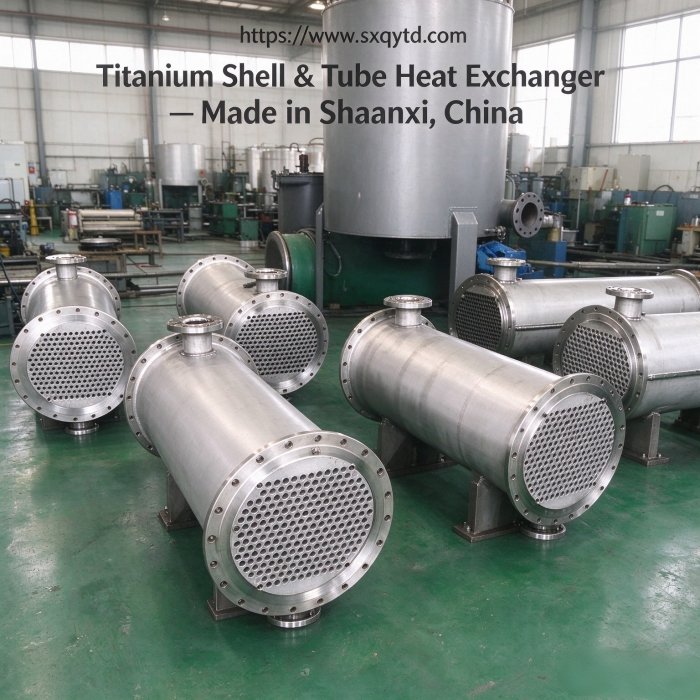
Heat exchangers concentrate the problem. A titanium tube bundle, a tubesheet, a steel shell and a mixed-material support structure all move by different amounts on the same cooldown. tube-to-tubesheet welded joint detail shows where the resulting load lands; titanium coiled tubing and coil selection guide show the geometry that can absorb some of it by flexure. Where the design is rigid, expansion joints, slotted supports, spring hangers and a written cooldown rate belong in the fabrication drawing. A slow, uniform cooldown is a design control, not an operating preference.
One caution about the numbers in that table: they are room-temperature constant coefficients applied over a very wide range, which is an approximation. Engineering references on cryogenic preload point out that the coefficient itself is not constant with temperature and recommend using a mean coefficient integrated over the actual range for a rigorous justification. Use the table to size the problem and to reject an obviously mismatched layout. Use material data measured over the real temperature interval for the final stress and preload calculation. That distinction is exactly why we give the arithmetic rather than a single number to paste into a drawing.
Where Titanium Actually Earns Its Place in Cryogenic Plant
It is worth being blunt about the largest market. Full-scale LNG storage tanks are built from 9 per cent nickel steel, austenitic stainless steels, aluminium alloys and Invar-type low-expansion systems. Titanium is not the economic answer for a tank wall measured in tens of thousands of square metres, and a supplier who suggests otherwise is not doing the buyer a favour. The material cost per kilogram is high, the thermal conductivity is modest compared with copper or aluminium, and the code route for a very large low-temperature pressure boundary is better established in the other families. Saying this plainly is more useful than pretending titanium wins every cold application.
Titanium wins in the smaller, nastier parts of the same plant. Cryogenic heat exchangers where the cold stream is paired with seawater or a chloride-bearing cooling medium; transfer lines, subsea hydraulic lines and instrument tubing that see cold plus salt; pump and valve trim that cycles repeatedly between ambient and service temperature; and lightweight hardware on offshore or mobile skids where mass matters. The common factor is not the cold alone. It is cold combined with corrosion, with difficult maintenance access, or with a weight budget. Where only the cold matters, 9 per cent nickel steel or an aluminium alloy is usually the cheaper qualified answer. That is the same two-axis logic our upgrade ladder applies to chlorides: pay for titanium where two independent requirements overlap, not where one will do.
A useful way to frame the comparison is by what each family is optimised for. Nine per cent nickel steel is a purpose-built low-temperature structural steel with a mature tank code route; austenitic 316L has an explicit UHA-51 impact exemption to minus 196 C and a large fabrication base; aluminium is light, cheap and has the deepest UNF exemption listed; titanium brings low density, near-immunity to seawater chlorides, low thermal contraction and no DBTT, at a premium price and with a more awkward qualification path. None of these is a universal winner, and a comparison that ranks them on a single property is a sales sheet, not an engineering selection.
The associated hardware is where a stockholder can help most. brine lithium shell-and-tube exchanger and five real tube bundle failure cases show the recurring geometry problems in mixed-temperature exchangers; coil selection and grade-by-grade acid limits cover the two boundaries that a cryogenic clean-down or process upset can cross without warning. If the cold side is clean and dry and the warm side carries chloride, the design review has to be based on the worst local condition at the metal surface, not the bulk stream temperature. A cryogenic line that is periodically warmed for maintenance can spend its most corrosive hours at ambient with condensate on it.
For the buyer, the short version is a scope question. Ask whether the item is a pressure boundary under a named code, or a component inside a system whose MDMT is set elsewhere. That answer decides whether the low-temperature paperwork is a design deliverable or a supplementary material requirement, and it prevents the two most common wasted enquiries: a mill certificate requested for a code question, and a code calculation requested from a stockholder.
The 14-Line Cryogenic PO and ITP Template Buyers Can Copy
The specification failure in this subject is always the same: a correct grade attached to an unstated duty. The template below is written so that every line can be copied into a purchase order or an inspection and test plan and answered with a document. It deliberately separates the material standard from the design code, the base metal from the weld, and the certificate from the conformity statement. Copy it, delete the lines that genuinely do not apply, and never merge lines two and three.
| # | Line to put in the PO or ITP | Evidence to demand |
|---|---|---|
| 1 | Grade, UNS number and product form | Heat-numbered certificate; no or-equivalent clause across material families |
| 2 | Material specification with edition (ASTM B265 / B338 / B348 / B863 as applicable) and ASME SB equivalent if coded | Certificate naming the specification and year |
| 3 | Governing design code, edition and clause for the low-temperature determination | Written designer statement with clause number |
| 4 | Required MDMT and the stated basis for it, including any Code Case | MDMT calculation sheet; Code Case number and revision |
| 5 | Whether impact testing is exempted, and under which clause | Signed exemption determination or test order |
| 6 | If tested: method, test temperature, specimen size and orientation, acceptance value | Accredited laboratory report against a named method |
| 7 | Sampling locations: base metal, weld metal, HAZ, and any cold-formed zone | Sample map tied to the weld map |
| 8 | Interstitial ceilings: O, N, H, C and Fe, in the delivered condition | Chemistry line on the heat certificate; E1447 hydrogen method where a limit is set |
| 9 | Condition, cold-work level, bend radius and post-form heat treatment | Forming record and anneal or stress-relief record |
| 10 | Welding: WPS and PQR, filler specification, three-zone argon shielding, back-purge criterion, weld colour acceptance | Qualification records and production weld map with colour photographs |
| 11 | Differential contraction calculation across the assembly temperature range, with fastener and gasket coefficients | Signed calculation; preload checked at both temperature extremes |
| 12 | Free-iron control, dedicated tooling, surface condition and cleanliness class | Free-iron test record; tooling and segregation record |
| 13 | Drying after hydrotest, residual-water and dew-point criterion, nitrogen blanketing if the interval before cooldown is long | Drain map, dry-gas record, hold-point sign-off |
| 14 | Cooldown rate, first-cooldown leak check, re-torque or preload verification, and the release signatures | Commissioning record with named signatories |
Line five is the one most often left blank, and line seven is the one most often filled in wrongly. An ITP that says impact test at MDMT per UG-84 without naming weld and HAZ locations will produce a pass on parent material and nothing else. Line eleven is the one that separates a materials specification from an assembly specification: a stockholder can answer lines one, two, eight and nine, but only the designer can answer eleven. Write the owner of each line next to it. Our B338 tube guide and 3.1 certificate page are the two references to attach when a supplier asks what a supplementary requirement looks like on a real order.
Line twelve deserves a note here because it is borrowed from a different subject. Our galvanic corrosion guide explains that titanium is the cathode and the steel is the part that is consumed, and that the area ratio decides how fast. In a cold plant, condensation under insulation keeps that couple wet for long periods, and a carbon steel test rig or temporary support can leave free iron on the surface before the unit ever reaches service temperature. Keep the free-iron acceptance line in the cryogenic ITP even though it looks like a corrosion item. Ice, water and a steel smear are one problem at minus 162 C, not three.
Limitations and Failure Conditions: Eight Ways a Cryogenic Titanium Job Fails
None of the eight conditions below means titanium is a poor cryogenic material. Each one means a specific part of the specification was left to assumption. Several of them are places where the metal was never the problem, and we would rather say so here than in a failure investigation.
Liquid oxygen and oxygen-enriched cold service
This is a hard exclusion, not a temperature limit. Titanium in gaseous or liquid oxygen can ignite under impact or friction, and published equipment guidance states plainly that titanium must not be used in oxygen-rich duty where impact can ignite it. Cold does not make it safe; a liquid oxygen system combines a high oxidiser density with thermal shock and moving parts. Cleaning for oxygen service is a separate discipline with its own non-volatile-residue and particle limits, and none of those tests say anything about toughness. If the word oxygen appears anywhere in the duty, stop the cryogenic grade discussion and route the enquiry to an oxygen-service review first. A materials stockholder should decline this order rather than qualify a grade into it.
Hydrogen pickup and hydride precipitation during cooldown
Titanium forms reversible hydride plates, and the first property to go is toughness. Hydrogen already in the metal from pickling, welding, cathodic over-protection or a reducing-acid upset does not become harmless because the plant is cold; the solubility and the hydride morphology change with temperature, so a heat that looked acceptable on a room-temperature certificate can behave differently at service temperature. The 150 ppm figure commonly quoted on certificates is a factory compliance ceiling, not a service safety limit. Our hydrogen embrittlement guide sets out the E1447 measurement route and why vacuum annealing is a works remedy, not a site remedy. Set a delivered-condition hydrogen ceiling in the PO, keep a heat-level history, and treat every pickling or cleaning event as a withdrawal from a finite margin.
Weld and heat-affected-zone oxygen or nitrogen pickup
The base metal can be exemplary while the joint is the brittle part. Above roughly 400 C titanium absorbs oxygen and nitrogen, and incomplete trailing-shield or back-purge coverage leaves an alpha-case layer that is hard and low in ductility. Weld colour is the honest inspector: silver or light straw is normally acceptable, deep blue or purple requires review, and grey or powdery white is a reject. At cryogenic temperature the loss of ductility in that thin layer is amplified rather than averaged out. Our GTAW three-zone shielding guide gives the argon purity, dew point and back-purge oxygen criteria; the cryogenic addendum is to include weld metal and HAZ in the impact sampling plan, with the notch position tied to the fusion line.
Free iron from carbon steel tools, test rigs, supports and scaffolding
Steel tools leave smears in a passive film only a few nanometres thick, and a temporary hydrotest pump or a steel support can deposit dissolved or embedded iron across a large wetted titanium area. The rust stain may disappear after the first rinse while the pit keeps going, which is the mechanism described in our pickling and free-iron guide. In a cold plant the same couple sits under wet insulation for months, and the area ratio makes a small steel anode against a large titanium cathode particularly unfavourable, as our galvanic corrosion guide explains. Require dedicated non-ferrous tooling, non-metallic or compatible temporary loop materials, and a final free-iron test as a separate acceptance line.
Differential contraction at mixed-material flanges, tubesheets and bolted joints
A titanium flange, a 316L nozzle, a carbon steel bolt set and a compressed gasket all contract by different amounts over the same 216 K swing. Preload can fall toward separation or rise toward yield, and a joint that was tight at assembly opens at service temperature. The remedy is a calculation, not a bigger torque wrench: check preload at both extremes, use a mean coefficient integrated over the actual temperature range for the final stress work, and consider Belleville washers, matched-coefficient fasteners or controlled compliance. Our tube-to-tubesheet joint detail and flange, bolt and gasket set show where the load lands. Make the contraction calculation a named ITP line with a signatory.
Residual water, ice and freeze-up after hydrostatic testing
A hydrotest is normally done with water at ambient, and the interval between a passed test and first cooldown can be weeks. Water left in a dead leg, a blind bore, an instrument stub or the annular gap at a tube-to-tubesheet joint becomes ice, blocks the drain path, concentrates whatever chloride was in the test water, and can split a thin-wall tube before the plant reaches design temperature. Chloride limits for titanium test water are quoted at 10, 25, 30 and 50 ppm in different construction specifications and are frequently borrowed from stainless or nickel-alloy piping practice rather than from a titanium tube standard. Do not pick one number from a search result. Require a written drain and dry-out map, a defined drying method, a dew-point or residual-water acceptance criterion, and a hold point before cooldown.
Galvanic couples under cold condensation and wet insulation
A cryogenic line sweats on warm-up and stays wet under insulation, giving a persistent electrolyte between titanium and any carbon steel it touches. Titanium is the noble cathode; the steel is consumed, and the severity is set by the area ratio rather than by the position of the two metals in a table. Coating only the steel anode is the classic mistake, because a small holiday in that coating then concentrates the attack. Our galvanic corrosion guide covers insulating joints, coating the cathode and the limits of cathodic protection; over-protection on the negative side is itself a hydrogen risk for titanium. Keep the insulation dry, specify the insulation chemistry, and inspect at warm-up rather than only at shutdown.
Thermal cycling fatigue at nozzles, supports, U-bends and repeated cooldowns
Most cryogenic plant does not sit at one temperature for twenty years. It cycles between ambient and service temperature for maintenance, batch operation or regeneration, and each cycle moves every constrained joint by a few millimetres. Nozzles, rigid supports, tube-to-tubesheet joints and tight U-bends accumulate that movement as low-cycle fatigue, which is a geometry problem that no Charpy value will detect. Our coil selection guide and tube bundle failure cases show how bend radius, support spacing and a stiff joint decide where the crack starts. Specify the number of design cycles, the cooldown and warm-up rate, expansion joints or flexible supports, and an inspection interval tied to cycles rather than to calendar time.
Summary: Choose Titanium if, Choose the Alternative if, Escalate if
Choose titanium for the cold duty if:
- The duty combines low temperature with chloride or seawater exposure, difficult maintenance access, or a mass budget, so two independent requirements have to be met at once.
- The designer has issued a written MDMT with a code clause and edition, and the order carries the impact-test programme with weld and HAZ sampling if an exemption is not available.
- Grade, interstitial ceilings, condition, cold-work level and forming route are specified in words and appear on the heat certificate.
- The differential contraction calculation, the fastener and gasket coefficients, the cooldown rate and the first-cooldown leak check are all named ITP lines with owners.
Choose 316L, 9 per cent nickel steel, aluminium or a non-metallic route instead if:
- The only requirement is low temperature. A large LNG tank wall is better served by a purpose-built low-temperature steel or aluminium system with a mature code route.
- The project needs the minus 196 C UHA-51 exemption without a test programme and cannot fund one; in that case the stainless route is the documented one, not the assumed titanium one.
- The duty is oxygen or oxygen-enriched, where titanium is excluded on ignition grounds regardless of toughness.
- The circuit is dominated by hot reducing acid at some point in its cycle, in which case the grade-by-grade acid limits decide the material long before the cold does.
Escalate to a designer or a fitness-for-service review if:
- A supplier answers a low-temperature question with a no-DBTT datasheet phrase and no clause number, no test temperature and no certificate field.
- Two documents give different MDMT values for the same item, or a summary table and its own explanatory note disagree.
- The impact-test report covers base metal only, or the weld map cannot be reconciled with the sample map.
- The assembly mixes titanium with steel or aluminium structural parts and nobody has produced a contraction or preload calculation.
- The item has already been stamped and somebody now wants to lower its MDMT, which is an in-service alteration, not a purchase.
The whole subject reduces to one sentence: the absence of a brittle transition is a property of the metal, and an MDMT is a property of a documented design. When you send an enquiry, the six most useful inputs are the governing code with edition, the required MDMT and its written basis, the grade with UNS number and interstitial ceilings, the welded and cold-formed condition of the part, the assembly temperature range with the materials it is bolted to, and the cooldown and commissioning sequence. Those six lines settle the branch before anyone orders a test coupon, and they remove most of the round trips that delay a cold-box project. We hold roughly 800 tonnes of titanium stock in Baoji, China Titanium Valley, including about 400 tonnes of plate, 80 tonnes of tube, 200 tonnes of bar and ingot, 50 tonnes of wire, 3,000 fittings, 1,500 flanges and 30,000 fasteners, plus nickel products for duties where titanium is the wrong upgrade. We cut to non-standard and small-batch sizes, work from customer drawings, certify to ASTM, ASME and GB standards, export-pack in house and dispatch confirmed in-stock orders the same day. Send us the code clause, the MDMT, the drawing and the heat-level chemistry you need, and we will tell you honestly which of those lines we can supply from stock and which ones belong with your designer. Request a quote →
Frequently Asked Questions
Can titanium be used at minus 196 C in liquid nitrogen service?
The metal can retain useful ductility at that temperature, but that is not the same as a component being permitted there. Minus 196 C is the boiling point of liquid nitrogen and a commonly quoted UHA-51 exemption temperature for low-carbon wrought austenitic stainless, not a general titanium rating. ASTM B265, B338 and B348 certificate room-temperature tensile properties and do not set a minimum design metal temperature. For a coded item, the designer must state the MDMT with a code clause and edition, decide whether impact testing is exempt, and specify the supplementary test if it is not. Ask for the clause number and the test record rather than a yes.
Does ASTM B338 require a Charpy impact test for low-temperature tube?
No. The scope of ASTM B338 calls for chemistry, room-temperature tensile properties in the condition normally supplied, flattening and reverse-flattening tests, nondestructive electromagnetic and ultrasonic examination of welded tube, and a hydrostatic or pneumatic test. There is no sub-zero Charpy requirement and no minimum design metal temperature in the specification. If the project needs low-temperature toughness, add it as a supplementary requirement in the purchase order with a tes
Опишите ваши требования — марка, размер и количество. Ответим в течение 24 часов.
Предпочитаете чат? WhatsApp +86 188 2967 9311 или напишите на sales@sxqytd.com.


- Что такое титан фланец| ASME B16.5 ASTM B381 Gr2 Gr5 титановые флажк
- ASME B16.5 титановая флажка класса 2 DN100-DN600 Класс 150/300 FOB
- Gr2 Titanium Sheet Price FOB Shanghai | ASTM B265 In Stock
- Titanium Price Today (26 октября 2026 г.): отчет о рынке Китая
- Цена на титан сегодня (23 октября 2026 г.): пластина, трубка, стерже
Контактное лицо: Wang Xiaoning
Телефон: +86-917-355-7966
Эл. почта: sales@sxqytd.com
WhatsApp: +86 188 2967 9311
Компания: Shaanxi Qianyi Tuoda Technology Co., Ltd
Адрес: Floor 4, Building 4, No. 188 Gaoxin Avenue, High-tech Zone, Baoji City, Shaanxi Province, China