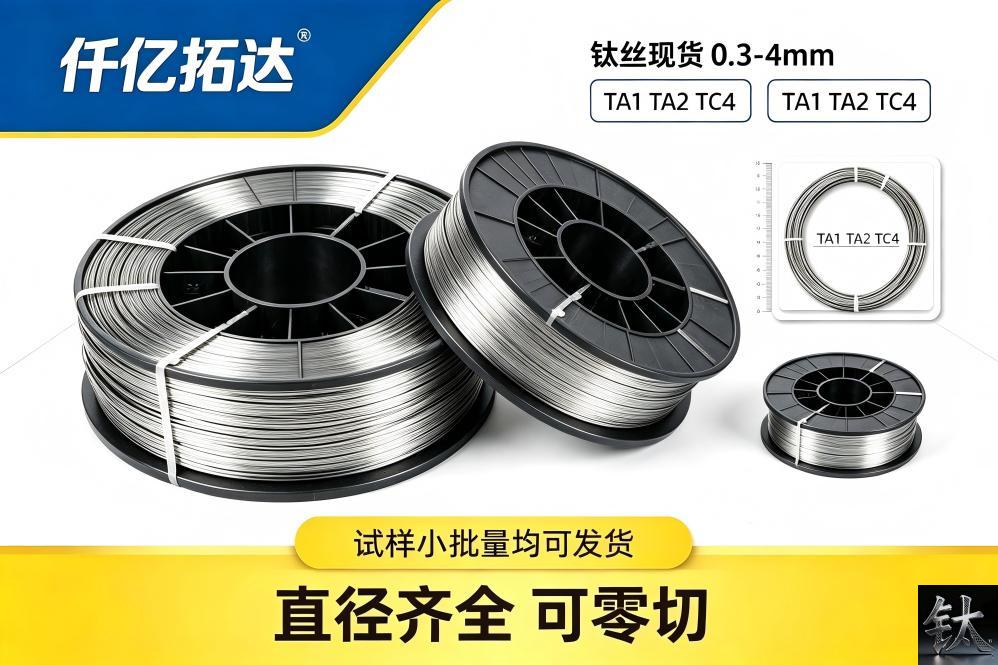
Titanium Wire Receiving Inspection: The Heat Number Disappears When You Open the Spool
| Specification | Titanium wire receiving inspection / spool sealed-state checks / heat-number traceability |
|---|---|
| Applicable Standard | Titanium welding wire and straight cut wire on spools, grades as ordered |
| Material Condition | Wire diameter / spool net weight / cast and helix / surface residue / desiccant and seal / label-to-MTC match |
| Inspection & Packaging | Receiving rejection triggers / 14-line acceptance checklist / dispute hierarchy / identification retention |
| Reference Price | $50.00 – $1000.00 |
Product Description: Titanium wire spool is delivered product, not packaging. Check 6 dimensions, 8 reject triggers and a 14-line receiving checklist before you open it.
Product Overview
Titanium Wire Receiving Inspection: The Heat Number Disappears When You Open the Spool
Answer first: a titanium wire spool is part of the delivered product, not the packaging, and cutting the seal breaks the heat-number chain that ties the metal to its mill certificate. Before anything is opened, six sealed-state numbers decide the lot: measured diameter, spool net weight, flange size, length per spool, cast and helix, and winding condition. Eight conditions below are grounds to reject, and a 14-line acceptance checklist turns each into a measurement, a reference file, a pass criterion and a signature. Three of our pages already cover the ordering and use side: our ASTM B863 titanium wire and welding wire guide covers which wire to buy, our spool and straight wire stock page covers the formats, and our GTAW argon shielding page covers welding shielding. None covers receiving. This article starts where they stop: inspection, rejection and keeping traceability after the first metre is used.
Most bays treat a wire spool like a box of bolts: weigh the carton, check the count, sign and move on. That is wrong for wire, because the spool state is the delivery state. A clean certificate cannot tell you whether the label matches the spool, whether the desiccant is spent, or whether drawing lubricant will become porosity three welds later. Our equipment arrival acceptance guide sets the general receiving logic and our process equipment buyers guide covers specification before an order. This article sits between them: is the physical spool the one the documents describe, and what happens when it is not.
At a Glance: Eight Numbers and Documents That Decide a Spool Pass or Fail
| Item | What the buyer must know |
|---|---|
| The short answer | A spool is delivered product, not packaging. Inspect it sealed, because six numbers can only be verified before the first metre is pulled and the heat-number chain breaks at the cut |
| The six numbers | Measured diameter, spool net weight, flange size, length per spool, cast and helix, and winding condition, checked against the purchase order, packing list and label, not a generic table |
| The evidence rule | The heat number lives on the label, the inner tag and the mill certificate. Once the wrap is cut and the loose end used, the label is the only physical link, so write an identification-retention step first |
| The dispute hierarchy | For dimension or quantity the purchase order and packing list govern, for metallurgy the mill certificate governs, for traceability the spool label governs. Name the file per check first |
| The surface risk | Drawing lubricant, oxide scale and handling grease are receipt defects, a porosity source in the first welds, and can only be judged on the as-received surface |
| The feed risk | Cast, helix and winding tension decide whether wire feeds or birdnests. Published values differ with the test method, so agree the method in the purchase order |
| Eight reject triggers | Out-of-tolerance diameter, weight or length mismatch, surface residue, bad cast or helix, uneven winding or unmarked joints, missing heat number or no retention plan, broken seal or spent desiccant, out-of-square cut ends |
| The one document | A 14-line receiving inspection and acceptance checklist with what is checked, the governing file, the pass criterion and who signs, copied into the instruction before unloading |
Read rows four and eight first. Nearly every wire dispute is a document dispute wearing a metrology costume: two parties measuring one spool against two different files. A stockholder can certify heat, chemistry and diameter at dispatch, not what happened in transit or after the wrap was cut. Our B16.5 guide on what a standard hides makes the same point elsewhere: a standard gets the part to the gate, and the purchase order carries the duty.
The Spool Is the Delivery: Why Opening It Destroys the Heat-Number Evidence Chain
The unit of delivery for titanium wire is the spool: a wound, tagged, sealed, desiccated object whose condition is part of the purchase. A wire spool has one place where the heat number physically lives, the label under the wrap. Pull the first metre for a trial, cut the tie, and the metal in the feed line is anonymous unless somebody recorded which spool it came from.
A certificate travels as a document and stays intact. A spool travels as an object and is opened by the first person who needs wire. Traceability is not lost at the mill; it is lost at the receiving bench, in the thirty seconds between cutting the seal and using the untagged loose end.
So receiving is the correct moment to inspect; an inspection done after the line is threaded is nearly worthless. Six checks are sealed-state checks, possible only while the wrap, desiccant and label are intact. Once open, net weight, seal integrity and label-to-certificate correspondence are unverifiable or changed. Our mixer unpacking guide makes the same chronological point: unpacking is a hold point and the record is made at opening, not from memory. Our coil selection guide covers wound product at specification; the receiving addendum is that a wound geometry is a deliverable.
Measure Before You Cut: Six Numbers You Can Only Verify While the Spool Is Still Sealed
Three documents describe a sealed spool: the purchase order says what was ordered, the packing list what was shipped, the label what this wound object claims to be. The six numbers below compare those files with an instrument. All are receiving questions and belong in the purchase order as acceptance criteria, not in a welding procedure.
| # | Check | What to measure and with which instrument | Governing file |
|---|---|---|---|
| 1 | Wire diameter | Micrometer or laser gauge on a clean outer-end sample, several points and both axes | Purchase order tolerance, confirmed against the edition named in your contract |
| 2 | Spool net weight | Calibrated scale on the sealed spool minus the tare of an empty spool | Packing list net weight and its stated tolerance |
| 3 | Flange or spool diameter | Tape or caliper across the flanges and wound width | Packing list or spool drawing in the purchase order |
| 4 | Length per spool | Derived from net weight, density and measured diameter, or an agreed counter | Packing list length and the derivation method in the purchase order |
| 5 | Cast and helix | A free loop on a flat surface, loop diameter and rise by the agreed method | Purchase order with the test method and edition named in the contract |
| 6 | Winding condition | Visual check of layers, tension and joints through the intact wrap | Packing list and receiving instruction on joint marking |
Two limits apply. Do not paste a published diameter-tolerance table into the receiving instruction: the governing tolerance is in your purchase order, and any referenced edition must be confirmed against the edition named in your contract. Length per spool is usually derived, not measured, so the derivation method and allowed difference must be written down first, or two parties will compute two lengths from one weight.
Which File Wins a Dispute? MTC, Packing List, Spool Label or Purchase Order
When a spool is rejected, the argument is rarely about the instrument; it is about which file the reading is compared against. A buyer uses the purchase order, a supplier a tolerance in a referenced standard, and both are certain. Fix it by naming a governing file per check before the truck arrives. Our EN 10204 3.1 certificate page is useful for what it does not cover: a mill certificate attests to the metal as produced, not to spool weight, seal state, transit residue, or whether this label matches that heat. Those facts live in the packing list, label and purchase order.
| Dispute type | Governing file | What the file can and cannot prove |
|---|---|---|
| Diameter, net weight, flange size, length | Purchase order plus packing list | The purchase order states the tolerance; the packing list states what was shipped. Neither proves metallurgy |
| Chemistry, heat, mechanical properties | Mill certificate for the named heat | Proves the metal as produced, not that this spool is that heat |
| Traceability after the wrap is cut | Spool label and receiving record | The label is the only physical link; once gone, no document rebuilds it |
| Surface residue, seal damage, winding faults | Receiving instruction with dated photographs | Transit and handling facts; no mill document covers them |
Our WPS and NDT qualification guide makes the parallel point for weld acceptance: codes are not interchangeable, and a pass under one does not discharge the others. Write the hierarchy into the purchase order: purchase order and packing list for dimension, mill certificate for metallurgy, spool label and receiving record for traceability, dated photographs for condition. Our flange, bolt and gasket article is a reminder that a bundle never replaces a line naming what is accepted.
Surface Condition at Receiving: Lubricant, Oxide Scale and the Porosity They Cause Later
A wire surface is a welding input, and the as-received surface is the only one a receiving inspector can judge. Drawing lubricant from the last reduction pass, oxide scale from an incomplete anneal and handling grease all sit on the wire at delivery. Wipe a short length with a clean white solvent-moistened cloth; a dark or greasy transfer is a receipt defect, not a cosmetic note. Our pickling and free-iron guide explains why a contamination mark on titanium is an event to record, and why stainless passivation documents are the wrong cleaning reference.
This matters at receiving because of porosity. Titanium weld metal is sensitive to hydrogen, moisture and hydrocarbon residue on the filler, and a contaminated surface puts all three into the arc before a parameter is adjusted. Our hydrogen embrittlement guide sets out why the factory hydrogen figure on a certificate is a compliance ceiling, not a cleanliness guarantee, and our upgrade ladder against 316L, 2205 and 6Mo shows why a passive-film material cannot be swapped with an or-equivalent clause. Record the wipe result, date and photograph; confirm the cleaning method against the edition named in your contract.
Cast, Helix and Winding Tension: Three Spool Properties That Decide Whether the Wire Feeds
Cast is the loop diameter a free length of wire forms on a flat surface; helix is how far that loop rises out of the plane. With winding tension they decide whether a feed runs or builds a birdnest at the drive rolls. These are spool properties, not metallurgical ones, and a mill certificate never mentions them.
| Property | How to check at receiving | Governing reference |
|---|---|---|
| Cast | Pull an agreed free length, lay it flat, record loop diameter by the named method | Purchase order, method and edition confirmed against the contract |
| Helix | On the same length, record the rise off the plane | Same agreed method; published values depend on the test |
| Winding tension and joints | Inspect layers through the intact wrap, note any joint and its flag | Packing list and receiving instruction on joint marking |
We will not print a cast or helix number. Published values differ with wire diameter, sample length, fixture and edition, and one universal figure starts a false-precision dispute. Agree the sample length, fixture, reading count and allowed range in the purchase order, and confirm the method against the edition named in your contract. Our coil selection guide and coiled tubing range cover wound product at specification and replacement ends; a wound geometry has its own acceptance. Our Gr5 versus Gr23 ELI guide is the analogy: a small processing difference changes the governing check.
Seal, Desiccant and Label Integrity: Keeping the Heat Number Alive After the First Metre
The moisture barrier is part of the delivered condition. A broken heat-sealed bag, punctured foil laminate, missing or colour-changed desiccant and a rewetted label are all receiving findings, often missed because the carton looks fine. Photograph the sealed spool, desiccant and label before cutting, and read the humidity indicator card if fitted. A spent desiccant does not prove damage, but it proves the protective condition was lost, shifting the burden onto a documented inspection rather than a shrug.
Then write the identification-retention step. Before opening, transcribe the label number, heat number and certificate number onto a receiving record and attach a durable tag to the spool core or reel, so remaining wire keeps its identity when the outer label is consumed. Our Titanium Fasteners range is the small-scale example where every bundle carries its mark, and our Gr2 flange page is the reminder that a part without its stamp cannot be tied to a certificate at claim time.
Eight Receiving Rejection Triggers: What to Measure, With Which Gauge, Against Which File
None of the eight conditions below means the wire is a bad purchase. Each means a receiving variable was unmeasured, measured against the wrong file, or measured after opening. Our five tube bundle failure cases shows what one unrecorded small defect costs in service; the same economics apply to a spool signed for and then found to birdnest. Every trigger needs four things: what is measured, the instrument, the governing file, and the action on disagreement.
Measured wire diameter does not match the order tolerance
Measure a clean outer-end sample with a calibrated micrometer or laser gauge at several points and both axes, recording every reading. The governing file is the purchase order tolerance, with the referenced edition confirmed against the edition named in your contract, not a generic table. On disagreement, hold the spool sealed and re-measure with a second calibrated instrument before both parties. If confirmed, reject or renegotiate before any wire is consumed.
Spool net weight, flange diameter or length per spool disagrees with the packing list
Weigh the sealed spool on a calibrated scale minus the tare of an empty spool, measure flange diameter, and derive length by the method agreed in the purchase order. The governing file is the packing list with its stated tolerances, read with the purchase order. On disagreement, re-weigh on a second scale, check whether the list is gross or net, and photograph the label beside the carton. Quantity disputes are settled by shipping documents, not the mill certificate.
Drawing lubricant, oxide scale or handling grease remains on the as-received surface
Wipe a short length with a clean white solvent-moistened cloth under good light and record the transfer with a dated photograph. The governing file is the receiving instruction and the cleanliness requirement in the purchase order, with the method confirmed against the edition named in your contract. On disagreement, retain a wipe sample and take a second reading on an unused length, then escalate to the agreed cleanliness test. Reject or require documented cleaning, because residue becomes porosity later.
Cast or helix is outside the agreed range and the wire birdnests on a feed trial
Pull the agreed free length, lay it on a flat clean surface, and record loop diameter and rise by the method named in the purchase order, then run a short feed trial where the contract allows one. The governing file is the purchase order with its method, sample length and allowed range, not a published number from another duty. On disagreement, confirm both parties used the same sample length and fixture, since cast and helix change with the method, and escalate to that method.
Winding is uneven, layers are crossed, or a joint is present without a marker
Inspect wound layers through the intact wrap for crossed or loose windings, and check that any joint is flagged and recorded. The governing file is the packing list and the receiving instruction on joint marking and winding condition. On disagreement, photograph the fault before disturbing the wrap and count the affected layers; an undeclared joint is a documentation defect as well as a feed defect. Reject the spool or require a written concession naming where the joint sits.
A spool label carries no heat number, or no identification-retention plan exists after opening
Before cutting the seal, read the label and confirm heat number, spool number and certificate number are present and match the mill certificate. The governing file is the label plus the receiving identification record. On disagreement, hold the spool and request the certificate for that heat; a spool whose heat cannot be tied to a certificate is not traceable and cannot be accepted as certified material. Require a written retention step and reject any missing, illegible or mismatched label.
The moisture seal is broken or the desiccant is spent
Inspect the heat-sealed bag or foil laminate for punctures, confirm the desiccant sachet is present and read the humidity indicator card if fitted, all before opening. The governing file is the receiving instruction and the packaging requirement in the purchase order. On disagreement, photograph the seal, sachet and card with the date and record transit conditions. A broken seal does not itself prove damage, but it removes the protective condition, so require a documented surface and feed inspection before acceptance.
Straight wire cut ends are out of square or the length is out of straightness
For straight cut lengths, check the cut face against a square on a flat surface, and roll the length or check it against a straightedge over its full length. The governing file is the purchase order length and squareness requirement, with the referenced edition confirmed against the edition named in your contract. On disagreement, measure a sample of lengths rather than one piece, record squareness deviation and bow, and compare with the purchase order. Reject or re-cut before bundling into a job.
The 14-Line Receiving Inspection and Acceptance Checklist
The usual failure is a receiving instruction written as one line: weigh the carton and file the certificate. Each line below can be copied into a receiving inspection and acceptance checklist and answered with a document, a value and a signature. It separates sealed-state from post-opening checks and names a governing file per line. Copy it, delete lines that do not apply, and never merge line one with line eleven.
| # | What is checked | Governing file | Pass criterion | Who signs |
|---|---|---|---|---|
| 1 | Spool label and heat number matched | Spool label plus receiving record | Heat, spool and certificate numbers correspond, photographed | Receiving inspector |
| 2 | Moisture seal, desiccant, indicator intact | Receiving instruction and packaging clause | Seal unbroken, desiccant active, dated photographs | Receiving inspector |
| 3 | Measured wire diameter on outer-end sample | Purchase order tolerance, edition confirmed | All readings within tolerance at several points | QC inspector |
| 4 | Spool net weight and tare | Packing list net weight and tolerance | Net weight within tolerance on a calibrated scale | Receiving inspector |
| 5 | Flange diameter and wound width | Packing list or spool drawing | Dimensions within the stated drawing values | Receiving inspector |
| 6 | Length per spool, derived or counted | Purchase order method plus packing list | Length within the allowed difference | QC inspector |
| 7 | Surface wipe for lubricant, scale, grease | Receiving instruction and cleanliness clause | White-cloth transfer within the agreed limit, photographed | QC inspector |
| 8 | Cast and helix on the agreed free sample | Purchase order with method and range | Loop diameter and rise within the agreed range | QC inspector |
| 9 | Winding condition, crossed layers, joints | Packing list and joint-marking instruction | Layers even, any joint flagged and located | Receiving inspector |
| 10 | Label-to-certificate traceability | Spool label and mill certificate | Heat on label equals heat on certificate | QC inspector |
| 11 | Identification retention for a partly used spool | Receiving instruction | Durable tag on core or reel, record links heat, spool, certificate | Receiving inspector and storekeeper |
| 12 | Straight cut squareness and straightness | Purchase order length and squareness | Cut face square and bow within stated values | QC inspector |
| 13 | Dispute hierarchy and photographic evidence | Purchase order clause on governing files | Photographs of spool, label and desiccant dated and filed | Receiving inspector |
| 14 | Records and sign-offs | Receiving inspection and acceptance checklist | Every line answered with a value, a document, a signature | Receiving lead and QA |
Line two is skipped because the carton looks fine; line eleven almost never exists because a partly used spool rarely keeps its tag. Line thirteen makes the list falsifiable: dated photographs and a named file turn a signature into a chain of custody. Our B265 plate guide and certificate page show the form such a record takes, where a standard gets material to the gate and the purchase order carries the duty; no mill can supply this content. Our condenser tube stock with fast dispatch is the commercial counterpart: a stockholder ships certified wire the same day, but the acceptance record belongs with the buyer.
Straight Wire, Cut Ends and Squareness: A Different Set of Receiving Checks
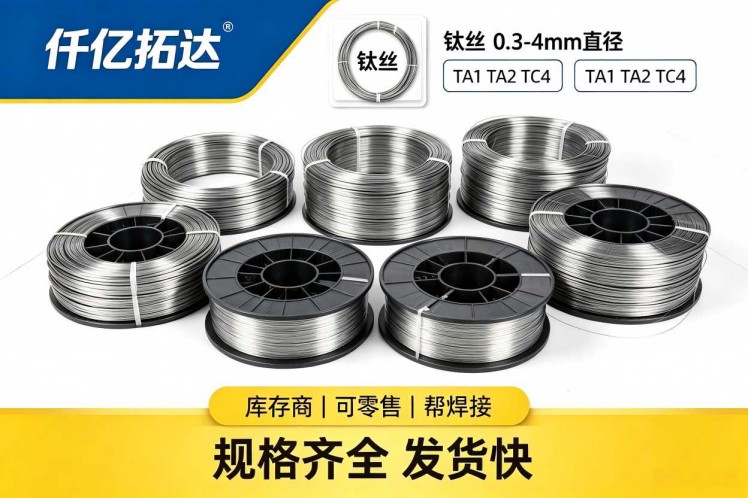
Not all wire arrives wound. Straightened cut lengths for filler, fixture, spring or medical use come as bundled rods and need checks a spool list does not cover: cut-face squareness, length, straightness, end condition and bundle identification. Our cut-to-length B338 tube page covers the same questions for tube, where a documented length is only as good as the cutting method. Check a sample against a square and straightedge, not one piece, and record the bow.
The governing file is again the purchase order, with any referenced edition confirmed against the edition named in your contract; do not paste a published straightness table into the receiving instruction. Bundle tags matter as much as spool labels, because a cut length has no wrap to carry a label. Our Gr2 flange page and flange, bolt and gasket article are reminders that identification and dimensional acceptance are separate: a part can be square and still untraceable. Photograph the tag, cut faces and straightedge check before issue.
Summary: Choose to Accept if, Choose to Hold if, Choose to Reject if
Choose to accept the delivery if:
- All six sealed-state numbers were measured before the wrap was cut, against the purchase order and packing list.
- The label carries a legible heat number matching the mill certificate, and a retention step is written before opening.
- The wipe test, seal, desiccant and indicator pass and are photographed with the date.
- Cast, helix and winding were checked by the agreed method, with no number borrowed from another duty.
- Every line of the 14-line checklist has a value, a governing file and a signature.
Hold the delivery and escalate if:
- A value is near a limit and the parties compare it against different files or standard editions.
- The seal is broken or the desiccant spent but the wire looks sound, so a documented surface and feed inspection is needed.
- Cast or helix depends on a sample length or fixture never agreed in the purchase order.
- The spool was opened before receiving, so sealed-state numbers cannot be verified.
Choose to reject or renegotiate if:
- Diameter, net weight, flange size or length is outside tolerance on a confirmed re-measurement.
- The heat number is missing, illegible or cannot be tied to a certificate.
- Surface residue, crossed winding, an unmarked joint or out-of-square ends are confirmed with no written concession.
- The supplier cannot produce the packing list, certificate or dated photographs the instruction requires.
The whole subject reduces to one sentence: a spool is delivered product whose identity lives on the label until the seal is cut, so inspect it sealed and write down which file governs each number. Useful enquiry inputs are the purchase order tolerance and edition, the packing list format, the label layout, the cleanliness requirement, the cast and helix method, and a retention step for partly used spools. We hold roughly 800 tonnes of titanium stock in Baoji, China Titanium Valley, including about 400 tonnes of plate, 80 tonnes of tube, 200 tonnes of bar and ingot, 50 tonnes of wire, 3,000 fittings, 1,500 flanges and 30,000 fasteners, plus export packing in house. We cut to non-standard and small-batch sizes, work from drawings, certify to ASTM, ASME and GB standards, and dispatch confirmed in-stock orders the same day. Send us the diameter, spool format and governing documents, and we will tell you honestly what ships from stock and which decisions belong with your receiving inspector. Request a quote →
Frequently Asked Questions
Is the mill certificate enough to accept a titanium wire spool?
No. A mill certificate attests to the metal as produced, including heat, chemistry and mechanical results. It says nothing about the spool as received: net weight, seal and desiccant state, transit residue, winding condition, or whether this label matches that heat. Those are receiving facts governed by the packing list, label, purchase order and receiving instruction. Accept only after the sealed-state checks are recorded and the 14-line checklist is signed.
What should be checked before a wire spool is opened?
Six sealed-state numbers: measured diameter, spool net weight, flange or spool diameter, length per spool, cast and helix, and winding condition. Also record the label heat number, desiccant state and moisture-seal integrity with dated photographs. These are possible only while the wrap is intact; once the first metre is used, weight, seal and label correspondence are permanently changed.
Which document governs a diameter or weight dispute on a delivered spool?
For dimension and quantity, the purchase order tolerance and packing list govern, with any referenced edition confirmed against the edition named in your contract. The mill certificate governs metallurgical questions only. For traceability after opening, the spool label and receiving record govern. Name the governing file per check in the purchase order before delivery, so a dispute is one measurement against one agreed file.
Can a spool be rejected for surface lubricant or oxide scale?
Yes, when the purchase order or receiving instruction states a cleanliness requirement and the wipe test shows residue outside it. Drawing lubricant, oxide scale and handling grease introduce hydrogen, moisture and hydrocarbons into the first welds, which appear as porosity. Record a white-cloth wipe result, a dated photograph and a retained sample, and confirm the cleaning method against the edition named in your contract.
How should a partly used spool keep its heat number?
Before cutting the seal, transcribe the label number, heat number and certificate number onto a receiving record, then attach a durable tag to the spool core or reel so remaining wire keeps its identity after the outer label is consumed. A loose spool with no tag is an uncertified length. Write this retention step into the receiving instruction before opening, and hold any spool with a missing or mismatched label.
Are there published cast and helix limits a buyer can quote?
There is no single defensible set. Published values change with wire diameter, sample length, fixture and edition, so one universal figure starts a false-precision dispute. Agree the sample length, fixture, reading count and allowed range in the purchase order, and confirm the method against the edition named in your contract. Where sources disagree, record it and give the verification action rather than selecting one convenient value.
What belongs in a titanium wire receiving inspection and acceptance checklist?
Fourteen lines, each with what is checked, the governing file, the pass criterion and who signs: label and heat number, seal and desiccant, measured diameter, net weight, flange size, length per spool, surface wipe, cast and helix, winding and joints, label-to-certificate traceability, a retention step for partly used spools, straight cut squareness, the dispute hierarchy with dated photographs, and records with release sign-offs. A stockholder ships certified wire, but the acceptance record belongs with the buyer.
Tell us your requirement — grade, size and quantity. We reply within 24 hours.
Prefer chat? WhatsApp +86 188 2967 9311 or email [email protected].
- Titanium Price Today (9 Nov 2026): Plate, Tube, Rod & Wire
- What is Titanium Flange | ASME B16.5 ASTM B381 Gr2 Gr5 Titanium Flan
- ASME B16.5 Titanium Flange Grade2 DN100-DN600 Class150/300 FOB
- Gr2 Titanium Sheet Price FOB Shanghai | ASTM B265 In Stock
- Titanium Price Today (Oct 26, 2026): China Market Report
Contact Person: Wang Xiaoning
Tel: +86-917-355-7966
Email: [email protected]
WhatsApp: +86 188 2967 9311
Company: Shaanxi Qianyi Tuoda Technology Co., Ltd
Address: Floor 4, Building 4, No. 188 Gaoxin Avenue, High-tech Zone, Baoji City, Shaanxi Province, China