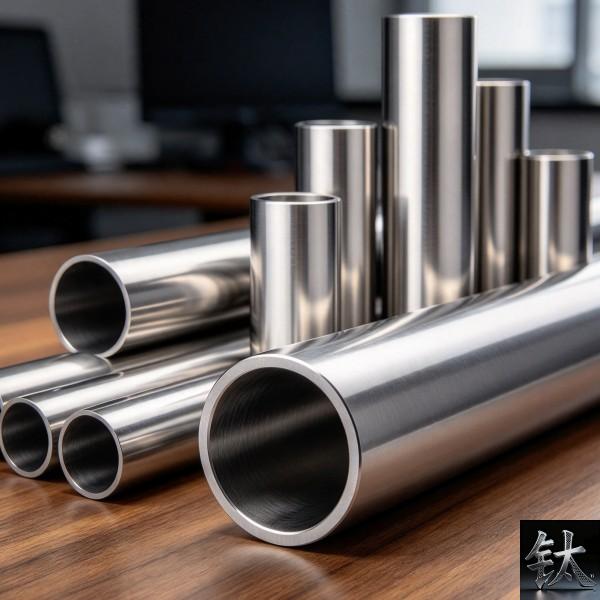
Nickel Products: N6, Ni201, Monel400 — Pick by Medium, Not by Catalog
| Specification | Product Forms: Plate / sheet / strip, seamless & welded pipe & tube, rod & bar, wire, forging, fitting |
|---|---|
| Applicable Standard | Grades Covered: N6 (≈UNS N02201), Ni200 (N02200), Ni201 (N02201), Monel 400 (N04400) |
| Material Condition | Governing Standards: ASTM B160 / B161 / B162 / B163 (pure Ni), ASTM B127 / B164 / B165 (Monel 400), EN 10204 3.1 |
| Inspection & Packaging | Decision Boundaries: Ni200 vs Ni201 carbon line at 315 °C graphitization, Monel 400 = Ni-Cu not pure nickel, thermal conductivity ~22 vs ~70 W/m·K, mercury liquid-metal embrittlement, no oxidizing aci |
Product Description: N6/Ni201 are pure nickel split by 0.02% carbon at 315°C; Monel 400 is Ni-Cu, not nickel. Pick by medium—caustic, seawater, HF, oxidizing—not by catalog.
Product Overview
Nickel Products: N6, Ni201, Monel400 — Pick by Medium, Not by Catalog
N6, Ni201 and Monel 400 are three different nickel-family alloys, and the one-line catalog entry that lists them together is the trap. N6 is the Chinese GB grade of commercially pure nickel (≈ UNS N02201, ≥99% Ni, carbon ≤0.02%); Ni200 and Ni201 are the ASTM names for the same pure nickel, split only by carbon — Ni200 ≤0.15%, Ni201 ≤0.02% — and that carbon line sets a hard 315 °C (600 °F) graphitization limit above which Ni200 embrittles. Monel 400 (UNS N04400) is not pure nickel at all: it is roughly 63% nickel plus 28–34% copper, about a third of pure nickel's thermal conductivity (~22 vs ~70 W/m·K), and it fails in nitric and other oxidizing acids where pure nickel survives. Pick by medium — caustic, seawater, hydrofluoric, oxidizing — not by the word "nickel". Here is what the catalog leaves out.
| Item | What the catalog states | What it hides |
|---|---|---|
| N6 (China GB) | Commercially pure nickel, ≥99% Ni, low carbon | Maps to UNS N02201 (Ni201). Confirm the grade and the standard when quoting — "N6" alone does not name the carbon limit. |
| Ni200 vs Ni201 | Same pure nickel; only carbon differs | Carbon decides the 315 °C graphitization line. Above it, only Ni201. The certificate must name the UNS and the carbon limit. |
| Monel 400 (N04400) | Nickel alloy, good in seawater and HF | It is Ni-Cu, not pure nickel: ~1/3 the thermal conductivity, fails nitric/oxidizing acids, and is embrittled by mercury. Not a drop-in for either. |
| Caustic soda (NaOH) | All three resist; pure nickel is the benchmark | Above 315 °C specify Ni201, not Ni200, or graphitization embrittles the part. |
| Seawater / HF | Monel 400 is the franchise | Pure nickel is only fair in stagnant seawater (pitting risk); both need flow and clean welding. |
| Oxidizing acids | "Nickel resists corrosion" | None of them survive nitric or ferric/cupric salts. All three need a chromium/molybdenum alloy instead. |
| Mercury / oxalic pickling | Not listed as a hazard | Mercury embrittles Monel 400 catastrophically; oxalic acid (used on stainless) attacks both. Keep both off nickel equipment. |
| Ordering field | ASTM B160/B161/B162/B163 (Ni); B127/B164/B165 (Monel) | The UNS number + standard edition decide the grade the mill ships. "Nickel" alone does not. |
What N6, Ni201 and Monel 400 Actually Are
Start with the chemistry, because everything that follows is a consequence of it. Commercially pure nickel is nickel with ≥99% Ni and only trace alloying; the workhorse grades are Ni200 (UNS N02200, carbon ≤0.15%) and Ni201 (UNS N02201, carbon ≤0.02%), plus the Chinese designation N6, which is the low-carbon grade equivalent to Ni201. They are the same metal apart from carbon, and that is the whole story of the first trap below. Pure nickel's signature is outstanding resistance to caustic soda at every concentration and temperature, good resistance to non-oxidizing (reducing) acids under deaerated conditions, and high thermal and electrical conductivity.
Monel 400 is a different animal. Its nominal composition is 63% nickel (minimum), 28–34% copper, with iron up to 2.5% and a maximum carbon of 0.30%. The copper is not a trace addition — it is the second-largest component, and it changes the corrosion envelope, the density, the conductivity and the magnetism. Monel 400 wins in flowing seawater and hydrofluoric acid, and it is immune to chloride stress-corrosion cracking, which is exactly why it is specified there. It is not, however, a stand-in for pure nickel in hot caustic, and it is not a chromium alloy that can face oxidizing acid. The companion overview at our nickel products page lays out the full composition and property table; this article starts where that table stops being useful — at the point of selection.
The Carbon Trap: Ni200 and Ni201 Split at 315 °C
Ni200 and Ni201 are identical in corrosion resistance and mechanical properties at room temperature. The only controlled difference is carbon: Ni200 allows up to 0.15%, Ni201 caps it at 0.02%. Above roughly 315 °C (600 °F), the carbon in Ni200 becomes unstable in solid solution and can precipitate as graphite at the grain boundaries — a process called graphitization that embrittles the metal and destroys ductility over time. Ni201's 0.02% carbon is too little to form that graphite network, so it stays ductile in continuous high-temperature service. This is why the two grades are priced and specified differently, and why the certificate must name the UNS number and the carbon limit explicitly.
The practical rule is simple but frequently violated. Below 315 °C, Ni200 and Ni201 are interchangeable — use the lower-cost Ni200. At or above 315 °C, or anywhere the temperature cycles through that line, specify Ni201. Substituting Ni200 for Ni201 in a hot caustic evaporator or a high-temperature alkali line invites sudden, catastrophic brittle failure after months of apparently normal service. Many plants standardize on Ni201 for caustic to remove the risk of a mis-order. Welding matters too: because carbon is the entire distinction, a welding procedure that introduces carbon into the heat-affected zone of a Ni201 part can locally defeat the purpose, so matching low-carbon filler (ERNi-1) is specified deliberately. Our Ni200 vs Ni201 caustic guide goes deeper on the service-temperature boundary.
The Drop-In Myth: Monel 400 Is Not Pure Nickel
The second trap is the assumption that "nickel" is one material and Monel 400 is just a form of it. It is not. Monel 400 is a nickel-copper solid solution; roughly a third of its mass is copper. That single fact rewrites the selection logic in three ways the catalog does not print. First, the corrosion envelope is different: Monel 400 is the right call in flowing seawater and hydrofluoric acid, but it is the wrong call in hot concentrated caustic where pure nickel is the benchmark, and in oxidizing acids it is no better than pure nickel — which is to say, poor. Second, the physical properties differ by a wide margin: thermal conductivity about 22 W/m·K versus pure nickel's ~70, and electrical resistivity about 0.547 µΩ·m versus pure nickel's ~0.096 (roughly 5.7× higher). Third, the density and Curie behavior differ, which matters for magnetic or weight-sensitive designs.
None of this makes Monel 400 inferior; it makes it different. Treating it as a drop-in for pure nickel — or for stainless steel — is where projects go wrong. It is not a stainless substitute in oxidizing service, and it is not a pure-nickel substitute in hot caustic. The broader family map, including where Inconel and Hastelloy take over, is in our Monel / Inconel / Hastelloy selection guide. Read that before assuming "nickel-grade" means "corrosion-proof in my stream".
Pick by Medium, Not by Family
The reliable way to choose is to name the medium first and the alloy second. The matrix below is the decision tool; every other section in this article is a footnote to it. "Pure nickel" here means N6 / Ni200 / Ni201; "Monel" means Monel 400.
| Service medium | Pure nickel (N6 / Ni200 / Ni201) | Monel 400 |
|---|---|---|
| Hot caustic soda (NaOH) >315 °C | Best — use Ni201 | Good, but pure nickel is the benchmark |
| Ambient caustic, neutral salts | Excellent | Good |
| Flowing seawater, marine | Fair (pitting risk if stagnant) | Excellent |
| Hydrofluoric acid (deaerated) | Good | Excellent |
| Reducing acids (HCl, H2SO4, deaerated) | Good | Good to fair |
| Oxidizing acids (HNO3, chromic, Fe3+/Cu2+ salts) | Poor | Poor |
| Chloride SCC exposure | Resistant | Highly resistant |
The two columns agree only on one thing: neither survives oxidizing acid. Everywhere else they split. Our nickel tube selection guide applies this matrix to tube forms and wall schedules if your part is a pipe or condenser tube.
When Pure Nickel Wins — and Where Monel 400 Falls Short
Pure nickel's advantages are specific and durable. In caustic soda it is the reference material across the entire concentration and temperature range, which is why caustic evaporators, concentrators and handling systems are built from it. Its high thermal conductivity (~70 W/m·K, several times that of stainless) makes it efficient where product-side fouling is not the limiting factor, and its high electrical conductivity plus well-defined magnetic behavior (Curie point near 360 °C) suit electronic and magnetostrictive parts. For reducing acids under deaerated conditions it is a sound, conservative choice.
Monel 400's advantages are equally specific: flowing seawater (corrosion rate in flowing salt water at room temperature is typically below 0.025 mm/year), hydrofluoric acid (where it forms a protective nickel-fluoride film), and resistance to erosion-corrosion at high velocity where stainless passive films wash away. But Monel 400 is the weaker heat-transfer material by a wide margin, and it is the wrong pick for hot caustic service where pure nickel is the benchmark, and for any oxidizing stream. For caustic-duty tubing the comparison is direct in our pure-nickel caustic tube page. Choose on the medium; do not choose on the nickname.
The Oxidizing-Acid Red Line: None of Them Survive Nitric Acid
This is the line buyers cross most often by mistake. Pure nickel and Monel 400 both resist corrosion by forming a stable surface film, but that film is not a chromium passive film. None of the three nickel grades here can form the protective oxide that a chromium-bearing stainless or a Hastelloy C / Inconel alloy forms. The result: in strongly oxidizing acids — nitric acid, chromic acid, and aerated solutions containing ferric or cupric salts, hypochlorite or wet chlorine — all three corrode rapidly. Nitric acid above about 10% dissolves Monel 400 quickly; pure nickel fares no better.
The rule is therefore unconditional: for oxidizing-acid service, step up to a chromium- or molybdenum-bearing family from a different alloy group. That is not a weakness of the nickel grades; it is simply outside their electrochemical logic. The family boundary is drawn explicitly in our Monel / Inconel / Hastelloy guide, and it should sit on the same spec sheet as the medium you just named in the matrix above.
Hidden Failure Modes the Catalog Skips
Four failure modes never appear on a datasheet and repeatedly surprise buyers who selected "the right alloy" by corrosion table alone. Each is a missing line in the purchase order, not a wrong alloy.
Mercury and liquid-metal embrittlement
Monel 400 is catastrophically embrittled by mercury — even trace contamination causes liquid-metal embrittlement, an old and famous failure mode. Any stream that may contact mercury, or any maintenance fluid containing mercury, is a hard exclusion for Monel 400. Pure nickel is cautious rather than catastrophic here, but the mercury line belongs on the inquiry regardless.
Oxalic acid and nitric pickling hazard
Oxalic acid is commonly used to pickle stainless steel, and nitric acid is used in mixed-acid descaling. Both attack nickel and Monel 400. Cleaning nickel equipment with an oxalic or nitric pickle formulated for stainless is a fast way to pit and weaken it. Specify the alloy-appropriate cleaning chemistry, never assume the stainless procedure transfers.
Sulfur and lead welding contamination
Nickel and nickel-copper alloys are embrittled by sulfur and by lead at elevated temperature. Marking crayons, cutting fluids, lubricants and shop dirt containing those elements must stay away from the joint before and during welding and heat treatment. Use matched filler — ERNi-1 for pure nickel, ERNiCu-7 for Monel 400 — and keep the joint sulfur- and lead-free. This is housekeeping discipline, not a material property, and it is one of the most common causes of avoidable field failures.
Stagnant seawater pitting
Monel 400's seawater reputation assumes flow. Under deposits, in dead legs and beneath marine fouling, oxygen-starved cells can pit the alloy. Design for flow, avoid long dead legs, and consider cathodic protection where stagnation is unavoidable. The same caution applies to pure nickel in stagnant chlorides. Our chemical-project nickel supply page covers how we quote against a stated service envelope rather than a generic grade.
The Heat-Transfer Gap: Monel 400 Is a Third of Pure Nickel's Conductivity
A less obvious trap appears in equipment design. Pure nickel conducts heat at roughly 70 W/m·K; Monel 400 at about 22 W/m·K — roughly one third. The same is true in reverse for electricity: Monel 400's resistivity (~0.547 µΩ·m) is about 5.7× pure nickel's (~0.096). If you substitute Monel 400 into a pure-nickel heat-exchanger or electrical design and reuse the same calculation, the heat-transfer area or the element resistance will be wrong by a factor that matters. Monel 400 is not a drop-in in thermal or electrical design even when the corrosion table says "equivalent".
Recompute the heat-transfer area, the wall temperature and the thermal stress for the actual alloy; do not copy the pure-nickel sizing sheet. The same logic applies when choosing tube forms — our nickel alloy seamless pipe and tube guide lists the ASTM forms (B161/B163 for pure nickel, B165 for Monel 400) so the calculation and the material match from the start.
Standards and the UNS Number: Write the Order So the Mill Cannot Sub
The product standards are straightforward but must be named exactly, because they are what lock the grade. For pure nickel: ASTM B160 (rod and bar), B161 (seamless pipe and tube), B162 (plate, sheet and strip), and B163 (seamless condenser and heat-exchanger tubes). For Monel 400: ASTM B127 (plate, sheet, strip), B164 (rod, bar and forgings), and B165 (seamless pipe and tube), with B564 covering forgings and flanges. Each covers both the relevant UNS number and the mechanical properties. The UNS numbers are the unambiguous part: N02200 (Ni200), N02201 (Ni201), N04400 (Monel 400).
Write the inquiry with the UNS number and the standard edition, not with the family word. "Nickel tube" can return any of three grades; "Nickel 201 tube, UNS N02201, ASTM B163, carbon ≤0.02%" returns one. For plate and bar forms our nickel alloy plate guide and nickel alloy bar guide map the standards to the buyable forms. The certificate (EN 10204 3.1) should echo the UNS and the carbon limit back to you — if it names only a generic "nickel" grade, the order was not specific enough.
Limitations and Failure Conditions
The list below is the one to design the purchase order against. None of these is a "bad alloy"; each is a condition the catalog does not print. Name the medium, the temperature line and the contaminants, and most of them close by themselves.
Caustic above 315 °C with Ni200
Carbon precipitates as graphite at grain boundaries; the part embrittles. Close it by specifying Ni201 (UNS N02201, carbon ≤0.02%) for any service at or above 315 °C.
Nitric, chromic or strongly oxidizing acids
None of the three nickel grades form a protective passive film; all corrode rapidly. Close it by stepping to a chromium/molybdenum alloy (Hastelloy C, Inconel) for oxidizing duty.
Mercury-contaminated streams
Monel 400 suffers catastrophic liquid-metal embrittlement on mercury contact. Close it by excluding Monel 400 wherever mercury may be present, and flagging mercury on the inquiry.
Oxalic or nitric pickling
Both acids attack nickel and Monel 400; stainless descaling procedures do not transfer. Close it by specifying the alloy-appropriate cleaning chemistry in the fabrication notes.
Sulfur or lead at weld or service temperature
Both embrittle nickel-family alloys at temperature. Close it with sulfur/lead-free housekeeping, matched filler, and clean tooling.
Stagnant, aerated seawater
Even Monel 400 pits under deposits and in dead legs. Close it by designing for flow and adding cathodic protection where stagnation is unavoidable.
Moist, aerated HF vapor above ~66 °C
Monel 400 is susceptible to stress-corrosion cracking in this specific condition. Close it with post-weld stress-relief and by avoiding the hot, aerated HF vapor envelope.
Hot sulfur-bearing atmosphere above ~300–350 °C
Sulfur embrittles high-nickel alloys, capping an already modest high-temperature role. Close it by keeping nickel equipment out of sulfur-bearing process gas above this band.
Frequently Asked Questions
Is N6 the same as Ni201?
Effectively yes for procurement purposes. N6 is the Chinese GB designation of commercially pure nickel with low carbon, equivalent to UNS N02201 (Ni201). Ni200 is the higher-carbon ASTM grade (carbon ≤0.15%). All three are the same metal apart from carbon, so confirm the grade, the UNS number and the carbon limit when you quote rather than relying on the single word "N6".
Can I use Ni200 instead of Ni201 to save cost?
Below about 315 °C (600 °F), yes — their corrosion resistance and mechanical properties are essentially identical, and Ni200 is the lower-cost choice. Above 315 °C, no: Ni200 can graphitize and embrittle, so Ni201 is mandatory. State the UNS number explicitly so the mill cannot ship the higher-carbon grade against a low-carbon requirement.
Is Monel 400 just "nickel"?
No. Monel 400 is a nickel-copper alloy — roughly 63% nickel plus 28–34% copper — with a different corrosion envelope, density, thermal conductivity and magnetism from pure nickel. It is not a drop-in for pure nickel in hot caustic, and it is not a chromium alloy that can face oxidizing acid. Choose it for flowing seawater and hydrofluoric acid, not as a generic "nickel" substitute.
Can Monel 400 handle nitric acid?
No. Nitric acid is strongly oxidizing, and Monel 400 (like pure nickel) cannot form the chromium passive film that resists it; above about 10% it dissolves quickly. For oxidizing-acid service, step up to a chromium- or molybdenum-bearing alloy such as Hastelloy C or Inconel.
Is Monel 400 safe around mercury?
No. Mercury causes catastrophic liquid-metal embrittlement of Monel 400, even in trace amounts. Exclude Monel 400 from any service that may contact mercury, and flag mercury as a contaminant on the inquiry so it is designed out from the start.
Can I pickle nickel in oxalic acid like stainless?
No. Oxalic acid (and nitric acid in mixed descaling) attacks both pure nickel and Monel 400. Cleaning chemistry formulated for stainless does not transfer to nickel equipment; specify the alloy-appropriate procedure or you will pit and weaken the part.
What must the purchase order name?
The UNS number and grade (N6/Ni201, Ni200, or Monel 400 N04400), the ASTM standard and edition, the form and size, the service envelope (medium, concentration, temperature — state the 315 °C line — and contaminants such as mercury or oxidizing salts), fabrication notes (filler, sulfur/lead-free, no oxalic pickle), and the inspection certificate (EN 10204 3.1). The eight-field list in the summary covers each of these.
Summary
Three alloys, one wrong shortcut: specifying "nickel" and letting the catalog fill in the rest. Pick by medium, not by family. Choose N6 or Ni201 if the service is caustic or alkali, reducing (non-oxidizing) acids under deaerated conditions, or any duty where you need high thermal or electrical conductivity and a defined magnetic response; for hot caustic or any service at or above 315 °C, choose Ni201 (low carbon) specifically, not Ni200. Choose Monel 400 if the service is flowing seawater, hydrofluoric acid, or velocity-erosion duty where its nickel-copper chemistry and anti-fouling behavior beat pure nickel; never where oxidizing acids, mercury, or oxalic/nitric pickling are present. Five things the catalog leaves to your purchase order: the Ni200/Ni201 carbon line at 315 °C, the fact that Monel 400 is Ni-Cu and not a pure-nickel drop-in, the oxidizing-acid red line that none of them survive, the mercury and oxalic hazards, and the ~3× thermal-conductivity gap that defeats copied heat-transfer calculations.
The order itself is eight fields, and they are the difference between a sound joint and a recalled one:
- Alloy and grade — N6 (≈Ni201), Ni200 (N02200), Ni201 (N02201), or Monel 400 (N04400); for pure nickel name the UNS and the carbon limit.
- Standard and edition — ASTM B160/B161/B162/B163 (pure Ni) or B127/B164/B165 (Monel 400); cite the edition so the inspector reads your numbers.
- Form and size — plate, tube, bar, rod, wire or forging; dimensions, tolerances and any cold-worked condition.
- Temper / condition — annealed; cold-worked only if strength is required, and stated.
- Quantity and traceability — batch size, heat number, and the mill test certificate required.
- Service envelope — medium, concentration, temperature (state the 315 °C line explicitly), flow, and oxidizing or mercury contaminants.
- Fabrication notes — welding filler (ERNi-1 for Ni, ERNiCu-7 for Monel 400), sulfur/lead-free housekeeping, and no oxalic or nitric pickle.
- Inspection and certificate — EN 10204 3.1 recording grade, chemistry (including carbon), mechanicals and dimensions.
Send those eight fields — plus the drawing where one exists — to our inquiry desk; we return the grade, the UNS confirmation and what the EN 10204 3.1 certificate will record before any order is placed. For N4/N6 plate selection by application our nickel plate selection guide maps the grade to the duty, and the same medium-first logic runs through our Titanium Plate, titanium tube, titanium bar, titanium wire and Titanium Fittings guides.
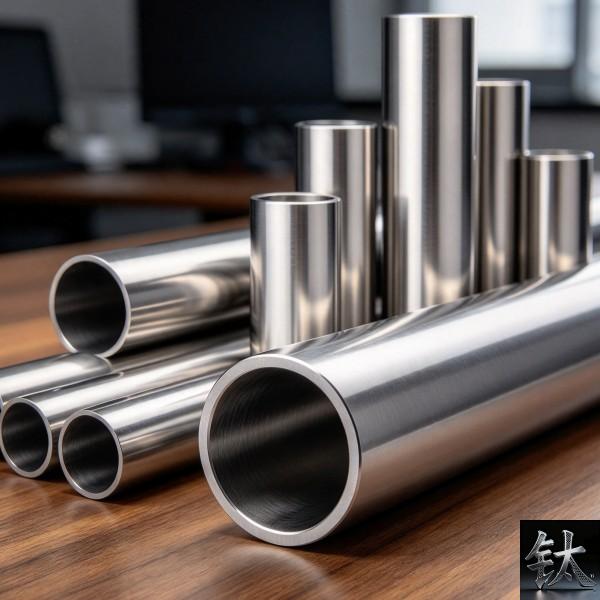
One line does most of the work: "Nickel 201, UNS N02201, ASTM B163, carbon ≤0.02% (not Ni200); service NaOH at 340 °C; EN 10204 3.1." For Monel 400: "Monel 400, UNS N04400, ASTM B165; flowing seawater, no mercury, no oxalic pickle; ERNiCu-7 filler." Copy the right one into the PO and the "nickel that cracked / pitted / embrittled" conversation ends before it starts.
In stock & ready to ship — Nickel Products
We stock ~30 t in stock (N6/Ni200/Ni201/Monel 400) and cut to your size. As a stockist-supplier we read drawings, work to ASTM / ASME / GB standards, export worldwide, and ship same day on stock items. Tell us your spec and get a quote fast.
Tell us your requirement — grade, size and quantity. We reply within 24 hours.
Prefer chat? WhatsApp +86 188 2967 9311 or email sales@sxqytd.com.


- What is Titanium Flange | ASME B16.5 ASTM B381 Gr2 Gr5 Titanium Flan
- ASME B16.5 Titanium Flange Grade2 DN100-DN600 Class150/300 FOB
- Gr2 Titanium Sheet Price FOB Shanghai | ASTM B265 In Stock
- Titanium Price Today (Oct 26, 2026): China Market Report
- Titanium Price Today (23 Oct 2026): Plate, Tube, Rod & Wire
Contact Person: Wang Xiaoning
Tel: +86-917-355-7966
Email: sales@sxqytd.com
WhatsApp: +86 188 2967 9311
Company: Shaanxi Qianyi Tuoda Technology Co., Ltd
Address: Floor 4, Building 4, No. 188 Gaoxin Avenue, High-tech Zone, Baoji City, Shaanxi Province, China