Titanium Supplier: Mill, Stockist or Trader? How to Tell
Three quotes for the same Titanium Plate can differ by 40 percent, and none of them is wrong. The reason is not the grade or the market. It is that the word “supplier” hides three different businesses: a mill that melts and rolls, a stockist that holds material and cuts it, and a trading company that matches your order to someone else’s capacity. Each one carries a different liability, a different certificate and a different definition of “in stock”. Ask the wrong question — “are you a factory?” — and all three will say yes or no in a way that tells you nothing. This page gives you three questions that do work, and a plain answer about which model fits your order. We are the middle one: a stockist and light fabricator in Baoji with roughly 800 tonnes on the floor.
How to use this page. This is a supplier-qualification guide, not a material-data sheet and not a certification register. It does not rank companies by size and it does not say one model is always better. It tells you which questions separate the models so your quotes become comparable. Where a standard or a melt rule matters — AS9100D, ISO 13485, DFARS, EN 10204 — the linked guides carry the detail and the boundary. Certifications change; verify every claim against the issuing body before you rely on it.
The short answer: three models, three different liabilities
Before you compare a single price, decide which of three businesses you are actually dealing with. The label on the website is not reliable; the liability is. The table below is the whole distinction in one view.
| Model | What it really does | Who signs the certificate | When it is the right call |
|---|---|---|---|
| Mill | Melts sponge, rolls or forges the heat | The mill, as producer | Certified lots, special melts, aerospace |
| Stockist | Holds own stock, cuts to your size | Mill signs; stockist transfers heat number to cut pieces | Small lots, urgent work, zero-cut |
| Trading company | Matches your order to a mill or stockist | Must name the real producer behind the MTC | Standard stock when the chain is disclosed |
Every one of them can say “we supply titanium” honestly. That is why the phrase is useless on its own. Use the three tests below instead, and see the Buy Titanium buyer hub for the wider map of grades, forms and specs.
The “Are you a factory?” trap — and the three tests that replace it
The most common qualification question is also the weakest. A mill says yes. A stockist with a cutting shop says yes, because it does process material. A trading company says yes because its partners are factories. You have learned nothing. Worse, the question pushes honest stockists to overclaim and pushes buyers to pay mill prices for stock service they did not need.
Replace it with three questions that have verifiable answers: who signs the mill certificate as producer, who owns the material you are being quoted right now, and who is responsible for the heat number after the cut. None can be answered with a yes or a no. Each produces a document or a name, and that is the point. Run all three before you compare prices — the buy-from-China checklist shows the same discipline applied to a cross-border order.
Test 1: who signs the mill certificate
Open the certificate and look for the producer field, the heat number, the UNS or grade designation, the specification and edition, and the chemistry and mechanical results. The name in the producer field is the company that owned the metal when it was made. A trading company cannot legitimately put itself there. If the document only says “titanium alloy, meets customer spec” with no standard number, it is not a usable certificate regardless of who sent it.
Our EN 10204 3.1 mill certificate guide shows which fields must be present and what 3.1 does and does not promise. Ask for a sample certificate from a recent heat before you place an order, and cross-check that the standard matches what you ordered — Grade 5 bar should reference ASTM B348 or AMS 4928, Grade 2 sheet should reference ASTM B265. A mismatch here is the fastest way to find a supplier who relabels material.
Test 2: who actually holds the stock
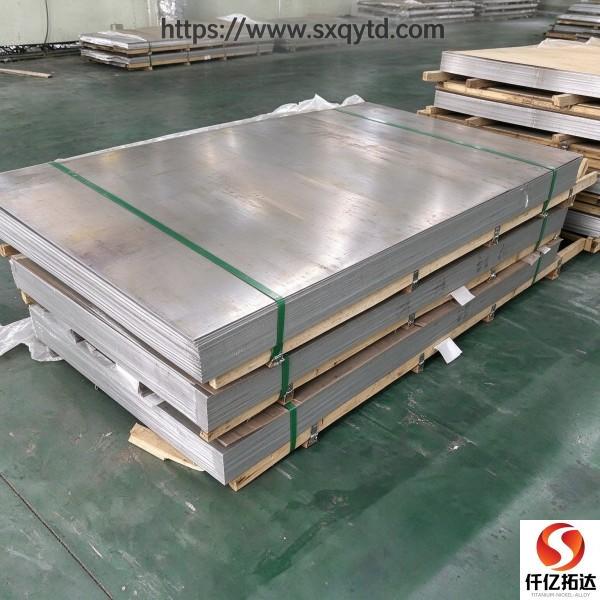
“In stock” means three different things. For a mill it may mean a heat that is scheduled but not rolled. For a trading company it may mean a partner who has material. For a stockist it should mean named pieces, in a named warehouse, with a weight list you can see before you pay. That distinction is the entire lead-time answer, which is why we publish our 800-tonne stock position and a same-day dispatch stock list instead of a catalogue.
Ask for a stock list with sizes and weights, then ask whether the material is owned or merely available. A stockist that holds its own material can commit to a dispatch date; a trader who has to source it cannot. Neither is dishonest, but they are quoting different products. Our titanium and nickel stock page and plate supplier page show the level of detail a real holding looks like.
Test 3: who owns the cut piece after cutting
Here is where the stockist earns its place. Once a certified plate is cut, the original certificate still describes the parent heat, but your piece needs its identity carried forward: the heat number marked or documented on every piece, the cutting operation declared, and the certificate tied back to the parent. That transfer is the stockist’s responsibility, not the mill’s — the mill never saw your cut list.
If a supplier cuts material and cannot tell you how the heat number follows the pieces, the service is incomplete however good the steel is. Our traceability and PMI guide explains the chain, and the zero-cut and small-MOQ page and cut-to-size plate page show how we handle one-piece orders and heat-number transfer. For receiving checks, the tube receiving-inspection guide is a usable template for plate and bar too.
When a trading company is the right answer
A trading company is not a bad supplier. For standard stock, non-critical parts or a hard-to-find size, a trader with an honest, disclosed chain can be fast and competitive precisely because it can reach several mills. The word that decides it is disclosed. Ask which mill produced the heat, ask for that mill’s certificate, and ask who signs the conformance document. A trader that answers all three is providing a sourcing service you may want. One that insists the chain is confidential is asking you to accept an unnamed producer.
The risk is not the middleman, it is the missing name. If a problem appears after machining or in service, an undisclosed chain means nobody owns the heat. Apply the same test we use in the stock-verification checklist: every document must point back to a producer you can identify.
Limits and failure conditions: when you must go to a mill
No stockist and no trader can substitute for a requirement written into your purchase order. These are the eight situations where the supply model is decided by the specification, not by price or convenience.
Aerospace and defense: AS9100D and melt-source rules
When the order names AS9100D, a specific melt source or a defense clause, the mill and its melt route are part of the contract. A stockist can hold qualifying material, but it cannot invent a melt history or a quality-system scope. Verify the certificate through the recognised database, and route contract-language questions such as DFARS to your own contracts team. The buy-from-China guide covers the clause-level detail.
Medical implant: ISO 13485 and ASTM F-series material
Implant material is specified by standard and chemistry, not by a supplier’s description. ASTM F136 ELI or ASTM F67 material must be made and certified to that standard, with the interstitial limits that go with it. A stockist can supply from a certified heat, but the certificate and the heat must be traceable to the producer. If the regulatory route requires ISO 13485 at the supplier, check who actually holds it.
Pressure equipment and code compliance
Pressure-boundary work brings code stamps, design approvals and inspection hold points. Material is one input among several; a stockist can provide the plate and the certificate, but it cannot provide the code stamp for a vessel it did not build. Confirm early whether you are buying material, a fabricated part or a coded assembly, and direct equipment questions to the buyer hub equipment route.
Special melts and chemistry you cannot source from stock
Double or triple vacuum arc remelting, ELI chemistry and tightly controlled interstitial levels are mill capabilities. If your drawing calls for them, a general stock holding is the wrong starting point. Our double vs triple VAR guide explains what each melt practice does and does not guarantee, so you can write the requirement before you ask for a price.
Full-lot and project-scale orders
When the quantity exceeds a stockist’s holding, the economical route is a mill lot. A stockist can still assemble it from several heats, but each heat brings its own certificate and you lose the simplicity of one continuous lot. Say the total tonnage up front; a supplier that quotes a stock price for a tonnage it does not hold is setting up a delay.
When paper alone is not enough: add PMI
A certificate proves what the document says. It does not prove that the piece in your hand matches it. For traceability-critical work, add positive material identification on receipt. A handheld XRF confirms the grade family and major elements in minutes; it cannot see everything, and a laboratory method is the referee when results are disputed. The traceability and PMI guide prints what each tool can and cannot see. Budget for the check relative to the cost of a rejected lot, not as an optional extra.
The stockist’s verification ceiling
A stockist can verify grade and chemistry, cut to size, transfer heat numbers and arrange third-party inspection. It cannot re-melt, re-roll or re-certify a heat, and it cannot change the producer named on the mill certificate. If a supplier promises all of those, the promise is not real. Know the ceiling so you ask the right party for the right document.
When a trading company hides the chain
The failure mode of the trader is not slowness, it is an unnamed producer. If the certificate has no mill name, if the conformance document is signed by the trader as though it were the mill, or if the heat number cannot be traced upstream, stop. Cheap material with an untraceable heat is expensive the first time it fails inspection. Insist on the producer name in writing before payment.
Why two quotes for the “same” plate are never comparable
Normalise six lines before you look at the per-kg number. Until all six match, the lower quote is not cheaper, it is for less.
| Line to normalise | What changes if it is missing | What to write on the RFQ |
|---|---|---|
| Specification and edition | Chemistry and tolerance limits move between editions | ASTM B265-2022, not just B265 |
| Certificate level | 3.1 versus 3.2, with or without witnessed tests | EN 10204 level, PMI yes or no |
| Condition and surface | Annealed, cold-worked or STA; pickled or bright | State temper and finish |
| Quantity and cutting | Cut-to-size lots cost more per kg than mill lots | Fixed sizes and cut list |
| Incoterms 2020 and destination | Who pays freight and where risk moves | Full rule and named city |
| Payment and inspection terms | Hold points and retention affect real cost | State inspection and terms |
Our why titanium quotes differ per kg guide works through each driver with examples. Grade names alone are not enough either: the ASTM / GB / EN equivalence guide shows where an “equivalent” grade is not interchangeable, and the grade overview is the starting point if you are still choosing.
Lead time: what “in stock” really buys you
Lead time is where the three models separate most visibly. A mill quote includes melting, rolling, testing and shipping, measured in weeks and exposed to the production schedule. A stockist quote starts from named pieces already in the warehouse, so cutting and packing dominate. A trader quote depends on whichever upstream source it finds, which is why it is the least predictable of the three.
Ask for the stock list with sizes and weights before you accept a delivery promise, and ask whether the date is based on owned material or on an expected source. For urgent work the same-day dispatch stock and ready cut-to-size plate pages are the honest answer; for a project lot the buy-from-China guide explains how to build a realistic schedule into the contract.
A ten-question qualification you can run in an afternoon
Copy these into your next supplier call. The answers should be documents or names, not adjectives.
| # | Question | A good answer |
|---|---|---|
| 1 | Who is the producer on the MTC? | A named mill, not the seller |
| 2 | Which standard and edition was the heat tested to? | ASTM B265-2022, not just B265 |
| 3 | Can I see a recent sample certificate? | PDF with heat, chemistry, mechanicals |
| 4 | Do you own the stock you quoted? | Stock list with sizes and weights |
| 5 | Who cuts it and who transfers the heat number? | Named process, marked cut pieces |
| 6 | Do you offer PMI on request? | Method and scope stated |
| 7 | Which certifications do you hold, and who issued them? | Verifiable through the issuing body |
| 8 | What is the minimum order, really? | A number, not “negotiable” |
| 9 | What Incoterms 2020 rule and named city? | FOB Ningbo, Incoterms 2020 |
| 10 | Will you accept a small qualification order first? | Yes, with the same documents |
A supplier that answers these with documents is worth a purchase order. One that answers with reassurance is telling you how it sells, not what it can prove. Send the shortlist to our inquiry page and we will answer the same ten for your specific grade and size.
Choose mill / choose stockist / choose trader
Choose a mill if your order names a certified heat, a special melt practice, aerospace or medical system requirements, a pressure-code route, or a tonnage beyond any stock holding. Accept the longer schedule as the price of that requirement, and check the certificate at receipt.
Choose a stockist if you need named pieces, cut-to-size with heat-number transfer, a small or one-off quantity, or a short dispatch window. Confirm the holding is owned and the certificate forwards from a named mill. This is the model we operate: stock, cut, test and export from Baoji.
Choose a trading company if the item is standard, the chain is fully disclosed, and the speed or price advantage is real. Verify the producer name on the certificate before you pay. Walk away if the chain is confidential.
Why source this from us
We are a stockist and light fabricator in Baoji, not a melting mill, and we say so. What that buys you is material you can see, cut to the size you actually need, with the certificate and heat number following every piece. We hold roughly 800 tonnes across plate, tube, bar, wire, fittings, flanges, nickel products and non-standard equipment, we read ASTM, ASME and GB drawings, and we export with the documents a buyer needs. The Baoji export page and Grade 2 plate supply page show the detail behind that claim.
When your order needs a mill melt route, we will tell you and point to the right requirement instead of pretending a stock heat can cover it. Send the grade, the finished size, the specification and the certificate level to our inquiry page; you will get the same ten answers, a stock position and a quote in 24 hours.
Summary: name the model before you ask for the price
Three questions do the work that “are you a factory” cannot: who signs the mill certificate as producer, who owns the stock you were quoted, and who carries the heat number after the cut. Get a document or a name for each. Then normalise six lines — spec and edition, certificate, condition, quantity and cutting, Incoterms, and terms — before you compare numbers. A mill, a stockist and a trader can all supply titanium; they are not selling the same obligation. Decide which obligation your order needs, and the price will finally mean something.
FAQ
What is the difference between a titanium mill, a stockist and a trading company?
A mill melts titanium sponge and rolls or forges it into plate, tube or bar; it signs the mill test certificate as the producer. A stockist buys finished material, holds it in its own warehouse and cuts it to the size you need; it forwards the mill certificate and transfers the heat number to every cut piece. A trading company holds little or no stock and matches your order to a mill or stockist; it should name the real producer behind the certificate. The three can quote the same grade and still be selling different scopes.
How do I know if a titanium supplier is really a manufacturer?
Do not ask yes or no. Ask for the certificate and read who signed it as producer, ask for a live video of the furnace or rolling mill with a current heat number, and ask which standard and edition the heat was tested to. A real mill can answer all three in a day or two. A trading company will deflect or show equipment that is not theirs. Verify ISO 9001 through the accreditation body’s public database, not the supplier website. Our buy-from-China guide walks through the full check.
Does a stockist provide a mill test certificate?
Yes, but understand what it is. The stockist forwards the original EN 10204 3.1 certificate issued by the mill that produced the heat, and it should show the heat number, chemistry and mechanical results. When the stockist cuts the material, it must transfer that heat number to each cut piece and state the cutting operation. The certificate proves what the paperwork says; a stockist that also offers PMI checks what the metal actually is. Both are covered in our mill-certificate and traceability guides.
Why do two quotes for the same Titanium Plate differ so much?
Because six lines are rarely the same: the specification and its edition, the certificate level, the delivery condition and surface, the quantity and whether it is cut to size, the Incoterms 2020 rule and destination, and the payment terms. A quote that omits the certificate or the spec is not cheaper, it is incomplete. Normalise those six lines in writing before you compare the per-kg number. Our why-prices-differ guide breaks down each driver.
Can I get a small quantity or cut-to-size titanium from a mill?
Usually not economically. Mills sell heats and minimum rolling quantities; a one-off plate or a short length is a stockist’s job. As a stockist and light fabricator we cut to size with no mill minimum — one plate or a few pieces is a normal order. The trade-off is that heat-number transfer and the specification matter more, because once certified plate is cut the identity has to follow every piece. Say the finished size you need, not the mill size.
When should I insist on buying direct from the mill?
When the purchase order names a requirement a stockist cannot satisfy: aerospace AS9100D and a specific melt source, medical ISO 13485 with ASTM F-series material, a pressure-code stamp, double or triple vacuum arc remelting, ELI chemistry, or a full lot larger than any stock holding. In those cases a stockist can still supply from a qualifying heat, but the certificate and the melt route must come from the mill and be checked at the receiving end. Our melt-practice and buy-from-China guides explain the boundaries.
What documents should a titanium supplier send before I pay?
At minimum the mill test certificate with heat number, chemistry and mechanical results naming the producer, the specification and edition, a packing list with individual piece weights, and a certificate of conformance. For traceability-critical work add PMI results and heat-number transfer on cut pieces. For export add the full Incoterms 2020 rule and named city. Ask for a sample certificate from a recent heat and cross-check the standard references before you release payment.
Contact Person: Wang Xiaoning
Tel: +86-917-355-7966
Email: [email protected]
WhatsApp: +86 188 2967 9311
Company: Shaanxi Qianyi Tuoda Technology Co., Ltd
Address: Floor 4, Building 4, No. 188 Gaoxin Avenue, High-tech Zone, Baoji City, Shaanxi Province, China