TA2 Titanium Plate Cut to Size: Reactor Tolerances
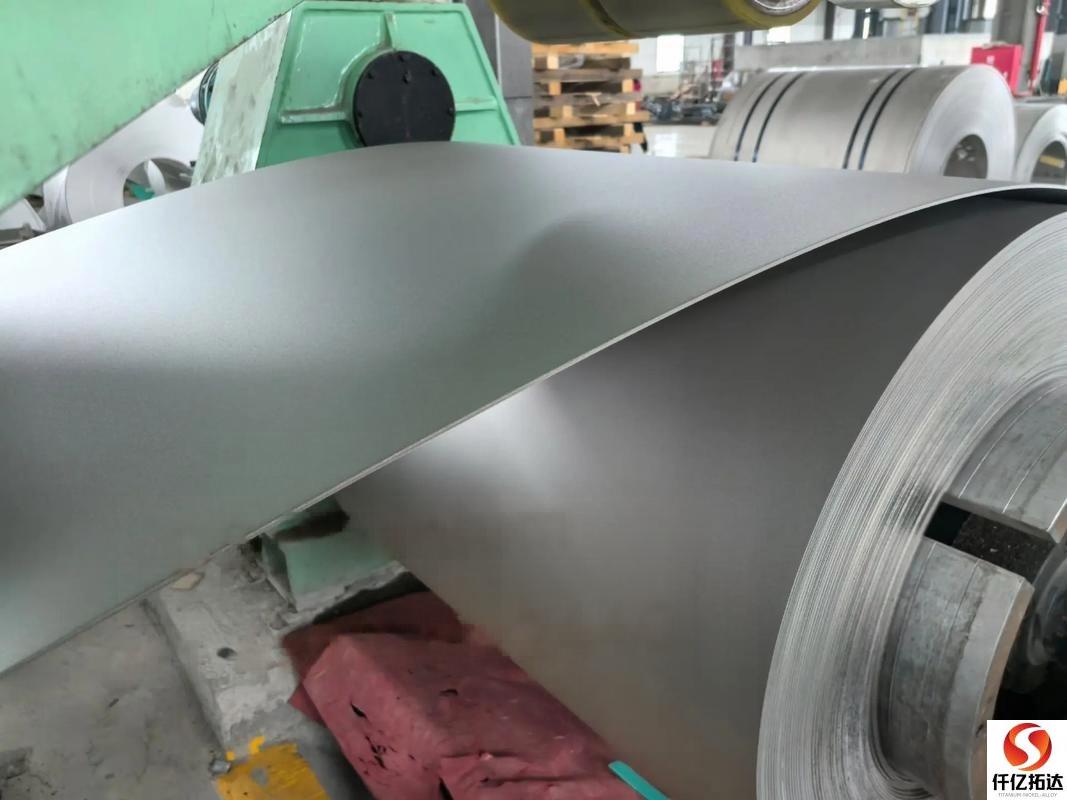
TA2 pure Titanium Plate cut to size is available from Baoji stock in 3 mm, 6 mm, 8 mm, 10 mm and 12 mm, but a cut-to-size plate is not automatically a weldable reactor lining. The three numbers that decide whether your lining fits on the first attempt are minimum thickness (not nominal), edge condition after cutting, and flatness over the full blank. Get those three into the purchase order and you remove roughly 80% of the rework we see on chemical reactor lining jobs. Get them wrong and a nominally compliant GB/T 3621 plate can arrive 0.4 mm thin, with a plasma-cut edge that cannot be welded without grinding, and a 4 mm bow across a 2 m blank that will not sit against the shell.
This guide is written for buyers who already know they want TA2 and need to specify it correctly. It covers what GB/T 3621 controls, how TA2 relates to ASTM B265 Grade 2, why "6 mm" is an ambiguous specification, what each cutting method does to the edge, where TA2 genuinely fails in chemical service, what cut-to-size really costs, and the eight fields that belong on the RFQ. If you are still deciding between TA2 and another grade, start with our GB/T 3621 vs ASTM B265 plate comparison and the Titanium Plate category before reading on.
| Standards | GB/T 3621 (TA2 plate); ASTM B265 / ASME SB265 (Gr2 equivalent); verify the current revision on the PO |
| Grades | TA2 / Gr2 / UNS R50400 baseline; TA1, TA9 (Gr7), TA10 (Gr12), TC4 (Gr5) also stocked |
| Service | Chemical reactor lining, tube sheet blanks, vessel shells, agitator baffles, pickling tanks |
| Core distinction | Cut-to-size is a dimensional service. Minimum thickness, edge metallurgy and flatness are separate specifications that must be written explicitly. |
The "Cut to Size" Trap: A Reactor Lining That Would Not Fit
A chemical equipment fabricator in Jiangsu ordered 14 TA2 blanks for a 6 mm reactor lining in 2024. The purchase order read "GB/T 3621 TA2, 6 mm, cut to 1200 x 2400 mm, 14 pcs". Every plate on the delivery note was 6 mm nominal and every plate carried a valid mill test certificate. The lining still failed at fit-up, and the rework cost more than the plate.
Three separate problems arrived in the same delivery. First, the hot-rolled tolerance band allowed thickness down to approximately 5.6 mm at some points; the vessel design had been calculated on a 6.00 mm minimum wall, so the fabricator was being asked to install plate that was out of specification for the design, not out of specification for the standard. Second, the supplier had cut the blanks by plasma. The cut edges carried a nitrogen-enriched, oxygen-contaminated heat-affected layer roughly 0.5 to 1.5 mm deep that produced porosity and hard, crack-sensitive weld metal when the lining was tack welded to the shell. Third, two blanks had a bow of around 3 to 4 mm across the 2.4 m length, which meant the lining would not lie flat against the carbon steel shell and left gaps that had to be forced closed with clamps, adding residual stress into every weld.
Nothing about this delivery was dishonest. The supplier delivered exactly what the PO described, and the PO was written by a competent buyer who simply assumed that "cut to size" implied "ready to weld". It does not. Cut to size means the supplier performed a cutting operation to a stated dimension. It says nothing about the minimum wall after rolling tolerance, the metallurgical condition of the cut edge, or the flatness of the blank after thermal cutting. Those three things are purchased, not inherited.
The rule: a plate specification has four independent parts — chemistry and mechanical properties, thickness basis, edge condition, and flatness/surface. "TA2, 6 mm, cut to size" specifies one and a half of them. Write all four or plan on rework.
We have published a longer treatment of the dimensional side in our GB/T 3621 core points article, and the standards mapping in the ASTM B265 plate and sheet guide. This article stays on the shop-floor decisions those standards leave to the buyer.
What GB/T 3621 Actually Controls, and What It Does Not
GB/T 3621 is the Chinese national standard for titanium and titanium alloy plate. It defines the grade designations (TA1, TA2, TA3, TA9, TA10, TC4 and others), chemical composition limits, tensile and yield requirements, dimensional tolerances, surface condition categories, and the test and inspection rules that a mill must apply before issuing a certificate. It is a mill product standard. Its job is to make sure that a plate described as TA2 anywhere in China is the same alloy with the same baseline mechanical properties.
What it does not do is decide your design basis. A mill standard cannot know whether the 6 mm on your drawing is a nominal dimension with a symmetric tolerance, a minimum wall required by a pressure vessel calculation, or a target thickness after forming. It cannot know that your blank will later be plasma cut, rolled to a radius, or welded into a lined vessel. It also cannot know that your customer requires ASME code compliance and therefore needs ASME SB265 material with a certified MTR rather than a GB/T 3621 certificate, even though the alloy is nominally the same.
This distinction matters most on the mechanical property line. TA2 under the Chinese system is commonly specified with a minimum tensile strength around 400 MPa, while ASTM B265 Grade 2 is commonly specified with a minimum around 345 MPa and a minimum yield around 275 MPa. Those figures are typical minimums from the respective standards and should be verified against the current revision and the actual MTR, but the shape of the difference is real: two certificates can both say "commercially pure titanium, grade 2 equivalent" and still carry different guaranteed minimums, different interstitial limits and different test frequencies. If your vessel was calculated to ASME VIII, the SB265 certificate is not a nice-to-have. It is the document the inspector will ask for.
There is a second boundary worth knowing. GB/T 3621 covers flat-rolled plate and sheet. It does not cover the forged tube sheets, forged flange blanks or rolled-and-welded shells that often sit next to the plate on the same equipment drawing. Those fall under forging and equipment standards such as ASTM B381 for forgings and the applicable pressure vessel code. Buyers who write a single "TA2 to GB/T 3621" line across a whole bill of materials end up with a mismatch at the first forged component.
TA2 vs ASTM B265 Grade 2: Equivalent, Not Identical
TA2 is the Chinese designation for commercially pure titanium corresponding to ASTM Grade 2, UNS R50400. In practice, a TA2 plate and a Gr2 plate from a competent mill will have essentially the same corrosion behaviour, because that behaviour comes from the TiO2 passive film and the interstitial content rather than from the designation printed on the certificate. Where buyers get into trouble is assuming that equivalence means interchangeability of documentation.
| Item | GB/T 3621 TA2 | ASTM B265 / SB265 Gr2 |
|---|---|---|
| UNS | R50400 (equivalent) | R50400 |
| Typical min. tensile | approx. 400 MPa | approx. 345 MPa |
| Typical min. yield | approx. 275 MPa | approx. 275 MPa |
| Certificate | Mill test certificate to GB/T 3621 | MTR to B265; SB265 for ASME work |
| Best used when | Domestic Chinese equipment, non-code tanks, general chemical fabrication | Export vessels, ASME-stamped equipment, third-party inspected projects |
All values in that table are approximate minimums for orientation. Always confirm against the current standard revision and the certificate you will actually receive; do not design from a table in an article. The operational advice is simpler: for an export order, put "TA2 / Gr2, UNS R50400, ASTM B265 or ASME SB265 as applicable" on the PO and ask for dual certification. Most Baoji mills can issue both from the same heat, but only if you ask before the plate is allocated, not after it ships.
One more documentation point that saves real disputes: require positive material identification on the finished blanks, not only on the mother plate. Once a 2000 x 6000 mm plate has been cut into twelve pieces, the heat number lives on a tag and on the certificate. If the tag is lost during cutting, the fabricator has twelve anonymous pieces of expensive metal and no traceability. Ask the supplier to stamp or etch the heat number onto every blank, or to supply a cutting map that ties each blank position back to the mother plate heat. Our certification and documentation page shows the document set we normally ship with export plate orders.
The 6 mm Problem: Nominal Thickness Is Not a Specification
Hot-rolled Titanium Plate is produced to a thickness tolerance, not to an exact dimension. For a nominal 6 mm hot-rolled plate, the permitted deviation is typically in the range of a few tenths of a millimetre and widens with plate width; the exact band depends on the standard revision, width class and rolling route. Cold-rolled sheet holds a tighter band. That is normal mill practice and it is fine for most fabrication — until the drawing was calculated on a minimum wall.
Pressure vessel and reactor calculations use minimum required thickness. If the calculation says 6.00 mm after corrosion allowance, then a plate delivered at 5.65 mm is nonconforming for your design even if it is perfectly conforming to the mill standard. The supplier has not cheated. The buyer has simply purchased a nominal dimension when the engineering required a guaranteed floor. There are three clean ways to write this and all of them appear on professional POs.
- State the basis explicitly: "thickness 6.00 mm minimum, no minus tolerance permitted at any point" — and require a thickness survey at a defined grid, for example five points per blank.
- Buy up one nominal class: specify 7 mm nominal when 6.00 mm minimum is required, then verify. This costs more metal but eliminates the dispute entirely on small quantities.
- Specify the tolerance class and the inspection: "per GB/T 3621 tolerance table X, UT thickness mapping supplied, report attached to MTR".
There is a related trap on tube sheet blanks. A tube sheet is drilled with hundreds of holes and then expanded or welded to tubes; its thickness governs both the tube-to-tubesheet joint strength and the ligament between holes. Buyers who order "6 mm plate" for a tube sheet are usually wrong on two counts — tube sheets are normally far thicker than 6 mm, and the flatness and internal soundness requirements are much higher. A tube sheet blank should carry an ultrasonic examination requirement to an agreed acceptance class, because a mid-plane lamination that is harmless in a lining becomes a leak path once it is drilled through. Ask for UT on any blank thicker than roughly 20 mm that will be drilled, rolled or welded under load.
Flatness belongs in the same conversation. Thermal cutting relaxes residual rolling stresses and can bow a thin blank noticeably. For a lining that must sit against a shell, specify a flatness limit in mm per metre and require it to be checked after cutting, not before. A plate that was flat in the mill and bowed on the cutting table is still a nonconforming blank.
Edge Condition Is a Specification, Not a Favour
Titanium is not stainless steel when it comes to cutting. Above roughly 400 to 500 C in air it absorbs oxygen and nitrogen rapidly, forming a hard, brittle oxygen-enriched layer — the same alpha case that is well known on bar and forgings. Any thermal cutting process creates a heat-affected zone at the edge. If that edge is subsequently welded without removing the layer, the contaminated material dissolves into the weld pool and produces hard, low-ductility weld metal with porosity and microfissures. This is one of the most common causes of "the titanium weld cracked and the material certificate was fine" investigations.
| Cutting method | Edge condition | When it is acceptable |
|---|---|---|
| Shearing | Cold worked edge, some work hardening, burr and roll-over; no thermal contamination | Thin sheet, typically up to about 6 mm, non-critical edges that will be machined or ground |
| Plasma / laser | Heat-affected layer approx. 0.5–1.5 mm, nitrogen and oxygen pickup, dross | Fast and economical, but the edge must be ground or machined back before welding |
| Waterjet | No thermal damage; slight taper approx. 0.1–0.3 mm; abrasive embedment possible | Best choice for weld-ready edges on linings and precision blanks |
| Machining / milling | Clean, square, dimensionally accurate, can produce the weld bevel in one setup | Critical weld preparations, tube sheet edges, small precision blanks |
The phrase to add to the PO is short: "all cut edges to be mechanically cleaned back by at least 1 mm per side, free of oxide, alpha case and dross, weld-ready". If the part needs a bevel, say so at the same time and reference the joint design. A supplier can produce a 30-degree bevel during the same machining setup for very little extra; producing it after the blanks have been delivered to your workshop costs a full handling cycle.
Also specify cleanliness, not just geometry. Titanium edges that will be TIG welded should be degreased with a chloride-free solvent and handled with clean gloves. Free iron from carbon steel tooling or from a shared grinding wheel embeds in the surface, forms a local galvanic cell and shows up as rust-coloured pitting after the first hydrotest. Dedicated titanium or stainless tools, a dedicated grinding wheel and a final pickling or passivation step are cheap insurance. This is the same contamination mechanism we describe in more detail for butt-weld fittings for chemical piping.
From Plate to Reactor Lining: The Fabrication Sequence Buyers Should Know
Understanding the sequence helps you buy the right blank rather than the right-sounding plate. A typical loose-lined or weld-overlay reactor lining goes through material receipt and PMI, thickness and flatness verification, cutting, edge preparation and cleaning, rolling to shell radius, trial fit against the shell, tack welding, full welding with argon backing and trailing shielding, dye penetrant inspection of the welds, hydrostatic or leak testing of the lining, and finally pickling and passivation of the whole wetted surface.
Two steps in that chain create most of the cost when the incoming plate is wrong. Trial fitting is where bowed blanks and undersize dimensions are discovered, and by then the shell may already be in the shop with a crew waiting. Weld repair is where contaminated edges are discovered, and grinding out a contaminated weld in a lined vessel is slow, awkward work with limited access. Both failures are far cheaper to prevent at the PO stage than to fix on the floor.
Shielding deserves a mention because it is a fabrication variable that buyers sometimes inadvertently specify away. Titanium welds need inert shielding on both the torch side and the back side, plus a trailing shield while the bead is still hot. A lining welded directly against a carbon steel shell has no accessible back side, so the joint design must provide a shielding path — typically through a grooved strip or a purge channel. If you are buying plate for a lining and you have not seen the joint detail, ask the fabricator before the plate is cut. The best plate in the world will not rescue a joint that cannot be purged. Our custom titanium reactor and heat exchanger overview shows the joint arrangements we most often build to.
Where TA2 DOES Fail: Read This Before You Approve the Grade
TA2 is an excellent material in oxidising and mildly reducing media, in seawater, in wet chlorine and in most chloride-bearing process streams at moderate temperature. It is not a universal acid-resistant metal. Listing its limits is more useful than repeating its advantages, because the failures that cost money almost always happen in the gap between "titanium is corrosion resistant" and the actual process conditions.
Hot concentrated reducing acids
In hydrochloric and sulphuric acid at elevated concentration and temperature, the TiO2 passive film cannot repassivate fast enough and general corrosion accelerates. There are published thresholds and inhibitors, but they are condition-specific; a plant that adds a small amount of oxidising species, or an ferric ion contamination, can move from acceptable to unacceptable corrosion rates with a modest composition change. Do not select TA2 for hot concentrated HCl or H2SO4 on the basis of a generic corrosion table. Ask for a coupon test in your actual liquor. Where a reducing acid must be handled, grade selection moves toward TA9/Gr7 or TA10/Gr12, or toward zirconium in the most aggressive acetic and reducing environments.
Chloride crevices above roughly 60 C
On a freely flowing open surface, TA2 resists seawater and chloride brines extremely well. Inside a crevice — under a gasket, under a deposit, at a lap joint, at an unsealed backing strip — oxygen is depleted, the local pH falls and the passive film breaks down. Above roughly 60 to 70 C the risk becomes significant, and it is geometry-driven rather than bulk-chemistry-driven. A lining with a crevice at every weld backing strip is a different proposition from a clean open tank. This is exactly the failure mode analysed in our Gr7 vs Gr12 chlor-alkali comparison. The practical fix is usually design (eliminate the crevice, seal the lap, use a full-penetration weld) rather than simply buying a more expensive grade.
Dry chlorine, anhydrous methanol and low-water systems
Titanium's film needs a trace of water or oxygen to repair itself. In genuinely dry chlorine, in anhydrous methanol and in near-water-free organic streams, repassivation can fail and reaction with the medium can be rapid and, in dry chlorine, violent. If your process includes a drying step, a start-up purge, or an upset that removes the water, that condition belongs in the material review. "The normal operation contains 3% water" is not a sufficient answer if the upset case contains none.
Hydrofluoric acid and fluoride contamination
Fluoride attacks TiO2 directly and TA2 has essentially no useful resistance to HF, even at low concentrations. The awkward part is that fluoride often arrives as a trace contaminant rather than as the bulk acid — in pickling residues, in some phosphate streams, in certain catalyst systems and in incompletely rinsed equipment. If fluoride is anywhere in the process or the cleaning regime, rule TA2 out and document why. This is also why HF/HNO3 pickling of titanium must be tightly controlled and thoroughly rinsed: the same chemistry that removes oxide can charge hydrogen into the surface if it is left too long.
Hydrogen uptake and galvanic couples
In cathodic protection systems, in galvanic contact with a more active metal, or during improper pickling, titanium can absorb hydrogen and form brittle hydride platelets. Above a few hundred ppm the ductility loss is measurable; in severe cases components crack under load that the design assumed was safe. Where Titanium Plate is joined to carbon steel — a clad or loose-lined vessel, for example — manage the couple with proper insulation and inspect for hydrogen pickup during shutdowns. This is the mechanism behind many of the flange and fastener problems discussed in our flange bolt and gasket selection notes.
Do not use TA2 plate for hot concentrated HCl or H2SO4, for any fluoride-bearing stream, for dry chlorine service, or inside a hot stagnant crevice without a design change. A more expensive grade will not fix a bad joint design; it will only make the failure more expensive.
Cost Economics: What Cutting Actually Costs
Cut-to-size plate typically carries a premium of roughly 8–15% over the equivalent full plate, depending on blank count, nested yield and cutting method. Waterjet cutting is commonly 2–3 times the per-metre cost of plasma, and machining a bevel adds another step. Those are the visible numbers. The invisible ones are usually larger.
Consider a 14-blank lining order. Cutting in the supplier's workshop with a nesting plan produces a predictable yield and leaves the offcuts with the supplier, who can use them. Cutting in the fabricator's workshop consumes floor space, a plasma or waterjet operator, handling time, and produces offcuts that the fabricator must store or scrap. More importantly, cutting in-house means the edge preparation, cleaning and flatness check all happen on the fabricator's critical path. On a job where the shell is already in the shop, one day of waiting for cut blanks can cost more in idle labour than the entire cutting premium.
The second economic factor is waste from ambiguity. In the case at the start of this article, the rework involved re-grinding edges, re-rolling two blanks and re-ordering plate for the two worst pieces. That is easily several times the 8–15% premium that would have bought a properly specified cut-to-size order in the first place. On small-batch and prototype work — where a single blank may be the whole order — the arithmetic is even more favourable, because there is no volume over which to amortise a mistake.
The third factor is grade substitution cost. TA9/Gr7 plate carries a substantial premium over TA2 because of palladium content, and palladium tracks an open market price. If your design contains hot crevices, you will pay that premium or you will redesign the joint. It is worth doing the crevice review before the plate is ordered, not after the lining leaks. For a current reference point on base material cost, see the titanium price index and our recent daily price report; the multiples quoted here are approximate planning figures, not quotations.
Seven Procurement Mistakes That Show Up on the Shop Floor
- Writing "6 mm" without a basis. Always state minimum, nominal-plus-tolerance-class, or nominal with an explicit acceptance rule.
- Accepting "commercial grade" or an unnamed equivalent. Insist on TA2 / Gr2 with UNS R50400 and an MTR tied to a heat number. TA2, TA1 and TA9 plate are visually indistinguishable.
- Not specifying the edge. "Cut to size" without an edge-condition clause is an invitation to receive plasma-cut edges that must be reworked before welding.
- Skipping flatness. Especially on thin blanks and linings, specify mm-per-metre and check after cutting.
- No thickness or UT survey on thick blanks. Drilled tube sheets and rolled shells need internal soundness, not just surface quality.
- Assuming TA2 equals ASME SB265. For code-stamped export equipment, the certificate must say SB265 (or an accepted dual certification), not only GB/T 3621.
- Losing traceability during cutting. Require heat-number marking on every blank or a cutting map tied to the mother plate.
Stock, Cutting and Lead Time: What We Can Actually Ship
Our Baoji warehouse normally holds TA2 plate in the common thin-to-medium thicknesses used for chemical equipment — 3 mm, 6 mm, 8 mm, 10 mm and 12 mm are the routine sizes, with thicker plate and other grades available from mill allocation. Total stock levels and the current plate inventory are published on our inventory page and in the Baoji stock and dispatch note; please confirm the exact size and quantity against live availability when you enquire, because stock moves quickly on common thicknesses.
Cutting is done to your drawing: rectangular blanks, circles, rings, nozzle cut-outs, bevel preparation and nested layouts. We can supply sheared, waterjet, plasma-plus-ground or fully machined edges, and we can mark each blank with its heat number. Small-batch and single-piece orders are normal for us — a repair blank for one reactor is as valid an order as a full lining — and this is where a stock-and-cut model beats a mill order, because a mill minimum quantity can be several tonnes while a repair may need 40 kg.
Lead time depends on whether the size is in stock and how much edge preparation is required. Stocked thicknesses with simple sheared or waterjet blanks are the fastest; non-stock thicknesses, dual certification, third-party inspection and machined bevels add time. Rather than quote a number that may be wrong next month, we ask for the drawing and the required document set and give a firm date with the quotation. Our inquiry response procedure sets out what we need to turn an RFQ into a firm offer, typically within 24 hours, and the non-standard fabrication cases show how cut blanks feed into finished equipment.
For buyers outside China, add two items to the enquiry that are often forgotten: the required export documentation (MTR language, third-party inspection, certificate of origin) and the packing method. Thin plate blanks scratch and bow easily in transit; specify a flat, fully supported crate with interleaving and edge protection. Freight damage to a precision blank is indistinguishable from a cutting defect until you have spent time measuring it.
Supplier Verification: What to Ask Before the PO
A credible Titanium Plate supplier should be able to answer six questions without hesitation. What heat will this plate come from, and can I have the chemistry and mechanical results before shipment? Which standard edition is the certificate issued against, and can you issue ASME SB265 dual certification if required? What is the actual measured thickness range across the blank, not just the nominal? How will the edges be cut, how much material will be removed after thermal cutting, and how will you verify the alpha case is gone? What flatness will you guarantee after cutting and how will you measure it? How will each blank carry its heat number?
Ask for a photograph of the thickness survey and the edge condition on the first article, not only a certificate. Ask whether the cutting tools are dedicated to titanium or shared with carbon steel. Ask whether PMI is done on the finished blanks. And ask what happens if the plate arrives out of specification — a supplier who has a documented nonconformance process is a much safer choice than one who says it never happens.
If the project involves an ASME-stamped vessel, a third-party inspector, or a client with its own approved vendor list, say so at the enquiry stage. Document requirements can change which heat is allocated and which tests are witnessed; discovering this after cutting is expensive. Our certifications page lists the standard document package, and the titanium materials overview covers the other grades we can substitute if the process conditions turn out to need them.
Frequently Asked Questions
Q1: Is TA2 the same as ASTM B265 Grade 2?
They are the same commercially pure titanium alloy in practical terms and both map to UNS R50400, with essentially the same corrosion behaviour. They are not identical as documentation: the Chinese GB/T 3621 certificate and the ASTM B265 or ASME SB265 MTR carry different guaranteed minimums and different test regimes. For code-stamped export equipment, specify SB265 dual certification explicitly rather than relying on equivalence.
Q2: What does "cut to size" actually include?
By default it includes only the cutting operation to the stated dimensions. It does not automatically include minimum-thickness control, thermal-edge removal, bevel preparation, degreasing, flatness correction or heat-number marking on each blank. Every one of those is a separate line on a well-written purchase order, and every one is cheap to add before cutting.
Q3: Should I specify nominal or minimum thickness?
If the thickness came from a design calculation, specify minimum and state that no minus tolerance is permitted at any measured point. If the thickness is purely a fabrication convenience, nominal with a stated tolerance class is fine. When in doubt on small quantities, buy one nominal class thicker and verify by thickness survey — the extra metal is cheaper than a rejected lining.
Q4: Can plasma-cut edges be welded directly?
No. Plasma and laser cutting leave a heat-affected, oxygen- and nitrogen-contaminated layer roughly 0.5–1.5 mm deep that causes porosity and brittle weld metal. Grind or machine the edge back by at least 1 mm per side until bright clean metal is exposed, then degrease with a chloride-free solvent. Waterjet cutting avoids the thermal layer entirely and is the better choice for weld-ready edges on thin linings.
Q5: What is the thinnest TA2 plate you stock?
Thin sheet down to around 0.5 mm and foil below that are available through mill allocation, while the routinely stocked chemical-equipment range starts at about 3 mm. Confirm the specific thickness, width and quantity against the live inventory list when you enquire, since common sizes move quickly.
Q6: Do I need ASME SB265 instead of GB/T 3621?
You need SB265 when the equipment is code-stamped, when the client's specification calls for ASME material, or when a third-party inspector will check the certificate. For non-code tanks, general chemical fabrication and domestic equipment, GB/T 3621 TA2 is entirely appropriate. State the requirement at enquiry so the correct heat and documentation are allocated from the start.
Q7: How fast can cut-to-size plate ship?
Stocked thicknesses with simple rectangular blanks are the quickest; non-stock sizes, dual certification, third-party witnessing and machined bevels add time. Send the drawing, quantity, edge condition and document set, and we will give a firm date with the quotation rather than a generic estimate. Small-batch and single-blank repair orders are accepted.
Choose TA2 if / Choose Something Else if
Choose TA2 cut-to-size plate if your medium is oxidising or mildly reducing, seawater, wet chlorine or a moderate chloride stream below roughly 60 C; if the design has no hot stagnant crevices; if you need small quantities, non-standard blanks or short lead time; if you can specify minimum thickness and edge condition on the PO; and if a GB/T 3621 certificate (or a dual SB265 certificate) satisfies your inspector.
Choose another option if the stream contains fluoride, hot concentrated HCl or H2SO4, dry chlorine, or anhydrous low-water organics (consider zirconium or a lined system); if hot crevices are unavoidable and cannot be designed out (consider TA9/Gr7 or TA10/Gr12); if the equipment is ASME-stamped and you cannot obtain dual certification; or if the part is a forged tube sheet or flange blank, which belongs under ASTM B381 rather than a plate standard.
Summary: The Eight Fields That Belong on the RFQ
Cut-to-size TA2 plate is one of the simplest products we supply and one of the easiest to buy incorrectly, because the specification looks complete when it is not. Put these eight fields on the enquiry and the plate that arrives will be the plate your fabricator can actually use.
- Grade and standard: TA2 / Gr2, UNS R50400, GB/T 3621, plus ASTM B265 or ASME SB265 dual certification if the project is code work.
- Thickness basis: minimum thickness with no minus tolerance, or an explicitly stated tolerance class, plus a thickness survey grid.
- Blank dimensions and quantity: drawing or dimension list, including any circles, rings and nozzle cut-outs, with nesting yield agreed.
- Edge condition: cutting method, removal depth after thermal cutting, bevel angle if required, degreasing and weld-ready acceptance.
- Flatness and surface: mm-per-metre limit measured after cutting; hot-rolled pickled, ground or polished surface as needed.
- Inspection: UT level for thick or drilled blanks, PMI on finished blanks, free-iron check, dye penetrant on prepared edges if specified.
- Documentation: MTR with heat number and chemistry, heat-number marking on every blank or a cutting map, certificate of origin and any third-party witnessing.
- Commercial terms: required quantity (small batches accepted), packing method for flat blanks, target delivery date and incoterms.
Send those eight items to our quotation desk with your drawing and process conditions, or use the contact page if you want to discuss the grade selection first. If the medium is anywhere near the limits listed above, tell us the chemistry, temperature, concentration and upset cases — we would rather recommend a different grade or a different joint design than ship plate that fails in fourteen months. For a broader view of the product range, see all titanium products and the materials overview.
- Titanium Price Today (11 Nov 2026): Plate, Tube, Rod & Wire
- Titanium Price Today (9 Nov 2026): Plate, Tube, Rod & Wire
- What is Titanium Flange | ASME B16.5 ASTM B381 Gr2 Gr5 Titanium Flan
- ASME B16.5 Titanium Flange Grade2 DN100-DN600 Class150/300 FOB
- Gr2 Titanium Sheet Price FOB Shanghai | ASTM B265 In Stock
Contact Person: Wang Xiaoning
Tel: +86-917-355-7966
Email: [email protected]
WhatsApp: +86 188 2967 9311
Company: Shaanxi Qianyi Tuoda Technology Co., Ltd
Address: Floor 4, Building 4, No. 188 Gaoxin Avenue, High-tech Zone, Baoji City, Shaanxi Province, China