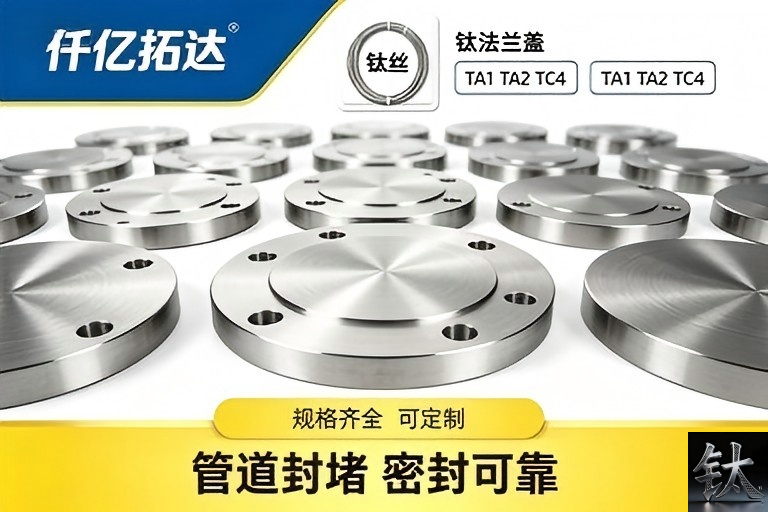
Titanium Flanges: ASME B16.5 Guide to What the Standard Does Not Tell You
| Спецификация | Flange Types: Weld neck (WN), slip-on (SO), blind, socket weld, threaded, lap joint, stub end, reducing, long weld neck, orifice |
|---|---|
| Применимый стандарт | Grades (SB-381 forgings): Gr1, Gr2, Gr2H, Gr5, Gr7, Gr7H, Gr12, Gr16, Gr23 ELI |
| Состояние материала | Governing Standards: ASME B16.5, ASME SB-381, ASME B16.47 (NPS 26-60), ASME B46.1, MSS SP-44 |
| Контроль и упаковка | Decision Boundaries: B16.5 = dimensions+ratings only, material from SB-381, Class is a rating not psi, bolt-circle pairing, RF finish 125-250 µin, flatness not in B16.5 |
Описание продукции: ASME B16.5 sets size and rating, not material. See what it hides: Class is not psi, SB-381 grade, bolt-circle pairing, RF finish, flatness - 8-field RFQ.
Обзор продукции
Titanium Flanges: ASME B16.5 Guide to What the Standard Does Not Tell You
ASME B16.5 fixes the size and the pressure-temperature rating of a titanium flange, but not the material, the working pressure, the bolt-circle match to the mating flange, or the face flatness. A titanium flange is ordered to B16.5 for geometry and to ASME SB-381 for its forgings - and "Class 150" means a rating group, not 150 psi. The five things the drawing omits decide whether the joint seals: the SB-381 grade, the real pressure at temperature, the bolt-circle pairing, the RF facing finish, and flatness under bolt load. Read on for the lines your purchase order must add.
| At a Glance | |
| B16.5 governs | Dimensions (OD, thickness, hub, facing, bolt-circle diameter, bolt-hole count and size) and pressure-temperature ratings by material group |
| B16.5 does NOT set | Material grade (that is ASME SB-381), working pressure in psi, flatness of the face, facing finish value |
| Size range | NPS 1/2 to 24 (DN15 to DN600); Class 2500 only to NPS 12 |
| Classes | 150, 300, 400, 600, 900, 1500, 2500 |
| "Class" meaning | A rating designation, not a psi value; Class 150 approx 285 psig for carbon steel at ambient, lower for titanium |
| RF facing | Raised face 1.6 mm (1/16 in) high for Class 150/300, 6.4 mm (1/4 in) for Class 400+; serrated finish 3.2 to 6.3 µm Ra (125 to 250 µin) |
| Bolt circle | Fixed per NPS/Class by B16.5; the mating flange must share the same bolt circle and hole count |
| Larger sizes | NPS 26 to 60 falls to ASME B16.47 (Series A / B, not interchangeable) |
| Material | Titanium Flanges are forgings to ASME SB-381 (Gr2, Gr7, Gr12, Gr5, Gr16, Gr23) |
| RFQ fields | 8 - listed in the Summary below |
1. The "B16.5" Trap
: Why the Drawing Alone Will Not Ship You a Working Flange
The most expensive titanium flange mistake is also the most common one. A buyer writes "Grade 2 titanium flange, 2 in, Class 150, ASME B16.5" on the purchase order, receives a conforming part, and finds on site that it either leaks, will not seat against the counter-flange, or is rated for far less pressure than the line needs. The order named a geometry and a rating group and said nothing about material grade, bolt-circle compatibility, facing finish or flatness. B16.5 is silent on all four, and those are exactly the fields that decide a working joint. The drawing is necessary; it is not sufficient.
This is not a titanium peculiarity; it is how every alloy flange specification is built. ASME B16.5 fixes the envelope - outside diameter, thickness, hub dimensions, facing, bolt-circle diameter and bolt-hole pattern - and then delegates the material to a separate specification, the pressure rating to a temperature-dependent table, and the surface condition to the purchaser. The practical consequence is that two flanges with identical B16.5 markings can be very different purchased products if one is a Gr2 forging and the other is a Gr7 forging, or if one is paired to a steel flange whose bolt circle differs. Our ASME B16.5 flanges guide covers what the standard does define - the types, the facing, the ratings. This article covers what it does not, and how to write the missing lines.
The five omissions that cause the most field failures are, in order: (1) the material grade, because B16.5 names no titanium alloy and the grade decides corrosion resistance and allowable stress; (2) the real pressure at temperature, because "Class 150" is a rating group, not 150 psi; (3) the bolt-circle pairing, because a titanium flange must share the mating flange's bolt circle and hole count to assemble; (4) the RF facing finish, because a scratched or wrong-finish face is a leak path; and (5) flatness, because a thin titanium flange can warp under bolt load and B16.5 does not limit it. Each is closed with one or two words on the PO.
2. What ASME B16.5 Actually Covers (and What It Hands to SB-381, B16.9 and Your PO)
Read narrowly, B16.5 is a dimensional and rating standard. For a given type, size and class it fixes the outside diameter, the thickness, the hub dimensions, the raised-face diameter and height, the bolt-circle diameter, the number of bolts and the bolt-hole diameter. It also publishes the pressure-temperature rating tables that translate a class into an allowable pressure at a given temperature for a given material group. What it does not do is name a single titanium grade or state a single surface-finish value. Those are owned by other documents and by the purchase order.
| Document | What it governs for a titanium flange |
|---|---|
| ASME B16.5 | Dimensions (OD, thickness, hub, facing, bolt circle, bolt-hole count and size) and pressure-temperature ratings by material group |
| ASME SB-381 | Titanium forgings - the material grade (Gr1, Gr2, Gr5, Gr7, Gr12, Gr16, Gr23) |
| ASME B16.47 | Large flanges NPS 26 to 60 (Series A and Series B, not interchangeable) |
| ASME B46.1 | Surface texture - the reference for the 125 to 250 µin RF serrated finish |
| Purchaser PO | Material grade, facing finish spec, flatness tolerance, NDT, bolt-pattern confirmation, edition of each standard |
The inch-pound values in the referenced standards are the standard; the SI equivalents are for information. Write the governing unit on the purchase order, or state both with the inch-pound value marked controlling - and name the exact edition, because tolerances and rating tables shift between revisions.
The clean way to think about it: B16.5 answers "what size is this and what can it carry", SB-381 answers "what is it made of", and the purchase order answers "which of the allowed options do I actually want". A complete order names all three. The existing B16.5 vs B16.47 article works the size boundary; pair it with this one and the PO is no longer guesswork. For the material side specifically, our SB-381 titanium forgings article explains what the forging grade does and does not guarantee.
3. The Class Is Not a Pressure
: When "Class 150" Is Not 150 psi
The single most common misreading in this category is treating the class number as a pressure in psi. It is not. Class 150 does not mean 150 psi. The class is a dimensionless rating designation whose allowable pressure depends on the material group and falls as the temperature rises. For carbon-steel forgings (ASME material Group 1.1, e.g. ASTM A105) the published ambient figure is about 285 psig for Class 150, about 740 psig for Class 300 and about 1,480 psig for Class 600; the values decline steeply with temperature and differ by material group.
| Class | Carbon steel Gr 1.1 ambient psig (reference) | What it means for a titanium flange |
|---|---|---|
| 150 | approx 285 psig | Do NOT read as 150 psi; titanium allowable stress is lower, so the real figure is below the carbon-steel number |
| 300 | approx 740 psig | Rating falls with temperature; read the titanium P-T table, not A105's |
| 600 | approx 1,480 psig | Higher class, thicker flange, larger bolt circle and more bolts |
| 900 / 1500 / 2500 | approx 2,220 / 3,705 / 6,170 psig | Class 2500 only to NPS 12; confirm edition-specific values |
Carbon-steel figures are published B16.5 Group 1.1 values for indication only. Titanium is not in Group 1.1; its allowable stress is lower, so a titanium flange of the same class carries less pressure at temperature. Read the titanium pressure-temperature table for your grade and confirm against the edition named on the drawing - do not borrow A105 numbers.
Two practical consequences follow. First, a line designed at 200 deg C cannot be rated on the ambient figure; the hot rating is a fraction of the cold one. Second, changing the material changes the rating even when the geometry is identical - a titanium Class 150 flange and a carbon-steel Class 150 flange of the same size do not carry the same pressure at temperature. The flange pressure-rating derating article walks the temperature effect in detail, and the grade-selection comparison shows why grade choice moves the allowable stress. Write "rated pressure at ___ deg C for grade ___" on the PO, not just "Class 150".
4. Material Comes From SB-381, Not B16.5
: The Grade the Drawing Never Names
B16.5 references materials by ASTM/ASME specification but does not itself specify a titanium grade. For Titanium Flanges the material is a forging made to ASME SB-381, and the grade - Gr2, Gr7, Gr12, Gr5, Gr16 or Gr23 - is the line B16.5 expects you to add. A flange that is dimensionally perfect to B16.5 can be made from any of those forgings, and the choice changes both corrosion resistance and allowable stress. The standard will not stop you shipping a Gr2 flange into a hot-brine line that needs Gr12, because Gr2 is a valid B16.5-conforming material; the failure is in the order, not the part.
Why this matters: the grade is the one field that decides whether the flange survives the medium. In chlorides and seawater, Gr2 is the baseline but crevice-prone; Gr7 (Pd) and Gr16 (Ru) cut crevice risk; in hot brine and desalination, Gr12 is the lower-cost option; for reducing acids, Gr7 is the usual choice; for high-strength lightweight headers, Gr5 (Ti-6Al-4V) earns its premium. The grade-selection comparison and the corrosive-service selection guide do the detailed work. The takeaway for this article is narrower: name the SB-381 grade on the PO, because B16.5 will not. Our forged bar for flange making page shows the SB-381 feedstock route, and the cut-to-drawing flange page covers made-to-order geometry on that material.
The naming point is worth one line: B16.5 marks a flange "SB-381 Gr2", not "B16.5 Gr2", because B16.5 has no grades of its own. If a certificate shows only a B16.5 stamp and no SB-381 grade, it is incomplete for titanium. Request the SB-381 grade, the UNS number and the heat number, and confirm them against the test certificate when the flanges arrive. For turning this into a clean order, our flange procurement guide lists the fields to write; the same material-standard logic runs through our ASTM B363 fittings guide, where B363 sets material and B16.9 sets shape.
5. Bolt-Circle and Bolt-Hole Count
: The Pairing Rule B16.5 States but Your PO Must Repeat
B16.5 fixes the bolt-circle diameter (also called pitch-circle diameter) and the number and size of bolt holes for each NPS and class. That is what makes "two B16.5 flanges of the same size and class bolt together, whoever made them" true. But the rule only holds if the mating flange is also to B16.5, in the same size and class, and the same edition's bolt pattern. When a titanium flange is paired to a carbon-steel flange, a cast-iron body, or an imported part made to a different standard or edition, the bolt circles can differ, and the joint will not assemble without reaming or a mismatched gasket.
| NPS (DN) | Bolt circle (in / mm) | Bolts x dia (Class 150) |
|---|---|---|
| 2 (DN50) | 4.75 in / 120.7 mm | 4 x 0.75 in |
| 4 (DN100) | 7.50 in / 190.5 mm | 8 x 0.75 in |
| 6 (DN150) | 9.50 in / 241.3 mm | 8 x 0.88 in |
| 8 (DN200) | 11.75 in / 298.5 mm | 8 x 0.88 in |
| 10 (DN250) | 14.25 in / 362.0 mm | 12 x 1.00 in |
| 12 (DN300) | 17.00 in / 431.8 mm | 12 x 1.00 in |
Bolt-circle values are standard ASME B16.5 Class 150 figures for indication only; confirm the exact diameter, hole count and hole size in the edition named on your drawing, because they shift between revisions and differ by class.
The field rule is simple: state the bolt circle and bolt-hole count of the mating flange on the PO and have the supplier confirm match. If the counter-flange is steel or cast iron, send its drawing and bolt pattern with the inquiry rather than assuming equality. A titanium flange with a perfect B16.5 face is useless if its bolt circle is 5 mm off the part it must meet. When the two sides cannot be welded or rotated into alignment, the lap-joint combination in H2 7 is the usual fix. Our Gr2 weld-neck flange RF and WN / SO / BL flange product pages list the standard pairings we stock.
6. RF Facing Finish and Flatness
: What the Standard Fixes and What It Leaves to You
B16.5 defines the raised-face geometry - a raised sealing band, 1.6 mm (1/16 in) high for Class 150 and 300, 6.4 mm (1/4 in) high for Class 400 and above - but it does not specify the surface finish of that face. The finish is set by ASME B46.1 and, in practice, by the gasket manufacturer: an RF face for a spiral-wound gasket normally carries a concentric or spiral serrated finish of about 3.2 to 6.3 µm Ra (125 to 250 µin). A radial scratch across those serrations is a direct leak path, because it breaks the continuous sealing line the gasket needs.
Titanium makes this worse in two ways. First, titanium is soft and work-hardens, so a tool dragged across the face or a steel wrench dropped on it leaves a scored, smeared track that will not seal and can gall against the mating face. Second, embedded iron from carbon-steel chips in the machining area contaminates the surface and becomes a local galvanic and corrosion site. The face must be clean, scratch-free and iron-free - and B16.5 will not make that happen; it is a facing-finish and handling clause on your PO and in the shop. The sealing-surface comparison covers RF, FF, RTJ, T&G and M&F choices; for RTJ grooves, the finish and the ring hardness matter instead.
Flatness is the quieter gap. B16.5 controls thickness and facing geometry but does not limit the flatness of the finished face across its diameter. A thin titanium flange - especially a large-diameter, light-wall or lap-joint backing flange - can warp under uneven bolt load or from residual stress after machining, leaving a rocking face that no gasket can bridge. Flatness and warpage are purchaser quality items: state a flatness tolerance or a "no rock" requirement on the PO, and inspect the face with a straightedge before assembly. Do not assume a B16.5 stamp implies a flat face.
7. Reverse and Lap-Joint Flanges
: Pairing Titanium to Steel Without a Weld
When a titanium flange must meet a steel or cast-iron flange that cannot be matched by welding - a glass-lined reactor nozzle, an existing carbon-steel header, a fitting you cannot rotate - the lap-joint combination is the standard answer. A lap-joint flange is a loose backing ring that rotates freely over a stub end; you spin the ring to align its bolt holes with the counter-flange, then bolt up. The mating surface is the stub end, which can be titanium, while the ring can be a less expensive or already-installed material. The bolt circle of the lap-joint ring must still match the counter-flange, so the pairing rule from H2 5 still applies to the ring.
The reverse (or backing) flange is the related trick: a titanium pipe is flared or fitted with a titanium stub end, and a steel or titanium backing flange clamps it. You get titanium in contact with the medium and a cheap, rotatable ring for bolting. This is common in titanium process lines precisely because it lets you align bolt holes without spinning a corrosion-sensitive, often expensive, titanium spool. The flange side of the joint is covered by our WN / SO / BL flange page; the stub end is the B363 / MSS SP-43 piece that meets it, and the material standard for that stub end's titanium is again SB-381, not B16.5.
One caution that closes the loop with H2 5: a lap-joint or reverse flange does not remove the bolt-circle rule, it relocates it. The backing ring must still share the counter-flange's bolt circle and hole count, or you are back to a joint that will not assemble. Confirm the bolt pattern of the fixed partner before ordering the ring, and state it on the PO. The cut-to-drawing flange service is where odd bolt patterns get made to match an existing partner.
8. When ://www.sxqytd.com/Titanium-Flanges.html target='_blank'>Titanium Flanges DO Fail
Crevice corrosion under the RF face and at bolt gaps in chlorides
Commercially pure titanium resists bulk chlorides well, but it is vulnerable in tight crevices where oxygen is depleted and the passive film cannot repassivate. The RF contact ring, the gap under the bolt head, and the lap interface are exactly those crevices. In hot chloride service - brine, seawater at temperature, cooling-water concentrators - crevice attack starts at these points even when the straight pipe survives. Published thresholds for CP titanium crevice corrosion in chlorides are commonly cited in the approximate 70 to 80 deg C region, but the real boundary depends on pH, chloride level and crevice geometry; treat any single number as indicative only. Upgrade to Pd- or Ru-bearing grades (Grade 7, Grade 16) or change the crevice geometry before escalating the alloy. Our corrosive-service selection guide maps the upgrade path.
Galvanic attack when bolted to carbon-steel flanges and bolts
Titanium is noble relative to carbon steel and most stainless grades. When a titanium flange is bolted into a carbon-steel flange with steel bolts in an electrolyte, the steel corrodes preferentially - sometimes aggressively - and the crevice it leaves accelerates the attack. Use titanium or compatible alloy flanges and fasteners, or insulate the joint with non-metallic sleeves and washers. This is a system-design issue, not a flange defect, and it is the most common "titanium failed" report that was never a titanium problem. The RT-tested flange page notes the NDT we apply; galvanic control is a separate, upstream decision.
Scoring and galling of the RF face during assembly
Titanium is soft and work-hardens, so a dropped tool, a steel wrench, or an over-tightened bolt dragged across the face scores and smears metal that will not seal and can gall against the mating face. Embedded iron from the machine shop is a second, silent contaminant. Both are handling and finish failures that B16.5 does not address. Keep the face clean and iron-free, protect it after machining, and reject flanges with radial scratches on the sealing band.
Field mismatch when the bolt circle differs from the counter-flange
The most avoidable failure is also the most visible: the flange is perfect, the gasket is correct, and the joint still will not go together because the bolt circles do not match. This happens when the titanium flange is ordered to B16.5 but the mating part is to a different standard, a different edition, or a non-standard bolt pattern. It is caught on site with a reamer or a redesigned gasket - at the worst possible moment. Close it by sending the counter-flange drawing and bolt pattern with the inquiry, as in H2 5; our five procurement mistakes article collects this and the other order-level errors that produce field failures.
Warping of a thin titanium flange under uneven bolt load
Because B16.5 does not limit flatness, a large light-wall or lap-joint titanium flange can rock after bolting if residual stress or uneven torque leaves it out of plane. The gap under the rocking edge is a permanent leak path no amount of re-torque fixes. State a flatness or "no-rock" requirement on the PO, inspect with a straightedge, and torque bolts in a cross pattern to a controlled, even load rather than tightening one side first.
Over-pressure when the class number is read as psi
The last failure mode is a design error, not a part defect: the line is specified to "150 psi" and a Class 150 flange is selected, ignoring that Class 150 is a rating group and that titanium's allowable at temperature is below the carbon-steel ambient figure. At 200 deg C a titanium Class 150 flange may carry a small fraction of its ambient rating. Read the titanium pressure-temperature table for the actual grade and temperature, and size the class from the hot rating, not the number on the flange.
9. Grades in Practice
: Gr2, Gr7, Gr12, Gr5, Gr16 and When Each Earns Its Premium
B16.5 references SB-381, and SB-381 covers a long list of titanium grades. In trading, perhaps six appear regularly for flanges. The grade decides corrosion resistance and allowable stress; it does not decide size, class or facing, which is the whole point of this article.
| SB-381 grade | UNS | Min UTS (approx) | Typical flange use |
|---|---|---|---|
| Gr2 | R50400 | 345 MPa / 50 ksi | General chemical, chlor-alkali, seawater piping - the volume grade |
| Gr7 | R52400 (Pd) | 345 MPa / 50 ksi | Reducing acids (HCl, dilute H2SO4), crevice-prone chlorides |
| Gr12 | R53400 (Mo-Ni) | 483 MPa / 70 ksi | Hot brine, seawater, MSF / MED desalination at lower cost than Gr7 |
| Gr5 | R56400 (Ti-6Al-4V) | 895 MPa / 130 ksi | High-strength, lightweight headers and aerospace-adjacent service |
| Gr16 | R52402 (Ru) | 345 MPa / 50 ksi | Crevice-prone chlorides, similar service to Gr7 at different alloying |
| Gr23 (ELI) | R56407 | 860 MPa / 125 ksi | Medical / high-purity where low interstitial is required |
Tensile minima are approximate values drawn from ASME SB-381 / referenced feedstock specifications; B16.5 itself references those tables rather than restating them. Confirm the exact values in the edition on your drawing. The H-suffix grades (2H, 7H, 16H) carry a higher minimum UTS for pressure-vessel intent.
Grade choice is where the existing grade-selection comparison and the types-and-applications article do the detailed work. The takeaway for this article is narrower: pick the grade for the medium, then write the four non-grade lines - material spec, real pressure at temperature, bolt-circle pairing, facing finish and flatness - so the part you receive matches the service you designed. A Gr7 flange in the wrong bolt circle, or a Gr2 flange rated on the ambient Class number in a hot line, fails for reasons the grade never addressed.
10. Choose Weld-Neck If / Choose Slip-On If / Choose Blind or Lap-Joint If
Do not split the difference between flange types; pick the one your service actually requires.
Choose weld-neck (WN) if
- The service is high pressure, high temperature, or cyclic, where the long tapered hub gives the best fatigue strength and a full-penetration weld you can radiograph.
- The line is subject to thermal cycling or vibration, and you want to avoid the fillet-weld stress concentration of a slip-on.
- The specification or end-user requires weld-neck for code or insurance reasons.
- You need the bore to match the pipe exactly, with no step at the joint.
Choose slip-on (SO) or socket-weld if
- The service is low pressure and static, and a fillet-welded flange is acceptable and cheaper to align.
- The diameter is small (socket-weld is normally NPS 2 and below), where alignment and cost favour it.
- Field welding is simpler with the pipe slipped through the flange than with a butt weld.
- Lead time and price matter more than the marginal fatigue gain of weld-neck.
Choose blind or lap-joint if
- You need to close a line or a nozzle - a blind flange carries the highest bending load in its class, so size it from the real pressure at temperature.
- The titanium side must meet a steel or cast-iron flange you cannot weld or rotate - a lap-joint backing flange lets you align the bolt holes and keep titanium on the medium side.
- The bolt pattern of the partner is fixed and non-standard, so the ring is cut to match it.
- You want a rotatable, lower-cost ring over a corrosion-sensitive titanium spool.
11. Frequently Asked Questions
Does ASME B16.5 specify the material of a titanium flange?
No. B16.5 fixes dimensions and pressure-temperature ratings; the material is a separate specification. Titanium Flanges are forgings made to ASME SB-381, and the grade - Gr2, Gr7, Gr12, Gr5, Gr16 or Gr23 - must be named on the purchase order. A B16.5 stamp with no SB-381 grade is incomplete for titanium.
Is a Class 150 flange rated for 150 psi?
No. The class number is a rating designation, not a pressure. For carbon-steel Group 1.1 the published ambient figure for Class 150 is about 285 psig, and it falls with temperature. Titanium is not in Group 1.1 and its allowable stress is lower, so a titanium Class 150 flange carries less than the carbon-steel number at temperature. Read the titanium pressure-temperature table for your grade and the design temperature; do not treat the class as psi.
What does the bolt circle on a B16.5 flange mean for pairing?
The bolt circle (pitch-circle diameter) and the bolt-hole count are fixed by B16.5 for each NPS and class, which is what lets two B16.5 flanges of the same size and class bolt together. The rule holds only if the mating flange is also to B16.5 in the same size, class and edition. When pairing a titanium flange to steel, cast iron or an imported part, confirm the bolt circle and hole count match, or the joint will not assemble.
What RF facing finish should I specify for a titanium flange?
B16.5 defines the raised-face height (1.6 mm for Class 150/300, 6.4 mm for Class 400+) but not the surface finish. For a spiral-wound gasket, specify a concentric or spiral serrated finish of about 3.2 to 6.3 µm Ra (125 to 250 µin) per ASME B46.1. Keep the face clean, scratch-free and free of embedded iron, because titanium is soft, work-hardens and a radial scratch is a leak path.
Does B16.5 require the flange face to be flat?
No. B16.5 controls thickness and facing geometry but does not limit flatness across the face. A thin or large titanium flange can warp under uneven bolt load or residual stress, leaving a rocking face that no gasket can bridge. State a flatness or "no-rock" tolerance on the purchase order and inspect the face with a straightedge before assembly.
Which titanium grade should I choose for a flange in chloride or reducing-acid service?
For general chloride service, Gr2 is the baseline but upgrades to Pd- or Ru-bearing grades (Gr7, Gr16) reduce crevice risk; for hot brine and desalination, Gr12 is a lower-cost option; for reducing acids such as hydrochloric or dilute sulphuric, Gr7 is the usual choice. State the medium, concentration, pH, temperature and crevice geometry in the RFQ; a grade name alone is not a corrosion specification.
What should the purchase order state that B16.5 does not?
Eight fields: the exact edition of B16.5 and of SB-381; the SB-381 grade and UNS; the flange type and facing; the size, class and real rated pressure at design temperature; the bolt-circle and bolt-hole count of the mating flange; the RF finish and any flatness tolerance; any NDT (RT, UT, PT) and EN 10204 certificate level; and the medium and service envelope. Those eight close every gap B16.5 leaves open.
12. Summary
: The 8 RFQ Fields That Close Every Gap B16.5 Leaves Open
ASME B16.5 is an excellent dimensional and rating standard and an incomplete purchase order. It proves size and pressure-temperature capability; it says nothing about material grade, working pressure in psi, bolt-circle pairing, facing finish or flatness. None of that is the supplier's fault - it is the specification's design. Eight fields on the purchase order close the gap, and they are the same eight whether you buy one flange or a thousand.
- Standard and edition - ASME B16.5 and ASME SB-381, each with its exact year; for NPS 26 to 60 name B16.47 Series A or B.
- Material grade and UNS - SB-381 Gr2 (R50400), Gr7 (R52400), Gr12 (R53400), Gr5 (R56400), Gr16 (R52402) or Gr23 (R56407), with heat and lot number.
- Type and facing - weld-neck, slip-on, blind, socket-weld, threaded, lap-joint, stub end; RF (state height per class), FF, RTJ, T&G or M&F.
- Size, class and rated pressure at temperature - NPS or DN, the class, and the allowable pressure at the design temperature for the chosen grade, not just "Class 150".
- Bolt-circle and bolt-hole match - the bolt-circle diameter, hole count and hole size of the mating flange, confirmed against its drawing.
- Facing finish and flatness - RF serrated finish 3.2 to 6.3 µm Ra (125 to 250 µin) per ASME B46.1, iron-free handling, and any flatness or "no-rock" tolerance.
- Inspection and certificate - EN 10204 3.1, heat and lot traceability, full chemistry, dimensions, and any RT, UT or PT you require (B16.5 does not require NDT on the flange itself).
- End use and service envelope - medium, concentration, pH, temperature, whether the service is sour, cyclic or high-purity, and the mating-flange standard, so grade, class and bolt pattern are chosen against the real duty.
One line does most of the work: "Flange to ASME B16.5; material SB-381 Gr___ (R___); Class ___; rated ___ psig at ___ deg C for grade ___; bolt circle ___ mm to match mating flange; RF finish 125 to 250 µin, iron-free, flatness ___; EN 10204 3.1." Copy it into the PO and the "B16.5 flange that leaks or will not bolt up" conversation ends before it starts.
Send the drawing, the mating-flange bolt pattern and those eight fields to our inquiry desk. We will confirm the class from the titanium pressure-temperature rating at your temperature, check the bolt-circle match against the partner flange, and state what the EN 10204 3.1 certificate will actually record before any order is placed.
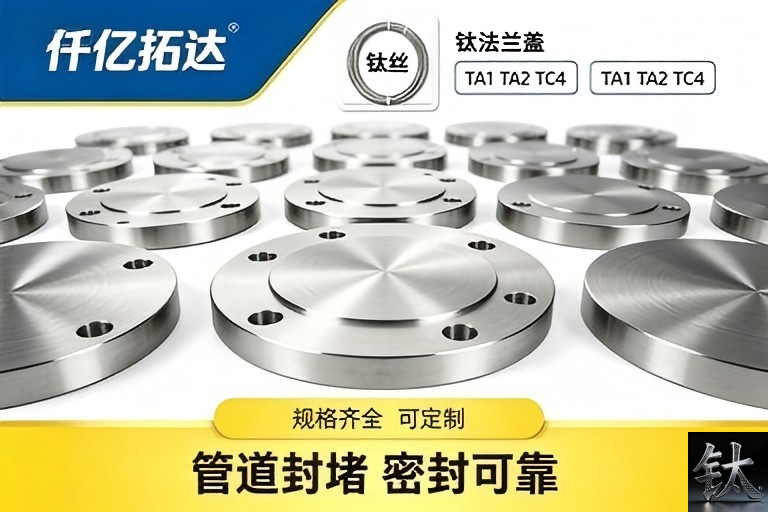
In stock & ready to ship — Titanium Flanges
We stock ~1,500 pcs in stock (Gr1/Gr2/Gr5/Gr7) and cut to your size. As a stockist-supplier we read drawings, work to ASTM / ASME / GB standards, export worldwide, and ship same day on stock items. Tell us your spec and get a quote fast.
Опишите ваши требования — марка, размер и количество. Ответим в течение 24 часов.
Предпочитаете чат? WhatsApp +86 188 2967 9311 или напишите на sales@sxqytd.com.


- Что такое титан фланец| ASME B16.5 ASTM B381 Gr2 Gr5 титановые флажк
- ASME B16.5 титановая флажка класса 2 DN100-DN600 Класс 150/300 FOB
- Gr2 Titanium Sheet Price FOB Shanghai | ASTM B265 In Stock
- Titanium Price Today (26 октября 2026 г.): отчет о рынке Китая
- Цена на титан сегодня (23 октября 2026 г.): пластина, трубка, стерже
Контактное лицо: Wang Xiaoning
Телефон: +86-917-355-7966
Эл. почта: sales@sxqytd.com
WhatsApp: +86 188 2967 9311
Компания: Shaanxi Qianyi Tuoda Technology Co., Ltd
Адрес: Floor 4, Building 4, No. 188 Gaoxin Avenue, High-tech Zone, Baoji City, Shaanxi Province, China