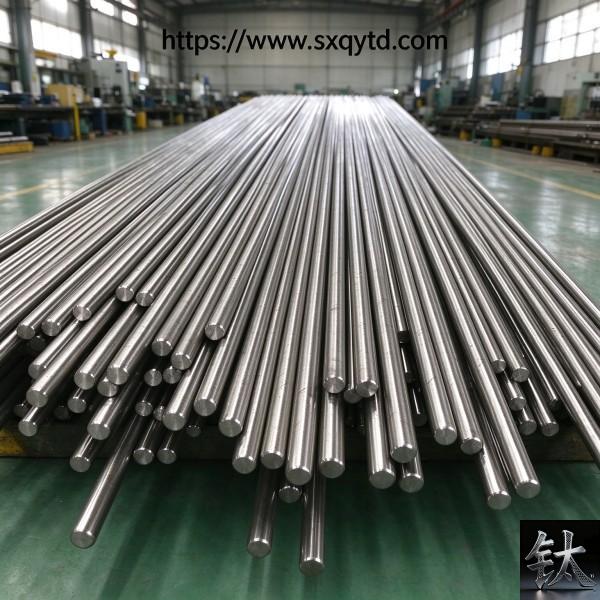
Monel K-500 vs Monel 400: When Age Hardening Pays, and When It Fails
| Specification | UNS N05500 / N04400 |
|---|---|
| Applicable Standard | Monel K-500 / Monel 400 |
| Material Condition | Age hardened / annealed |
| Inspection & Packaging | ASTM B865 / B164 / AMS 4676 |
| Reference Price | $50.00 – $70.00 |
Product Description: Monel K-500 triples yield strength over 400, but welding erases it and aged hardness can breach NACE 35 HRC. Buyer rules, 8 failure modes.
Product Overview
Monel K-500 vs Monel 400: When Age Hardening Pays, and When It Fails
Monel K-500 (UNS N05500) and Monel 400 (UNS N04400) are the same nickel-copper alloy separated by roughly 3% aluminium and under 1% titanium. Those small additions let an age-hardening treatment lift minimum yield strength from about 172 MPa to roughly 620-790 MPa — a three- to four-fold gain. That gain is real, and it is also why most K-500 purchases go wrong: the strength exists only in the age-hardened condition, and a weld, a stress-relief cycle, or a sour-service hardness ceiling can remove it or disqualify it. If your part is a pump shaft, loaded valve stem, spring or high-strength fastener machined from one piece and never load-bearing welded, K-500 is the right call. If the part is welded, static, sour, or simply a casing, buy Monel 400: it costs less, welds with ERNiCu-7 without penalty, and sits far below the NACE MR0175 / ISO 15156-3 hardness limit. This guide covers the gamma-prime mechanism, the hardness trap, why welding erases the premium, the eight conditions where each grade fails, and a seven-point acceptance checklist that a mill certificate alone does not satisfy. For the part-by-part pump and valve view, see our Monel 400 pump and valve selection guide; this article handles the material-condition decision behind it.
At a Glance: 400 vs K-500 Specification Snapshot
| Spec | Monel 400 (UNS N04400) | Monel K-500 (UNS N05500) |
|---|---|---|
| Alloy type | Ni-Cu solid solution | Same Ni-Cu base + Al / Ti, precipitation hardenable |
| Key chemistry | Ni 63-70%, Cu 28-34%, Fe ≤2.5% | Similar Ni-Cu + Al ~2.3-3.15%, Ti ~0.35-0.85% (typical ranges) |
| Strengthening | Cold work only | Gamma-prime Ni3(Al,Ti) precipitates during ageing |
| Min. tensile (annealed / aged) | ~483 MPa | ~965 MPa aged (typical minimum ~900 MPa, form dependent) |
| Min. yield (annealed / aged) | ~172 MPa | ~620-790 MPa aged |
| Elongation | ~35% typical, highly formable | ~15-25% typical aged, less formable |
| Hardness | ~75 HRB annealed, far below sour cap | ~28-35 HRC aged, close to the 35 HRC sour-service ceiling |
| Welding | ERNiCu-7, no strength penalty | Weld metal reverts to ~400 strength; avoid load-bearing welds |
| Chloride SCC | Both effectively immune in chloride service — the reason either beats 316L stainless in seawater | |
| Key standards | ASTM B127 / B164 / B165 / B564, A494 M-35-1 cast | ASTM B865, B164, AMS 4676, QQ-N-286 (legacy), API 6ACRA |
| Default duty | Casings, bodies, seats, plate, tube, welded fabrications | One-piece pump shafts, loaded stems, springs, high-strength fasteners |
| Relative price | Baseline, commonly stocked | Roughly 30-50% premium, usually a mill order |
Read the hardness and welding rows before the yield row. Most buyers compare 172 MPa against 690 MPa, place the order, and only discover at incoming inspection that the certificate says “annealed”, or that the drawing calls for a welded boss on the shaft. Every number above is a typical or minimum value from published mill datasheets and the common ASTM forms; actual acceptance values belong to the standard and product form on your purchase order, not to a comparison table. Where a range is wide — K-500 yield in particular — it reflects differences between hot-worked, annealed, cold-drawn and fully aged conditions, and between bar, forging and wire. Our nickel alloy bar standards guide lists which ASTM specifications govern each form, and our nickel products stock overview shows what is normally on the shelf in Baoji.
What Actually Differs: About 3% Aluminium, Not a New Alloy
It is tempting to treat K-500 as a different metal. It is not. Both grades are nickel-copper solid solutions with essentially the same corrosion personality: high nickel gives immunity to chloride stress-corrosion cracking, and high copper gives the film that survives hydrofluoric acid and flowing seawater. Both lack meaningful chromium, so neither can build the chromium-oxide passive layer that protects stainless steel in oxidising media. That shared weakness is why the two grades fail in the same places — nitric acid, wet chlorine, aerated HF, and stagnant seawater crevices — and why a strength upgrade never buys corrosion margin. The Monel 400 vs Inconel comparison makes the same point from the other direction: when the medium changes family, you change alloy family; when only the load changes, you change condition.
| Element | Monel 400 (typical spec) | Monel K-500 (typical spec) | Why it matters |
|---|---|---|---|
| Nickel | 63.0-70.0% | 63.0-70.0% (similar base) | Chloride SCC immunity, caustic resistance |
| Copper | 28.0-34.0% | 27.0-33.0% (similar base) | HF and flowing-seawater film |
| Aluminium | Not a controlled addition | ~2.3-3.15% | Forms gamma-prime with Ni during ageing |
| Titanium | Not a controlled addition | ~0.35-0.85% | Co-precipitates, refines and stabilises the hardening phase |
| Iron / manganese | Fe ≤2.5% / Mn ≤2.0% | Fe ≤2.0% / Mn ≤1.5% typical | Tightened to protect age-hardening response |
| Carbon | ≤0.30% | ≤0.25% typical | Weld ductility; graphite risk is a pure-nickel issue, see Ni200 vs Ni201 |
The aluminium and titanium are not there for corrosion. They are there to be precipitated. In the annealed condition K-500 is barely stronger than 400, which means an annealed K-500 bar is an expensive Monel 400 bar. Buying “K-500” without writing the delivery condition on the order is the single most common way to pay a 30-50% premium and receive no strength benefit. This is also why a certificate that reports chemistry but omits the heat-treatment condition is not evidence of an aged part: the chemistry of an annealed and an aged piece of the same heat is identical. Our nickel sheet with EN 10204 3.1 MTC page shows what a heat-specific certificate should contain; the condition line is the one buyers forget to demand.
One more practical difference follows from the chemistry. XRF positive material identification, which works well for distinguishing chromium-bearing alloys, is poor at quantifying aluminium in a heavy nickel-copper matrix. A handheld analyser will comfortably tell you that a bar is a Ni-Cu alloy, but it may not reliably separate 400 from K-500, and it cannot tell annealed from aged at all. For genuine grade discrimination use optical emission spectroscopy on a prepared surface, as described in our nickel rod authenticity and spectral inspection guide; for condition discrimination use hardness plus the mill heat-treatment record. Keep those two verification jobs separate.
The Age-Hardening Mechanism and the 540-600 °C Window
Age hardening works because aluminium and titanium are more soluble in the nickel-copper matrix at high temperature than at room temperature. A solution treatment dissolves them; a quench traps them in a supersaturated state; a controlled reheat in the region of 540-600 °C lets them diffuse back out as a fine, coherent dispersion of gamma-prime, Ni3(Al,Ti). Those particles are only nanometres across, but they obstruct dislocation movement throughout the grains, and that is what turns a 172 MPa yield into a 620-790 MPa yield. Nothing about the grain structure, the density, or the corrosion film changes in any commercially meaningful way. The strength is entirely a precipitate effect, which is why it is also entirely reversible by heat.
| Stage | Typical practice | What the buyer must record |
|---|---|---|
| Solution / hot work | Hot worked or solution treated, then quenched to keep Al and Ti in solution | Heat number and product form |
| Ageing | Roughly 540-600 °C for about 8-16 h, followed by controlled furnace cooling; exact cycle is supplier and specification dependent | Furnace batch ID, time and temperature record, condition designation on the MTC |
| Finishing | Straightening, machining, grinding; cold work after ageing is limited | Final hardness reading and dimensional report |
| Verification | Tensile test on the same heat and treatment lot, hardness check on the delivered piece | Numeric yield / tensile / elongation, HRC results, inspector signature |
Two consequences follow, and both reach the purchasing desk. First, the treatment is a batch process with a record. A legitimate aged delivery can name the heat number, the ageing furnace batch, the cycle and the resulting mechanical test values. If a supplier can quote the alloy but cannot produce a heat-treatment record, you are being sold a chemistry, not a condition. Second, the treatment has a temperature ceiling in service. Sustained exposure in the upper hundreds of degrees coarsens the precipitates (over-ageing) and the strength drifts back down; most designers treat roughly 425 °C as the point above which age-hardened nickel-copper is no longer the natural choice, and the applicable design code governs in every case. For hot caustic duty the correct family is actually pure nickel with the carbon control explained in Ni200 vs Ni201, not a hardened Ni-Cu alloy.
There is a third consequence that is easy to miss on a drawing. Because ageing is normally performed on the whole wrought piece before final machining, the part must be designed so that no subsequent operation reheats it locally. Grinding burns, weld repairs, straightening with a torch, and hot-forming all create softened zones with no visible boundary. A shaft that passes a hardness check at the journals can be materially softer under a keyway or at a threaded end if somebody repaired it with heat. That is why high-consequence K-500 shafts are specified as one-piece machined from aged stock with a hardness map, rather than as fabricated assemblies.
Rule of thumb: K-500 is not a stronger metal. It is the same metal in a heat-treated condition. Specify the condition, verify the condition, and never apply heat to the finished part.
The “Stronger Is Safer” Trap — Why Yield Strength Is Not the Buying Criterion
The most persistent mistake in Ni-Cu specification is treating yield strength as a free upgrade. Upgrading a static pump casing from 400 to K-500 adds cost, adds procurement lead time, adds a hardness compliance question, and adds a welding restriction — and buys exactly nothing, because a casing sees pressure and corrosion, not shaft torque. The failure mode that kills casings is rarely overload; it is pitting under deposits, crevice attack at a gasket face, or an oxidiser nobody listed on the data sheet. None of those respond to yield strength. We see the reverse error too: a shaft specified in 400 because “Monel is Monel”, then failing by fatigue or by yielding at a keyway because 172 MPa was never checked against the actual bending load.
The useful question is not “which is stronger” but where does the load path go, and is there a weld in it. A one-piece machined shaft with a calculated bending stress above roughly 100-120 MPa (allowing a sane margin on the 172 MPa annealed minimum) is the classic K-500 candidate. A shaft with a welded-on coupling, a built-up impeller hub, or a repair-welded journal is not, because the weld becomes the weakest link at close to 400-level strength while the rest of the part was priced at K-500 level. In that case either redesign the joint as a mechanical fit, or stay with 400 and increase the section. Our pump and valve grade trap section gives the short version; the load-path version is the one that belongs on the engineering drawing.
Ductility is the other half of the trade. Annealed 400 elongates around 35% and can be cold bent, flared, swaged and deep drawn; fully aged K-500 typically sits nearer 15-25% and will crack if a fabricator treats it like the workhorse. Springs and fasteners are the exception where the higher strength is exactly what is wanted, but even there the assembly torque must be set for the actual condition — a point our titanium fastener torque failure guide documents in detail for a different alloy family, and the same physics applies here. Specifying K-500 for a part that later needs cold forming is a scrap-making decision, not a specification decision.
The NACE Hardness Trap: When the Stronger Grade Becomes Non-Compliant
In sour (H2S-containing) oil and gas service, NACE MR0175 / ISO 15156-3 and API 6ACRA constrain nickel alloys by hardness and by sulfide stress-cracking test evidence, not by brand name. A widely cited ceiling for nickel-copper alloys in this family is 35 HRC maximum; the exact permissible hardness depends on the alloy, the product form, the strength class and the applicable edition of the standard, and it must be read from the standard itself for the specific order. Now place the two grades on that scale: annealed 400 sits far below the line, while fully aged K-500 commonly lands around 28-35 HRC — right at the boundary. The treatment that creates the strength also creates the compliance risk.
| Condition | Typical hardness | Sour-service implication |
|---|---|---|
| Monel 400, annealed | ~75 HRB (well below HRC scale concerns) | Comfortably usable; still verify the exact table entry and the product form |
| Monel 400, cold worked | Higher HRB, grade dependent | Cold work raises hardness; declare the condition on the MTC |
| K-500, annealed | Similar to annealed 400 | Compliant on hardness, but you paid for strength you did not get |
| K-500, fully aged | ~28-35 HRC commonly reported | At or near the widely cited 35 HRC ceiling: measure each lot, do not assume |
This produces a genuinely awkward procurement situation. A shaft that needs K-500 strength is often in a service where H2S is present; the buyer asks for “NACE compliant K-500” and receives a certificate that shows chemistry, tensile values and a 3.1 signature, but no hardness reading. That certificate does not answer the question. Compliance is a property of the delivered heat in its delivered condition, evidenced by a hardness test and, where required, SSC test data against the applicable standard. Ask for the numeric HRC value on the delivered lot, confirm the governing standard edition and table entry, and state on the purchase order that hardness acceptance is required before dispatch. Our Monel 400 pump and valve RFQ checklist lists the 35 HRC item in its nine-point list; on K-500 it moves from a formality to a gating item.
There is a second, subtler route to the same problem: hardness added after the certificate. Cold straightening, thread rolling, shot peening or aggressive grinding can raise local surface hardness beyond the bulk reading, and sulfide cracking initiates at the surface. Where a part will see both high load and sour service, specify the hardness measurement location and method, and avoid unrecorded cold work after ageing. This is also why some project specifications simply prohibit age-hardened Ni-Cu in the most severe sour environments and route the designer to a qualified alloy from the API 6ACRA list instead. When the medium is severe enough that the hardness ceiling and the strength requirement collide, the honest answer is often a different alloy family — see the C276 vs C22 grade guide for how we handle the equivalent decision in Ni-Cr-Mo grades, and the nickel alloy family overview for the wider map.
We are deliberately not publishing a single universal “K-500 is / is not NACE compliant” verdict here, because that verdict does not exist. It depends on the delivered hardness, the heat-treatment condition, the standard edition and the environment class. What we can say without qualification is that an unqualified assumption of compliance is the failure mode, and that the verification cost is a few hardness readings against the cost of a failed downhole component. Write the requirement into the RFQ, and make the test result a release condition rather than a document that arrives after the crate is sealed.
Why Welding Erases the Strength You Paid For
This is the section most suppliers avoid, and the one that decides whether a K-500 order was worth placing. The common filler for nickel-copper is ERNiCu-7 (and its covered-electrode equivalent ENiCu-7). It is a solid-solution Ni-Cu weld metal with no deliberate aluminium or titanium addition, so the weld deposit cannot age harden. Even if you welded with matching K-500 filler, the fusion zone melts and re-solidifies, dissolving the gamma-prime dispersion; the heat-affected zone is heated well into the solution range and loses its precipitates locally. After the arc goes out, the joint is a Monel-400-strength band running through a K-500-strength component. Typical welded joint strength falls back toward the annealed 400 range, not toward 690 MPa.
Can a post-weld age restore it? In principle a full solution treatment plus a complete re-age of the entire assembly would re-precipitate gamma-prime in the base metal, but it would not create the same precipitate distribution in the as-cast weld metal, and in practice a finished pump shaft or valve assembly cannot be put through a 540-600 °C furnace cycle without distortion, scale, dimensional change and a new round of machining. Some project specifications do require a post-weld thermal cycle for stress relief; that must be resolved on the WPS/PQR with the actual mechanical consequences quantified, not assumed. Our titanium weld NDT and WPS qualification guide explains the same logic of “the procedure defines the properties” for a different metal system; the governing principle is that a qualified procedure must be qualified for the delivered condition.
| Design situation | Correct decision | Reason |
|---|---|---|
| One-piece machined shaft, no weld | Aged K-500 | Full aged strength survives to service |
| Shaft with welded coupling or boss in the load path | Redesign as a mechanical fit, or use 400 with a larger section | Weld and HAZ revert to near-annealed strength |
| Casing, body, bonnet, seat, pipe spool | Monel 400, welded as normal | Weldable, cheaper, no strength premium needed |
| Field repair on a K-500 part | Treat as an engineering change, not a weld repair | Local properties, hardness and compliance all change |
| Dissimilar joint to steel or stainless | Qualified procedure with ERNiCu-7 or a nickel-based filler; galvanic review | Filler dilution and galvanic couple both matter |
The practical design response is boring and effective: keep K-500 out of the load path of any weld. Machine the shaft from a single aged blank; use keys, splines, shrink fits and threaded retainers instead of welded bosses; put the corrosion-resistant 400 welded fabrication around it. Where a fabricator insists a welded K-500 assembly is fine, ask for a transverse tensile test across the joint and a hardness traverse through the HAZ on a procedure qualification coupon. If they cannot produce those, the claimed strength exists only on the mill certificate for the base metal.
A related trap appears in repair. A K-500 shaft returned from service with a scored journal is sometimes built up by weld and re-machined, which silently converts the repaired zone into annealed-strength material with a hardness change and, in sour service, a compliance change. We treat a weld repair on an age-hardened component as an engineering change requiring re-qualification, not as maintenance. The same discipline applies to the shop practices that follow machining: our iron contamination and pickling guide covers surface contamination for titanium, and the underlying lesson — that post-processing can undo the specified condition — transfers directly here.
Corrosion Envelope: Near-Identical Chemistry, Three Real Differences
Because the base chemistry is shared, the corrosion ranking between 400 and K-500 is short. Both are effectively immune to chloride stress-corrosion cracking, both excel in flowing seawater and de-aerated HF, both are weak in oxidising media, and both suffer under deposits and gasket crevices in stagnant seawater. If your corrosion problem is one of these, changing from 400 to K-500 changes nothing except the invoice. The detailed medium-by-medium boundaries are set out in our nickel products by medium guide and the pump and valve failure list; this chapter only covers where the age-hardened condition genuinely shifts the answer.
| Environment | Monel 400 | Aged K-500 | Buyer note |
|---|---|---|---|
| Flowing seawater, high velocity | Excellent | Excellent, often better erosion / cavitation resistance | One of the few places the strength upgrade also helps |
| Stagnant seawater, shielded crevices | Pitting / crevice risk | Same risk, plus higher SCC sensitivity | Neither grade is the answer; design out the crevice |
| De-aerated hydrofluoric acid | Classic service | Similar chemistry, but higher strength raises SCC concern | Aeration and oxidisers flip the result |
| Nitric acid, wet chlorine, hypochlorite | Fails | Fails | No chromium; change alloy family |
| Caustic / alkali | Good | Good, but check high-temperature caustic SCC | Above ~315 °C consider Ni201 family instead |
| Sour H2S service | Usual choice on hardness grounds | Requires hardness + SSC evidence | See the hardness chapter above |
Difference one: erosion and cavitation. In high-velocity seawater, impellers, shafts and choke trim are damaged by mechanical removal of the protective film as much as by chemistry. A harder, higher-strength surface resists that removal better, so aged K-500 has a legitimate track record in pump shafts and high-velocity marine hardware. This is the one application where the strength upgrade and the wear upgrade point in the same direction, and it is why the grade exists in marine service at all.
Difference two: stress-corrosion and hydrogen sensitivity. Higher strength generally means lower tolerance of a crack-like flaw, residual stress and hydrogen. Aged K-500 is more susceptible than annealed 400 to stress-corrosion cracking in certain hot concentrated caustic and HF-adjacent conditions, and to hydrogen-assisted cracking when cathodically protected or coupled to a sacrificial anode system. Design standards and project specifications frequently impose additional heat-treatment or hardness restrictions for this reason. A service that is benign for 400 is not automatically benign for the same part in the aged condition, and a coupon test in the real liquor is worth more than a ranking table.
Difference three: galvanic and magnetic behaviour. Both grades are noble relative to steel and aluminium, so coupling a small Ni-Cu part to a large carbon-steel structure is usually safe from the Ni-Cu side, while the steel corrodes; coupling a small steel fastener into a large Ni-Cu assembly is the dangerous direction. Annealed Ni-Cu alloys are effectively non-magnetic, which is why 400 appears in instruments and mine-sweeping hardware, but some aged K-500 lots show a measurable magnetic response. Where low magnetic signature is a design requirement, do not assume K-500 inherits the 400 property — request a permeability result on the delivered lot. For plate and tube forms that stay in the solid-solution family, our nickel alloy plate standards guide and Nickel Seamless Pipe standards guide cover the standards that actually govern the order.
Standards, Delivery Conditions and the PO Line That Must Not Be Vague
“Monel K-500 bar” is not a specification. It names a chemistry but omits the product form, the governing standard, the delivery condition, the acceptance values, the sour-service requirement and the certificate level. Every one of those omissions is a route to receiving material that is technically K-500 and functionally wrong. The standards below are the ones that actually appear on real orders; note that B164 is a legitimate nickel-copper bar specification but is not a guarantee of age-hardened properties, which is why B865 or an AMS number should govern when the strength is the reason for the purchase.
| Designation | What it covers | Why it appears on a K-500 order |
|---|---|---|
| ASTM B865 | Precipitation-hardening nickel-copper-aluminium alloy (UNS N05500) bar, rod, wire, forgings | The primary K-500 product specification; state the condition |
| ASTM B164 | Nickel-copper alloy rod, bar and wire (400 / K-500 in non-aged conditions) | Frequently seen on old drawings; may not deliver aged properties |
| AMS 4676 | Aerospace material specification for K-500 bar and forgings | Used when the end user is aerospace or defence |
| QQ-N-286 | Legacy US federal specification for K-500 | Still appears on legacy drawings; agree the modern replacement in writing |
| API 6ACRA | Age-hardened nickel-based alloys for oil and gas drilling and production equipment | Governs hardness, strength class and SSC qualification for sour-service parts |
| NACE MR0175 / ISO 15156-3 | Materials for H2S-containing environments | Hardness ceiling and environmental limits; check the exact table entry |
| EN 10204 Type 3.1 | Heat-specific inspection certificate signed by the mill independent inspection function | The document that must carry condition, hardness and test values |
Legacy drawings are a recurring source of trouble. QQ-N-286 appears on equipment built decades ago and is still copied into new purchase orders by engineers who inherit the drawing. Rather than silently substituting a modern specification, agree the replacement in writing on the PO and record both designations, so the certificate and the drawing remain traceable to each other. The same discipline applies when the end user is an EPC working to PED or ASME material dossiers: the certificate must cite the standard and edition the dossier names. Our EN 10204 3.1 mill certificate page explains what the certificate can and cannot attest, and the nickel MTC 3.1 page shows the nickel-side document set we supply.
Copy this onto the PO / RFQ:
Material: Monel K-500, UNS N05500
Standard: ASTM B865 (edition stated) / AMS 4676 if applicable
Form: bar / forging / wire, diameter ___ mm x length ___ mm
Condition: age hardened (precipitation heat treated), not annealed
Mechanicals required: tensile / 0.2% yield / elongation, numeric values, same heat + same ageing lot
Hardness: ___ HRC max, measured on delivered lot, location and method stated
Chemistry: full heat analysis including Al and Ti
Certificate: EN 10204 Type 3.1, English, with heat number and ageing batch reference
Sour service: NACE MR0175 / ISO 15156-3 / API 6ACRA applicability: yes / no; if yes, SSC evidence required
Welding: none permitted on the load path (or attach approved WPS/PQR)
Marking: heat number on each piece; no grade or condition substitution
One line in that template does more work than the rest: the condition line. Write “age hardened”, require numeric tensile and hardness values from the same heat and ageing lot, and refuse certificates that say only “complies”. If a supplier cannot fill those fields, they are offering annealed stock with a K-500 label. For mixed projects where nickel components ship alongside titanium equipment, our nickel alloy products buying guide shows how we combine forms on one document set; adding the condition field to that same document set is usually a five-minute job at ordering time and an impossible one after dispatch.
How to Verify You Actually Received Age-Hardened K-500
Incoming inspection of K-500 has two independent jobs, and conflating them is the root of most disputes. Job one is identity: is this Ni-Cu with the Al/Ti additions, and is it the heat on the certificate? Job two is condition: has that heat actually been through the ageing cycle, and did it reach the specified properties? XRF helps with part of job one and nothing of job two. A certificate helps with both only if the mill actually reports the treatment lot and test values. Here is the seven-point check we run before a K-500 order leaves our Baoji warehouse, and that we recommend every buyer performs on receipt.
- UNS and standard on every document. N05500, ASTM B865 (or the agreed AMS/legacy equivalent) and edition, not a generic “Monel” description.
- Heat number matching. Physical tag = certificate heat = packing list line = invoice line. Multi-piece cuts from one bar share the mother heat and must be listed separately.
- Full chemistry including Al and Ti. A Ni-Cu certificate with no aluminium line cannot be a K-500 certificate. Optical emission spectroscopy on a prepared spot is the reliable cross-check, as covered in our spectral inspection guide.
- Condition designation. The MTC must state age hardened / precipitation heat treated and reference the ageing furnace batch, not merely the alloy and dimensions.
- Numeric mechanical values. Tensile, 0.2% yield and elongation as numbers from the same heat and treatment lot; “meets specification” is not a test result.
- Hardness on the delivered lot. Record the HRC value, the method, the locations and the number of readings. For sour service this is the compliance gate, not a formality.
- No undocumented thermal or cold-work history. Confirm no weld repair, torch straightening, grinding damage or unrecorded cold forming after ageing; ask for the dimensional and surface report on machined parts.
A practical note on hardness: it is a screening tool, not a substitute for a tensile test. A bar can read in the expected HRC band and still have an unfavourable yield result if the ageing cycle was marginal, and a local cold-worked surface can read high without the bulk being over-hardened. Use hardness to detect a wrongly conditioned batch quickly, and the mill tensile result to accept the lot. For high-consequence shafts, add a third layer: a coupon or a sacrificial piece from the same heat and treatment lot, tested by the buyer laboratory before the batch is machined. That costs a few hundred dollars and removes the entire annealing-versus-aged argument from the dispute.
Finally, distinguish what the documents can prove. An EN 10204 3.1 certificate proves what the mill tested on that heat. A PMI or OES reading proves what arrived in the crate. Neither proves what a fabricator did to the part afterwards. If the part is welded, repaired or locally heated, the qualification logic in our WPS and NDT qualification guide applies to the post-processing step. Chain of custody — heat, treatment lot, machining, inspection — is the actual product here, and it is what we hand over with the material.
Limitations and Failure Conditions: Where Each Grade Breaks
Neither grade fails because it was the weaker one. Both fail when a specification ignores a boundary — a sour stream nobody declared, a weld nobody drew, a hardness cap nobody measured, or a condition line nobody wrote. The eight conditions below are organised by medium and shop-floor situation, in the order they show up in real RFQs and failure reports, rather than by metallurgical category. Use them as a review checklist against your own data sheet before the PO is issued.
Sour service (H2S) and the 35 HRC boundary
The harder, stronger condition is the one most likely to be rejected by a sour-service material review. Aged K-500 commonly sits near the widely cited 35 HRC ceiling in NACE MR0175 / ISO 15156-3, and API 6ACRA adds strength-class and SSC-test requirements for age-hardened nickel alloys. A certificate without a hardness value is not evidence of compliance, and a hardness reading taken before final cold work may not represent the delivered surface. If the well or process stream is sour, decide the alloy and condition together at the design stage: an annealed 400 part with a larger section is often simpler to qualify than an aged part that needs a full SSC dossier. Request the numeric hardness result and the applicable standard table entry as a release condition, not as an attachment after shipment.
Stagnant seawater, deposits and gasket crevices
Both grades depend on a clean, flowing surface to maintain their copper-nickel film. Under a gasket face, a biofouling patch, a tube support or a shutdown deposit, oxygen depletion drives local pitting and crevice attack; the higher strength of K-500 does not help, and in high-strength material a pit becomes a fatigue or SCC initiator sooner. The failure is a geometry and operating problem, not a grade problem. Design for drainability, avoid horizontal dead legs, specify a flushing and lay-up procedure for outages, and if the crevice cannot be designed out, change alloy family rather than paying for a stronger version of the same chemistry. The same distinction between flowing and stagnant seawater is the central point of our Monel 400 pump and valve guide.
Aerated HF, oxidising acids, wet chlorine and hypochlorite
Neither grade contains meaningful chromium, so neither can hold a passive film in oxidising media. Aerated HF vapour, nitric acid, wet chlorine, hypochlorite, ferric or cupric ion contamination and chlorine dioxide all push corrosion rates up sharply, and a strength upgrade makes the outcome worse by adding SCC susceptibility. This is the most common form of “we bought the better grade and it still failed”. Audit the full species list including cleaning chemicals and upset conditions before selecting any Ni-Cu alloy; where oxidisers are routine, the correct answer is a chromium-bearing nickel alloy, as discussed in the C276 vs C22 comparison and the nickel alloy family guide.
Welded or repair-welded K-500 in the load path
ERNiCu-7 weld metal cannot age harden, and the HAZ loses its gamma-prime dispersion during the thermal cycle. The joint reverts to near-annealed 400 strength while the rest of the component is priced and designed as K-500. A full post-weld solution plus age is rarely practical on a finished assembly and does not reproduce wrought properties in the cast weld metal. Field weld repairs on shafts are especially dangerous because the change is invisible after machining. Specify one-piece machined construction, mechanical joints and a written prohibition on weld repair in the load path, and require a transverse tensile test plus a hardness traverse across any joint that is unavoidable.
Cathodic protection, galvanic couples and hydrogen embrittlement
High-strength age-hardened alloys are more sensitive to hydrogen-assisted cracking than annealed solid-solution material. In seawater systems protected by sacrificial anodes or impressed-current cathodic protection, hydrogen is generated at the metal surface; a highly stressed K-500 fastener, pin or shaft keyway can absorb enough to crack, particularly where hardness is at the top of the band and residual tensile stress from machining remains. This is a known failure pattern for high-strength marine fasteners, not a theoretical concern. Review the protection potential, avoid over-protection, control hardness, specify low-stress machining and consider an annealed 400 part where the load allows it. Our fastener torque and assembly failure guide shows how assembly stress turns into service cracking in another alloy system.
Sustained elevated temperature and over-ageing
The gamma-prime dispersion is only stable within a temperature window. Long-term exposure in the upper hundreds of degrees coarsens the precipitates, strength declines toward the annealed condition, and creep becomes a design consideration that a room-temperature yield figure does not address. Most designers stop treating age-hardened Ni-Cu as a structural option above roughly 425 °C unless the applicable code says otherwise. Above about 315 °C in concentrated caustic, the carbon-controlled pure nickel family is the correct route — see Ni200 vs Ni201. If thermal cycles, steam-out or hot oil tracing are part of the duty, state the maximum metal temperature and the duration on the RFQ so the condition can be assessed rather than assumed.
Hot concentrated caustic and alkaline SCC
Both grades handle caustic well at moderate temperature, which is why they appear in caustic transfer and evaporation equipment. In hot concentrated alkali, however, high-strength nickel-copper material can suffer stress-corrosion cracking, particularly at welds, cold-worked surfaces and high residual stress locations. Aged K-500 is the less forgiving of the two. A stress-relief treatment that might help the residual stress can simultaneously change the aged condition and the hardness compliance, so it cannot be applied casually. Lower the applied stress, eliminate crevices and cold-worked surfaces, verify the actual operating temperature, and use pure nickel or a qualified alloy when the caustic is both hot and concentrated.
Wrong condition on the certificate: annealed stock sold as K-500
This is the most preventable failure and the one that costs money without any physical damage. K-500 in the annealed condition has essentially the chemistry of K-500 and the strength of 400. A certificate that lists Ni, Cu, Fe and Mn but omits Al, Ti, the condition designation, the ageing batch and numeric mechanical values does not prove an aged delivery. XRF will not reliably resolve the aluminium content in this matrix and cannot distinguish conditions at all. Require the full specification code, condition line, heat-treatment reference, tensile values and HRC results on the EN 10204 3.1, and confirm with OES plus hardness on receipt. The nickel MTC 3.1 page and the 3.1 mill certificate explanation describe the document structure that makes this check possible.
Application Map, Cost and Availability
Use the load path, not the strength column, to place the order. Monel 400 default work: pump casings and volutes, valve bodies and bonnets, seats and discs, plate and sheet linings, seamless and welded pipe spools, fasteners of moderate strength, HF alkylation piping, caustic transfer lines, and any fabrication that will be welded. It is the grade that belongs on a plate or pipe order, and it is the form most often held in stock. K-500 default work: one-piece pump shafts, high-torque valve stems, downhole and subsea components qualified to API 6ACRA, springs, high-strength studs and bolts, marine propeller and rudder shafts, erosion-prone choke trim, and instrument parts where a non-magnetic wrought blank is needed and the magnetic response has been verified.
On price, published and quoted figures put K-500 roughly 30-50% above 400 per kilogram, with the spread driven by form, size, condition, testing and mill minimum order quantity. That premium is easy to justify on a shaft that would otherwise have to be redesigned with a larger section, and impossible to justify on a casing. Availability is the more decisive commercial variable: 400 plate, bar, tube and fittings are stocked items in Baoji, while aged K-500 bar and forgings in a specific diameter are usually a mill order with a heat-treatment slot attached. On a shutdown schedule, a 400 solution that ships this week frequently beats a K-500 solution that ships in six weeks. We hold roughly 30 tonnes of nickel products within an approximately 800-tonne total titanium and nickel inventory, cut non-standard sizes, work from customer drawings, certify to ASTM / ASME / GB, and tell you plainly whether the aged condition you need is on the shelf or a mill order. For a system-level view of how material condition interacts with fabrication and inspection, our WPS and NDT qualification guide is the natural next read.
| Part / situation | Specify | Reason |
|---|---|---|
| Casing, body, bonnet, seat, welded spool | Monel 400, annealed | Weldable, in stock, no strength premium needed |
| One-piece machined shaft, bending stress above ~100-120 MPa | Aged K-500, ASTM B865 | 3-4x yield with no weld in the load path |
| High-torque valve stem | Aged K-500 if no weld; 400 if torque allows | Torque decides; condition line on the PO is mandatory |
| Sour H2S service | 400 by default; K-500 only with hardness + SSC evidence | Aged hardness sits near the 35 HRC ceiling |
| Stagnant seawater with crevices | Neither, until geometry is fixed | Crevice attack is not a strength problem |
| Oxidising acid, wet chlorine, aerated HF | Neither — Cr-bearing nickel alloy or titanium | No chromium in Ni-Cu; wrong alloy family |
| Short shutdown, standard forms, tight budget | Monel 400 from stock | Schedule and cost beat an unused strength margin |
Summary: Choose 400 if, Choose K-500 if
Choose Monel 400 (UNS N04400, annealed) if:
- The part is welded, formed, flared, bent or fabricated, or will be repair-welded in the field.
- The part is static: casings, bodies, bonnets, seats, plate, tube, fittings and pipe spools.
- Service is sour and you want the simplest hardness compliance path.
- You need stock forms on a short shutdown schedule, cut to non-standard dimensions.
- The duty is flowing seawater, de-aerated HF or moderate caustic and 172 MPa yield is sufficient.
Choose Monel K-500 (UNS N05500, age hardened) if:
- The part is a one-piece machined shaft, loaded stem, spring or high-strength fastener with no weld in the load path.
- Calculated stress genuinely exceeds the annealed 172 MPa minimum with margin, or erosion / cavitation is the limiting mechanism.
- You can write “age hardened”, the governing standard, numeric mechanicals and a hardness limit onto the PO and the 3.1 certificate.
- Sour-service applicability has been resolved with hardness and, where required, SSC evidence against the applicable standard edition.
- The 30-50% price premium and the mill lead time are justified by the load case rather than by a feeling that stronger is safer.
The whole decision reduces to one sentence: 400 is a material, K-500 is a condition of that material. Buy the material when the job is corrosion and fabrication; buy the condition when the job is load, and then protect the condition through machining, inspection and documentation. When you send an enquiry, the most useful inputs are the part drawing, the medium with every oxidiser and impurity, the maximum metal temperature, whether the stream is sour, whether any weld is in the load path, and the required condition and hardness. Those six lines determine the grade and the document set, and they remove the back-and-forth that delays shutdown orders. We are a Baoji (China Titanium Valley) stockist-supplier: roughly 800 tonnes of titanium stock plus about 30 tonnes of nickel products, cut-to-size and non-standard dimensions from drawings, ASTM / ASME / GB certification, export packing and same-day dispatch on confirmed in-stock orders. Tell us the load case and the medium and we will confirm the grade, the condition and the realistic date together. Request a quote →
Frequently Asked Questions
Is Monel K-500 simply a stronger version of Monel 400?
Chemically, almost. Both are nickel-copper alloys with similar Ni and Cu ranges; K-500 adds roughly 2.3-3.15% aluminium and 0.35-0.85% titanium so that a precipitation-hardening treatment can form gamma-prime. The corrosion envelope is essentially shared. What differs is the delivery condition: fully aged K-500 reaches roughly 620-790 MPa minimum yield against about 172 MPa for annealed 400, but an annealed K-500 bar is no stronger than 400. Treat it as a condition, not a different metal.
Can I weld K-500 and keep the high strength?
Not in the welded zone. ERNiCu-7 filler has no aluminium or titanium and cannot age harden, and the heat-affected zone loses its gamma-prime precipitates during the thermal cycle. The joint reverts to near-annealed 400 strength. A full solution plus re-age of a finished assembly is usually impractical and does not reproduce wrought properties in cast weld metal. Design K-500 parts as one-piece machined components with mechanical joints, or stay with 400 and increase the section.
Is age-hardened K-500 compliant with NACE MR0175 / ISO 15156 for sour service?
There is no unconditional yes. These standards constrain nickel-copper alloys by hardness and environmental limits, and a widely cited ceiling for this family is 35 HRC. Fully aged K-500 commonly measures around 28-35 HRC, so it sits at or near the boundary, while annealed 400 is far below it. Compliance depends on the delivered hardness, the heat-treatment condition, the product form and the applicable standard edition and table entry. Require a numeric HRC result on the delivered lot and, where the project demands it, SSC test evidence before release.
What must the mill certificate show to prove I received aged K-500?
An EN 10204 Type 3.1 tied to the heat number should state UNS N05500, the governing standard and edition, the full chemistry including Al and Ti, the condition as age hardened or precipitation heat treated, the ageing batch reference, numeric tensile / 0.2% yield / elongation from the same heat and treatment lot, and hardness results with method and location. A certificate saying only that the material “complies” does not prove the condition. Confirm with optical emission spectroscopy for chemistry and a hardness check for condition on receipt.
Which grade should I use for a pump shaft or valve stem?
Use aged K-500 when the shaft is machined from one piece, the calculated bending stress exceeds the annealed 172 MPa minimum with margin, and no load-bearing weld is present. Use 400 when the part is welded, the load is modest, the service is sour, or the schedule demands stock forms. Our Monel 400 pump and valve selection guide gives the part-by-part version; the short rule is that the load path and the weld decide, not the price list.
Does K-500 corrode faster than Monel 400?
In most media the general cor
Tell us your requirement — grade, size and quantity. We reply within 24 hours.
Prefer chat? WhatsApp +86 188 2967 9311 or email sales@sxqytd.com.
- What is Titanium Flange | ASME B16.5 ASTM B381 Gr2 Gr5 Titanium Flan
- ASME B16.5 Titanium Flange Grade2 DN100-DN600 Class150/300 FOB
- Gr2 Titanium Sheet Price FOB Shanghai | ASTM B265 In Stock
- Titanium Price Today (Oct 26, 2026): China Market Report
- Titanium Price Today (23 Oct 2026): Plate, Tube, Rod & Wire
Contact Person: Wang Xiaoning
Tel: +86-917-355-7966
Email: sales@sxqytd.com
WhatsApp: +86 188 2967 9311
Company: Shaanxi Qianyi Tuoda Technology Co., Ltd
Address: Floor 4, Building 4, No. 188 Gaoxin Avenue, High-tech Zone, Baoji City, Shaanxi Province, China