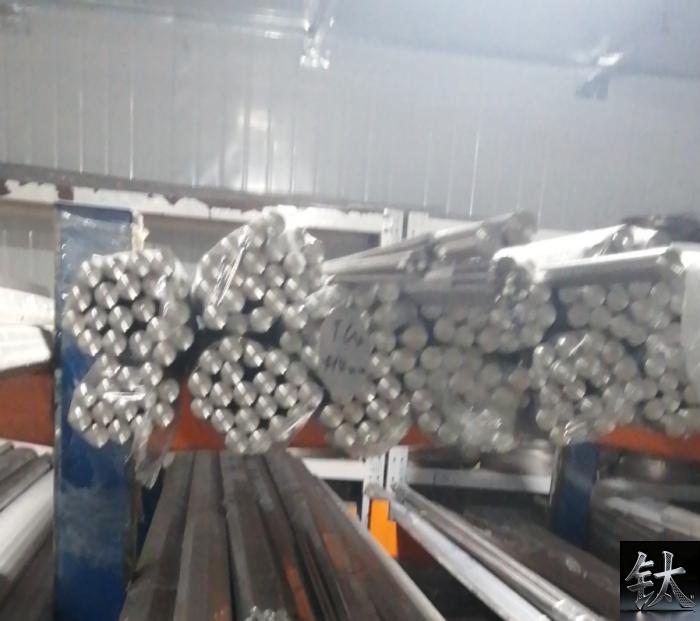
Nickel Filler Wire Classification and Heat-Lot Traceability: A Wire Specification Is Not a Welding Classification
| Спецификация | Filler classification system / AWS A5.14 ASME SFA-5.14 ISO 18274:2023 |
|---|---|
| Применимый стандарт | Alloy family / ERNi-1 ERNiCu-7 ERNiCr-3 ERNiCrMo-4 ERNiCrMo-10 |
| Состояние материала | Product form / straight cut-length TIG rod and spooled GMAW wire |
| Контроль и упаковка | Traceability / heat lot number moisture barrier packaging opening log |
| Справочная цена | $70.00 – $100.00 |
Описание продукции: ASTM B160 is a base-metal spec; AWS A5.14 ERNi-1 is a filler class. Two systems, deoxidizers, AWS vs GB/NB mapping, and heat-lot ID lost after re-spooling.
Обзор продукции
Nickel Filler Wire Classification and Heat-Lot Traceability: A Wire Specification Is Not a Welding Classification
Ordering nickel wire by a diameter and a grade does not name the welding classification on the spool. ASTM B160 and ASTM B164 are wrought product specifications for rod, bar and wire; AWS A5.14, ASME SFA-5.14 and ISO 18274 are filler-metal classifications for bare rods and electrodes. They are two document families, and a PO quoting only the first cannot certify the second. Five common classes, ERNi-1, ERNiCu-7, ERNiCr-3, ERNiCrMo-4 and ERNiCrMo-10, map to five alloy families, and each carries deoxidizer additions that make its deposit chemistry differ from the matching base metal. Our wire diameter and grade selection page, titanium B863 versus AWS A5.16 article and nickel welding rod ready-stock page cover different ground: the older wire page explains how to choose a diameter and a grade, the titanium article explains titanium welding wire in a different material family, and this article explains the nickel filler classification system and the heat-lot evidence chain. Two systems, five classes, eight rejection triggers and one 14-line checklist decide what an inspector can sign.
A material certificate says what the metal is; a fabrication and welding method statement says what was done to it. Those pages settle which grade and which standard to order; this article starts where they stop. We are a Baoji China Titanium Valley stockholder with roughly 30 tonnes of nickel stock, so where a classification depends on an edition or a national cross-reference we name the conflict and give the action instead of printing one false value. Our grade guide maps the alloy names, N6 and Ni201 product page lists the wrought forms, and weight calculator sizes the order. This article deals with the filler that joins them.
At a Glance: Eight Facts That Separate a Wire Order from a Filler Classification
Read the first three rows before the PO is written; they fix the two document families, the five filler classes and the deoxidizer rule. The rest turn those decisions into checks an inspector can sign.
| Item | What the decision turns on |
|---|---|
| The short answer | A diameter and a grade are a base-metal order. A filler class is a separate welding classification |
| Two families | ASTM B160, B164, B166, B574 cover wrought products. AWS A5.14 and ISO 18274 cover bare rods and electrodes |
| Five classes | ERNi-1, ERNiCu-7, ERNiCr-3, ERNiCrMo-4, ERNiCrMo-10 map to five alloy families |
| The trap | Filler wire carries Ti, Al, Mn or Nb deoxidizers. Matching filler is not the same grade |
| Mapping | AWS, ISO and GB/T 15620 or NB/T 47018 give no one-to-one value. Six verification actions replace it |
| Lost lot | Cutting, re-spooling and coiling can separate the heat mark. Rebuild a lot-to-spool map |
| Packaging | Moisture barrier, opening log, cleanliness, cast and helix, straight rod versus spool marking |
| One document | A 14-line Method Statement / ITP Checklist naming check, basis, criterion and signer |
A material certificate proves heat and chemistry, not the filler class or the heat number on a cut rod.
The "Wire Specification Is the Filler Classification" Myth: Two Standards, Two Jobs
A mill supplies wire to a wrought product specification and a fabricator buys a bare rod to a filler classification, and both arrive as a coil or a straight length. ASTM B160 covers nickel rod and bar and ASTM B164 covers nickel-copper rod, bar and wire; these control the mill product, identified by a UNS number such as N02200 or N04400. Our bar page for B160 and B164 and nickel rod selection guide set out those grades. None is a welding consumable classification.
A filler classification asks what deposit chemistry this bare rod delivers in a weld. AWS A5.14, Specification for Nickel and Nickel-Alloy Bare Welding Rods and Electrodes, and its adoption ASME SFA-5.14 in BPVC Section II Part C, assign classes such as ERNi-1 and ERNiCrMo-4. ISO 18274:2023 assigns parallel codes such as S Ni 2061 and S Ni 6276. A PO saying only ASTM B160 N02201 wire, 1.6 mm, has specified a base metal and a diameter, not a filler class.
Two document families, two jobs, one purchase order.
The same discipline applies across the range. Our seamless pipe page and plate page for B162 and B575 are wrought references; the filler comes from a separate system. Our WPS and NDT qualification guide makes the parallel point for titanium: the procedure qualification, not the certificate, governs the weld. Name the class the WPS requires before issue.
Base-Metal Specifications vs Filler-Metal Classifications: The Two Document Families
Treat the two families as independent columns in the PO and the method statement. One names the wrought product, one the bare consumable, and a third covers the certificate documents that tie a lot to a heat number. Our nickel products overview and nickel bar range sit in the first column; the filler classes below sit in the second.
No row can be substituted for another, and no single standard covers all rows.
| Document family | What it controls | Typical designations |
|---|---|---|
| Wrought product spec | Chemistry and condition of the mill product | ASTM B160, B162, B164, B166, B574 / UNS N02200, N04400 |
| AWS filler classification | Deposit chemistry of the bare rod or electrode | AWS A5.14 / ASME SFA-5.14 / ERNi-1, ERNiCrMo-4 |
| ISO filler classification | Solid wire and rod classification for nickel alloys | ISO 18274:2023 / S Ni 2061, S Ni 6082, S Ni 6022 |
| Procurement and certificate | Lot acceptance and the traceable record | AWS A5.01 / EN 10204 3.1 / heat number |
| National cross-reference | Domestic designation and pressure-equipment conditions | GB/T 15620 / NB/T 47018 / SNi6022 |
AWS A5.11 is not interchangeable with A5.14. Write each standard and edition into the PO as a separate line.
Alloy Family to Filler Family: Which ER Classification for Which Base Metal
Filler selection follows the alloy family of the base metal, not the product form. ERNi-1 is the pure nickel filler, ERNiCu-7 the nickel-copper filler, ERNiCr-3 the nickel-chromium-iron filler, ERNiCrMo-4 the C-276 type and ERNiCrMo-10 the C-22 type. Each has a parallel ISO 18274 code. Our C-276 versus C-22 guide and Ni200 versus Ni201 guide explain the base-metal side.
The mapping is a family correspondence, not a purchase instruction. The edition named in the PO and the qualified WPS govern the final class.
| Alloy family | Base-metal spec | AWS A5.14 / SFA-5.14 | ISO 18274:2023 | Deoxidizer note |
|---|---|---|---|---|
| Pure nickel | ASTM B160 / B162, N02200 N02201 | ERNi-1 | S Ni 2061 (NiTi3) | Titanium, porosity control |
| Nickel-copper | ASTM B164 / B127, N04400 | ERNiCu-7 | S Ni 4060 (NiCu30Mn3Ti) | Titanium and manganese |
| Ni-Cr-Fe | ASTM B166 / B168, N06600 | ERNiCr-3 | S Ni 6082 (NiCr20Mn3Nb) | Niobium and manganese |
| Ni-Cr-Mo C-276 | ASTM B574 / B575, N10276 | ERNiCrMo-4 | S Ni 6276 (NiCr15Mo16Fe6W4) | Low carbon, tungsten |
| Ni-Cr-Mo C-22 | ASTM B574 / B575, N06022 | ERNiCrMo-10 | S Ni 6022 (NiCr21Mo13Fe4W3) | Higher chromium, niobium free |
| Ni-Cr-Mo 625 | ASTM B444 / B446, N06625 | ERNiCrMo-3 | S Ni 6625 (NiCr22Mo9Nb) | Niobium, dissimilar joints |
A C-22 joint does not automatically take ERNiCrMo-10; dilution, the medium and the qualified procedure can point elsewhere, and our C-276 versus C-22 guide explains why. ERNiCr-3 is often chosen for dissimilar joints, a use our Monel versus Inconel page touches. Our Monel K-500 guide is a reminder that a heat-treated base grade and its filler follow different rules.
The "Matching Filler Means the Same Grade" Trap: Deoxidizers Change the Chemistry
Matching filler sounds as though the consumable and the base metal carry the same grade and composition. They do not. A bare rod is engineered to produce a sound deposit through an arc, so it carries deoxidizer and stabilizer additions a wrought product of the same name does not. ERNi-1 contains titanium to suppress porosity, ERNiCu-7 carries titanium and manganese, and ERNiCr-3 carries niobium and manganese to resist hot cracking. Those elements are intentional and sit inside the filler classification limits, not the base-metal specification.
This is why a chemist checking a spool against the wrought grade table can reject good wire. Read ERNi-1 deposit against ASTM B160 limits for N02201 and the titanium looks like an impurity, so the class fails for the wrong reason. Judge against the filler classification in the PO and the value on the consumable certificate, with the analysis state recorded as deposit or product. Our mill certificate page covers a wrought record; a filler lot certificate is a different document. Our B160 and B164 bar page is the wrong yardstick for a rod.
Matching filler means the deposit is fit for the base metal and the service, not that the consumable is the same UNS number. Judge the wire against its own classification.
Because the deposit is diluted by the base metal and some services require over-alloying, a fabricator can weld a C-276 component with a C-22 type or a 625 type filler, or join a nickel alloy to steel with ERNiCr-3. Our C-276 versus C-22 guide and Monel versus Inconel page frame those choices. The qualified WPS and PQR, not a stock label, are the authority, and our WPS qualification guide makes the same point for titanium. Record the class and the qualification reference before the first arc.
Where the Standard Stops: Why AWS, ISO and GB/NB Mappings Do Not Give One Value
A project buying to AWS A5.14 and fabricating under a national pressure-equipment code soon asks for a one-to-one cross-reference between ERNiCrMo-10, ISO 18274 S Ni 6022 and a GB/T 15620 SNi6022 designation, with NB/T 47018 conditions on top. There is no official single value to print. The code numbers look alike, but the standards come from different bodies, on different revision cycles, with different composition limits, suffix conventions and grouping rules. ASME SFA-5.14 adopts the AWS classes into BPVC Section II Part C, while ASME Section IX assigns an F-number such as F-No.43 for qualification. Our export and standards FAQ covers the documentation that crosses borders.
Printing one equality would be fast and wrong. The table states the conflicts and gives no single answer.
| Where sources diverge | What one document implies | What the other implies |
|---|---|---|
| Edition and adoption | AWS A5.14/A5.14M carries its own revision year | ASME SFA-5.14 adopts it into a named BPVC edition; ISO 18274 and GB/T 15620 use other years |
| Composition limits | A class sets C, Si, Mn, Cr, Mo, W and Nb ranges | A national designation may bound them differently or omit tungsten |
| Suffix and grouping | AWS uses numeric suffixes and ASME IX F-numbers | A national code groups consumables by its own table |
| Acceptance and testing | A5.14 classifies by chemical analysis with A5.01 guidance | NB/T 47018 can add retest, impact or corrosion conditions |
Where a supplier offers SNi6022 against a PO naming ERNiCrMo-10, treat it as a substitution to be verified. Our export FAQ covers shipment documentation.
When Traceability DOES Fail: Cutting, Re-Spooling, Coiling and the Evidence Chain
A filler classification is only useful if the wire in the welder hand is the wire on the certificate. Our wire diameter and grade selection page describes the ordered forms.
Cutting to straight lengths, re-spooling and coiling
A continuous coil carries one heat or lot tag. Cut it into one-metre TIG rods and the tag is separated from most pieces. Rewind a large spool onto smaller spools and the new cores need a transferred lot number. Coil a straight rod into a drum and the original label can be lost. In each case rebuild a lot-to-spool or lot-to-bundle map tying every unit back to the certificate and the classification. A handwritten number is not traceability. Our EN 10204 3.1 page shows the document at one end; the method statement names who rebuilds the map at the other.
Moisture-barrier packaging and the opening log
Nickel filler wire is supplied in sealed moisture-barrier packaging with a desiccant, and some spools carry a humidity indicator. Once the seal is broken, exposure time and ambient humidity matter because moisture drives hydrogen-related porosity. Require an opening log recording date, time, operator, spool identity, desiccant and indicator condition, and any re-sealing action. Our titanium wire GTAW shielding article makes the parallel point for a different family. A dry, sealed, logged spool is an inspectable condition.
Straight cut-length rod versus spooled wire marking
The two forms must be identified differently. Straight rods for GTAW are bundled by diameter, length, classification and lot with a durable tag; spooled wire for GMAW is identified on the flange, hub or label. Diameter and form are separate fields from class and lot. Mix a TIG bundle with a MIG spool of the same class and the welder can feed the wrong form into the wrong process. Our nickel welding rod ready-stock page lists the forms we hold; require form, diameter and class legible at issue.
Surface cleanliness, cast, helix and feedability
A bare rod must be free of drawing lubricant, oil, oxide and handling residue, because sulphur, lead and grease promote hot cracking and porosity. For spooled wire, cast and helix describe the curvature off the spool and affect feeding through the liner and contact tip. Wipe a sample with a lint-free solvent cloth and run a feed trial recording arc stability and bird-nesting. Our small-batch and zero-cut page is a reminder we handle non-standard sizes in house. Surface condition and feedability are two checklist lines, not one.
Our titanium B863 versus AWS A5.16 article covers a different material family and does not govern nickel filler classes; citing it in a nickel PO repeats the two-family mistake.
Limitations and Failure Conditions: Eight Fabrication and Welding Rejection Triggers
Each trigger names what to check, the method, the basis document and the dispute action. Our C-276 versus C-22 guide and Ni200 versus Ni201 guide show the downstream cost.
The purchase order cites a wrought specification as though it were a filler classification
Read the PO and the label side by side. If the PO names ASTM B160 or B164 and asks for an ERNi-1 certificate, the two describe different things and the weld is unclassified. Judge against the line that should name AWS A5.14, ASME SFA-5.14 or ISO 18274 explicitly, and confirm the edition. In a dispute, hold the lot and require a reissued PO with a filler line. Our B160 and B164 bar page is a base-metal reference, not a consumable document.
A filler lot is rejected against the matching base-metal chemistry table
Check which composition table the analysis was judged against. Titanium in ERNi-1, titanium and manganese in ERNiCu-7, and niobium and manganese in ERNiCr-3 are intentional additions, not impurities. Judge against the filler classification in the PO and the value on the consumable certificate, with the analysis state recorded. In a dispute, quarantine the lot and repeat by the agreed reference method. Our mill certificate page covers a different document.
A national designation is substituted for an AWS class with no verification record
When a supplier offers a GB/T 15620 or NB/T 47018 designation against a PO naming ERNiCrMo-10, treat it as a substitution, not an equality. Require the six verification actions, the qualified WPS and PQR reference, and the ASME IX F-number grouping. Judge against the PO substitution clause and named editions. In a dispute, hold the lot and escalate to purchaser engineering. Our export and standards FAQ lists documentation that can travel with a shipment.
The heat or lot number is lost after cutting, re-spooling or coiling
Trace every issued bundle or spool back to the mill certificate and the classification through a lot-to-spool map. Read each mark and reconcile it against the packing list and lot certificate, photographing labels. Judge identity against the PO traceability clause. A cut rod with no map is a reject regardless of chemistry, because an untraceable consumable cannot be qualified. In a dispute, hold all affected units and require the map rebuilt. Our EN 10204 3.1 page shows the upstream record.
Moisture-barrier packaging is damaged or the spool has no opening record
Inspect the seal, desiccant and humidity indicator before issue, and read the opening log for date, time, operator, exposure duration and re-sealing action. Judge against the PO packaging clause and confirm the criterion against the contract edition. A wet or unlogged spool can drive hydrogen-related porosity no certificate detects. In a dispute, quarantine, record the indicator state, and require a documented drying or disposition decision. Our titanium wire shielding article shows how atmosphere conditions are logged.
Surface contamination or drawing lubricant residue degrades feedability
Wipe a sample with a lint-free solvent cloth, inspect for oil, oxide and residue, and run a feed trial recording cast, helix, drive-roll slip, bird-nesting and arc stability. Judge against the PO cleanliness clause and the WPS feedability requirement. Sulphur, lead and grease promote hot cracking, and a spool that will not feed cannot hold a steady arc. In a dispute, segregate, clean or reject per the disposition, and repeat the trial. Our WPS and NDT qualification guide is the reference for the procedure record.
Straight cut-length rods and spooled wire are mixed or marked with the wrong form
Check that each bundle or spool carries classification, lot, diameter and product form, and that TIG bundles and GMAW spools are stored and issued separately. Judge against the PO form and marking clause. The same class in the wrong form feeds the wrong process, and a label omitting diameter invites a setup error at the torch. In a dispute, re-tag from the map and segregate the forms. Our nickel welding rod ready-stock page lists the forms in stock.
The consumable lot certificate does not match the physical spool or no deposit retest exists on request
Reconcile the classification and batch on every label against the lot certificate and the EN 10204 3.1 or AWS A5.01 record, and confirm whether the contract calls for an all-weld-metal chemical retest. Judge identity against the PO traceability clause and the agreed reference method. A certificate for a different heat is not traceability. In a dispute, hold the lot and request the retest by the named method. Our mill certificate page and Baoji stockholder page cover the record and supplier side.
The 14-Line Nickel Filler Wire Classification and Traceability Method Statement / ITP Checklist
The recurring failure is a one-line note saying check wire and quantity. Each line below can be answered with a document, a criterion and a signature. Never merge lines four and five, or lines ten and eleven.
| # | Check | Basis document | Acceptance criterion | Sign-off |
|---|---|---|---|---|
| 1 | Standards and editions per line | Purchase order | A5.14 or SFA-5.14 or ISO 18274, with edition | Buyer and supplier |
| 2 | Filler class and alloy family match | PO and qualified WPS | One class, family justified | Welding engineer |
| 3 | Base spec and filler class cited separately | PO and method statement | Two lines, no substitution | Buyer quality assurance |
| 4 | Deoxidizers judged against filler class | Filler certificate and classification | Ti, Mn, Nb inside class limits | Receiving chemist |
| 5 | Deposit versus product analysis state | Named classification edition | Method and state stated | Receiving chemist |
| 6 | AWS to GB or NB substitution record | PO clause and six actions | Engineering approval attached | Purchaser engineering |
| 7 | WPS, PQR and F-number reference | Qualified WPS and PQR | Class inside qualified range | Welding engineer |
| 8 | Heat or lot on every spool or bundle | Lot certificate and packing list | Every unit traceable | Stores inspector |
| 9 | Lot-to-spool map after cutting or re-spooling | Traceability clause | Map rebuilt and signed | Fabrication supervisor |
| 10 | Form, diameter and class legible at issue | PO marking clause | Rod and spool separated and tagged | Stores inspector |
| 11 | Moisture barrier, desiccant, indicator | PO packaging clause | Seal intact, indicator acceptable | Storekeeper |
| 12 | Opening log and exposure duration | Storage and opening procedure | Date, time, operator and action recorded | Storekeeper |
| 13 | Cleanliness, cast, helix, feed trial | WPS and PO cleanliness clause | Clean surface, stable feed, no slip | Welding supervisor |
| 14 | Hold, disposition and release record | This checklist | Every line answered and signed | Quality lead and buyer |
Lines four, six, nine and fourteen are the checks most often signed without evidence.
Six Verification Actions When the Classification Systems Disagree
This article named two document families, five filler classes, a deoxidizer rule, a national cross-reference conflict and a traceability chain. Printing one favourite value would be faster and wrong. Six actions settle the numbers and the identity for one delivery.
- Name the standard and edition for every line: AWS A5.14/A5.14M with its revision, the ASME SFA-5.14 adoption and BPVC edition, or ISO 18274:2023, or the GB/T 15620 and NB/T 47018 year. Confirm ranges against the contract edition, not a supplier table. Our B160 and B164 bar page stays separate.
- State the specimen and deposit condition: wire product or all-weld-metal deposit, note that shielding gas or flux changes deposit chemistry, and keep the as-welded or post-weld heat-treated state explicit. A number without a state is not a specification.
- Fix the measurement and dispute reference method, name who witnesses a retest, and require the agreed reference method when two results disagree. Our mill certificate page shows a record form, but a wrought certificate is not a filler deposit analysis.
- Rebuild the lot-to-spool map: photograph each label, tie it to the heat or lot number and the certificate, and attach a layout of where each unit was issued. Our nickel welding rod ready-stock page lists the forms needing mapping.
- Assign the reviewer and qualification reference: name the welding engineer, quality lead and purchaser representative who sign the substitution, citing the WPS, PQR and F-number grouping. Our WPS and NDT qualification guide sets out that discipline.
- Archive the chain with dates: PO clauses, lot certificate, opening log, feedability trial, retest report and signed checklist, and force reassessment on any re-cut, re-spool, heat mismatch or opened hold. Our export FAQ and Baoji stockholder page cover shipment documentation.
Ask for the PO classification line and the lot certificate with dates and signatures.
Summary: Choose AWS A5.14 if, Choose ISO 18274 if, Escalate if
Choose one AWS A5.14 / ASME SFA-5.14 classification line if:
- The PO names the class, its edition and the ASME adoption, and the WPS cites the same class.
- The lot certificate carries class and batch, and every spool or bundle maps to a heat or lot number.
- Deoxidizers are judged against the filler classification, not a base-metal table.
- The 14-line method statement is signed per line and the opening log is complete.
Escalate to a classification review or a substitution hold if:
- The PO quotes only a wrought specification such as ASTM B160 or B164 and asks for a filler certificate.
- A national designation is offered as an equality with no six-action verification record.
- The heat or lot was lost after cutting, or the label does not match the certificate.
- Moisture packaging is damaged, the opening log is missing, or a feed trial shows slip.
- Straight rods and spooled wire are mixed, or the titanium B863 article is cited in a nickel PO.
Choose an ISO 18274 or a national-code route if:
- The project or pressure-equipment code names ISO 18274:2023, GB/T 15620 or NB/T 47018 as governing.
- A regional supply chain issues S Ni designations and purchaser engineering has approved the cross-reference.
- The buyer cannot produce a WPS and PQR naming the AWS class; set the qualification first.
- The grade is still in question; settle the base metal from our grade guide and N6 and Ni201 product page before choosing the filler.
The subject reduces to one sentence: a wire specification is not a filler classification, and a filler lot is only as good as the heat number that still travels with it. When you enquire, send the base-metal grade and specification, the filler class and edition, the form and diameter, the WPS reference, and the packaging requirements. We are a Baoji China Titanium Valley stockholder with roughly 30 tonnes of nickel material in stock, we cut to small-batch and non-standard sizes, we work from customer drawings, we read and supply to ASTM, ASME and GB standards, we export-pack in house and dispatch confirmed in-stock orders the same day. Our products overview, small-batch page, export FAQ and stockholder page describe the stock, cutting, documentation and supplier. We will tell you honestly what we can ship from stock and which decisions belong with your welding engineer. Request a quote →
Frequently Asked Questions
Is a nickel wire specification the same thing as a welding filler classification?
No. ASTM B160 and ASTM B164 are wrought product specifications for rod, bar and wire, identified by a UNS number. AWS A5.14, ASME SFA-5.14 and ISO 18274 are filler classifications for bare rods and electrodes, identified by ERNi-1 or S Ni 2061. A purchase order needs both a base-metal line and a separate filler classification line. Quoting one in place of the other leaves the weld unclassified.
Does matching filler mean the wire is the same grade as the base metal?
No. Matching filler means the deposit is fit for the base metal and the service, not that the consumable carries the same UNS number. Filler wire deliberately contains titanium, aluminum, manganese or niobium to control porosity and hot cracking. Those additions sit inside the filler classification limits and can be outside the wrought grade table, so judge the wire against its own classification.
Which AWS class corresponds to C-22 and to C-276 base metal?
ERNiCrMo-10 is the C-22 type, aligned in ISO 18274 with S Ni 6022 and UNS N06022, and ERNiCrMo-4 is the C-276 type, aligned with S Ni 6276 and UNS N10276. These are family correspondences, not purchase instructions. Dilution, the corrosive medium and the qualified WPS can point to a different class. Confirm the final choice against the PO and the qualified procedure.
Can I substitute a GB/T 15620 or NB/T 47018 designation for an AWS A5.14 class?
Treat it as a proposed substitution, not an equality. The standards use different editions, composition limits, suffix conventions and grouping rules, and a national code can add retest conditions for pressure equipment. There is no official single one-to-one value. Use six verification actions: name the editions, state the specimen condition, fix the reference method, rebuild the lot map, assign the reviewer and WPS reference, and archive the chain.
Why does the heat or lot number disappear after cutting or re-spooling?
A continuous coil or spool carries one identification tag. Cutting it into straight TIG rods, rewinding onto smaller spools or coiling into a drum separates most pieces from that tag. The fabricator must rebuild a lot-to-spool or lot-to-bundle map tying every issued unit back to the mill certificate and the classification. A handwritten number is not traceability, and an untraceable consumable is a reject.
What should be on a filler wire method statement and ITP checklist?
Fourteen lines, each naming the check, the basis document, the acceptance criterion and who signs. They cover standard editions, filler class and family, separate base-metal and filler lines, deoxidizer limits, deposit versus product analysis, substitution verification, WPS and PQR reference, lot numbers, the lot-to-spool map, form and diameter marking, moisture packaging, the opening log, cleanliness and feedability, and hold and release sign-off.
Can a spool be chemically correct and still be a valid reject?
Yes. Chemistry is a few lines of fourteen. A lost heat number, damaged moisture-barrier packaging, a missing opening log, drawing lubricant on the surface, poor cast and helix causing feed slip, and straight rods mixed with spooled wire are all valid holds on a spool whose deposit chemistry is exactly as certified. Judge each trigger against the PO and hold the lot before issue.
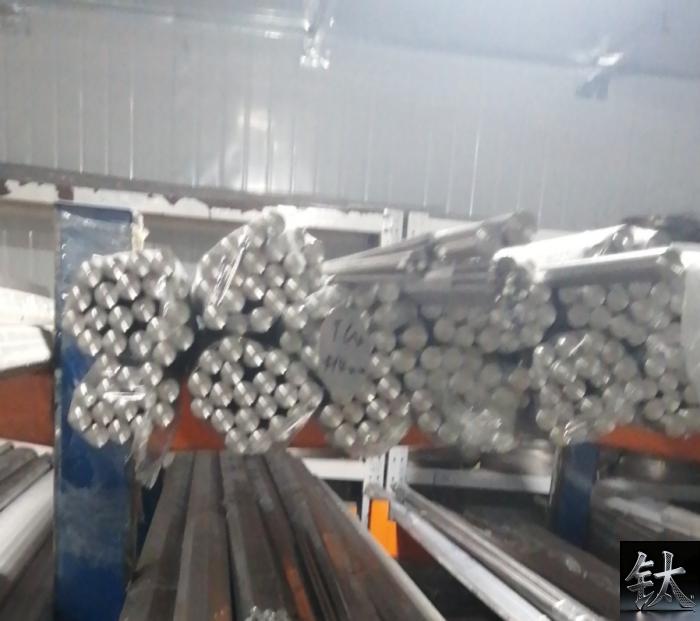
Опишите ваши требования — марка, размер и количество. Ответим в течение 24 часов.
Предпочитаете чат? WhatsApp +86 188 2967 9311 или напишите на [email protected].

- Titanium Price Today (9 Nov 2026): Plate, Tube, Rod & Wire
- Что такое титан фланец| ASME B16.5 ASTM B381 Gr2 Gr5 титановые флажк
- ASME B16.5 титановая флажка класса 2 DN100-DN600 Класс 150/300 FOB
- Gr2 Titanium Sheet Price FOB Shanghai | ASTM B265 In Stock
- Titanium Price Today (26 октября 2026 г.): отчет о рынке Китая
Контактное лицо: Wang Xiaoning
Телефон: +86-917-355-7966
Эл. почта: [email protected]
WhatsApp: +86 188 2967 9311
Компания: Shaanxi Qianyi Tuoda Technology Co., Ltd
Адрес: Floor 4, Building 4, No. 188 Gaoxin Avenue, High-tech Zone, Baoji City, Shaanxi Province, China