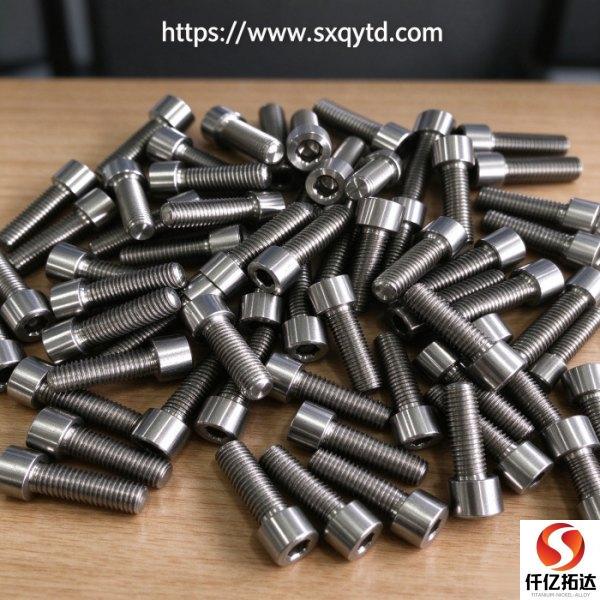
Should You Use Copper Anti-Seize or Threadlocker on Titanium?
| Specification | Compound Types: Molybdenum disulfide, PTFE / wax, copper-based anti-seize, anaerobic threadlocker |
|---|---|
| Applicable Standard | Primary Function: Friction control and anti-galling, distinct from vibration locking |
| Material Condition | Torque Impact: Nut factor K changes with lubrication state; re-derive torque per assembly |
| Inspection & Packaging | Galvanic Note: Copper-based compounds need review on aluminium and carbon steel structures |
| Reference Price | $5.00 – $100.00 |
Product Description: titanium bolt anti seize, copper anti seize vs threadlocker, titanium thread lubricant, MoS2 PTFE coating
Product Overview
Should You Use Copper Anti-Seize or Threadlocker on Titanium?
Use an anti-seize lubricant on titanium threads, not a threadlocker as an anti-galling measure. The two products do opposite jobs: anti-seize lowers friction so preload is controllable and the threads do not cold-weld, while an anaerobic threadlocker cures to raise breakaway torque and resist vibration loosening. On titanium, where published approximate nut factors run around K ≈ 0.20–0.25 dry and K ≈ 0.12–0.18 lubricated (figures quoted from our own F468/F467 torque-boundary guide, marked approx), that change in friction is not a detail — it decides whether the torque you apply produces the clamp you designed for. The table below separates the four compounds buyers most often confuse.
| Compound | What it actually does | Effect on nut factor K | Galvanic / service caution |
|---|---|---|---|
| MoS2 anti-seize | Lowers friction, protects thread flanks against cold welding | Moves K into the lubricated band (approx 0.12–0.18) | State it in the PO so torque is derived for the lubricated case |
| PTFE / wax coating | Dry-film lubricity, cleaner handling than paste | Lowers K, but by a different amount than paste — measure it | Coating thickness can affect thread fit; check gauge |
| Copper-based anti-seize | High-temperature anti-seize, effective on titanium-to-titanium threads | Lowers K; re-derive torque | Copper is nobler than aluminium and steel — review galvanic isolation in mixed-metal joints |
| Anaerobic threadlocker | Cures to resist vibration loosening; increases breakaway torque | Acts as a lubricant only before cure; K changes as it cures | Not an anti-galling control; removal can trigger breakaway galling |
| Nickel-based anti-seize | High-temperature compound used on steel | Lowers K | Commonly excluded on titanium assemblies — our site guide states "never nickel-based" |
| Dry, no compound | Nothing | Highest K (approx 0.20–0.25) | Highest galling risk on titanium-to-titanium; avoid on critical joints |
1. The "Threadlocker = Anti-Seize" Trap
The confusion is understandable: both are applied to threads, both come in small bottles, and both are described as "for bolts". But a threadlocker is a locking adhesive, not a lubricant. Its job is to fill the thread clearance and cure into a polymer that resists rotation. Anti-seize is a grease or paste loaded with solid lubricants whose job is to keep metal surfaces from welding together under load and to make friction repeatable.
On titanium this distinction is not optional. Titanium's protective oxide is thin, its thermal conductivity is low, and under the combination of high contact pressure and slow tightening the thread flanks can cold-weld — the failure known as galling. Assembly without a deliberate lubricant is the most cited cause. Applying a curing adhesive instead does not remove that risk; it can make removal worse, because the breakaway torque of a cured joint plus a galled flank is exactly the condition that strips a thread or shears a small socket screw.
If you need both anti-galling and vibration resistance, treat them as two separate engineering controls: a controlled lubricant for the torque basis, and a mechanical locking feature (prevailing-torque nut, safety wire, tab washer or a qualified locking compound applied on top of a documented lubrication state). Do not let the second silently replace the first. Our Titanium Fasteners Guide covers the full compound list; this article is only about the decision between the two categories.
2. Three Different Jobs Buyers Mix Up
Friction control is the first job: get a repeatable relationship between applied torque and achieved preload. Anti-galling is the second: keep the flanks from cold-welding during tightening and, later, during removal. Vibration locking is the third: stop a nut from backing off in service. A single product rarely does all three, and a purchase order that says only "lubricate threads" leaves all three undefined.
The clean way to specify it is three short lines: name the compound (for example MoS2 anti-seize, or a PTFE dry film), state where it is applied (threads and under the head — under-head friction is part of K too), and state the nut factor K used for the torque calculation. Add a fourth line for the locking method if the joint needs one. That is enough for a machine shop to reproduce the assembly and for an inspector to verify it.
For stocked items our passivation and anti-gall treatment page describes the surface condition the parts arrive with. Passivation and anodising are corrosion controls; they are not assembly lubricants. Confusing the two is the same category error as confusing threadlocker with anti-seize.
3. The "Copper Is Always Safe" Trap
: Where It Works and the Galvanic Catch
Copper-based anti-seize is a legitimate, widely used high-temperature compound and it works on titanium-to-titanium threads. The catch appears when the joint is not all titanium. Copper is more noble than aluminium and carbon steel in the galvanic series, and a copper-loaded paste smeared at a threaded interface in a wet, electrolyte-containing assembly can put a thin, very noble deposit in contact with a less noble parent metal. The parent metal is then the sacrificial side — the bolt survives, the housing does not.
Titanium-to-titanium joints
The usual case for copper paste: both parts are noble, the compound mainly controls friction, and there is no large dissimilar-metal driving force. Still specify the K used for torque.
Aluminium housings
This is the case to review. Use an isolating washer or barrier, keep the compound off the bearing face where it can contact bare aluminium, and prefer a non-metallic lubricant where the assembly will see electrolyte. Our marine-environment titanium screws page covers isolation hardware.
Carbon steel or stainless structures
Either isolate the joint or choose a non-copper compound. Remember that in a titanium-to-steel couple, titanium is the cathodic side; insulating washers, coatings and area-ratio control belong in the design rather than in the lubricant choice.
Wet or immersed service
Galvanic effects need a continuous electrolyte. In a dry indoor assembly the copper concern is minor; in seawater immersion, a crevice under the head or a splash zone it is a real design input. Confirm the whole service envelope before choosing a metallic paste.
4. Why the Torque DOES Change When You Change the Compound
Torque and preload are linked by T = K × D × F, where T is torque, D is nominal diameter, F is target clamp and K is the nut factor — a stand-in for thread-flank and under-head friction. Nothing in ASTM F468 or F467 sets K. It is a property of the assembled, lubricated joint, and it moves substantially between dry and lubricated states: approximately 0.20–0.25 dry versus 0.12–0.18 lubricated for the ranges quoted in our site's F468/F467 torque-boundary guide, marked approx.
Two consequences follow, and both are assembly errors rather than material defects. Apply a dry-state torque to a lubricated bolt and you over-stretch the shank past yield. Apply a lubricated-state torque to a dry bolt and you under-preload the joint, which then walks loose. Neither failure shows up as a broken head on the day of assembly.
Therefore: whenever the compound, coating, surface finish or mating nut changes, re-derive the torque from the K for the new state. Do not carry a torque figure from a previous purchase order, do not apply a fixed "reduce by 20%" rule without your own K values, and do not use a generic steel torque table. A worked example would need your actual K, diameter and target clamp — we deliberately do not publish a universal titanium torque table here, and the M6 / M8 / M10 hex bolts we supply are quoted with the assembly state stated separately. Ask your supplier for the measured K for the exact compound, coating and nut pairing you will use.
Assembly line to copy: "MoS2 anti-seize on all threads and under head; nut to ASTM F467 matched to bolt grade; torque derived from T = K × D × F with K = [fill from measured assembly state] and target clamp = [fill]; record K and lubrication state on the assembly sheet; single-use in critical joints." The two blank fields are the point — they cannot be filled by a catalogue.
5. When the Compound Stops Helping
: Limitations and Failure Conditions
A lubricant choice that works on a bench can fail in service. These are the conditions where the compound, the isolation or the torque basis needs re-review; no concentration, temperature or torque thresholds are given because they depend on the exact joint.
Seawater immersion and splash zones
A continuous electrolyte makes both galvanic coupling and crevice corrosion active. Re-check the copper decision, the isolating hardware and the grade itself; a higher strength grade does not fix a crevice.
Stagnant chloride crevices under the head
Paste can trap chlorides in a tight crevice, and the crevice can develop an oxygen-depleted acidic cell. Design the crevice out where possible, and select the grade for the crevice condition rather than for the bulk medium.
Elevated temperature
Grease carriers and cured polymers have service temperature limits; a compound chosen for room-temperature assembly may not survive the operating temperature, and the K at assembly temperature may not be the K at service temperature. Confirm the supplier's data for both.
Re-torque after the first thermal cycle
Titanium's lower modulus and the embedding of bearing surfaces can reduce preload after the first cycle. Any re-torque must use the same lubrication state and K as the original assembly, or the second pass will not reproduce the first clamp.
Removal and reuse
Breakaway galling is common on titanium, and a cured threadlocker adds breakaway torque on top of it. Treat critical fasteners as single-use and inspect before any re-torque.
Clean-room or medical device assembly
Metallic pastes and loose solid lubricants may be unacceptable where particulate or residue is controlled. Our fasteners for medical device assembly page covers equipment-side requirements; a clean assembly needs its own approved process, and no implant-grade claim is made here.
6. Frequently Asked Questions
Can I use threadlocker instead of anti-seize on a titanium bolt?
Not as an anti-galling control. Threadlocker is a curing locking adhesive; it does not provide the controlled lubrication titanium threads need, and it raises breakaway torque on removal. If you need vibration locking, use a mechanical locking feature or a qualified compound on top of a documented lubrication state.
Is copper anti-seize safe on titanium bolts?
On titanium-to-titanium threads it is a normal high-temperature choice. On aluminium or carbon steel structures, copper is the more noble metal and can drive galvanic attack on the parent material in a wet joint — use isolation or a non-metallic compound, and keep paste off bare aluminium bearing faces.
Why nickel-based anti-seize is not recommended here
Our site's fastener guide states "never nickel-based" for these assemblies. Nickel compounds are a steel-oriented high-temperature family; for titanium, use MoS2, PTFE/wax or copper with the galvanic review above. Follow the compound specified in your qualified assembly procedure.
Do I have to change the torque if I switch compound?
Yes. K changes with the compound, coating, surface finish and mating nut. Re-derive torque from T = K × D × F for the new state and record the K used; never carry a torque figure over from a different lubrication condition or apply a fixed percentage reduction.
Where exactly should anti-seize be applied?
On the threads and under the head or nut bearing face — under-head friction is part of K. Apply a thin, controlled amount, avoid contaminating the bearing surface of a dissimilar-metal joint, and state the application in the assembly sheet so the torque basis is reproducible.
7. Summary, Choose X if / Choose Y if, and Request a Quotation
Choose anti-seize if
- The threads are titanium-to-titanium, or the joint is load-bearing and needs a repeatable preload.
- You will derive torque from the K for the actual lubrication state and record it.
- The assembly is in a wet or chloride environment where galling on removal is a real cost.
- You have reviewed copper-based compounds against any aluminium or steel parent metal.
- The surface condition (passivation or coating) is stated separately from the assembly lubricant.
Choose threadlocker if
- Vibration loosening is the specific failure mode and a mechanical lock is not feasible.
- Anti-galling lubrication and the torque basis have already been defined separately.
- The service temperature and removal plan are compatible with a cured polymer.
- The joint is not a single-use critical assembly where breakaway galling would be unacceptable.
- Your qualified assembly procedure explicitly permits it.
The short version: lubricate deliberately, isolate dissimilar metals deliberately, and re-derive torque whenever the assembly state changes. Most titanium "bolt failures" are assembly-specification failures, and the compound is one line in that specification.
To request a quotation, send: item, grade and standard, size / length / pitch, head style, mating nut grade, surface finish, required compound or coating, quantity, certificate requirement, and the service medium. One action, one list.
Send your fastener RFQ or browse the Titanium Fasteners hub for the standard product range.
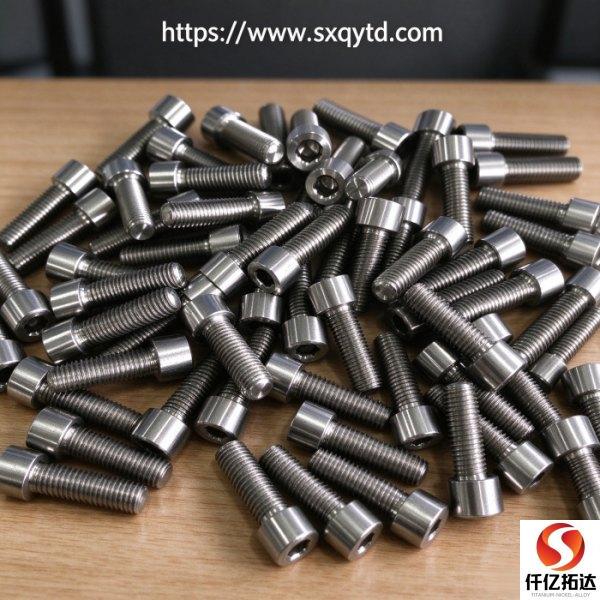
Data note and attribution: the nut-factor ranges quoted (approx 0.20–0.25 dry, 0.12–0.18 lubricated) are taken from our own published F468/F467 torque-boundary guide and are approximate, not measured values for any specific lot or compound. T = K × D × F is a standard engineering relation. No executable torque values, service temperature limits, galvanic potential differences or corrosion rates are given; obtain these from the compound supplier and from testing of the exact assembly. Reviewed and maintained by the Engineering Team, Shaanxi Qianyi Tuoda Technology Co., Ltd., Baoji, China.
Need this specification in titanium? Get a quote.
Send us your grade, size and quantity. We check live stock and reply with price and lead time the same day.
Stock holder in Baoji Titanium Valley · ~800 t inventory · cut-to-size · drawing-based machining · ASTM / ASME / GB · export-ready · same-day response
Tell us your requirement — grade, size and quantity. We reply within 24 hours.
Prefer chat? WhatsApp +86 188 2967 9311 or email [email protected].


- Titanium Price Today (9 Nov 2026): Plate, Tube, Rod & Wire
- What is Titanium Flange | ASME B16.5 ASTM B381 Gr2 Gr5 Titanium Flan
- ASME B16.5 Titanium Flange Grade2 DN100-DN600 Class150/300 FOB
- Gr2 Titanium Sheet Price FOB Shanghai | ASTM B265 In Stock
- Titanium Price Today (Oct 26, 2026): China Market Report
Contact Person: Wang Xiaoning
Tel: +86-917-355-7966
Email: [email protected]
WhatsApp: +86 188 2967 9311
Company: Shaanxi Qianyi Tuoda Technology Co., Ltd
Address: Floor 4, Building 4, No. 188 Gaoxin Avenue, High-tech Zone, Baoji City, Shaanxi Province, China