What Is ISO 7380 and When Do You Need a Button Head Bolt?
| Specification | Head Form: ISO 7380 button head socket screw, low domed profile |
|---|---|
| Applicable Standard | Alternatives: DIN 912 socket cap head, countersunk head, hex head, flange head |
| Material Condition | Selection Rule: Head height, bearing area and tool clearance — choose two |
| Inspection & Packaging | Custom Route: Non-standard head forms produced from a customer drawing |
Product Description: ISO 7380 defines the button head socket screw. Compare it with DIN 912 socket caps and countersunk heads on head height, bearing area and tool clearance
Product Overview
What Is ISO 7380 and When Do You Need a Button Head Bolt?
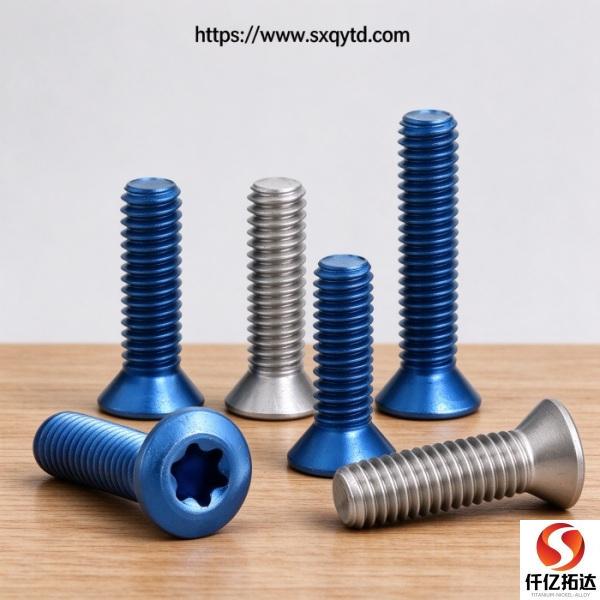
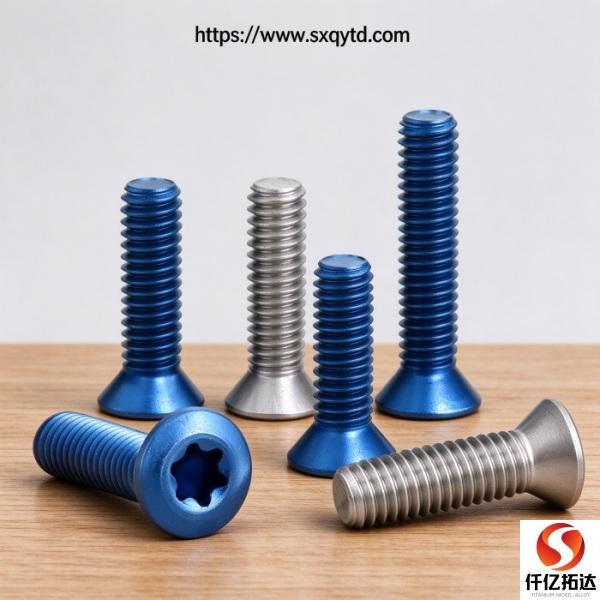
ISO 7380 defines the button head socket screw: a low, domed head with an internal hex drive, used where a protruding head is unacceptable but a countersunk hole is not wanted. Compared with a DIN 912 socket cap head it is lower and smoother; compared with a countersunk head it has a larger flat bearing face and needs no conical seat. The selection rule is simple and worth writing down: head height, bearing area and tool clearance — you can optimise two, not all three. The table below puts the four common titanium head forms against that rule.
| Head form | Head height | Bearing area / drive depth | Choose it when |
|---|---|---|---|
| ISO 7380 button head | Low, domed | Moderate flat bearing face; shallow internal hex recess | Low profile, snag-free surface, no countersink, modest clamp |
| DIN 912 socket cap | Tall cylindrical | Largest drive depth and head height; good wrench engagement | High preload, repeated assembly, deep counterbore available |
| Countersunk | Flush when seated | Conical seat; bearing behaviour depends on the countersink fit | A flush surface is mandatory and the sheet can take a cone |
| Hex head (DIN 933 / 931) | Tallest | External wrench, largest bearing face, highest torque capability | Structural bolting, high clamp, easy field service |
| Flange head | Medium | Integrated washer-like flange spreads load | Soft or thin parent material, vibration, no separate washer |
1. The "Any Head Will Do" Trap
: What ISO 7380 Actually Defines
ISO 7380 is a dimensional standard for a head form, not a material specification. It says nothing about whether the screw is titanium, which grade it is, what its tensile strength must be, or what certificate it carries. Those come from ASTM F468 / F468M for the finished fastener and EN 10204 3.1 for the paperwork. Citing ISO 7380 alone on a purchase order is like specifying a shoe size without saying what the shoe is made of.
The form itself has three defining features: a low domed head, an internal hex drive, and a flat bearing face under the head. That combination is why it appears on exposed assemblies — guards, covers, frames and equipment where a protruding cap head would snag or be damaged, and where a countersunk cone is undesirable because the parent sheet is thin or the hole is not conical.
Our Gr2 bolts, nuts and washers range lists the head styles available from stock; the Titanium Fasteners hub indexes them by product family. If the form you need is not among them, the drawing becomes the governing document — see non-standard fasteners by drawing.
2. Three Things You Cannot Have All At Once
Lower the head and you reduce the depth available for the internal hex drive and the amount of metal above the bearing face. Increase the bearing area and you need a wider head, which may not fit a counterbore or a tight edge distance. Keep generous tool clearance and the head usually has to grow taller. A button head deliberately trades drive depth and torque capability for a low, smooth profile.
On titanium this trade is sharper than on steel for two reasons. The alloy's lower elastic modulus means the joint is more sensitive to preload loss, and the shallow drive recess limits how much installation torque the head can take before the hex rounds out. So a button head is a good answer to a space problem and a poor answer to a clamp load problem. If the design needs high preload, go back to a DIN 912 cap screw or a hex head and give it the room it needs.
There is a second consequence buyers miss: the bearing face under a titanium head is part of the friction that sets the nut factor K. Changing head form changes bearing area and surface condition, so the torque basis changes with it. State the head form, the lubrication state and the K used for torque together; our F468/F467 torque-boundary guide explains the derivation. The Titanium Fasteners Guide covers the galling side of the same assembly.
3. Where ISO 7380 Earns Its Premium
A button head earns its place in four situations. First, exposed surfaces where a protruding head would catch clothing, hoses or cleaning tools. Second, compact assemblies where a cap head will not clear a neighbouring component. Third, thin parent material where a countersunk cone would remove too much section. Fourth, appearance-critical equipment where a smooth domed head is part of the design intent — noting that colour is a marking, not a grade identifier.
It does not earn its place where the joint is structural, highly preloaded, frequently disassembled or torque-critical. In those cases a hex bolt to DIN 933 / 931 in M6 / M8 / M10 or a DIN 912 socket cap screw is the more honest choice, even if it looks less elegant. Our passivation and anti-gall treatment page describes the surface options that apply to any of these forms.
RFQ line to copy: "Socket screw, ISO 7380 button head [or DIN 912 cap head / countersunk per drawing], M8 × 1.25 × ___, material and mechanical properties to ASTM F468 (or F468M) Gr___ (R___), head form per current ISO edition and supplier drawing, drive recess size verified, EN 10204 3.1 with heat number, PMI one piece per lot, dimensional report." Verify all head dimensions against the current standard edition before ordering.
4. ISO 7380 vs DIN 912 vs Countersunk
: The Decision Table
- Need the lowest protruding profile with a flat bearing face? ISO 7380 button head.
- Need high installation torque and repeated service? DIN 912 socket cap, or a hex head if there is room.
- Need a completely flush surface? Countersunk — but check that the parent material can take the cone and that the length basis is the countersunk one, not the hex-bolt one.
- Joining thin or soft parent material without a loose washer? Flange head, with the bearing area and isolating function stated in the drawing.
- None of the above fits? Freeze the drawing and quote it as non-standard rather than substituting a "close enough" form.
Note that the four head forms also use different length bases. A hex bolt is measured from under the head to the tip; countersunk screws are commonly specified including the head. Mixing those two conventions is a classic source of a short or over-long replacement part. Our export desk confirms the head form and length basis against the drawing before cutting.
5. When a Button Head DOES NOT Fit
A head form solves a geometry problem. It does not solve any of the following, which are load, medium or assembly conditions. No concentration or temperature limits are given here; verify against isocorrosion data and coupon testing for the exact service.
High preload and cyclic loading
The shallow drive recess and lower head section are the wrong trade for a highly preloaded, fatigue-loaded joint. Use a cap or hex head and re-derive the torque basis.
Frequent disassembly and reuse
Shallow internal hex drives wear and round out faster, and titanium breakaway galling already argues against reuse in critical joints. Plan replacement fasteners rather than re-torque.
Stagnant hot chloride crevices
A low head still creates a crevice. Grade 7 / 16 material or a design change is the fix; head style is not. See our marine-environment screws page.
Seawater immersion and galvanic couples
In a wet joint with aluminium or steel, titanium is the cathodic side and the parent metal is sacrificed. Insulating washers and area-ratio control belong in the design.
Thin sheet and countersink fit
If the design actually calls for a flush surface, a button head is not a drop-in substitute for a countersunk screw — the cone, the length basis and the bearing behaviour all change. Confirm against the drawing.
6. Frequently Asked Questions
Is ISO 7380 a material standard?
No. It defines the button head socket screw form and dimensions. Material and mechanical properties come from ASTM F468 / F468M, and the certificate from EN 10204 3.1. Cite them separately.
Can a button head replace a DIN 912 cap screw?
Only where the lower clamp load and shallower drive are acceptable. A button head trades drive depth and torque capability for a low profile; it is not a strength-equivalent substitute in a highly preloaded joint.
Why does head style change the torque I should use?
Because under-head friction is part of the nut factor K. Bearing area, surface finish and lubrication all change with the head form, so re-derive torque from T = K × D × F for the actual assembly state rather than reusing a value from a different head.
How is length measured on a button head screw?
Length basis differs between head forms — hex bolts are measured from the bearing face under the head, while countersunk screws are commonly specified including the head. State the head form and confirm the length basis on the drawing before ordering.
Can I get a titanium button head in a non-standard size?
Yes, by drawing. Our non-standard fasteners by drawing route covers custom head forms, lengths and drive recesses; freeze the drawing before cutting, since a late revision on titanium stock is expensive.
7. Summary, Choose X if / Choose Y if, and Request a Quotation
Choose ISO 7380 if
- Low profile and a snag-free exposed surface are the design drivers.
- The parent material is too thin for a countersunk cone.
- Clamp load is modest and the joint is not frequently disassembled.
- You will state the head form, length basis, lubrication and K together in the PO.
Choose DIN 912 or a hex head if
- The joint is structural, highly preloaded or fatigue-loaded.
- The fastener will be removed and reinstalled during maintenance.
- You need deep wrench engagement and a larger bearing face.
- There is room for a counterbore or external wrench access.
Head style is not cosmetics. It sets bearing area, drive depth, length basis and part of the friction that turns your torque into clamp. Name the form and its ISO / DIN number in the same PO line as the material standard, and the part that arrives will be the part the drawing assumed.
To request a quotation, send: grade and finished-product standard, head form and standard number, diameter / pitch / length and length basis, drive recess, finish, quantity, certificate and PMI requirement, and a drawing if non-standard. One action, one list.
Send your fastener RFQ or browse the Titanium Fasteners hub.
Data note and attribution: head-form characteristics are qualitative descriptions from published standard summaries. No head heights, drive recess sizes, bearing areas, tolerance values or length tables are given; verify every dimension against the current ISO / DIN edition and the supplier drawing. The "choose two" rule is a qualitative engineering trade-off, not a test result. Media in section 5 are qualitative exclusions from published corrosion guidance with no concentration or temperature thresholds; verify against isocorrosion data and coupon testing. No third-party certification, inventory count, lead time or test report is claimed. Reviewed and maintained by the Engineering Team, Shaanxi Qianyi Tuoda Technology Co., Ltd., Baoji, China.
Need this specification in titanium? Get a quote.
Send us your grade, size and quantity. We check live stock and reply with price and lead time the same day.
Stock holder in Baoji Titanium Valley · ~800 t inventory · cut-to-size · drawing-based machining · ASTM / ASME / GB · export-ready · same-day response
Tell us your requirement — grade, size and quantity. We reply within 24 hours.
Prefer chat? WhatsApp +86 188 2967 9311 or email [email protected].


- Titanium Price Today (9 Nov 2026): Plate, Tube, Rod & Wire
- What is Titanium Flange | ASME B16.5 ASTM B381 Gr2 Gr5 Titanium Flan
- ASME B16.5 Titanium Flange Grade2 DN100-DN600 Class150/300 FOB
- Gr2 Titanium Sheet Price FOB Shanghai | ASTM B265 In Stock
- Titanium Price Today (Oct 26, 2026): China Market Report
Contact Person: Wang Xiaoning
Tel: +86-917-355-7966
Email: [email protected]
WhatsApp: +86 188 2967 9311
Company: Shaanxi Qianyi Tuoda Technology Co., Ltd
Address: Floor 4, Building 4, No. 188 Gaoxin Avenue, High-tech Zone, Baoji City, Shaanxi Province, China