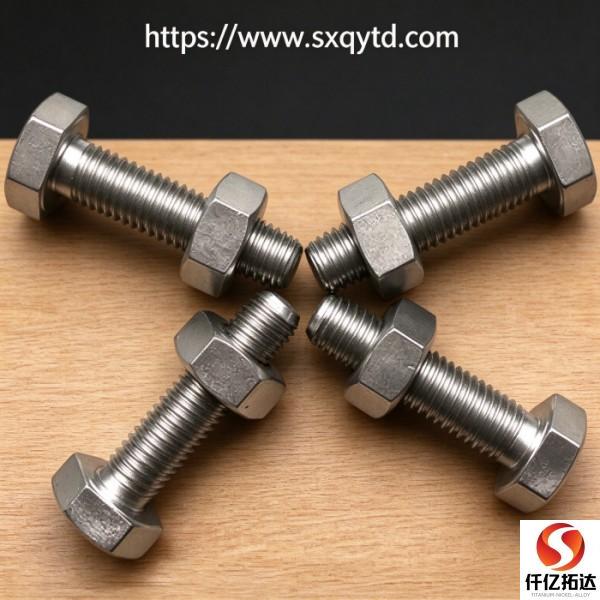
How Can You Tell If a Titanium Bolt Is Real? 6 Field Tests
| Specification | Material Category: Commercially pure titanium (Gr1 / Gr2) and Ti-6Al-4V (Gr5) |
|---|---|
| Applicable Standard | Verification Methods: Density, magnet, spark, ceramic streak, solvent rub, XRF / PMI |
| Material Condition | Product Scope: Hex bolts, socket screws, nuts, washers, studs, non-standard fasteners |
| Inspection & Packaging | Referenced Standards: ASTM F467 / F468 / F468M, ASTM B348 / B381, DIN 933 / 931, EN 10204 3.1 |
| Reference Price | $5.00 – $20.00 |
Product Description: Density 4.51 g/cm3, magnet, spark, ceramic scratch and XRF: six field tests to spot fake titanium bolts, plus what a mill certificate can and cannot prove
Product Overview
How Can You Tell If a Titanium Bolt Is Real? 6 Field Tests
A genuine Grade 2 titanium bolt has a density of approximately 4.51 g/cm³, which makes it roughly 43% lighter than carbon steel at approximately 7.85 g/cm³; Grade 5 (Ti-6Al-4V) is approximately 4.43 g/cm³. That single number is the fastest way to reject a fake: weigh the fastener, measure its volume by water displacement, and divide. The other five checks — magnet, spark, ceramic streak, solvent rub and XRF / PMI — each answer a different question, and two of them are widely misunderstood. Here is the short answer: all six are screening tests. None of them proves that a bolt conforms to ASTM F468, and only one result, backed by an EN 10204 3.1 mill test certificate, is strong enough to write into a purchase order. The table below shows exactly what each test can and cannot prove.
| # | Test | What a genuine result looks like | What it CANNOT prove |
|---|---|---|---|
| 1 | Magnet | No attraction (titanium is paramagnetic) | Does not separate titanium from annealed 316L / 304 stainless |
| 2 | Density / weight | approx 4.51 g/cm³ (Gr2) or 4.43 g/cm³ (Gr5) | Does not confirm grade, heat treatment or interstitial limits |
| 3 | Spark | Short, bright white burst with few branches | Does not identify an alloy; destructive; titanium dust is combustible |
| 4 | Unglazed ceramic streak | Dark grey to black streak on a streak plate | Affected by oxide film, coatings and pressure; qualitative only |
| 5 | Solvent rub + markings + gauge | Colour stays; permanent grade mark; pitch matches the PO | Colour says nothing about grade; markings can be copied |
| 6 | XRF / PMI | Near-pure Ti for Gr2; approx 6% Al / 4% V for Gr5 | Cannot measure O, N, C or mechanical properties; reads the surface |
| — | Contract step (not a field test) | EN 10204 3.1 MTC with chemistry, mechanicals and a traceable heat number | Only as trustworthy as the supplier's traceability system |
1. What Six Field Tests Can Prove — and the One Thing They Cannot
Buyers usually ask one question — "is this real titanium?" — when they actually need three different answers. The first is material identity: is the metal titanium at all, or is it steel, aluminium or a plated lookalike? The second is grade identity: if it is titanium, is it commercially pure Grade 2 or the much stronger Ti-6Al-4V Grade 5? The third is conformance: does the finished fastener meet the chemistry, mechanical properties, dimensional tolerances and documentation required by the applicable standard and by your purchase order?
Tests 1 to 5 address only the first layer. Test 6, handheld XRF or PMI, reaches into the second layer because it reads alloying elements. No field test reaches the third layer. Conformance lives in paperwork and, where the risk justifies it, in an independent laboratory: an EN 10204 3.1 mill test certificate tied to a heat number, a dimensional report, and if the joint is critical, tensile and hardness verification on a sample from the delivered lot.
This distinction is not academic. A bolt can be genuine Grade 2 titanium and still be the wrong purchase — because the specification called for Grade 5, because the thread is UNC rather than metric, or because the certificate covers the bar stock rather than the finished fastener. ASTM F468 and F468M govern titanium bolts, screws and studs as finished products; ASTM F467 covers the nuts that go with them; ASTM B348 covers the titanium bar from which they may be machined. Those documents have different scopes. Citing bar tensile values from B348 as the allowable load of a finished bolt is a specification error, not a testing problem. When you write an RFQ, name the standard that applies to the item you are buying, not the one that applies to the raw material.
Our Titanium Fasteners hub for bolts, screws, studs and nuts lists the standards we quote against; our ASTM F467 titanium nuts and ASTM F468 marine screws pages show how those scopes appear on individual items. Use them as a checklist for what your own purchase order should say.
2. The "Magnet Myth"
: Test 1 Is an Elimination Test, Not Proof
Titanium is paramagnetic, so a hand magnet will not visibly attract a Grade 2 or Grade 5 bolt. This is true, useful, and the most over-interpreted fact in the entire category. The problem is that annealed austenitic stainless steels — 304 and 316L in particular — are also essentially non-magnetic in the annealed condition, and they are the single most common substitute in the fastener trade. Cold working can introduce a weak magnetic response in those grades, which means even a faint pull is ambiguous rather than conclusive.
So the correct reading of the magnet test is asymmetric. If the bolt sticks firmly to a magnet, it is not titanium — you have caught carbon steel, iron, or a ferritic / martensitic stainless grade, and you can stop. If it does not stick, you have eliminated exactly one family of fakes and learned nothing else. You have not distinguished titanium from 316L, from aluminium, or from a titanium-plated steel core. Every one of those will also fail to attract the magnet.
The reason this myth persists is that it works often enough to feel reliable. The cheapest fakes on the market are coloured carbon-steel bolts sold as "titanium" at a fraction of the price; the magnet catches those immediately, and the buyer concludes the method is sound. It is sound for that one case. It is not a material identification method. Treat it as a 5-second gate at the start of an incoming inspection, then move on to density, which is where the first real discrimination happens.
3. Test 2 — Density
: 4.51 g/cm³ and the 40% Desk Check
Density is the one property in this article that is hard to fake cheaply, because it is set by the crystal lattice and the atomic mass of the element rather than by surface treatment. Published nominal values for the metals a buyer is likely to encounter are summarised below. These are room-temperature nominal figures from standard reference tables, not measurements from any specific lot; use them as screening bands, not acceptance limits.
| Material | Nominal density (approx, g/cm³) | Relative to Grade 2 titanium |
|---|---|---|
| Aluminium 6061 | 2.70 | approx 0.60× |
| Titanium Grade 5 (Ti-6Al-4V) | 4.43 | approx 0.98× |
| Titanium Grade 1 / 2 (CP) | 4.51 | 1.00× |
| Carbon steel | 7.85 | approx 1.74× |
| 304 / 316 stainless | 7.9 – 8.0 | approx 1.76× |
| Brass | 8.4 – 8.7 | approx 1.9× |
The ratio is the practical takeaway. For the same geometry, a steel fastener will weigh approximately 1.7 times as much as the identical fastener made from Grade 2 titanium — a difference of roughly 43%. You do not need a laboratory to see that. Weigh a known steel bolt of the same size and thread, then weigh the suspect part on the same 0.01 g scale. If the two masses are within a few percent, the "titanium" bolt is steel or stainless regardless of how convincing the colour is.
For an absolute check, use water displacement: weigh the dry part, suspend it fully in water without touching the vessel, record the displaced volume, and divide mass by volume. Work with a batch of ten or twenty small fasteners rather than a single M5 screw — the relative error of both the scale and the meniscus reading drops sharply. Degrease the parts first, tap away bubbles trapped in the threads, and use the water temperature appropriate to the density you are comparing against. A result in the 4.4–4.6 g/cm³ band is consistent with titanium; a result near 2.7 suggests aluminium; anything near 7.8–8.0 is a ferrous alloy.
One caveat matters for plated or clad parts. A thin titanium coating over a steel core still has an overall density close to steel, so the weighing test catches it immediately. A thicker clad layer combined with a hollow or lightened core can land in the titanium band by coincidence. That is why density is a screen, and why the XRF result in section 8 still has to be taken on a clean, representative metal surface. Our Gr2 bolts, nuts and washers in M6–M36 and our Grade 5 ASTM B348 bar stock pages state the grades and the material standards separately for exactly this reason.
4. Test 3 — Spark
: Bright White Bursts and Where This Test Is Allowed
When a small area of titanium is touched to a bench grinder, it produces a short, intense, brilliant white burst with relatively few branching carbon sparks. Mild carbon steel throws a longer yellow-orange stream with characteristic forked bursts; stainless steels sit between the two, generally longer and less brilliant than titanium. The contrast is striking enough that an experienced fabricator can sort mixed scrap in seconds.
It is also the one test on this list that we would not recommend performing on a fastener you intend to install. Three reasons. First, it is destructive: it removes metal, damages any surface treatment, and can nick a thread or a bearing face. Second, fine titanium particles are combustible, and accumulated grinding dust presents a real fire hazard; titanium's thermal conductivity is far lower than steel's, so the particle itself retains the heat of grinding. Third, the result is comparative rather than analytical — it tells you "this behaves like the titanium sample I compared it against", not "this is Grade 5 to ASTM F468".
If you use it at all, use it the way a receiving department should: on one sacrificial sample from an incoming lot, in a workshop with local extraction and no accumulated dust, with eye protection and flame-resistant gloves, and with a known reference sample of confirmed Grade 2 beside it. Never grind near solvent containers, paper packaging or a dust-collection bag containing other metal fines. Do not use it on anodised parts and expect meaningful colour information afterwards.
For buyers, the practical conclusion is simple: the spark test is a useful story to understand and a poor acceptance method to specify. Put PMI in the purchase order instead, and keep the grinder for the scrap bin.
5. Test 4 — Unglazed Ceramic Streak
: Reading a Dark Mark Without Over-Claiming
A streak plate is the unglazed back of a plain ceramic tile, or a purpose-made unglazed porcelain plate. Draw a non-critical face of the bolt — the top of the head, never the thread or the bearing surface — across it with moderate, even pressure. Titanium typically leaves a dark grey to near-black streak. Aluminium and most stainless steels leave a lighter silvery mark, or almost nothing at all, because they are harder relative to the plate or because their oxide behaves differently.
The physics is unglamorous: a relatively soft metal transfers a thin film of itself and its oxide onto a harder, slightly abrasive ceramic surface, and the colour of that film is what you see. That also explains every limitation of the method. An anodised interference film, a PVD coating, a passivation layer, cutting oil, or simply pressing harder will change the result. A glazed tile will give you no streak at all. Two different operators can produce two different marks from the same bolt.
Use it only as a paired comparison. Put a confirmed Grade 2 sample and the suspect part on the same plate, draw both with the same pressure and the same face, and compare the marks side by side. If they match, you have one more reason to proceed to a real test. If they differ, you have a reason to hold the lot — not grounds to reject it. No reputable inspection plan accepts or rejects material on a ceramic streak, and no certificate references one.
6. The "Colour Trap"
: Anodising Is an Oxide Film, Not Paint
Blue, purple, bronze and gold titanium bolts are not painted. Anodising grows a transparent titanium dioxide layer on the surface; the colour you see is thin-film interference, determined by the thickness of that oxide, in the same way that oil on water produces a rainbow. Because the colour is a property of the oxide rather than a pigment, wiping the part with acetone or isopropyl alcohol will not remove it. That is genuinely useful information — and it is the second most over-interpreted fact in this category.
Here is the trap, in two parts. First, colour does not identify the material. PVD coatings, paints, dyes and heat-tinting can put a convincing blue or purple on stainless steel and aluminium. Second, colour does not identify the grade. Grade 2 and Grade 5 both anodise readily, and a purple bolt tells you nothing about whether it contains 6% aluminium and 4% vanadium. Buyers who treat "coloured titanium" as a grade marker are making a purchasing decision on a decorative finish.
The solvent rub described in the next section therefore has one narrow job: it separates an oxide interference colour from an applied coating. A colour that transfers to the cloth is a coating. A colour that stays may be anodising — or a well-bonded PVD layer on a non-titanium core. Either way, the outcome of the rub is not a material identification result.
If colour actually matters to your assembly, specify it as a finish requirement rather than as a material description: "anodised to match approved sample, colour consistent across the lot", and keep the grade, standard and certificate requirements in separate clauses. Our passivated and anti-gall treated Titanium Fasteners page separates surface treatment from material specification for the same reason — a MoS₂ or PTFE anti-gall coating changes installation torque, but it does not change what the bolt is made of.
7. Test 5 — Solvent Rub, Head Markings and Thread Gauges
This is one pass with three cheap cross-checks, and it catches more commercial fraud than any of the "exciting" tests above.
Solvent rub. Wipe the coloured area with a lint-free cloth dampened with acetone or isopropyl alcohol for ten to fifteen seconds, using gloves and ventilation. Pigment or dye on the cloth means an applied coating. No transfer is consistent with an anodised oxide film, but as section 6 explained, it is not proof of titanium.
Marking check. Look for a permanent manufacturer's identification and a grade designation on the head. What is required depends on the standard and on your contract, so the correct question is not "is there a mark?" but "does the mark match what the purchase order demanded, and is it permanent?" Many buyers require a stamped rather than a printable mark precisely so that it survives handling and cannot be altered after inspection. If your PO says nothing about marking, a completely unmarked bolt can be conforming — which is a documentation gap, not necessarily a fake. Put the marking requirement in writing before the order, not after the dispute.
Dimensional and thread check. Counterfeit and mislabelled stock very often gives itself away here rather than in chemistry. Confirm the thread with a pitch gauge, the across-flats dimension with callipers, and the head style against the named standard. An M10 coarse bolt has a 1.5 mm pitch; a 3/8"-16 UNC bolt has sixteen threads per inch. They look almost identical in a parts bin and neither will fit the other — a mistake that is far cheaper to catch at goods-in than at a shutdown. Our M6, M8 and M10 titanium hex bolts in stock page lists thread standards and head styles explicitly so that this check can be done against a written specification. For anything outside a standard catalogue, our non-standard Titanium Fasteners made to drawing service starts from the same fields: grade, thread, head, length, tolerance and finish.
8. Test 6 — XRF / PMI
: The Only Result That Belongs in a Purchase Order
Handheld X-ray fluorescence, usually called PMI (positive material identification) in a receiving context, gives an elemental reading from a clean metal surface in under a minute. On a Grade 2 fastener the spectrum is essentially near-pure titanium. On Grade 5 it should show approximately 6% aluminium and approximately 4% vanadium, the nominal Ti-6Al-4V composition. That single reading resolves the two questions the first five tests cannot: is it titanium, and is it the grade I paid for.
Three limits belong in any honest description of PMI. It does not measure light interstitial elements — oxygen, nitrogen, carbon and hydrogen — which are precisely the impurities that control the ductility and toughness of commercially pure titanium. It cannot see heat treatment, grain structure, tensile strength, hardness, or whether the thread was rolled rather than cut. And it reads only the near-surface layer, so a plated or clad part can report titanium while hiding a steel core; on a suspect lot, take the reading on a small freshly abraded flat, or cut a sample and read the section.
This is why the contract-grade answer is PMI plus documentation, not PMI alone. An EN 10204 3.1 mill test certificate declares the heat chemistry and mechanical test results and ties them to a heat number that should be traceable to the parts in your box. Our EN 10204 3.1 mill test certificate page explains what that document declares, and our certifications page carries the company-level documentation. For a critical joint, add third-party verification of a sample from the delivered lot.
Suggested purchase-order wording: "Material: titanium Grade 2 / Grade 5 to ASTM F468 (nuts to ASTM F467). PMI on a minimum of one piece per lot, result recorded against heat number. EN 10204 3.1 mill test certificate required with each shipment. Permanent manufacturer and grade marking required. Off-spec chemistry or missing heat traceability is grounds for rejection." Adapt the grade, standard and sampling rate to your own inspection plan.
Note what that clause does not contain: no magnet, no spark, no colour. Those are useful in the yard; they have no place in a contract. Our Titanium Fasteners export documentation page lists the certificate and marking fields we quote against, so the PO clause and the supplier's paperwork use the same vocabulary.
9. When the Six Tests DO Fail
: Five Lookalikes That Pass Them
A screening method is only as good as its failure list. Here are five specific cases where a buyer who trusts the six tests will still be wrong.
Annealed 316L stainless — the fake that passes the magnet test
It is non-magnetic, corrosion-resistant, takes a polish that looks like titanium, and is cheaper. It passes tests 1, 4 (with a light streak) and often 5. Density catches it immediately — it is roughly 1.76 times heavier — but only if the buyer actually weighs it. This is the most common substitution in marine hardware.
Anodised aluminium — the fake that passes the "light and coloured" test
Light, non-magnetic, and available in exactly the blue and purple buyers associate with titanium. It fails the density test in the opposite direction, at approximately 2.70 g/cm³, and it leaves a different ceramic streak. A buyer who relies on "it feels light and looks anodised" will accept it. Our titanium screws specified for marine environments page is explicit about grade and density-relevant properties for this reason.
Titanium-clad or titanium-plated steel — the fake that passes surface XRF
A surface PMI reading reports titanium because the surface is titanium. A thin plating over steel is caught by weighing; a thicker cladding over a lightened core may not be. Reading a freshly abraded flat, or sectioning one sample from the lot, closes this gap. This is the case that most strongly argues for heat-number traceability rather than a single spot check.
Grade 2 sold as Grade 5 — real titanium, wrong grade
Every one of the six tests passes, because the bolt really is titanium. Only an elemental reading for aluminium and vanadium, or a certificate with mechanical test results, separates the two. The commercial consequence is not a fake material but a wrong strength class — which matters far more on a loaded joint than a steel imitation does.
Off-spec or recycled titanium — correct elements, wrong interstitials
The XRF spectrum looks right, the density is right, and the bolt is still non-conforming if oxygen or nitrogen exceeds the grade limits or if the mechanical properties were never tested. XRF cannot see those elements. This is the exact boundary between identification and conformance described in section 1, and it is why the certificate, not the analyser, is the acceptance document.
10. Where Real Titanium Bolts Still Corrode
: Five Media That Break the TiO₂ Film
Passing every test above proves only that the bolt is titanium. It says nothing about whether titanium is the right material for your service. Titanium's corrosion resistance comes from a thin, adherent, self-healing TiO₂ film; where that film cannot form or is chemically dissolved, the metal behaves like an active one. The following are qualitative service warnings drawn from published corrosion data, not concentration or temperature limits. Check isocorrosion curves for your exact medium and confirm with coupon testing before specifying.
HF and fluoride-containing acids — the oxide film is dissolved
Fluoride ions complex titanium and strip the protective oxide, so even dilute hydrofluoric acid or fluoride-contaminated process streams can cause rapid attack. This is the first exclusion to check on any chemical-plant fastener enquiry, including pickling lines where HF appears as a trace contaminant rather than the bulk acid.
Hot reducing acids (HCl, H₂SO₄) — no oxidising species to repassivate
In hot, deaerated, non-oxidising acids the film cannot rebuild as fast as it is reduced. Grade 2 has a narrow room-temperature envelope that closes quickly as temperature rises; Grade 7 or Grade 12 extends it, at a cost. Our Grade 7 material for strong reducing-acid environments page covers the upgrade path at plate level; the same grade logic applies to the bolting on that equipment.
Dry chlorine — the counter-intuitive one
Titanium is widely used in wet chlorine because the moisture sustains the oxide film, but dry chlorine is a documented exclusion and can react vigorously with the metal. A "chlorine service" line on a data sheet is not enough: the specification must state whether the stream is wet or dry. This reversal catches out more specifications than any other entry on this list.
Red fuming nitric acid — a documented exclusion
Concentrated oxidising nitric acid is generally compatible with titanium, while red fuming nitric acid is a known exclusion with a risk of vigorous reaction. It is a reminder that "more oxidising" is not monotonically safer, and that a generic "nitric acid service" description is not a sufficient basis for material selection.
Hot, stagnant chloride crevices — Grade 2's weak spot
In flowing ambient seawater Grade 2 is excellent. In a tight, stagnant crevice at elevated chloride temperature — under a washer, in a flange gasket gap, in a tube-to-tubesheet joint — localised attack can start even when general corrosion is negligible. The remedy is often geometric (eliminate the crevice, improve drainage) rather than metallurgical; where it cannot be, a grade upgrade is the right spend. Our titanium stud bolts for chemical flange bolting page is where this comes up most often in practice, because the joint geometry creates the crevice.
In short: a genuine bolt in the wrong medium is still a failed specification. Identify the material, then qualify the service. Those are two separate engineering decisions, and a certificate of authenticity does not substitute for the second one.
11. Frequently Asked Questions
Is a magnet test enough to confirm a titanium bolt?
No. A firm magnetic attraction rules titanium out, but the absence of attraction does not confirm it: annealed 304 and 316L stainless, aluminium and titanium-plated steel are all non-magnetic to a hand magnet. Use the magnet as a five-second gate, then weigh the part and check its density before drawing any conclusion.
What is the density of Grade 2 vs Grade 5 Titanium Fasteners?
Published nominal values are approximately 4.51 g/cm³ for commercially pure Grades 1 and 2, and approximately 4.43 g/cm³ for Grade 5 (Ti-6Al-4V). Both are roughly 43% lighter than carbon steel at approximately 7.85 g/cm³. The two titanium grades are too close for density to distinguish them; that requires an elemental PMI reading.
Can the spark test be done safely on a finished bolt?
Not on a part you intend to install. Grinding removes metal, can damage the thread or bearing face, and produces fine titanium particles that are combustible. If you use the test at all, do it on one sacrificial sample from the lot in a workshop with local extraction, eye protection and no accumulated dust, and keep a confirmed reference sample beside it.
Does real anodised colour rub off with acetone or alcohol?
Genuine anodised colour should not transfer, because it is thin-film interference in a titanium dioxide layer rather than a pigment. Colour that wipes onto the cloth indicates paint, dye or another applied coating. But a colour that stays is not proof of titanium: PVD-coated stainless steel can behave the same way.
What does an XRF / PMI report actually tell you?
It reports the elements near the surface. Grade 2 reads as near-pure titanium; Grade 5 should show approximately 6% aluminium and approximately 4% vanadium. It does not measure oxygen, nitrogen, carbon or hydrogen, cannot see heat treatment or tensile strength, and can be fooled by a plated surface unless the reading is taken on a freshly abraded flat or a section.
Does an EN 10204 3.1 certificate prove the bolt is titanium?
It declares the heat chemistry and mechanical test results and links them to a heat number — it is the conformance document, not a field test. Its value depends entirely on traceability from that heat to the parts in your shipment. Pair it with PMI on a sample from the delivered lot, and verify that the certificate covers the finished fastener specification you ordered, not only the bar stock.
What should a purchase order say to guarantee genuine titanium fasteners?
Name the grade and the finished-product standard (ASTM F468 / F468M for bolts and screws, F467 for nuts), require a permanent manufacturer and grade marking, require PMI on at least one piece per lot with the result recorded against a heat number, and require an EN 10204 3.1 certificate with each shipment. State that off-spec chemistry or broken traceability is grounds for rejection.
12. Summary, Choose X if / Choose Y if, and Request a Quotation
Choose field screening if
- You are sorting mixed incoming stock, scrap or an unknown parts bin, and need a fast first pass.
- The fasteners are for a non-critical assembly with no specified grade or certificate requirement.
- You have a confirmed reference sample to compare against, and you accept that the result is indicative only.
- The suspected substitution is ordinary carbon steel, which the magnet and density checks both catch.
- You will follow a suspicious result with PMI before accepting or rejecting the lot.
Choose PMI + EN 10204 3.1 if
- The purchase order names a grade (especially Grade 5) or a finished-product standard.
- The joint is load-bearing, pressure-containing, or installed in a corrosive medium.
- You need a result that can be recorded against a heat number and produced in an audit.
- The supplier is new, the lot is large, or the price is far enough below market to warrant suspicion.
- Your customer has specified positive material identification or third-party verification.
Six field tests can tell you whether a bolt might be titanium. They cannot tell you whether it is the grade you ordered, whether it meets the standard you specified, or whether it belongs in the medium you are about to put it in. Weigh it first, because density is the cheapest test that is hard to fake. Treat the magnet and the colour as elimination checks, not evidence. Keep the spark test off finished parts. Then put the actual requirement where it belongs — in the purchase order, as a grade, a standard, a PMI result and a traceable certificate.
To request a quotation, send the following fields and we will confirm stock, grade and shipping date: item (bolt / screw / nut / washer / stud), grade, applicable standard, size and length, thread standard and pitch, head style, surface finish or colour, quantity, certificate requirement, PMI requirement, and a drawing or photograph if the part is non-standard. One action, one list — no need to guess which test your supplier performed.
Send your fastener RFQ or browse the full titanium bolts, screws, studs and nuts catalogue. For small quantities and mixed sizes, our Gr2 stock range and Grade 5 bolt, nut and washer sets are quoted by the piece rather than by the tonne.
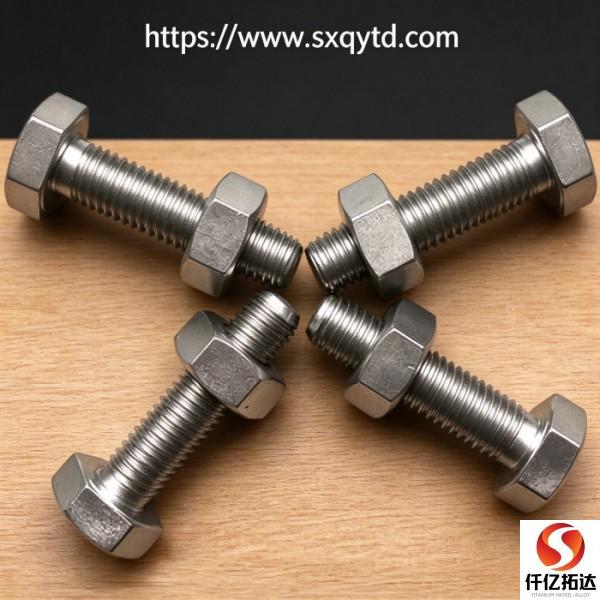
Data note and attribution: all density and composition figures in this article are published nominal values from standard material reference tables, marked approx, and are screening values rather than lot-specific test results. No corrosion concentration or temperature limits are given; the media in section 10 are qualitative exclusions from published corrosion guidance and require verification against isocorrosion data and coupon testing for your exact service. No third-party certification, inventory count, lead time or test report is claimed. Reviewed and maintained by the Engineering Team, Shaanxi Qianyi Tuoda Technology Co., Ltd., Baoji, China.
Need this specification in titanium? Get a quote.
Send us your grade, size and quantity. We check live stock and reply with price and lead time the same day.
Stock holder in Baoji Titanium Valley · ~800 t inventory · cut-to-size · drawing-based machining · ASTM / ASME / GB · export-ready · same-day response
Tell us your requirement — grade, size and quantity. We reply within 24 hours.
Prefer chat? WhatsApp +86 188 2967 9311 or email [email protected].


- Titanium Price Today (9 Nov 2026): Plate, Tube, Rod & Wire
- What is Titanium Flange | ASME B16.5 ASTM B381 Gr2 Gr5 Titanium Flan
- ASME B16.5 Titanium Flange Grade2 DN100-DN600 Class150/300 FOB
- Gr2 Titanium Sheet Price FOB Shanghai | ASTM B265 In Stock
- Titanium Price Today (Oct 26, 2026): China Market Report
Contact Person: Wang Xiaoning
Tel: +86-917-355-7966
Email: [email protected]
WhatsApp: +86 188 2967 9311
Company: Shaanxi Qianyi Tuoda Technology Co., Ltd
Address: Floor 4, Building 4, No. 188 Gaoxin Avenue, High-tech Zone, Baoji City, Shaanxi Province, China