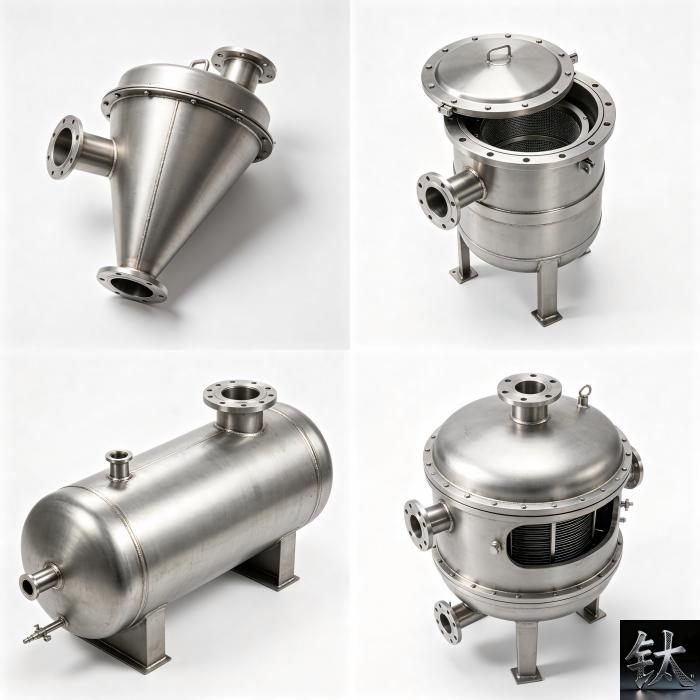
Monel 400 for Pumps and Valves
| Спецификация | Alloy: Monel 400 (UNS N04400) / K-500 / 404 |
|---|---|
| Применимый стандарт | Best for: flowing seawater pumps, HF alkylation, caustic service |
| Состояние материала | Avoid: stagnant seawater, nitric acid, wet chlorine, aerated HF vapor |
| Контроль и упаковка | Standards: ASTM B127/B164/B165/B564/B366, A494 M-35-1, NACE MR0175, API 610/6A |
| Справочная цена | $50.00 – $60.00 |
Описание продукции: Monel 400 (UNS N04400) for pumps and valves: pick it for flowing seawater and HF, avoid stagnant water and oxidizing acids. Grades, parts, NACE/API standards, failure modes and RFQ checklist.
Обзор продукции
Monel 400 for Pumps and Valves: What the Spec Sheet Does Not Tell You
Monel 400 (UNS N04400) is the right call for pump shafts, impellers, casings, valve stems and bodies in exactly two services: flowing seawater and hydrofluoric acid (HF). In both it outlasts 316L stainless by years and is immune to chloride stress-corrosion cracking — the failure mode that kills 300-series stainless in marine duty. But it fails fast in the opposite conditions: stagnant seawater, oxidizing acids (nitric), wet chlorine, and aerated HF vapor. The mill cert lists the chemistry; it does not tell you that de-aeration, flow velocity and NACE hardness are what actually decide whether your pump survives. Below: the grades, the parts, the four traps, eight failure modes, and a 9-point RFQ checklist. We write this from the buyer's side — not to sell Monel 400, but to stop the recurring mistakes we see on failed pumps and valves returned to Baoji workshops. If your medium is not clearly one of the two lanes below, do not assume Monel 400 fits; state the real stream before you order, and let the failure list decide.
| At a Glance | Monel 400 pump & valve essentials |
|---|---|
| Alloy type | Ni–Cu solid solution, UNS N04400, W.Nr 2.4360; Ni 63–70% / Cu 28–34% |
| Best for | Flowing seawater pumps, HF alkylation units, caustic/alkali service |
| Avoid for | Stagnant seawater, nitric/oxidizing acids, wet chlorine, aerated HF vapor |
| Strength | 483 MPa tensile / 172 MPa yield (annealed) — moderate; K-500 for higher load |
| Chloride SCC | Immune — the main reason to pick it over 300-series stainless |
| Density | 8.80 g/cm³ |
| Key standards | ASTM B127/B164/B165/B564/B366, A494 (cast), NACE MR0175, API 610 / 6A |
| Sour-service limit | 35 HRC max (annealed) per NACE MR0175 / ISO 15156-3 |
The "Monel Is Bulletproof" Myth
The most expensive Monel 400 failures we see are not from bad metal — they are from the belief that "Monel" alone solves corrosion. A buyer specifies Monel 400 for a seawater pump, the pump sits idle over a winter, biofouling builds under a deposit, and a crevice corrodes through the casing in 14 months. Another specifies it for a nitric-acid transfer valve because "Monel resists everything." It does not. Monel 400 is a reducing-environment alloy: it loves HF, caustic and flowing seawater, and it is attacked by oxidizing species (nitric acid, ferric/cupric chloride, wet chlorine, hypochlorite). Knowing the two services it owns — and the four it flees — is the whole job. A 40,000 USD seawater pump scrapped at 14 months is the usual tuition for skipping it, and the repair bill rarely includes the downtime that triggered the emergency order in the first place.
This matters because Monel 400 costs roughly two to three times 316L per kilogram. Spend it where the medium is the threat, and it pays back in avoided failures. Spend it where 316L would have been fine, and you simply inflated the bill. The rest of this guide is how to tell the difference before you issue the PO.
What Monel 400 Actually Is — the Numbers on the Mill Cert
Monel 400 is a nickel–copper solid-solution alloy. Its corrosion resistance comes from the nickel matrix plus a copper content high enough to form a stable Cu&sub2;O/CuO film in non-oxidizing media. Crucially, it contains almost no chromium, so it cannot form the chromium-oxide film that protects stainless steel in oxidizing conditions — that is the trade-off behind every limitation in this article. Put differently: Monel 400 is strong where stainless is weak (seawater, chlorides, HF) and weak where stainless is strong (oxidizing acids) — the two are near-inverse, which is why the choice between them is rarely a compromise and almost always a clear call once the medium is known. The high nickel content is also why it shrugs off chloride stress corrosion cracking, the exact mechanism that destroys austenitic stainless in seawater.
| Element | Min % | Max % | Why it matters for pumps/valves |
|---|---|---|---|
| Nickel (Ni) | 63.0 | 70.0 | Drives seawater & chloride-SCC immunity |
| Copper (Cu) | 28.0 | 34.0 | HF resistance, erosion resistance in flowing water |
| Iron (Fe) | — | 2.5 | Improves cavitation/erosion resistance |
| Carbon (C) | — | 0.30 | Low C keeps weld ductility |
| Sulfur (S) | — | 0.024 | Impurity ceiling per ASTM |
One practical consequence of the low chromium level: Monel 400 welds readily with ERNiCu-7 filler and rarely needs post-weld heat treatment, which keeps fabrication cost down versus the chromium-molybdenum alloys. That weldability is a quiet reason it dominates small pump and valve components where 625 or C-276 would be over-specified and harder to join. In practice a Monel 400 seawater pump can run a decade while a 316L unit of the same design cracks at a weld in two years — the difference is the nickel, not the price tag.
Typical mechanicals (annealed): tensile 483 MPa (70 ksi) min, yield 172 MPa (25 ksi) min, elongation 35% min, hardness 110–160 HBW. Max continuous service in air ≈ 480°C. For the broader nickel family and how N6/Ni201 differ, see our Nickel Products guide (N6 / Ni201 / Monel 400 by medium), and the Monel vs Inconel vs Hastelloy comparison.
The Grade Trap — Monel 400 vs K-500 vs 404
"Monel" is not one grade, and the wrong pick here costs you either strength or weldability:
- Monel 400 (N04400) — the workhorse. Good strength, excellent weldability with ERNiCu-7 filler, best all-round for casings, bodies, seats.
- Monel K-500 (N05500) — precipitation-hardened; yield climbs to ~620–790 MPa. Use it for pump shafts and high-load stems where 400's 172 MPa yield is too low. Slightly less corrosion margin and a stricter weld procedure.
- Monel 404 (N04404) — low-C, controlled-magnetism variant for electronic/glass-seal parts; almost never a pump/valve choice.
Rule of thumb: bodies and low-stress parts → 400; shafts and loaded stems → K-500. Do not "upgrade" everything to K-500 — you add weld risk for no benefit on a static body, and you may push hardness above the NACE limit in sour service. K-500 also carries a material premium of roughly 30–50% over 400, so spreading it across bodies and bonnets is pure cost with no return. For most pumps the split is simple: 400 for the wet-end static parts, K-500 only where the shaft sees real bending load. If unsure, size the shaft for 400 and switch to K-500 only when the calculated stress exceeds the 172 MPa yield with margin — that keeps the weld procedure simple and the NACE paperwork clean.
Which Pump Parts Earn Monel 400
Pumps see high-velocity, often seawater or sour service. The parts that justify Monel 400:
- Shafts & impellers — flowing seawater or brackish water; Monel 400 resists biofouling and erosion better than copper alloys and never chloride-SCC like 316L.
- Casings & volutes — HF alkylation units (the standard material for all HF piping/valve bodies/flanges); caustic soda transfer.
- Wear rings & bushings — where galling and erosion are the limit, not bulk corrosion.
- Submersible & fire-main pumps — shipboard and desalination, where stagnant periods are short and flow keeps the surface clean.
Where it does not earn its price: a fresh-water, ambient, non-corrosive duty where 316L or even ductile iron is fine. Pay for Monel only where the medium is the threat. As a practical rule, if the duty is fresh water or a neutral, ambient stream, stay with 316L or even coated carbon steel and keep the Monel budget for the genuinely corrosive lines. For centrifugal pumps built to API 610, Monel 400 casings and shafts are a common specification in seawater injection and fire-water service, and the alloy's non-magnetic nature matters where a magnetic signature must stay low. For the adjacent equipment picture, our heat exchanger material selection guide contrasts Monel with titanium and nickel routes, and nickel heat exchanger / reactor selection covers the wider system.
Which Valve Parts Earn Monel 400
Valves concentrate stress at stems and seats, so grade choice is even less forgiving:
| Valve part | Form / standard | When Monel 400 wins |
|---|---|---|
| Body & bonnet | Cast ASTM A494 M-35-1 | HF alkylation, seawater, caustic |
| Stem | Bar ASTM B164 / K-500 | Seawater with high torque; K-500 if load high |
| Seat & disc | Forged B564 | Corrosive shut-off, no chloride SCC worry |
| Flanges & fittings | B564 / B366 | Same line as the Monel pipe spool |
Cast Monel 400 is ordered to ASTM A494 Grade M-35-1. If your valve supplier quotes "Monel" without the A494 grade and a 35 HRC max for sour service, push back — that is exactly where field failures start. See our nickel alloy bar standards and nickel alloy plate standards for the full form list, and nickel alloy seamless pipe for mating line pipe. A note on trim: when the seat and disc are Monel 400 but the body is cast A494 M-35-1, confirm both are procured to the same NACE hardness limit — mixed compliance is a frequent audit finding that can void a sour-service warranty.
The Seawater Trap — Flowing vs Stagnant Changes Everything
Monel 400 is famous for seawater — but the fame is for flowing seawater. Corrosion in moving seawater is typically under 0.025 mm/year, and the alloy shrugs off both biofouling and chloride SCC. The moment water goes stagnant — a standby pump, a closed cooling loop, a bilge that sits — deposits form, oxygen gradients appear, and crevice corrosion starts. The rate is still lower than pure nickel 200, but it is no longer "fit and forget."
If the service is stagnant or low-flow seawater, say so on the RFQ. Inconel 625 (molybdenum + chromium) or Hastelloy C-276 resists crevice/pitting far better there. Monel 400 earns its keep only when flow keeps the surface swept clean.
A practical design rule: specify Monel 400 for continuously circulating seawater, fire-main and desalination duties, but switch to Inconel 625 for standby or intermittent lines where deposits will sit for weeks. For a titanium alternative in oxidizing seawater, see TA10 / Gr12 (Ti–Mo–Ni).
The HF Trap — De-aerated Yes, Aerated Vapor No
This is the trap that surprises even experienced specifiers. Monel 400 is the standard material for hydrofluoric acid at all concentrations — but only in de-aerated liquid HF. Dissolved oxygen or, worse, HF vapor with air destroys the passive film and drives stress-corrosion cracking. The classic failure: an anhydrous-HF line flange bolt (K-Monel 400) cracked in 5–15 hours after a tiny leak formed aerated HF vapor at the joint. The fix is not a different alloy alone — it is de-aeration plus a stress-relief anneal of the component.
Any HF duty must state oxygen content and whether vapor is possible. If vapor or aeration is unavoidable, evaluate Hastelloy C-276 and keep Monel 400 only for the fully de-aerated liquid loop. This single clause on the datasheet prevents the majority of HF-related Monel failures we are asked to diagnose.
Monel 400 vs the Alternatives
| Candidate | When it beats Monel 400 | Trade-off |
|---|---|---|
| 316L stainless | Mild, ambient, non-corrosive duty | Chloride SCC in seawater; shorter life |
| Titanium Gr2 | Oxidizing + seawater, no HF | Dissolved by HF; different cost model |
| Inconel 625 | Stagnant seawater, H&sub2;S sour, oxidizing | ~2–3× the cost of Monel 400 |
| Hastelloy C-276 | Mixed acid + oxidizer, wet chlorine | Premium price, harder to source |
Monel 400 sits in the sweet spot of cost vs seawater/HF resistance. It is not the most resistant alloy — it is the most economical one that never chloride-SCC and shrugs off HF. A common false economy is upgrading everything to Inconel 625 "just to be safe". On a continuously flowing seawater pump that is wasted spend — Monel 400 is the right, cheaper answer, and 625 buys no extra life there. Reserve the premium alloys for the cases above where 400 genuinely fails. The opposite false economy is downgrading to 316L to save the line item; in seawater that trade ends in chloride SCC and an unplanned shutdown that costs more than the alloy saving many times over.
For the wider nickel equipment picture, see nickel heat exchanger / reactor selection and our stock-holder buying guide. For pure-nickel caustic duty specifics, our caustic soda evaporator case (8-year zero corrosion) shows the alkaline side where nickel-class alloys excel.
Where Monel 400 FAILS — Failure Modes by Medium
Most failures are a medium crossing the alloy's boundary. This is the section most specifiers skip, and it is the one that decides whether the part comes back as scrap or runs for a decade. List your real stream, not the design assumption:
Stagnant or low-flow seawater
Crevice corrosion under deposits and biofouling. Mitigate with continuous flow, or pick Inconel 625 where standby periods are long. A tell-tale sign is rust-coloured deposits at the waterline of an idle pump — that is crevice attack starting under the biofilm, and it will only spread once it begins.
Aerated HF or HF vapor
Stress-corrosion cracking within hours (the 1948 flange-bolt failure cracked in 5–15 h). De-aerate the liquid, stress-relief anneal the part, and keep vapor out of joints. Where vapor is unavoidable, switch the wetted parts to Hastelloy C-276 and reserve Monel 400 for the fully de-aerated liquid leg only; do not trust it across a flange where a micro-leak can form aerated vapor.
Nitric and other oxidizing acids
Rapid general attack. Monel 400 has no chromium oxide film, so nitric, chromic acid and similar oxidizers destroy it. Specify Inconel 625 or Hastelloy C-276. Even dilute nitric picks at Monel 400, so do not accept it on faith for any nitration, acid-regeneration or mixed-oxidant service — the chromium-free matrix has no defence there.
Wet chlorine, hypochlorite, ferric/cupric chloride
Oxidizing chlorides attack fast even at low temperature. Avoid Monel 400 entirely; use Hastelloy C-276. This also covers swimming-pool and bleach-adjacent duty where hypochlorite is present, and any chlorination loop that holds wet chlorine at the tail.
Moist aerated ammonia
Stress-corrosion cracking risk on cold-worked parts. Stress-relieve and limit cold work; keep ammonia dry where possible. Cold-worked Monel 400 in moist aerated ammonia is the classic SCC case cited in failure literature, so any ammonia-compressor or urea-plant trim should be fully stress-relieved before service.
Mercury and mercury salts
Liquid-metal embrittlement — absolutely forbidden contact. Even trace mercury vapor can cause catastrophic cracking. This matters in mercury-cell chlor-alkali plants, where Monel 400 must be excluded from any mercury-contact zone and handled with mercury-free tooling during maintenance.
Sulfur-bearing gas above ≈425°C
Sulfidation attack. Drop the temperature or change to a high-chromium alloy such as Inconel 601. Below about 425°C the sulfidation rate is manageable; above it, attack accelerates fast and a chromium-bearing alloy becomes mandatory rather than optional.
De-aerated HCl / H&sub2;SO&sub4;
Usable only at low concentration (<15% HCl at room temperature, <2% H&sub2;SO&sub4; to ~50°C) and low temperature; dissolved oxygen degrades resistance quickly. State oxygen on the RFQ. The moment the stream is aerated, even low-concentration HCl can attack Monel 400 — the de-aeration clause is what keeps it inside the "usable" box, and without it the material belongs in the avoid column.
Standards on the PO & RFQ Checklist — 9 Points That Prevent a $40k Failure
A vague "Monel 400" PO is an invitation to a substitution. Pin every line item. Form standards: B127 (plate/sheet), B164 (bar/rod/wire), B165 (seamless pipe/tube), B725 (welded pipe), B564 (forgings), B366 (fittings), A494 M-35-1 (castings). Certification: EN 10204 3.1 mill cert reporting full chemistry + mechanicals. Sour service: NACE MR0175 / ISO 15156-3, verified by 35 HRC max hardness on annealed material. Equipment cross-ref: API 610 (centrifugal pumps), API 6A (wellhead), API 6ACRA (age-hardenable nickel-copper). For field repair, weld with ERNiCu-7, keep interpass temperature moderate, and apply a stress-relief anneal if the part sees HF. Skip PWHT for ordinary seawater duty — over-annealing can soften a K-500 shaft below its design hardness and void the specification, so only stress-relieve where the service actually demands it.
| # | State on the RFQ | Why |
|---|---|---|
| 1 | Exact medium + concentration | Decides reducing vs oxidizing |
| 2 | Temperature & pressure | 480°C air ceiling |
| 3 | Flow velocity / stagnant? | Stagnant → crevice risk |
| 4 | Oxygen / aeration level | Aerated HF → SCC |
| 5 | Impurities (Fe³⁺, Cu²⁺, Cl²) | Oxidizers flip the result |
| 6 | Sour (H&sub2;S/CO&sub2;)? NACE? | 35 HRC max if yes |
| 7 | Grade (400 vs K-500) | Strength vs weldability |
| 8 | ASTM form + EN 10204 3.1 | Stops substitution |
| 9 | Weld procedure & PWHT | ERNiCu-7, stress-relief if HF |
For piping that mates to these parts, our nickel alloy seamless pipe standards and pure nickel N6 / Ni201 export selection cover the adjacent materials.
Summary — Choose X if / Choose Y if
Choose Monel 400 if — your stream is flowing seawater, HF (de-aerated), or caustic/alkali; chloride SCC has killed 316L before; you need non-magnetic parts; and budget is tighter than Inconel 625.
Choose Monel K-500 if — the part is a pump shaft or loaded stem where 172 MPa yield is insufficient; keep 400 for static bodies.
Choose Inconel 625 / Hastelloy C-276 if — service is stagnant seawater, oxidizing acids, wet chlorine, H&sub2;S sour gas, or mixed acid + oxidizer. Pay more, buy margin.
On cost: at roughly 2–3× the per-kilogram price of 316L, Monel 400 looks expensive on the purchase order. But in its two lanes a Monel 400 pump often outlives two or three 316L units and avoids a saltwater shutdown, so the life-cycle number usually favours it. Buy it for the medium, not the line-item. When you contact us, the single most useful input is the full medium composition — not just the nominal chemical — because that one line decides the grade and saves the round trip. Send us the medium, the temperature, the flow regime and any impurities, and we return a graded recommendation with the ASTM callouts already filled in.
Net: Monel 400 is not bulletproof, but in its two lanes — flowing seawater and HF — it is the economical, chloride-SCC-immune default for pumps and valves. Specify the medium honestly and the grade pays for itself. We are a stockist-supplier in Baoji (China Titanium Valley): ~30 t nickel products in stock including Monel 400 bar, plate and forgings, cut to size, read drawings, work to ASTM/ASME/GB, ship same day on stock. Tell us your medium and we will quote fast — request a quote. Also see our Baoji stock supplier profile, how to choose nickel rod, and N4 vs N6 nickel plate guide.
Frequently Asked Questions
Is Monel 400 resistant to chloride stress corrosion cracking?
Yes. Because of its high nickel content (about 65 percent) and lack of chromium, Monel 400 is generally immune to chloride-induced SCC — the failure that routinely takes out 300-series stainless in seawater. That immunity is the single biggest reason to specify it over stainless for marine pumps and valves.
Can Monel 400 be used in nitric acid or other oxidizing acids?
No. Nitric acid, chromic acid, ferric/cupric chloride and hypochlorite are oxidizing media that attack Monel 400 rapidly because it forms no chromium oxide film. For oxidizing acids specify Inconel 625 or Hastelloy C-276 instead.
Does Monel 400 work in stagnant or low-flow seawater?
Poorly. It excels in flowing seawater (<0.025 mm/year, no biofouling, no SCC) but stagnant water lets deposits form and drives crevice corrosion. For standby lines or closed loops, Inconel 625 resists crevice/pitting far better.
What is the cast grade of Monel for valve bodies?
Cast Monel 400 for valves and pumps is ordered to ASTM A494 Grade M-35-1. Always pair it with a 35 HRC max hardness verification for any sour-service application.
Is Monel 400 compliant with NACE MR0175 for sour service?
Yes, when procured to NACE MR0175 / ISO 15156-3 with hardness limited to 35 HRC max in the annealed condition and verified by test. Cold-worked or improperly heat-treated parts can exceed that and lose compliance.
Monel 400 vs K-500 — which for a pump shaft?
Use K-500 for pump shafts and loaded stems where Monel 400's 172 MPa yield is too low; its precipitation hardening lifts yield to roughly 620–790 MPa. Keep Monel 400 for casings, bodies and seats where strength is not the limit and weldability matters more.
How does Monel 400 compare to 316L stainless in seawater pumps?
In flowing seawater Monel 400 lasts years where 316L chloride-SCC fails, and it resists biofouling and erosion better than copper alloys. It costs roughly 2–3× 316L per kg, but at ~8.8 vs ~8.0 g/cm³ the volume gap is narrower, and avoided failures usually flip the life-cycle cost in Monel's favor.
Опишите ваши требования — марка, размер и количество. Ответим в течение 24 часов.
Предпочитаете чат? WhatsApp +86 188 2967 9311 или напишите на sales@sxqytd.com.


- Что такое титан фланец| ASME B16.5 ASTM B381 Gr2 Gr5 титановые флажк
- ASME B16.5 титановая флажка класса 2 DN100-DN600 Класс 150/300 FOB
- Gr2 Titanium Sheet Price FOB Shanghai | ASTM B265 In Stock
- Titanium Price Today (26 октября 2026 г.): отчет о рынке Китая
- Цена на титан сегодня (23 октября 2026 г.): пластина, трубка, стерже
Контактное лицо: Wang Xiaoning
Телефон: +86-917-355-7966
Эл. почта: sales@sxqytd.com
WhatsApp: +86 188 2967 9311
Компания: Shaanxi Qianyi Tuoda Technology Co., Ltd
Адрес: Floor 4, Building 4, No. 188 Gaoxin Avenue, High-tech Zone, Baoji City, Shaanxi Province, China