Titanium Grade 5 Bar, ASTM B348 — R56400 (Ti-6Al-4V) Bar & Billet from Baoji
Titanium Grade 5 bar · ASTM B348 · UNS R56400 · Ti-6Al-4V
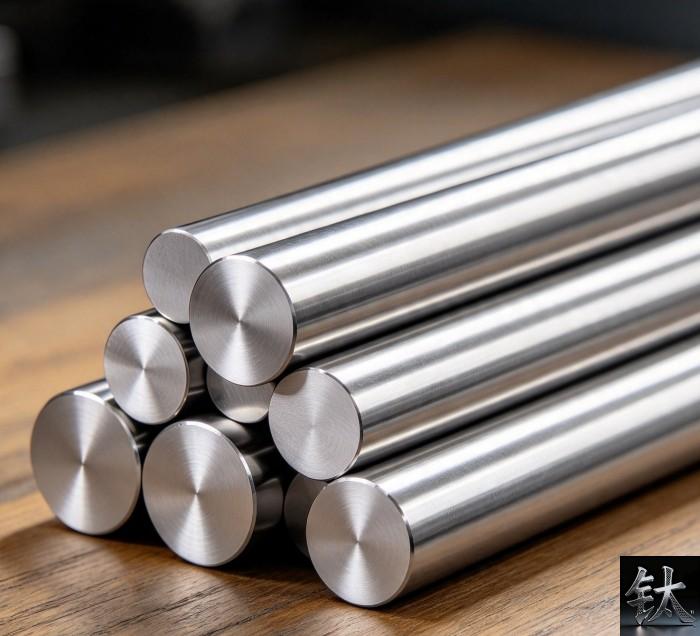
Grade 5 (Ti-6Al-4V, UNS R56400) is the alpha-beta titanium alloy that half the world's titanium is made into — roughly twice the strength of Grade 2 at barely more weight. SXQYTD stocks and cuts Grade 5 round, square, hexagon and flat bar plus forged billet to ASTM B348, with mill test certificate and PMI. Below is the procurement detail that decides form, condition and size before you issue a PO.
| Material | Grade 5 (UNS R56400, Ti-6Al-4V) | Principle | α-β alloy, ~2× Gr2 strength |
| Type & stock | Round / square / hex / flat bar, billet | Industry | Aerospace, medical, marine, oil & gas |
| Standard | ASTM B348 / ASME SB-348 | Lead time | 3–7 days stock; 2–4 weeks custom |
1. What a Grade 5 bar is — by grade and by form
By grade, Grade 5 (UNS R56400) is titanium alloyed with 6 % aluminium and 4 % vanadium — an alpha-beta alloy and the default choice wherever strength-to-weight matters. ASTM B348 also covers Grades 1–4, 7, 9, 12 and 23 bar, so the same bar route serves a corrosion-grade or an ultra-low-interstitial medical grade when the job calls for it. By form, the bar comes as round (the bulk of demand), square, hexagon (for fasteners and wrench parts), flat / rectangular bar, and forged billet (the starting block for further forging into parts). Diameters run from Ø6 mm light stock up to Ø300+ mm bar, with billets larger again for open-die work.
2. Why Grade 5 — grade vs. service vs. strength
Grade 5 is chosen for strength and weight, not for the cheapest corrosion resistance. Match the grade to the duty:
| Service | Recommended grade | Why |
| High strength / weight | Gr5 (Ti-6Al-4V) | Tensile ~895 MPa vs Gr2 345. |
| Medical implant | Gr23 (ELI) / ASTM F136 | Extra-low interstitials, biocompatible. |
| Corrosive + moderate load | Gr2 / Gr12 | Cheaper, better formability. |
| High temperature to ~400 °C | Gr5 | Holds strength where CP-Ti softens. |
| vs Grade 2 | Gr5 only if strength needed | Gr5 costs more, machines harder. |
Two things that surprise first-time buyers: (1) Grade 5 is not cold-formable like Grade 2 — bending or shaping needs hot work, so plan allowances for springback; and (2) the machining cost is the real expense, not the metal — titanium's low elastic modulus lets the bar deflect under the tool (it "gives"), and its low thermal conductivity keeps heat at the cutting edge, so rigid setups, sharp carbide and flood coolant are mandatory. We rough-turn and cut to length so you machine only the finish passes.
3. Technical standards we build to
- Bar spec: ASTM B348 / ASME SB-348, Grade 5, MTC EN 10204 3.1.
- Aerospace: AMS 4928 (bar) / AMS 4965 (STA) where specified.
- Medical: ASTM F136 / F1472 (ELI) for implant-grade stock.
- Chemistry (R56400): Al 5.5–6.75 %, V 3.5–4.5 %, Fe ≤ 0.40 %, O ≤ 0.20 %, C ≤ 0.10 %, N ≤ 0.05 %, H ≤ 0.015 %.
- Mechanical (annealed): tensile ≥ 895 MPa, yield ≥ 828 MPa, elongation ≥ 10 %.
4. Manufacturing flow — from billet to your bar
1) Gr5 billet release with MTC & PMI → 2) Heating to forging / rolling temperature → 3) Forging or rolling to bar → 4) Anneal (or solution-treat-and-age on request) → 5) Pickling / passivation (remove α-case) → 6) Straightening → 7) Band-saw cutting to length (no oxy-fuel) → 8) UT (large dia) / PT & dimensional → 9) PMI and marking (grade, size, heat) → 10) Export packing. Stock bar is usually supplied annealed; STA condition is available for higher strength with a small ductility trade.
5. Key performance
| Item | Control value | Note |
| Tensile strength | ≥ 895 MPa | ~2.6× Gr2. |
| Yield strength | ≥ 828 MPa | High specific strength. |
| Hardness | ~36 HRC (annealed) | STA raises it further. |
| Density | 4.43 g/cm³ | Still ~60 % lighter than steel. |
| Machining | Rigid setup, sharp carbide | Low modulus deflects the cut. |
6. Application industries
| Industry | Part | Why Grade 5 |
| Aerospace | Airframe, engine, landing gear | Strength at low weight. |
| Medical | Implants (ELI Gr23) | Biocompatible, strong. |
| Oil & gas / marine | Valve bodies, shafts | Strength + seawater resistance. |
| Sporting goods | Bike, golf, race parts | Stiff and light. |
7. Selection guide
By service: need strength-to-weight → Gr5; implant → Gr23 / F136 (ELI); corrosive + low load → Gr2. By form: round for shafts and blanks, square / hex for wrench and fastener stock, flat for brackets and plates, billet for forging your own parts. By condition: annealed for most machining and forming; solution-treated-and-aged (STA) when you need the extra strength and can accept less ductility. Send the part drawing or size, quantity and condition; we confirm grade and stock in one reply.
8. Customizable items & accessories
- Form and size (Ø6–300+ mm round; square / hex / flat to order).
- Length: random mill length or cut to your dimension.
- Condition: annealed, or STA on request.
- Surface: black, peeled, ground, polished; rough-turned to save your machining.
- PMI report, heat-number marking, third-party inspection (SGS / TUV).
9. Lead time, test reports & warranty
| Item | Commitment |
| Lead time | 3–7 days from stock; 2–4 weeks custom / large dia. |
| Test reports | MTC 3.1, UT (large dia), PT, PMI, dimensional. |
| Warranty | 12 months against material and workmanship defects from shipment. |
10. FAQ
Grade 5 or Grade 2 bar — which should I use?
If the part is loaded and weight matters, Grade 5 is the answer — its tensile strength is about 2.6× that of Grade 2 at almost the same density. Choose Grade 2 when corrosion resistance and formability outweigh strength, or when cost is tight and the load is light. Grade 5 is harder to machine and cannot be cold-formed, so factor that into the part cost.
Annealed or solution-treated-and-aged (STA)?
Annealed Grade 5 gives the best balance of strength, ductility and machinability and suits most parts. STA pushes tensile past ~1100 MPa for high-load components but reduces elongation and makes machining tougher. Unless your drawing calls for STA, take annealed.
Can Grade 5 be used for medical implants?
Grade 5 itself is not the implant grade. For implants use Grade 23 (Ti-6Al-4V ELI, UNS R56407) or ASTM F136 / F1472, which cap oxygen, iron and nitrogen far lower for biocompatibility and fracture toughness. We stock ELI Grade 23 bar for medical buyers — ask for F136 documentation.
Request a quote
Send the grade (Gr5 or ELI Gr23), form, size, length, condition and quantity. We return stock status and a stock-backed price within 8 hours.
Phone / WeChat: +86 188 2967 9311
Email: sales@sxqytd.com
Or leave a message on the contact page with your drawing attached.
- What is Titanium Flange | ASME B16.5 ASTM B381 Gr2 Gr5 Titanium Flan
- ASME B16.5 Titanium Flange Grade2 DN100-DN600 Class150/300 FOB
- Gr2 Titanium Sheet Price FOB Shanghai | ASTM B265 In Stock
- Titanium Price Today (Oct 26, 2026): China Market Report
- Titanium Price Today (23 Oct 2026): Plate, Tube, Rod & Wire
Contact Person: Wang Xiaoning
Tel: +86-917-355-7966
Email: sales@sxqytd.com
WhatsApp: +86 188 2967 9311
Company: Shaanxi Qianyi Tuoda Technology Co., Ltd
Address: Floor 4, Building 4, No. 188 Gaoxin Avenue, High-tech Zone, Baoji City, Shaanxi Province, China