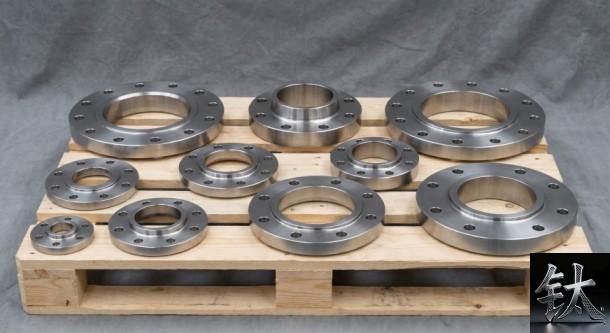
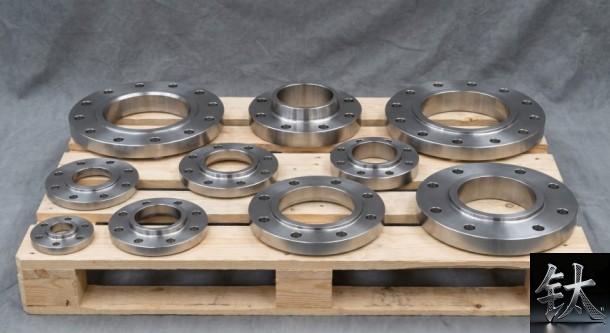
Titanium Flange Machining From Bar Stock
| Спецификация | We perform precision titanium flange machining from solid bar stock, producing custom weld neck, slip on, blind and special non-standard flanges according to client drawings. |
|---|---|
| Применимый стандарт | Starting from premium titanium bar conforming to ASTM B348, the finished flanges meet ASME B16.5 and ASTM B363 requirements, with full material traceability and MTC supplied. |
| Состояние материала | Machining from bar stock delivers dense, uniform microstructure, eliminating defects found in forged or plate-cut parts, perfect for high-pressure and corrosive working conditions. |
| Контроль и упаковка | We handle both small-batch prototype orders and bulk production, control tight tolerances, and arrange fast lead time for titanium flanges machined directly from bar stock. |
| Справочная цена | $25.00 – $50.00 |
Описание продукции: Custom titanium flange machining from solid titanium bar stock to your drawings. ASTM B348 raw material, ASME B16.5 standard, dense structure for high pressure and corrosive service. MTC available.
Обзор продукции
Titanium Flange Machined from Bar Stock vs Forged B381 | Grain Flow, Route Boundary, EN 10204 3.1
Meta Description: Titanium flange machined from bar stock vs forged per ASTM B381 — same outer shape, different material route. Bar (B348) for low-pressure/non-code; forged billet (B381) for pressure service. Reduction ratio + grain flow documented. PO names the route; cert matches the route.
Two Routes, One Shape — Not Interchangeable
| Item | Bar-Stock Machined (B348) | Forged Flange (B381) |
|---|---|---|
| Starting form | Hot-rolled / turned round bar | Upset + drawn / closed-die forged billet |
| Grain flow | Axial, crosses hub fillet transversely | Radial/contour-following, continuous at fillet |
| Internal soundness | Directional, center-line risk on big sections | Porosity consolidated, UT-friendly |
| Reduction ratio | Not applicable (rolled bar) | Documented (industry practice ≥3:1, project may ask 4–5:1) |
| Code pressure service | Only if design/drawing explicitly approves bar route | Standard route for ASME B16.5 pressure flanges |
| Cert | EN 10204 3.1 to B348 (bar heat) | EN 10204 3.1 to B381 F-2/F-5 (forging heat + reduction) |
Machining removes metal. It does not create a forging. A B348 cert can never be relabelled as B381.
When Bar-Stock Machining Is Honest & Acceptable
- Non-pressure / low-P utility spacer, backup ring, dummy flange
- Instrument tap, lab rig, prototype fit-check
- Small-bore threaded flange in low-stress duty (engineering-approved)
- Drawing explicitly says "machined from B348 bar, bar route accepted"
- Project ITP waives forging reduction for the component class
When Forging Is the Only Correct Route
- Pressure-retaining flange (ASME B16.5 / B31.3 / VIII service)
- WN nozzle on vessel/reactor, cyclic thermal duty
- Sea/FGD/chlor-alkali, sour/acid excursion
- Gr5 (TC4) load-governed joint — grain flow = fatigue life
- PO cites "ASTM B381 F-2 / SB-381" — bar substitute = non-conformance
Why Grain Flow Decides (the fillet is the weak point)
The hub-to-flange fillet is the highest stress concentration. A forged flange carries continuous grain across that fillet; a bar-turned flange has grain running along the bar axis, intersecting the fillet at 90° — a transverse weakness. Under thermal cycle / pressure pulse, bar-route hubs crack at the fillet; forged hubs do not. This is why code treats them differently, not "snobbery over terminology".
Correct Way to Order (no ambiguity)
- PO states product form: "Forged per ASTM B381 F-2" OR "Machined from B348 bar, bar route approved by drawing"
- B381 line must show: heat No., reduction ratio, anneal record, tensile from forging/prolongation
- B348 line must show: bar heat, chemistry, bar tensile — never "F-2 forging" wording
- CNC scope: forge/billet → anneal → CNC, or bar → CNC (stated up front)
- UT on forging body; PT on machined face; PMI grade verify either route
Our Supply Boundary (plain language)
- Forged route: closed-die / ring-roll from certified billet → B381 F-2/F-5/F-7, reduction ratio in MTC, UT+PT, 3.1
- Bar route: B348 annealed bar → CNC, cert to B348, labelled "bar-machined, non-B381" on tag
- We do NOT issue a B381 forging cert for a bar-turned part. Route swap needs written engineering approval, not a sales email.
- Forged bar (open-die upset bar) is a valid forging feedstock — but "forged bar" ≠ "hot-rolled bar"; cert line must say which.
RFQ Template (kills the route confusion)
Route required (pick ONE, no mixing):
  [ ] Forged per ASTM B381 F-2/F-5/F-7 (reduction ratio ___:1)
  [ ] Machined from ASTM B348 bar (bar route, drawing/ITP approved)
Type: WN / SO / Blind / TH / SW ___
Grade: Gr2(R50400) / Gr5 / Gr7(Pd) / Gr12 ___
NPS×SCH: ___   Class: 150/300/600 ___
Standard: B16.5 / EN1092 PN__ / drawing ___
NDE: UT+PT (forged) / PT only (bar) / RT on weld ___
Cert: 3.1 (B381 or B348 as routed) / 3.2 TPI ___
Engineering approval ref (if bar route): ___
Incoterm: EXW Baoji / FOB Shanghai / DAP ___
FAQ — Bar-Stock vs Forged Titanium Flange
Q1: Can a bar-turned flange look identical to a forged one?
A: Externally yes. Internally no — grain direction and reduction ratio differ. Only the cert + route clause prove it.
Q2: Is B348 chemistry same as B381 F-2?
A: Same UNS R50400, same alloy family — but different product form. Shared chemistry ≠ shared forging compliance.
Q3: Can bar route be used for pressure service?
A: Only with explicit design/drawing approval naming B348 bar route. Otherwise ASME pressure flanges use B381 forging.
Q4: What reduction ratio do inspectors want?
A: B381 has no single pinned number; industry practice ≥3:1 cross-section, many EPCs ask 4–5:1 for large/hubbed flanges. MTC must state actual ratio.
Q5: Does CNC quality make bar "as good as forged"?
A: Surface finish yes; grain-flow fatigue behavior no. CNC cannot rewrite metallurgy.
Q6: Small threaded flange from bar — OK?
A: Low-stress, non-code, engineering-approved: yes. Pressure nozzle: no, go forged.
Q7: Will you issue B381 cert for bar part if customer asks?
A: No. Route mismatch is a non-conformance. We issue B348 cert + "bar-machined" tag, or forge it properly.
Q8: Forged bar vs hot-rolled bar?
A: Different. Forged bar = upset/drawn (grain refined); hot-rolled bar = mill-rolled. Both B348 form family, but NDE scope differs — state which.
Q9: UT on bar flange?
A: Optional unless drawing/ITP requires; on forged body UT is the standard volumetric check.
Q10: HS code?
A: WCO 6-digit 8108.90 base; destination sub-heading via broker. Route stated on CI/PL.
Request a Quote
Email: sales@[yourdomain].com
Tell us the route (forged B381 or bar B348-approved) + spec. Reply in 24h: billet status, EXW/FOB price, cert type, dispatch window.
About: Baoji Titanium Valley flange route line — forged B381 (closed-die/ring-roll, reduction ratio in MTC) and B348 bar-machined (labelled non-forging, engineering-approved only). Same CNC precision, honest cert per route. No bar cert relabelled as forging, no phantom reduction ratio, no route swap without written approval. Lot confirmed before PI; tag = MTC = PL = route clause.
Опишите ваши требования — марка, размер и количество. Ответим в течение 24 часов.
Предпочитаете чат? WhatsApp +86 188 2967 9311 или напишите на sales@sxqytd.com.

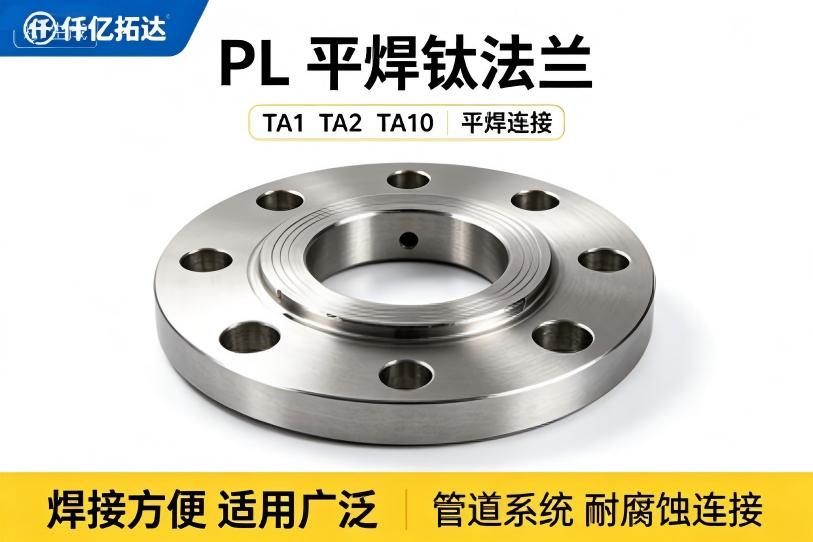


- Titanium Price Today (26 октября 2026 г.): отчет о рынке Китая
- Цена на титан сегодня (23 октября 2026 г.): пластина, трубка, стерже
- Читайте титановую проволоку и проволоку из титанового сплава: класси
- Титановая проволока: от выбора марки до производственного процесса (
- Читайте титановую трубку и трубку из титанового сплава: классификаци
Контактное лицо: Wang Xiaoning
Телефон: +86-917-355-7966
Эл. почта: sales@sxqytd.com
WhatsApp: +86 188 2967 9311
Компания: Shaanxi Qianyi Tuoda Technology Co., Ltd
Адрес: Floor 4, Building 4, No. 188 Gaoxin Avenue, High-tech Zone, Baoji City, Shaanxi Province, China