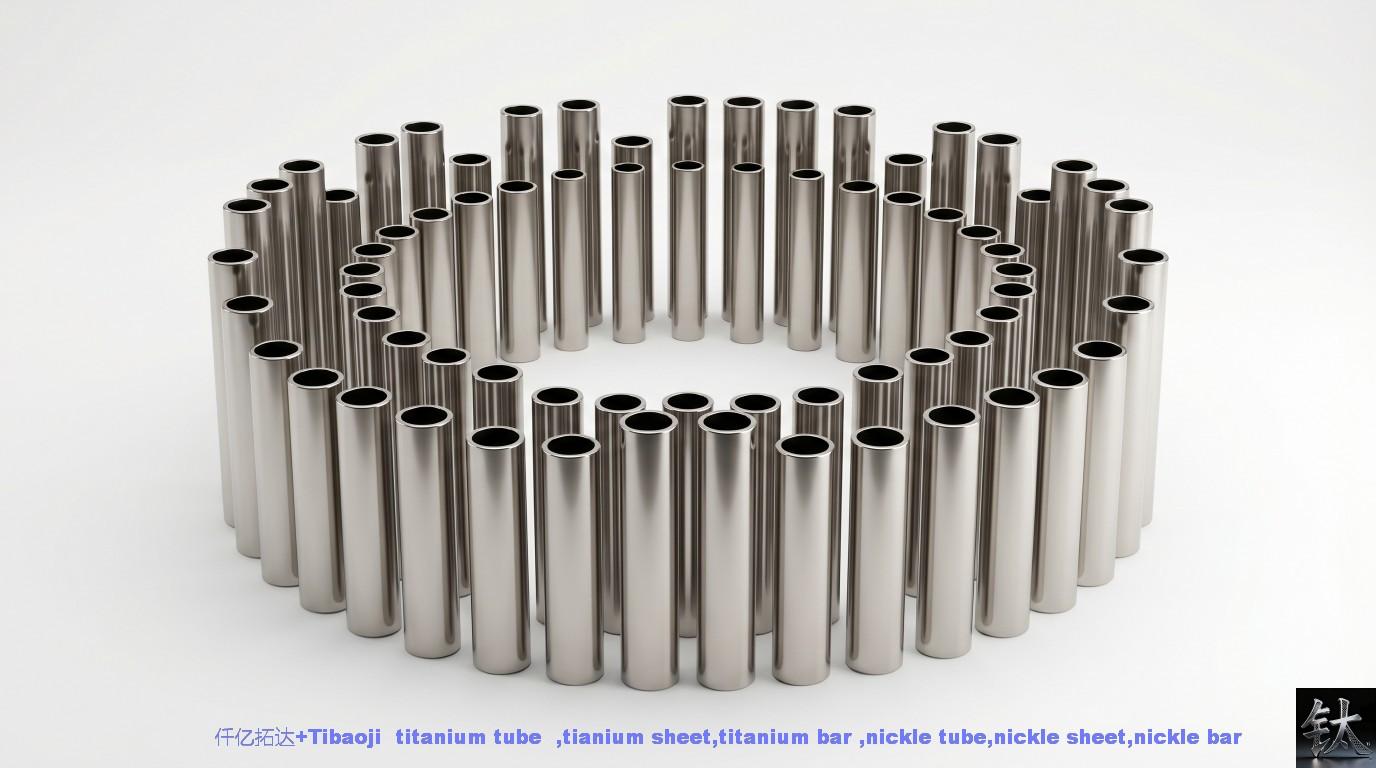
Nickel Products: N6, Ni201, Monel 400 Selection Guide
| Спецификация | ASTM B162 (Ni plate), B161 (Ni tube), B160 (Ni bar), B127 (Monel plate), B165 (Monel tube), B164 (Monel bar) |
|---|---|
| Применимый стандарт | Ni200 (UNS N02200, N6), Ni201 (UNS N02201, N4), Monel 400 (UNS N04400, NCu28-2.5-1.5) |
| Состояние материала | Custom 3 (Service) Caustic soda (NaOH) evaporators, HF acid storage, seawater heat exchangers, marine engineering |
| Контроль и упаковка | Ni201 for caustic above 315C (graphitization); Monel 400 for seawater/HF/chloride; never substitute pure Ni for Monel 400 in chloride servic |
| Справочная цена | $30.00 – $40.00 |
Описание продукции: Nickel products selection: Ni200/N6 vs Ni201/N4 vs Monel 400/N04400. 315C graphitization boundary, seawater/HF/caustic service. Chinese grade correspondence. Buyer guide with 8-field PO checklist.
Обзор продукции
| Standards | ASTM B162 (Ni plate), B161 (Ni tube), B160 (Ni bar), B127 (Monel plate), B165 (Monel tube), B164 (Monel bar) |
|---|---|
| Grades | Ni200 (UNS N02200, N6), Ni201 (UNS N02201, N4), Monel 400 (UNS N04400, NCu28-2.5-1.5) |
| Service | Caustic soda (NaOH) evaporators, HF acid storage, seawater heat exchangers, marine engineering |
| Core distinction | Pure nickel is for caustic (NaOH) and reducing acids; Monel 400 is for seawater/HF/chloride. The 315C graphitization boundary separates Ni200 from Ni201. Never substitute pure Ni for Monel 400 in chloride service. |
The Failure: Pure Nickel in Seawater — 14 Months to Pinhole
In 2022, a Middle East multi-stage flash (MSF) desalination plant ordered replacement heat exchanger tubes for a brine preheater. The original specification called for Monel 400 (UNS N04400) per ASTM B165. The supplier, citing a 35% cost reduction, offered Ni200 (UNS N02200, Chinese N6) as an "equivalent nickel alloy." The buyer accepted, having been told that "both are nickel alloys with similar corrosion resistance." Fourteen months after installation, the brine preheater developed pinhole leaks across approximately 20% of the tube bundle. The plant was forced into an unscheduled shutdown, and the entire tube bundle had to be replaced — with Monel 400, as originally specified.
Metallurgical investigation found classic chloride pitting on the tube outer surface (the brine side). The pits were 0.8-1.5 mm deep, penetrating the 1.65 mm tube wall in the worst cases. The corrosion rate was 0.7-1.0 mm/year — approximately 30-40x the corrosion rate that Monel 400 would have exhibited in the same service (0.025 mm/year). The failure was not a quality defect in the Ni200 tube; the Ni200 was metallurgically sound and met ASTM B162. The failure was a material selection error: pure nickel is not resistant to chloride pitting in seawater, and no amount of quality control can make it so.
The lesson is that "nickel alloy" is not a material specification. Pure nickel (Ni200/Ni201) and Monel 400 are both nickel alloys, but they serve different corrosion environments. A nickel product purchase order has eight fields, and the UNS designation, service environment match, and temperature boundary are three of the missing fields the failure will find.
Pure Nickel vs Monel 400: Two Different Materials
Pure nickel (Ni200, Ni201) and Monel 400 are both called "nickel products" in trade, but they are metallurgically and corrosion-behaviorally distinct materials. Pure nickel is commercially pure nickel with minimum 99.0% Ni content, used for its resistance to caustic soda (NaOH), potassium hydroxide (KOH), and reducing acids. Monel 400 is a solid-solution nickel-copper alloy with Ni 63% minimum and Cu 28-34%, used for its resistance to seawater, hydrofluoric acid (HF), and chloride-bearing environments. The two materials are not interchangeable.
| Property | Ni200 / Ni201 | Monel 400 |
|---|---|---|
| Composition | Ni 99.0% min | Ni 63% min, Cu 28-34% |
| UNS | N02200 / N02201 | N04400 |
| Chinese grade | N6 / N4 | NCu28-2.5-1.5 |
| Yield (MPa) | 103-207 | 240-345 |
| NaOH resistance | Excellent (to 315C) | Good (to 200C, then Cu leaching) |
| Seawater resistance | Poor (pitting 1-5 mm/yr) | Excellent (0.025 mm/yr) |
| HF acid resistance | Moderate | Excellent |
| Oxidizing acid | Poor | Poor |
The decision matrix is clear. For caustic soda (NaOH) and potassium hydroxide service, use pure nickel — Ni200 below 315°C, Ni201 above 315°C. For seawater, brine, HF acid, and chloride-bearing environments, use Monel 400. For oxidizing acids (HNO3, chromic acid), neither material is suitable — use stainless steel or titanium. The buyer who treats "nickel alloy" as a single material category, and accepts whichever the supplier offers, will eventually install the wrong material in the wrong service and pay for the failure.
Ni200 vs Ni201: The 315°C Graphitization Boundary
The only chemical difference between Ni200 and Ni201 is carbon content: Ni200 has carbon maximum 0.15%, Ni201 has carbon maximum 0.02% — a 7.5x reduction. Below 315°C, the two grades perform identically in all corrosion environments; the carbon is dissolved in the nickel matrix and has no effect on corrosion behavior. Above 315°C, the carbon in Ni200 precipitates as graphite at grain boundaries, forming a continuous network that reduces ductility to near zero — a phenomenon called graphitization embrittlement.
Graphitization is irreversible. Once the graphite network forms, the material cannot be recovered by heat treatment; the graphite is thermodynamically stable at all temperatures below the nickel melting point. ASME Boiler and Pressure Vessel Code Section VIII explicitly limits Ni200 to 315°C maximum for pressure-retaining service. Ni201, with its 0.02% carbon maximum, does not graphitize and is approved for pressure service up to 600°C.
The practical implication for caustic soda service is decisive. Membrane cell chlor-alkali plants operate caustic soda evaporators at 300-350°C — directly across the 315°C boundary. A Ni200 evaporator body operating at 320-350°C will graphitize within 6-18 months, depending on the actual temperature and the carbon content of the specific heat (which can be at the 0.15% maximum). The graphitized material will fail catastrophically under pressure — not by corrosion, but by brittle fracture of the pressure boundary. The cost premium for Ni201 over Ni200 is 2-5% (the carbon control cost); the cost of a graphitized evaporator body is $50,000-$200,000 and 2-4 weeks of plant downtime.
Monel 400: The Nickel-Copper Synergistic Passivation
Monel 400 (UNS N04400) is a solid-solution nickel-copper alloy — the copper is fully dissolved in the nickel matrix, not present as a second phase. The composition range is Ni 63% minimum, Cu 28-34%, Fe 1.5% maximum (typically 1.5-2.5% in practice), Mn 1.0% maximum, with carbon below 0.3%. The alloy has been in industrial use since approximately 1905, originally derived from the natural nickel-copper ore from the Sudbury deposit in Canada.
The corrosion resistance of Monel 400 in seawater and chloride environments is the result of a synergistic passivation mechanism between nickel and copper. Nickel forms a NiO passive film; copper enhances the film's resistance to chloride breakdown by modifying the film's electronic structure and reducing the rate of localized chloride penetration. The Monel 400 passive film is thicker, more adherent, and more resistant to pitting than the pure nickel passive film. In ambient seawater, Monel 400 exhibits a corrosion rate below 0.025 mm/year — effectively inert — versus 1-5 mm/year for pure nickel under pitting attack.
The strength advantage is equally significant. Monel 400 has a yield strength of 240-345 MPa, double the 103-207 MPa of pure nickel. This allows thinner wall sections for the same pressure rating, reducing material cost and weight. In marine engineering, Monel 400 is the default material for pump shafts, valve stems, heat exchanger tubes, and fasteners where both chloride resistance and mechanical strength are required.
Monel 400 Service Limits: Where It Fails
Monel 400 is not a universal nickel alloy. Three service limits must be observed. First, Monel 400 is attacked by oxidizing acids (nitric acid, chromic acid, sulfuric acid above 70% concentration with oxidizing conditions). In these environments, the copper in the alloy is selectively dissolved, and the material fails rapidly. For oxidizing acid service, use stainless steel (316L) or titanium.
Second, Monel 400 suffers impingement corrosion in high-velocity seawater above 4 m/s. At velocities above 4 m/s, the passive film is mechanically stripped by the turbulent flow, and the exposed metal corrodes at accelerated rates. For seawater service above 4 m/s (e.g., pump impellers, high-velocity condenser inlets), upgrade to Monel K-500 (age-hardenable, higher strength) or to cupronickel 90/10 or 70/30, which have better velocity tolerance.
Third, Monel 400 is susceptible to stress corrosion cracking (SCC) in HF vapor containing oxygen above 70°C. In HF acid service, Monel 400 performs well in liquid HF and in deaerated HF vapor, but if the vapor contains dissolved oxygen and the temperature exceeds 70°C, SCC can initiate at stress concentration points (weld HAZ, threaded roots, cold-formed bends). For aerated HF vapor above 70°C, use Inconel 625 or Incoloy 825.
Chinese Grade Correspondence: N6, N4, NCu28
Chinese nickel and nickel alloy grades correspond to ASTM grades as follows. N6 corresponds to Ni200 (UNS N02200), with carbon maximum 0.15% — defined in GB/T 5235. N4 corresponds to Ni201 (UNS N02201), with carbon maximum 0.02% — also defined in GB/T 5235. NCu28-2.5-1.5 corresponds to Monel 400 (UNS N04400), with Ni 63% minimum, Cu 28-34%, Fe 1.5-2.5%, Mn 1.0-2.0% — defined in GB/T 5235 and the older YB standard.
When ordering from Chinese suppliers, specify both the UNS designation and the Chinese grade to avoid ambiguity. A Chinese supplier offering "N6 plate" is offering Ni200; a supplier offering "N4 plate" is offering Ni201. The two are visually identical and cannot be distinguished by appearance or by standard chemistry report without explicit carbon analysis. The most common error is accepting N6 (Ni200) when N4 (Ni201) was specified for high-temperature caustic service — the carbon content difference is invisible on a casual inspection, and the graphitization failure does not appear until 6-18 months of service above 315°C.
Always require on the PO: "Material per ASTM [standard], UNS [designation], equivalent to Chinese [grade]. Carbon content shall be reported on the MTR and shall not exceed [value]." For N4 (Ni201), the carbon report is the single most important quality control document — without it, the buyer cannot verify that the supplied material is N4 and not N6.
Product Forms and Standards
Nickel and Monel products are supplied in the same product forms as titanium: plate, sheet, strip, seamless tube, welded tube, bar, wire, forgings, and fittings. The ASTM standards governing each product form are:
| Product Form | Pure Nickel Standard | Monel 400 Standard |
|---|---|---|
| Plate, sheet, strip | ASTM B162 | ASTM B127 |
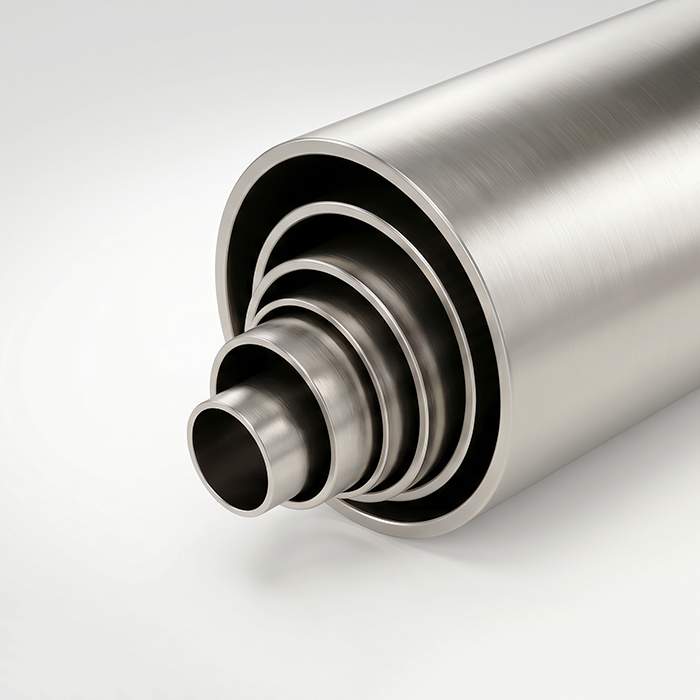
| Seamless pipe/tube | ASTM B161 | ASTM B165 |
| Heat exchanger tube | ASTM B163 | ASTM B165 (also covers HX tube) |
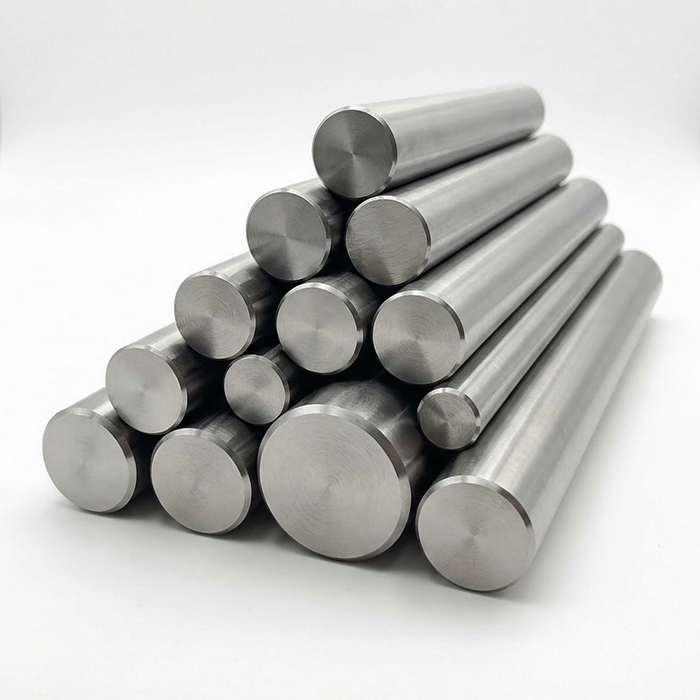
| Bar, rod | ASTM B160 | ASTM B164 |
| Wire | ASTM B160 (covered) | ASTM B164 (covered) |
| Forgings | ASTM B564 | ASTM B564 |
| Fittings | ASTM B366 | ASTM B366 |
A complete nickel product PO cites the product form standard plus the grade: "ASTM B162 UNS N02201" for Ni201 plate, or "ASTM B127 UNS N04400" for Monel 400 plate. Specifying only "nickel plate" or "Monel plate" without the ASTM standard and UNS leaves material verification open — a supplier can deliver any nickel-containing material that meets the dimensional spec.
Eight Common Procurement Failures
These are the eight failures observed in nickel product purchase orders over the past decade, in approximate frequency order:
1. Substituting pure nickel (Ni200/Ni201) for Monel 400 in seawater. Chloride pitting at 1-5 mm/year; failure in 6-18 months. The two materials are not interchangeable. Always verify the UNS designation matches the service.
2. Using Ni200 above 315°C. Graphitization embrittlement; catastrophic brittle fracture of pressure boundary. Use Ni201 (UNS N02201, carbon max 0.02%) above 315°C.
3. Accepting N6 (Ni200) when N4 (Ni201) was specified. Visually identical; the carbon difference is invisible without explicit carbon analysis. Require carbon report on MTR for all Ni201 orders.
4. Specifying only "nickel plate" or "Monel plate" without ASTM standard and UNS. No contractual basis for material verification. Always cite "ASTM [standard] UNS [designation]."
5. Using Monel 400 in oxidizing acid (HNO3). Copper selective dissolution; rapid failure. Use stainless steel or titanium for oxidizing acid service.
6. Using Monel 400 in high-velocity seawater above 4 m/s. Impingement corrosion strips the passive film. Use Monel K-500 or cupronickel 90/10 for high-velocity service.
7. Not requiring PMI on Monel 400. Monel 400 and pure nickel are visually identical; PMI (XRF) verifies the copper content (28-34%) that distinguishes Monel 400 from pure nickel. Require PMI on every lot.
8. Using Monel 400 in aerated HF vapor above 70°C. Stress corrosion cracking at weld HAZ and stress concentration points. Use Inconel 625 or Incoloy 825 for aerated HF vapor above 70°C.
Cost Economics: Pure Nickel vs Monel 400
The cost relationship between pure nickel and Monel 400 depends on the nickel-copper price differential, which has been volatile over the past decade. As of 2024-2026, the approximate cost relationship is:
| Product | Ni200 (USD/kg) | Ni201 (USD/kg) | Monel 400 (USD/kg) |
|---|---|---|---|
| Plate (B162/B127) | $22-32 | $24-35 (+5-10%) | $18-28 |
| Tube (B161/B165) | $45-65 | $48-70 | $35-55 |
| Bar (B160/B164) | $20-30 | $22-32 | $17-25 |
Monel 400 is typically 10-20% cheaper than pure nickel by weight, because copper is less expensive than nickel. However, Monel 400 has higher density (8.80 g/cm³ vs 8.89 g/cm³ for pure nickel — nearly identical) and higher strength, so the cost per unit of pressure-bearing capacity favors Monel 400 for most structural and pressure vessel applications. The cost-driven substitution error — accepting Ni200 instead of Monel 400 to "save money" — is usually a misreading of the cost data: Ni200 is actually more expensive than Monel 400, and the substitution fails because Ni200 is the wrong material for seawater, not the right material at a lower price.
Supplier Verification: Six Documents to Request
Before placing a nickel product order, request these six documents. A supplier who cannot produce all six is not qualified for nickel product service.
1. Material Test Report (MTR) per EN 10204 3.1, showing heat chemistry including carbon content (critical for distinguishing Ni200 from Ni201), and UNS designation matching the ordered grade.
2. ASTM product form standard compliance certificate (B162 for Ni plate, B127 for Monel plate, etc.) with grade and UNS explicitly stated.
3. Mechanical properties certificate showing yield strength, tensile strength, and elongation per the ASTM standard, for the supplied temper (annealed, stress-relieved, as-drawn).
4. For Ni201 (N4) orders: explicit carbon analysis report showing carbon content below 0.02%. This is the single most important document for Ni201 — without it, the buyer cannot verify that N4 was supplied instead of N6.
5. PMI (XRF) certificate for every lot of Monel 400, verifying the copper content (28-34%) that distinguishes Monel 400 from pure nickel. PMI is mandatory because the two materials are visually identical.
6. Surface and contamination certificate: for Monel 400, confirm that the product was pickled after forming to remove iron contamination (carbon steel tooling embeds free iron, same issue as titanium). For pure nickel in caustic service, confirm that no sulfur-bearing compounds were used in the surface treatment (sulfur accelerates caustic corrosion on nickel).
Summary: The 8-Field Purchase Order for Nickel Products
A complete nickel product purchase order has these eight fields. Anything less leaves a gap the failure will find.
1. Standard + grade: ASTM [B162/B161/B160/B127/B165/B164] UNS [N02200/N02201/N04400], equivalent Chinese grade [N6/N4/NCu28-2.5-1.5].
2. Service environment confirmation: Specify the intended service (caustic soda, seawater, HF acid, marine) and confirm the material is suitable. Reject substitutions across service categories.
3. Temperature boundary (for pure nickel): For service above 315°C, specify Ni201 (UNS N02201) and require carbon analysis below 0.02%. For service below 315°C, Ni200 is acceptable.
4. Product form + dimensions: Plate (thickness, width, length), tube (OD, wall, length), bar (diameter, length), with tolerances per the ASTM standard.
5. Temper + mechanical properties: Annealed (soft, general service), stress-relieved (intermediate strength), as-drawn (high strength, spring wire). Specify yield, tensile, elongation per ASTM.
6. Surface + pickling: Pickled after forming; free-iron test per ASTM A380 for Monel 400. No sulfur-bearing surface treatments for pure nickel in caustic service.
7. Documentation: MTR EN 10204 3.1 with carbon analysis (for Ni201), ASTM standard compliance certificate, mechanical properties certificate, PMI certificate (for Monel 400), surface contamination certificate.
8. PMI on receipt: For Monel 400, buyer verifies XRF copper content (28-34%) on 10% of received material. For Ni201, buyer verifies carbon content on the MTR. Reject lots that do not match the ordered grade.
Frequently Asked Questions
Q1: What is the difference between Ni200 (N6) and Ni201 (N4)?
The only chemical difference is carbon content: Ni200 (UNS N02200, Chinese N6) has carbon maximum 0.15%; Ni201 (UNS N02201, Chinese N4) has carbon maximum 0.02% — a 7.5x reduction. Above 315C, carbon in Ni200 precipitates as graphite at grain boundaries, causing graphitization embrittlement (ductility drops to near zero). Ni201, with its low carbon, does not graphitize and is approved by ASME for pressure service above 315C. Below 315C, both grades perform identically in caustic and reducing acid service. The cost premium for Ni201 over Ni200 is 2-5% — the carbon control cost, not a quality difference.
Q2: Can I use pure nickel (Ni200/Ni201) instead of Monel 400 in seawater?
No. Pure nickel has excellent resistance to caustic soda (NaOH) and reducing acids, but it is susceptible to pitting and crevice corrosion in chloride-bearing environments including seawater. The chloride ion breaks the nickel passive film locally and initiates pitting at rates of 1-5 mm/year in flowing seawater. Monel 400 (Ni 63%, Cu 28-34%) has superior chloride resistance due to the copper-nickel synergistic passivation, with corrosion rates below 0.025 mm/year in ambient seawater. Substituting pure nickel for Monel 400 in seawater or chloride service is one of the most common and expensive material selection errors in nickel procurement.
Q3: What is the Chinese grade correspondence for nickel and Monel products?
Chinese GB designations: N6 corresponds to Ni200 (UNS N02200, carbon max 0.15%); N4 corresponds to Ni201 (UNS N02201, carbon max 0.02%); NCu28-2.5-1.5 corresponds to Monel 400 (UNS N04400, Ni 63% min, Cu 28-34%, Fe 1.5-2.5%, Mn 1.0-2.0%). When ordering from Chinese suppliers, specify both the UNS designation and the Chinese grade to avoid ambiguity. N6 and N4 are defined in GB/T 5235; NCu28-2.5-1.5 is defined in GB/T 5235 and the older YB standard. Do not accept N6 when N4 was specified — the carbon content difference is not visible on a standard chemistry report without explicit carbon analysis.
Q4: At what temperature does Ni200 graphitize and how do I prevent it?
Ni200 (UNS N02200) graphitizes above 315C. Carbon dissolved in the nickel matrix precipitates as graphite at grain boundaries, forming a continuous network that reduces ductility to near zero. The embrittlement is irreversible — once graphitized, the material cannot be recovered by heat treatment. Prevention: use Ni201 (UNS N02201, carbon max 0.02%) for any service above 315C. ASME B&PVC Section VIII limits Ni200 to 315C maximum for pressure-retaining service. For caustic soda evaporators operating at 300-350C (common in membrane cell chlor-alkali plants), Ni201 is mandatory; using Ni200 risks graphitization and catastrophic failure of the pressure boundary.
Q5: What is Monel 400 used for and what are its limits?
Monel 400 (UNS N04400) is used for seawater heat exchangers, HF acid storage and processing equipment, marine valve and pump components, and chemical processing involving reducing acids and neutral salt solutions. Its strength (yield 240-345 MPa, double that of pure nickel) and chloride resistance make it the default nickel alloy for marine engineering. Limits: Monel 400 is attacked by oxidizing acids (nitric acid, chromic acid) and by high-velocity seawater above 4 m/s (impingement corrosion). Monel 400 is also susceptible to stress corrosion cracking in HF vapor containing oxygen above 70C. For high-velocity seawater or aerated HF vapor, upgrade to Monel K-500 (age-hardenable) or Inconel 625.
Q6: Why does Monel 400 resist seawater corrosion better than pure nickel?
Monel 400 is a solid-solution nickel-copper alloy (Ni 63%, Cu 28-34%). The copper addition creates a synergistic passivation mechanism: nickel forms a NiO passive film, and copper enhances the film's resistance to chloride breakdown. The copper-nickel alloy passive film is thicker, more adherent, and more resistant to localized chloride attack than the pure nickel passive film. In ambient seawater, Monel 400 corrosion rate is below 0.025 mm/year, versus 1-5 mm/year for pure nickel under pitting attack. The copper also increases the alloy's strength (yield 240-345 MPa vs 103-207 MPa for pure nickel) and improves resistance to impingement corrosion in flowing seawater up to 3-4 m/s.
Q7: What standards govern nickel and Monel product forms?
ASTM B162 covers nickel plate, sheet, and strip (Ni200 and Ni201); B161 covers seamless nickel pipe; B160 covers nickel bar; B163 covers nickel condenser and heat exchanger tube. For Monel 400: ASTM B127 covers plate, sheet, and strip; B165 covers seamless tube; B164 covers bar. ASME B16.5 and B16.9 govern flange and fitting dimensions for both materials. A complete nickel product PO must cite the ASTM product form standard plus the grade (UNS designation): e.g., ASTM B162 UNS N02201 for Ni201 plate, or ASTM B127 UNS N04400 for Monel 400 plate. Specifying only 'nickel plate' or 'Monel plate' without the ASTM standard and UNS leaves material verification open.
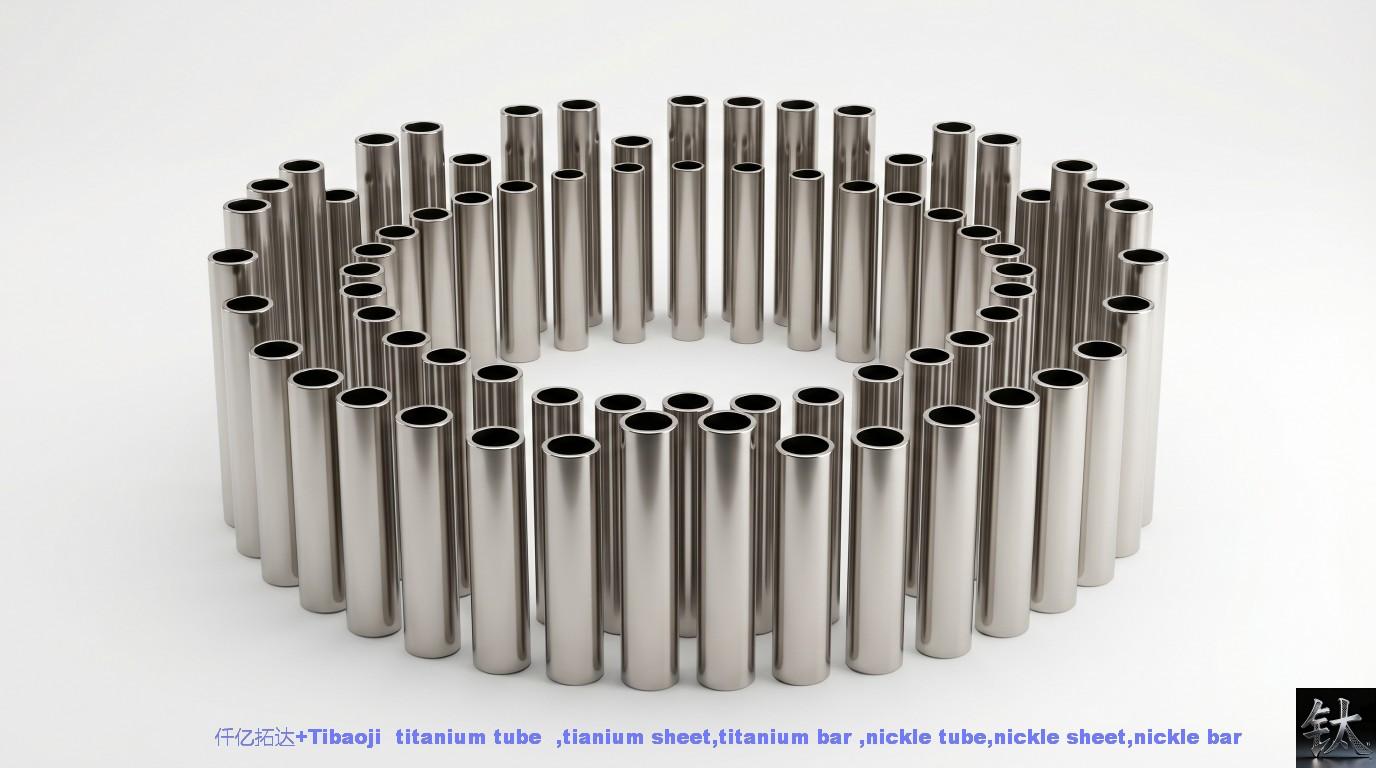
Опишите ваши требования — марка, размер и количество. Ответим в течение 24 часов.
Предпочитаете чат? WhatsApp +86 188 2967 9311 или напишите на sales@sxqytd.com.
- Цена на титан сегодня (23 октября 2026 г.): пластина, трубка, стерже
- Читайте титановую проволоку и проволоку из титанового сплава: класси
- Титановая проволока: от выбора марки до производственного процесса (
- Читайте титановую трубку и трубку из титанового сплава: классификаци
- Титановые трубы: выбор тройников и переходов в 5 шагов
Контактное лицо: Wang Xiaoning
Телефон: +86-917-355-7966
Эл. почта: sales@sxqytd.com
WhatsApp: +86 188 2967 9311
Компания: Shaanxi Qianyi Tuoda Technology Co., Ltd
Адрес: Floor 4, Building 4, No. 188 Gaoxin Avenue, High-tech Zone, Baoji City, Shaanxi Province, China